6 Sponsored Post Marketplaces Worth Shortlisting in 2026
A practical comparison of sponsored post marketplaces for link building and digital PR, based on vendor documentation and public sources.
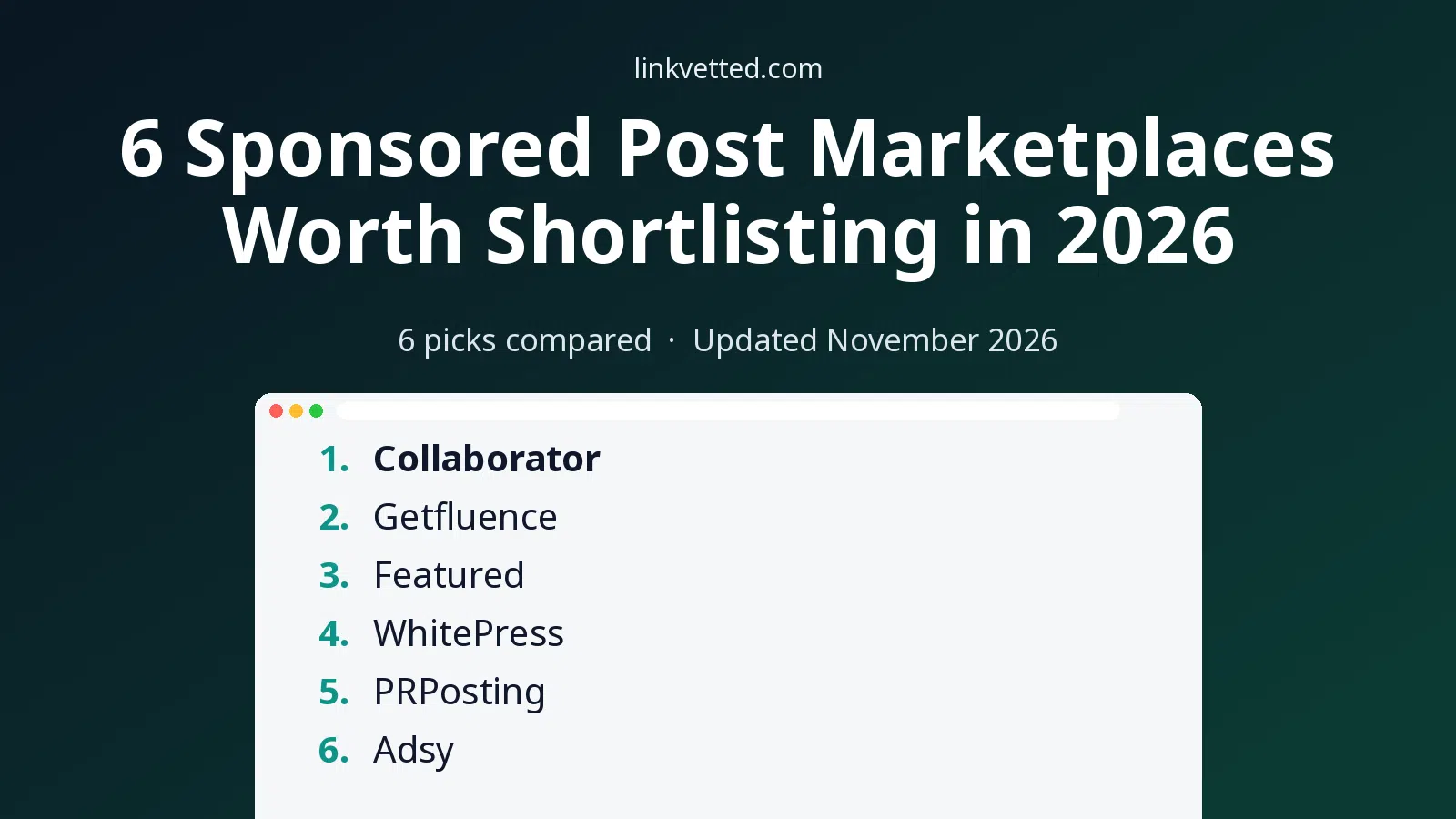
- Editor's choiceCollaborator
Focused sponsored content buying
Starts atSee websiteVisit collaborator.proFull review - Great alternativeGetfluence
Browsing a broad media catalogue
Starts atSee websiteVisit getfluence.comFull review - Also considerFeatured
Digital PR and brand mentions
Starts atSee websiteVisit featured.comFull review
Direct answer
My top pick is the Collaborator marketplace, because it is built specifically around sponsored content placements and gives you a structured way to review publisher sites before you commit. For teams that want a wider blogger network with self-serve browsing, Getfluence is a strong second. If your focus is digital PR rather than paid placements, Featured is worth a look. Each fits a different workflow, so the right choice depends on how you source and approve sites.
TL;DR:
- Sponsored post marketplaces differ mainly in how they vet publishers, how much control you get over placement, and whether they lean toward SEO links or PR coverage.
- Collaborator is the most focused option for buying sponsored articles, but it works best when you already know what kind of sites you want.
- Getfluence suits teams that want to browse a broad media catalogue and manage campaigns in one place.
- Featured is better aligned with digital PR and brand mentions than with pure link acquisition.
- Always confirm link attributes, editorial rules and disclosure requirements with each marketplace before you buy.
Last checked November 2026. Plan prices are not quoted in this guide because they change often; see each vendor's own pricing page for current figures before you buy.
Quick comparison
| Tool | Best for | Starts at | Free plan? | |
|---|---|---|---|---|
| Collaborator | Focused sponsored content buying | See website | Not stated | Visit |
| Getfluence | Browsing a broad media catalogue | See website | Not stated | Visit |
| Featured | Digital PR and brand mentions | See website | Not stated | Visit |
| WhitePress | Content marketing at scale | See website | Not stated | Visit |
| PRPosting | Simple guest and sponsored placements | See website | Not stated | Visit |
| Adsy | Self-serve marketplace browsing | See website | Not stated | Visit |
The best sponsored post marketplaces compared
I compared these platforms from vendor documentation and public sources, looking at how each one handles publisher vetting, placement workflow and reporting. I did not run hands-on tests, so treat this as a starting point for your own evaluation rather than a lab result. The notes below focus on fit and limits.
Collaborator
Best for: Focused sponsored content buying
Collaborator is a marketplace where advertisers connect with publishers who accept sponsored articles. It fits teams that already have a rough idea of the site types they want and prefer a structured buying process over cold outreach. The platform presents publisher profiles with site information so you can review before deciding.
For sponsored post work, the value is in the workflow: you can search for publishers, review their details and manage placements in one place. That reduces the back-and-forth of email negotiation. It helps most when you buy regularly and want a repeatable process rather than one-off deals.
The limit is inventory. Some niches have fewer publishers than others, and you may not find the exact sites you had in mind. If you need very specific domains, you may need to combine it with direct outreach.
- Built around sponsored placements
- publisher profiles with site details
- campaign workflow support
- Inventory varies by niche
- less suited to pure PR outreach
Getfluence
Best for: Browsing a broad media catalogue
Getfluence is a marketplace for sponsored articles and brand content across a range of media outlets. It suits teams that want to browse a catalogue and pick publishers by category, audience or market. The platform is oriented toward brand visibility as much as link placement.
For sponsored post campaigns, it gives you a way to compare publishers and manage multiple placements without negotiating each one separately. That is useful when you run campaigns across several countries or verticals and want one dashboard.
The caveat is that catalogue quality is not uniform. Some markets have strong publishers, others less so. Review each site on its own merits rather than assuming the platform's vetting covers everything.
- Large media catalogue
- campaign management features
- works across multiple markets
- Quality varies by market
- pricing transparency depends on publisher
Featured
Best for: Digital PR and brand mentions
Featured is a platform for earning editorial mentions and brand coverage rather than buying links outright. It fits teams running digital PR campaigns where the goal is visibility and credibility, with links as a secondary benefit.
For sponsored post work, it is a different model: you are often paying for placement or coverage in a publication rather than a standard guest post. That can be useful when you want contextually relevant mentions in outlets your audience reads.
Skip it if your only goal is acquiring keyword-rich anchor links. The editorial model does not always align with that, and you should check how each placement handles links before committing.
- Oriented toward editorial mentions
- useful for brand visibility
- supports outreach-style campaigns
- Less focused on SEO links
- may not fit pure link-building goals
WhitePress
Best for: Content marketing at scale
WhitePress is a content marketing marketplace that covers sponsored articles, guest posts and related formats across many markets. It suits teams that publish regularly and want a single place to source placements.
For sponsored posts, it offers a large pool of publishers and tools to manage orders. That helps when you need volume and want to keep the process organized rather than tracking deals in spreadsheets.
The trade-off is that the platform is large, so you still need your own review process. Do not assume every publisher meets your standards. It is less appealing if you only buy a handful of placements a year.
- Broad publisher network
- supports multiple content formats
- campaign management tools
- Interface can feel dense
- quality control depends on your review
PRPosting
Best for: Simple guest and sponsored placements
PRPosting is a marketplace for guest posts and sponsored articles with a fairly direct ordering process. It fits smaller teams or agencies that want to place a few articles without a long setup.
For sponsored post buying, it lets you browse publishers, review site details and place orders. The workflow is simple, which is helpful if you are new to marketplaces and want to learn the basics.
The limitation is scale. In some regions or niches the publisher pool is thinner, so you may run out of suitable options. It is best for modest campaigns rather than large multi-market programs.
- Straightforward ordering flow
- publisher listings with site metrics
- suits smaller campaigns
- Smaller publisher pool in some regions
- less depth for complex campaigns
Adsy
Best for: Self-serve marketplace browsing
Adsy is a self-serve marketplace where you can browse publishers and order different types of placements, including sponsored articles. It suits teams that prefer to explore options themselves rather than go through a managed service.
For sponsored posts, it gives you a catalogue to search and compare. That can be efficient when you have clear criteria and want to move quickly.
The main caution is inventory quality. Because it is self-serve and broad, you should check each site's relevance and editorial standards yourself. It is less suitable if you want a tightly curated list.
- Self-serve browsing
- multiple placement types
- supports repeat orders
- Mixed inventory quality
- requires your own vetting
How I chose
I selected these platforms by reviewing vendor documentation and public sources, then comparing how each one handles publisher vetting, placement workflow and reporting. I focused on marketplaces that are currently operating and that clearly describe a sponsored post or content placement offering. I did not run hands-on tests, so the notes reflect documented features and stated positioning rather than personal trial.
I also weighed fit and limits. A platform that works well for a large multi-market campaign may be overkill for a small agency placing a few articles a month. I noted drawbacks where the documentation or public information suggests a trade-off, such as variable inventory or a model that leans toward PR rather than SEO links. Use this as a shortlist, then verify details directly with each vendor.
What to check before you buy
- Confirm how each marketplace vets publishers and whether you can review site history and relevance yourself.
- Ask about link attributes and editorial rules, including whether links are followed, nofollowed or sponsored.
- Check disclosure requirements so your placements comply with advertising and consumer protection rules in your market.
- Clarify what you get for the price: article writing, placement only, or both, and who owns the content.
- Ask about reporting and whether you receive confirmation of publication with a live URL.
- Review the cancellation and revision policy before you commit to a campaign.
FAQ
What is a sponsored post marketplace?
It is a platform where advertisers and publishers connect to arrange paid articles or brand content. You browse publisher listings, choose sites that fit your campaign and pay for placement. Some marketplaces also handle writing or review. They are used for link building, brand visibility and digital PR, though the rules and link attributes vary by platform.
Are sponsored posts good for SEO?
Sponsored posts can support visibility and referral traffic, but search engines expect paid links to be disclosed properly. Many publishers mark sponsored links with a sponsored or nofollow attribute. Treat sponsored placements as part of a wider marketing mix rather than a guaranteed ranking tactic, and follow the disclosure rules in your market.
How do I choose the right marketplace?
Start with your goal. If you want a structured buying process for sponsored articles, look at platforms built around that. If you want broad catalogue browsing, compare larger networks. If you want editorial mentions, consider PR-oriented platforms. Then check publisher vetting, link rules and reporting before you commit.
Can I use these marketplaces for digital PR?
Some of them support digital PR-style campaigns, especially platforms oriented toward editorial mentions and brand coverage. Others are more focused on standard sponsored articles. If PR is your main goal, check whether the platform offers editorial placements and how it handles links and disclosure.
Do I need to disclose sponsored posts?
Yes, in most markets you should disclose paid content clearly. Disclosure rules vary by country, so check the requirements where your audience is based. Marketplaces and publishers often have their own policies too. Clear disclosure protects your brand and keeps your campaigns compliant.
Sources
- https://collaborator.pro
- https://getfluence.com
- https://featured.com
- https://www.whitepress.com
- https://prposting.com
- https://adsy.com