The 6 Best Software to Consolidate Customer Data in 2026, Ranked
6 tools for the best software to consolidate customer data, compared on pricing, free plans and best-fit use. Each pick comes with its main catch. Facts only.
- Editor's choiceTealium Customer Data Hub
Data infrastructure and orchestration
Starts atPricing on requestVisit tealium.comFull review - Great alternative
 Salesforce Data Cloud
Live profiles inside Salesforce
Starts atPricing on requestVisit salesforce.comFull review - Also consider
 mParticle
Performance-focused audience activation
Starts atPricing on requestVisit mparticle.comFull review
Direct answer
Tealium Customer Data Hub comes first here, mainly for Data infrastructure and orchestration. Look at Salesforce Data Cloud for live profiles inside Salesforce, and at mParticle for performance-focused audience activation. All 6 tools are compared below on fit, free plan and limits. None of these vendors publish plan prices, so pricing is on request for every option.
TL;DR:
- Tealium Customer Data Hub sits first on this list: Data infrastructure and orchestration.
- Segment comes with a trade-off: best value at scale.
- Every tool from Tealium Customer Data Hub to Treasure Data Customer Data Cloud works by quote, with no list price shown.
- A permanent free plan is missing from all 6 tools, Tealium Customer Data Hub and Treasure Data Customer Data Cloud included; plan for a trial or a premium start.
- For AI-driven marketing audiences, Treasure Data Customer Data Cloud is worth a look.
Last checked November 2026. Pricing on request: vendors did not publish plan prices when this guide was last checked (November 2026), so ask each vendor for a written quote.
Quick comparison
| Tool | Best for | Starts at | Free plan? | |
|---|---|---|---|---|
| Tealium Customer Data Hub | Data infrastructure and orchestration | Pricing on request | Not stated | Visit |
| Salesforce Data Cloud | Live profiles inside Salesforce | Pricing on request | Not stated | Visit |
| mParticle | Performance-focused audience activation | Pricing on request | Not stated | Visit |
 Segment | Cross-app event collection and unification | Pricing on request | Free trial | Visit |
 RudderStack | Warehouse-native data control | Pricing on request | Not stated | Visit |
| Treasure Data Customer Data Cloud | AI-driven marketing audiences | Pricing on request | Not stated | Visit |
Tool-by-tool breakdown
Choosing software to consolidate customer data usually comes down to price, fit and limits. This LinkVetted guide sets 6 tools side by side on those three points, with the facts kept short and checkable.
Tealium Customer Data Hub
Best for: Data infrastructure and orchestration
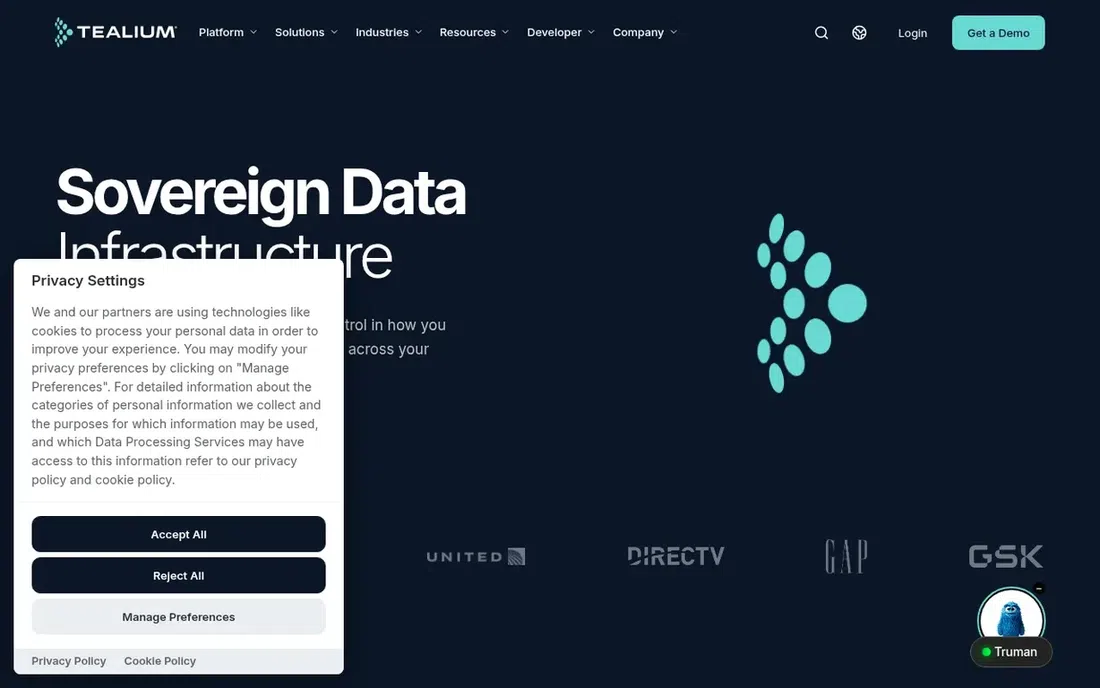
Choose Tealium Customer Data Hub for Data infrastructure and orchestration. If you want a narrow collection layer with minimal overhead, a more straightforward system may be the better choice.
Where it falls short: Feature depth may overwhelm small teams.
Tealium presents its Customer Data Hub as customer data infrastructure for orchestration and AI, with a suite of products for data integration, management, and analytics. Marketing and data teams in larger environments are the usual fit. Pricing for Tealium Customer Data Hub is not stated here, so ask the vendor for current figures. Trial and free access: Not stated.
- Integration and management suite
- Wide analytics support
- Configuration can get complicated
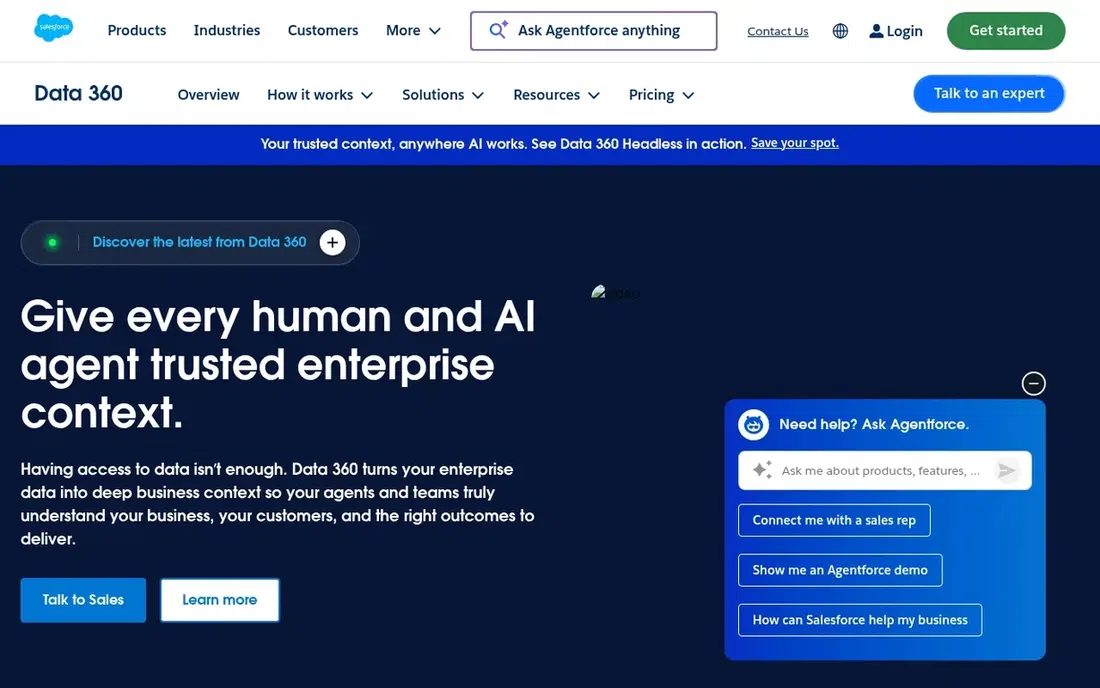
In short, Salesforce Data Cloud is for live profiles inside Salesforce. Salesforce Data Cloud, now branded Data 360, is positioned to unify all customer data and deliver live insights for personalizing every customer experience. On top of that, expect implementation planning and data modeling effort.
Downsides: Most handy with Salesforce in place.
If you want a vendor-neutral collection layer, other choices here are more open. Beyond that, the value grows when CRM data and external sources meet in one place. As for the details, teams outside the Salesforce ecosystem may find the fit weaker, since much of the benefit comes from native ties to other Salesforce products. No starting price is listed for Salesforce Data Cloud here; confirm pricing on the vendor site. Free options: Not stated.
- Brings together customer data for personalization
- Native to the Salesforce ecosystem
- Implementation needs planning
For performance-focused audience activation, mParticle is a natural candidate. mParticle describes itself as a performance CDP that turns customer data into audiences, actions, and measurable growth.
As for the details, clean event tracking is a prerequisite, and messy instrumentation will limit results regardless of the system. Since the emphasis is on activation and workflows, teams seeking deep warehouse ownership may prefer a warehouse-native choice. Check the vendor site for mParticle pricing; none is listed in this comparison. Free access: Not stated.
Trade-offs to know: Activation-first instead of storage-first.
- Workflow and outcome focus
- Turns data into audiences
- Needs clean event tracking
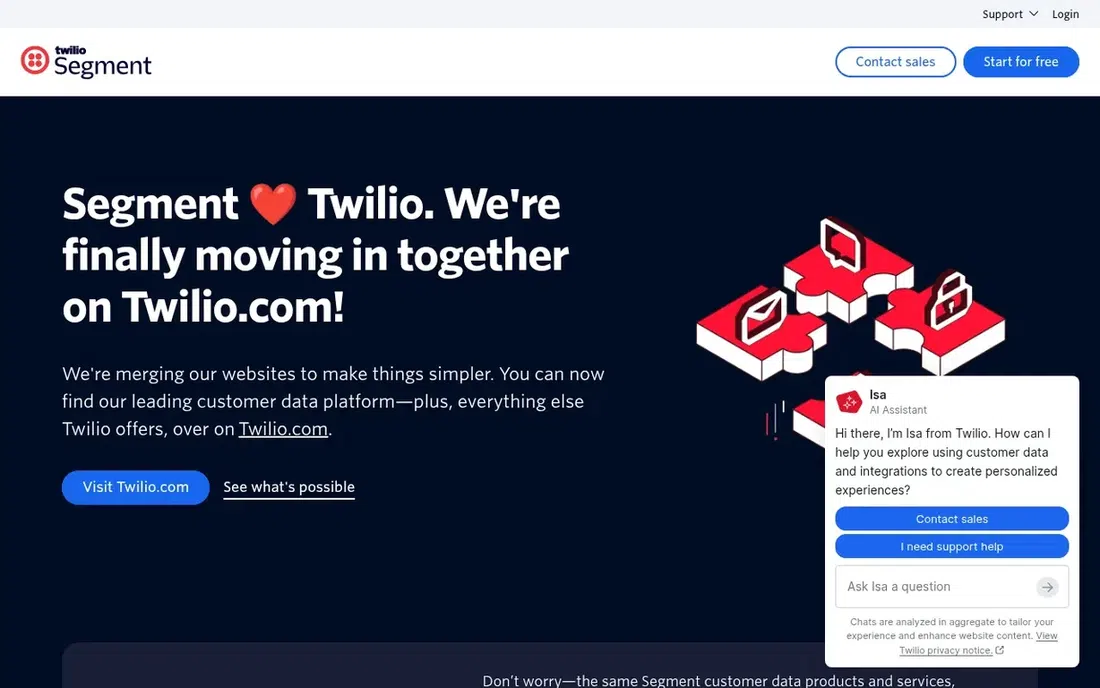
Segment is a good fit for cross-app event collection and unification. Segment is a customer data system built to collect, unify, and enrich customer data across any app or device. Smaller teams without technical resources may find lighter tools simpler to start with.
In daily use, since it is event-driven, Segment asks for thoughtful tracking plans and engineering involvement at the start. In practice, consider alternatives when your priority is deep warehouse control or a single-vendor suite. Segment shows no starting price here, so confirm the cost on the vendor site. Free plan details: Free trial.
Downsides: Setup needs engineering input.
- Collects data from any app or device
- Brings together and enriches customer profiles
- Best value at scale
RudderStack makes the most sense for warehouse-native data control. It fits organizations that already treat their data warehouse as the center of gravity and want profiles to live there.
On top of that, the warehouse-native approach assumes warehouse skills and some infrastructure comfort, so non-technical marketing teams may need support. This comparison lists no price for RudderStack; ask the vendor. Trial and free access: Not stated.
Where it is weaker: Warehouse knowledge expected.
- Collect, unify, activate, govern
- Warehouse-native architecture
- Less turnkey for non-technical teams
Treasure Data Customer Data Cloud
Best for: AI-driven marketing audiences
Choose Treasure Data Customer Data Cloud for AI-driven marketing audiences. Teams with established data pipelines tend to get more from it.
Treasure Data Customer Data Cloud shows no starting price here, so confirm the cost on the vendor site. As for free access: Not stated.
Where it falls short: Marketing-centric framing.
- Designed for acquisition and retention
- AI-focused experience product
- Needs data maturity
How we chose
The comparison looks at four things: starting price, free access, how well the feature set matches software to consolidate customer data, and the main limit of each tool. Prices and plan limits come from vendor pages and can change, so confirm them on the vendor site before you buy. The sequence is a judgement call: typical use case first, then pricing transparency, then free access. Use the profiles to check fit.
What to check before you buy
- Request quotes from Tealium Customer Data Hub, Treasure Data Customer Data Cloud and the others; the list shows no fixed prices.
- Use real work to test the free trial from Segment, rather than a demo project.
- Read the limits listed for Tealium Customer Data Hub first: configuration can get complex.
- Make sure Salesforce Data Cloud lets you export your data in a format another tool can read.
- Involve the people who will use mParticle daily; a short pilot beats a long feature checklist.
FAQ
Do these tools publish their prices?
No. None of the tools, from Tealium Customer Data Hub to Treasure Data Customer Data Cloud, shows a fixed starting price here, so budget time for quotes.
Can I try these tools before paying?
Often, yes. Segment offers a free trial. Use your own data and a real task during the test, and check what the free tier or trial limits before you rely on it. For the full picture, the cards above cover all 6 entries of this software to consolidate customer data list, including price, free plan and limits.
Is Tealium Customer Data Hub the right pick for everyone comparing software to consolidate customer data?
No single tool suits every team. Tealium Customer Data Hub comes first because it fits Data infrastructure and orchestration, while Salesforce Data Cloud suits real-time profiles inside Salesforce and mParticle suits performance-focused audience activation. Match the tool to your own size, budget and workflow before deciding.
How are the tools for software to consolidate customer data ordered?
Tealium Customer Data Hub sits first and Treasure Data Customer Data Cloud last because the order follows typical fit for software to consolidate customer data, then price clarity and free access. It is a judgement call, so read each profile for fit and limits.
What should I check before committing?
Confirm source and destination coverage, identity resolution behavior, and governance controls. Also estimate the implementation effort and the skills your team will need. Reviewing these points early avoids surprises after rollout.
Sources
- https://tealium.com
- https://www.salesforce.com/data
- https://www.mparticle.com
- https://segment.com
- https://www.rudderstack.com
- https://www.treasuredata.com