Best SIEM Software for Defense Contractors in 2026: Prices, Free Plans and 6 Picks
Best SIEM software for defense contractors: 6 contenders ranked by fit, with entry costs and free tiers. Strengths and gaps are listed per tool. Prices checked.
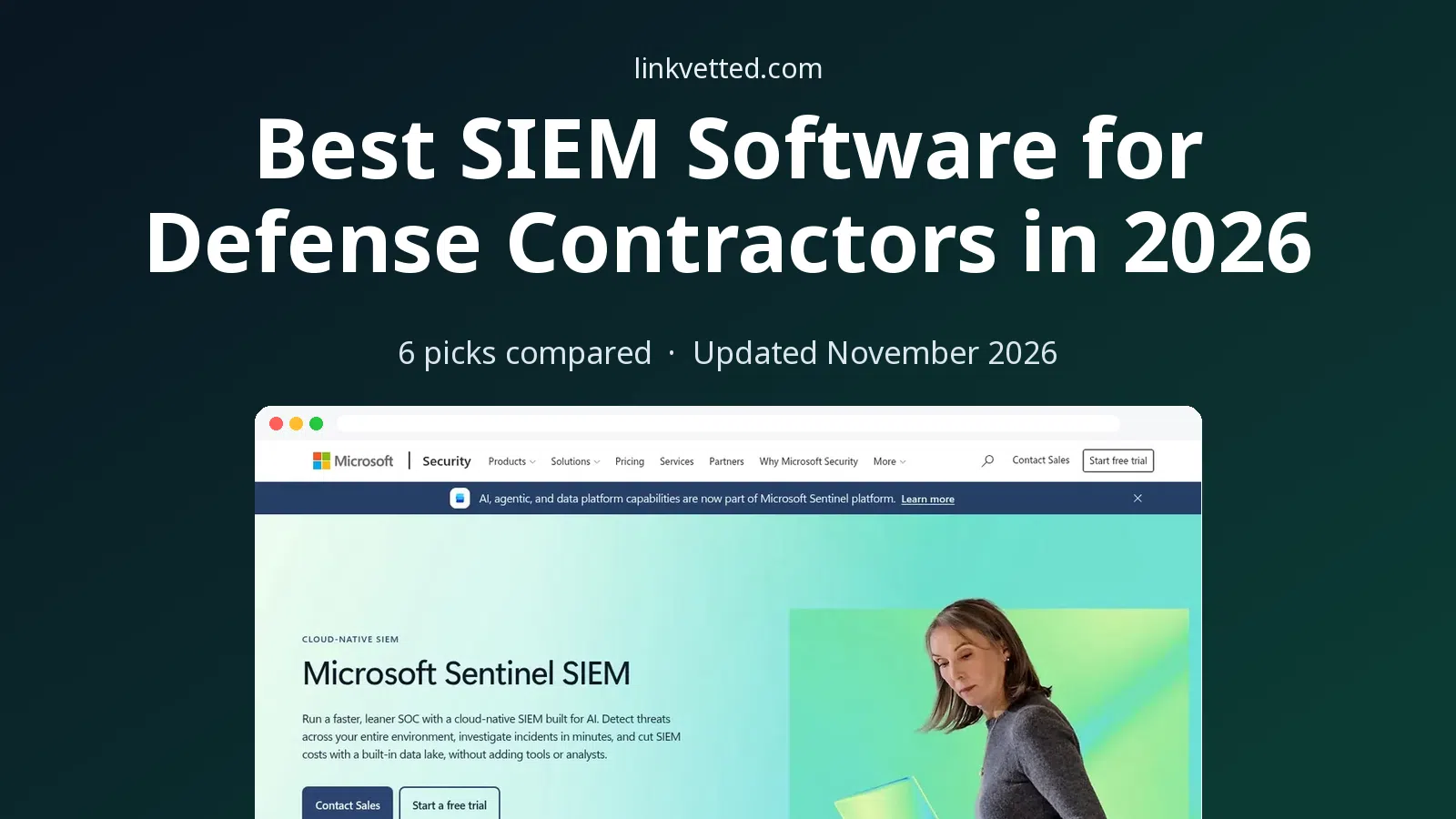
- Editor's choice
 Microsoft Sentinel
Cloud-native SOC on Microsoft Azure
Starts atPricing on requestVisit azure.microsoft.comFull review - Great alternativeSumo Logic Cloud SIEM
Quick cloud-native detection and response
Starts atPricing on requestVisit sumologic.comFull review - Also considerSecuronix Unified Defense SIEM
Combined SIEM, UEBA and SOAR
Starts atPricing on requestVisit securonix.comFull review
Direct answer
Start with Microsoft Sentinel if you need Cloud-native SOC on Microsoft Azure. Sumo Logic Cloud SIEM is better for quick cloud-native detection and response, and Securonix Unified Defense SIEM is better for combined SIEM, UEBA and SOAR. Free plan facts and limits for all 6 tools follow. None of these vendors publish plan prices, so pricing is on request for every option.
TL;DR:
- The list opens with Microsoft Sentinel, aimed at Cloud-native SOC on Microsoft Azure.
- Every tool from Microsoft Sentinel to Splunk Enterprise Security works by quote, with no list price shown.
- Before buying Securonix Unified Defense SIEM, weigh this: plenty of modules need phased rollout.
- Splunk Enterprise Security suits Unified detection and response at scale.
Last checked November 2026. Pricing on request: vendors did not publish plan prices when this guide was last checked (November 2026), so ask each vendor for a written quote.
Quick comparison
| Tool | Best for | Starts at | Free plan? | |
|---|---|---|---|---|
| Microsoft Sentinel | Cloud-native SOC on Microsoft Azure | Pricing on request | Not stated | Visit |
| Sumo Logic Cloud SIEM | Quick cloud-native detection and response | Pricing on request | Not stated | Visit |
| Securonix Unified Defense SIEM | Combined SIEM, UEBA and SOAR | Pricing on request | Not stated | Visit |
 IBM QRadar SIEM | Established on-premises security operations | Pricing on request | Not stated | Visit |
 Elastic Security | Open system with endpoint and SIEM | Pricing on request | Not stated | Visit |
 Splunk Enterprise Security | Unified detection and response at scale | Pricing on request | Not stated | Visit |
The 6 tools in detail
If you are comparing SIEM software for defense contractors, this page covers 6 tools in one place: what each is best for, what it costs to start, whether it has a free plan, and the main limit to know about.
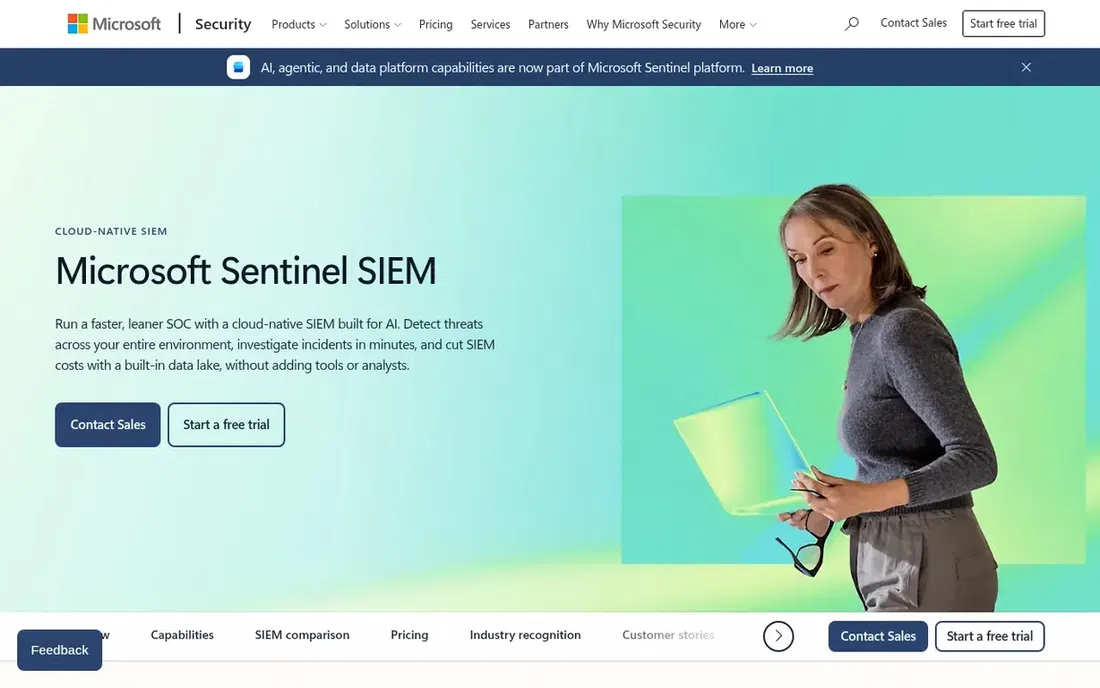
Choose Microsoft Sentinel for Cloud-native SOC on Microsoft Azure. Organizations running largely non-Microsoft infrastructure may face additional integration effort, and ingestion volume drives continuing cost.
Where it is weaker: Tied closely to the Microsoft ecosystem.
Pricing for Microsoft Sentinel is not stated here, so ask the vendor for current figures. Free plan details: Not stated.
- Cloud-native SIEM architecture
- Data lake to handle SIEM costs
- Costs scale with data ingestion
Sumo Logic Cloud SIEM
Best for: Quick cloud-native detection and response
Sumo Logic Cloud SIEM is a good fit for quick cloud-native detection and response. Sumo Logic Cloud SIEM is a cloud-native product designed for modern SOC teams, with live threat detection, automated investigation and a scalable architecture oriented to speed and context.
Watch-outs: Ingestion-based costs need monitoring.
Teams wanting a broader integrated SOAR and UEBA suite may compare Splunk Enterprise Security or Securonix. For everyday use, the cloud delivery model may not meet every on-premises or disconnected requirement, so confirm deployment fit early. Sumo Logic Cloud SIEM shows no starting price here, so confirm the cost on the vendor site. As for free access: Not stated.
- Scalable cloud-native system
- Automatic investigation support
- Cloud delivery model limits on-premises use
Securonix Unified Defense SIEM
Best for: Combined SIEM, UEBA and SOAR
Securonix Unified Defense SIEM is built with combined SIEM, UEBA and SOAR in mind. Securonix Unified Defense SIEM brings SIEM, threat detection, investigation and response, UEBA and SOAR together on a scalable cloud system.
Downsides: Tuning analytics takes analyst time.
As for the details, rolling out the full set of modules takes planning, and analytics need continuing tuning by analysts. In practice, contractors who want an open, self-managed system may prefer Elastic Security, while Microsoft-centric shops frequently weigh Microsoft Sentinel. Check the vendor site for Securonix Unified Defense SIEM pricing; none is listed in this comparison. On free options: Not stated. Highlights: Scalable cloud product.
- UEBA and SOAR
- Wide analytics coverage
- Plenty of modules need phased rollout
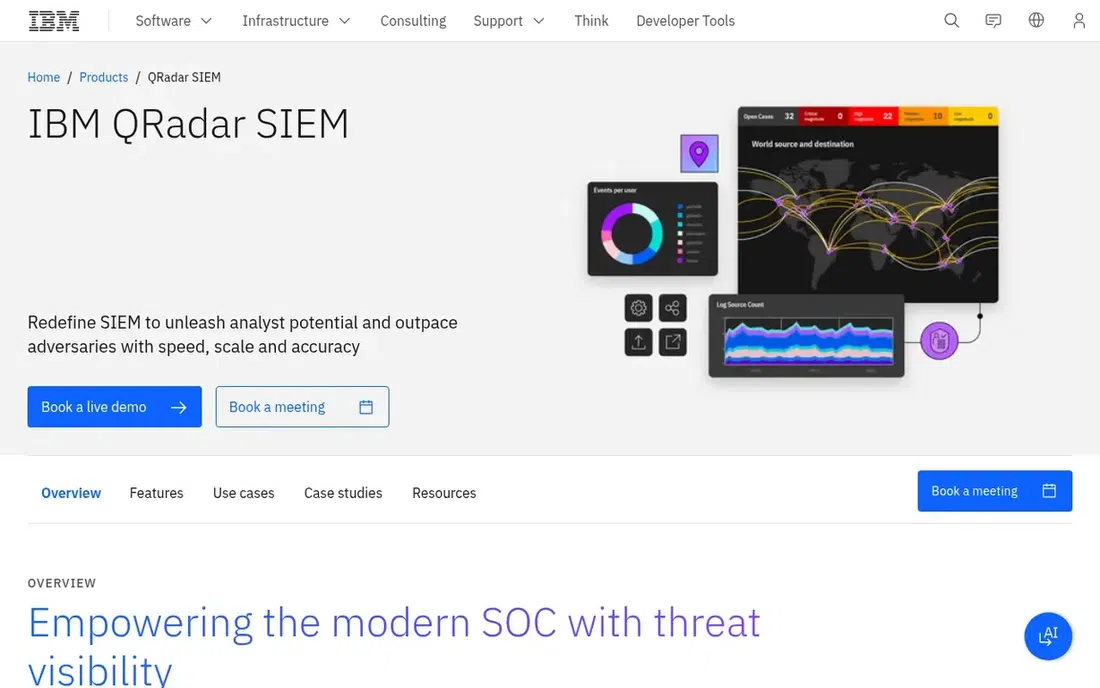
IBM QRadar SIEM makes the most sense for established on-premises security operations. IBM QRadar SIEM is an intelligent security information and event management product that aims to provide actionable insight into the most critical threats.
The main drawbacks: Deployment and tuning take effort.
It suits defense contractors with established SOC teams and on-premises or hybrid infrastructure who want a long-standing enterprise SIEM as their correlation backbone. This comparison lists no price for IBM QRadar SIEM; ask the vendor. Free options: Not stated.
- Mature enterprise SIEM feature set
- Suits hybrid and on-premises estates
- Interface can feel dated to new analysts
Elastic Security was built for open system with endpoint and SIEM. It suits defense contractors with engineering capacity who want to build and tune their own detection stack on an open foundation.
Trade-offs to know: Many features need deliberate configuration.
On top of that, operating the system well assumes real engineering time, and teams without it may struggle to keep detections current. No starting price is listed for Elastic Security here; confirm pricing on the vendor site. As for free access: Not stated.
- SIEM
- AI features that present their reasoning
- Needs in-house engineering to run
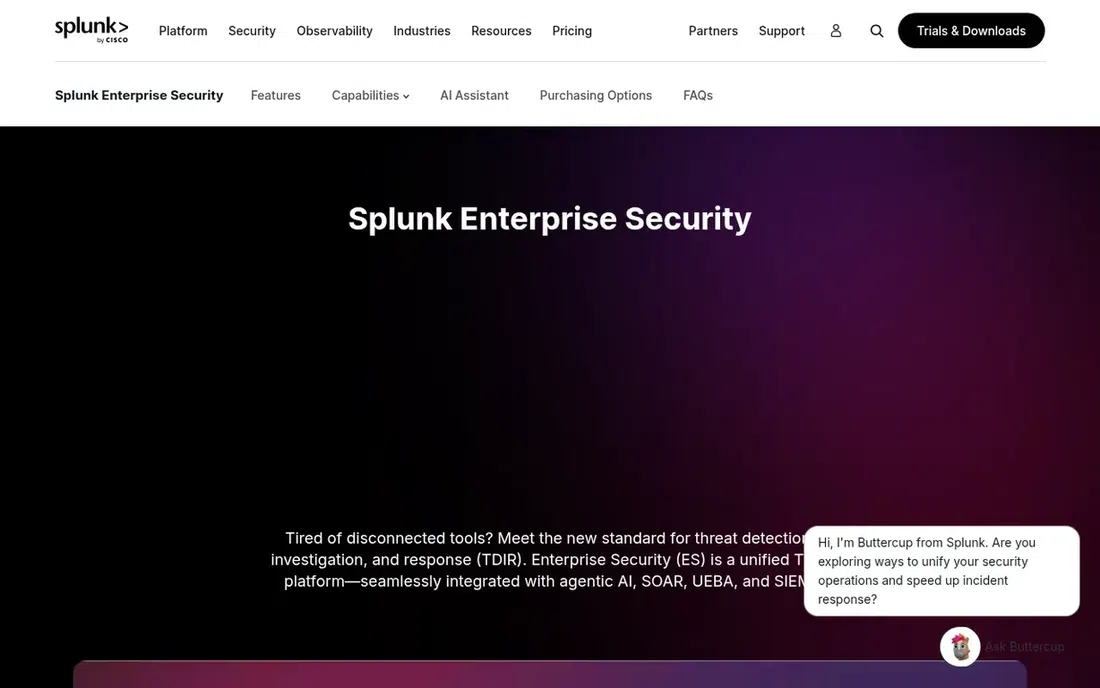
Splunk Enterprise Security serves Unified detection and response at scale. Teams with dedicated security engineering staff tend to get the most from it.
It fits defense contractors that want one environment for correlation, automation and analyst workflows rather than stitching separate tools together. Check the vendor site for Splunk Enterprise Security pricing; none is listed in this comparison. Free plan details: Not stated.
Main advantages: simplified investigation workflow.
Honest limits: Needs skilled administration.
- Agentic AI support for threat work
- Integrated SIEM
- Wide feature set can be complicated
How the list was put together
Things to verify first
- Request quotes from Microsoft Sentinel, Splunk Enterprise Security and the others; the list shows no fixed prices.
- Before choosing Microsoft Sentinel, weigh its main limit: tied closely to the Microsoft ecosystem.
- See whether Sumo Logic Cloud SIEM offers onboarding or training, and whether it is included in the price.
- Compare total cost, not headline price: for Splunk Enterprise Security, add extra seats, add-ons and any usage-based charges.
- Confirm minimum seats and billing terms with Microsoft Sentinel before you commit to an annual plan.
FAQ
Does any tool for SIEM software for defense contractors here have a free plan?
No tool in this list, Microsoft Sentinel and Splunk Enterprise Security included, has a permanent free plan. Trials and quotes are the usual route, so plan a short evaluation period.
Is a cloud-native SIEM right for defense contractors?
Cloud-native SIEMs like Microsoft Sentinel, Exabeam and Sumo Logic can suit contractors whose data handling rules allow cloud processing. Contractors with stricter on-premises or disconnected requirements should confirm deployment choices before shortlisting.
Can I try these tools before paying?
Not by default. None of the tools, from Microsoft Sentinel to Splunk Enterprise Security, lists a free plan or a free trial here, so ask each vendor for a demo before committing.
How are the tools for SIEM software for defense contractors ordered?
Microsoft Sentinel sits first and Splunk Enterprise Security last because the order follows typical fit for SIEM software for defense contractors, then price clarity and free access. It is a judgement call, so read each profile for fit and limits.
Is Microsoft Sentinel the right pick for everyone comparing SIEM software for defense contractors?
No single tool suits every team. Microsoft Sentinel comes first because it fits Cloud-native SOC on Microsoft Azure, while Sumo Logic Cloud SIEM suits fast cloud-native detection and response and Securonix Unified Defense SIEM suits combined SIEM, UEBA and SOAR. Match the tool to your own size, budget and workflow before deciding.
How do Splunk Enterprise Security and IBM QRadar SIEM differ?
Both are typical in enterprise SOCs, so the choice frequently comes down to existing skills and infrastructure.
Sources
- https://azure.microsoft.com/en-us/products/microsoft-sentinel
- https://www.sumologic.com/solutions/cloud-siem
- https://www.securonix.com
- https://www.ibm.com/products/qradar-siem
- https://www.elastic.co/security
- https://www.splunk.com/en_us/products/enterprise-security.html