Choosing PR Tools for B2B Tech Companies in 2026: 6 Options Compared
A practical comparison of the best PR tools for B2B tech companies in 2026, covering media databases, monitoring, outreach and reporting.
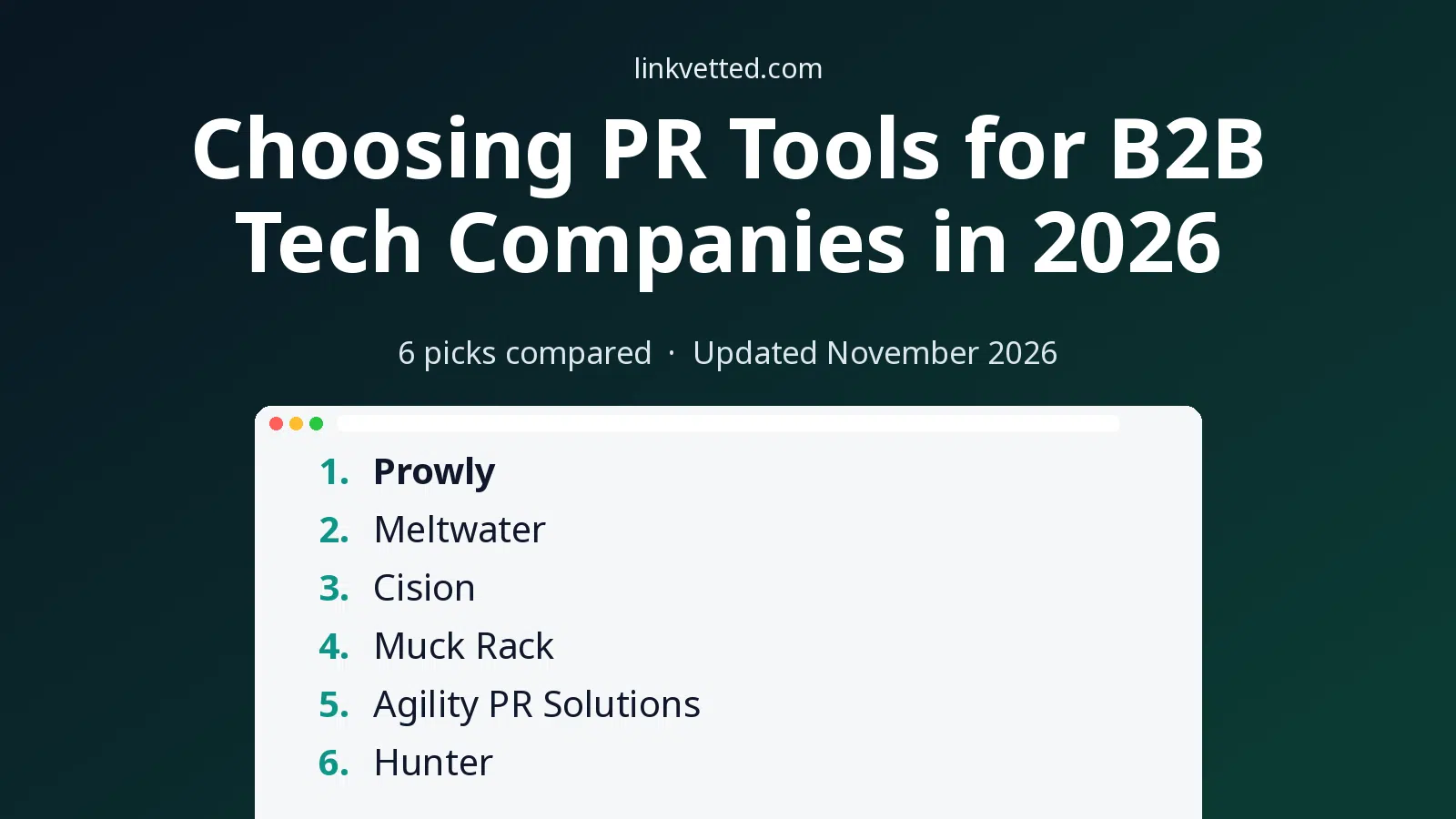
- Editor's choice
 Prowly
All-in-one PR workflow for small teams
Starts atSee websiteVisit prowly.comFull review - Great alternative
 Meltwater
Monitoring and media relations in one platform
Starts atSee websiteVisit meltwater.comFull review - Also consider
 Cision
Broad media data and established PR workflows
Starts atSee websiteVisit cision.comFull review
Direct answer
My first pick for most B2B tech teams is Prowly, because it combines media database search, contact management, press release publishing and campaign reporting in one place, which suits small teams that need one system rather than several. For teams that mainly need monitoring and journalist contact data, Meltwater and Cision are the two other names I would look at first. The right choice depends on whether you need outreach, listening or reporting most.
TL;DR:
- B2B tech PR usually needs three jobs covered: finding the right journalists, sending targeted pitches and proving coverage to the people who approve the budget.
- Media database tools are the core of most stacks, but the quality of contact data and the coverage of tech and trade press matter more than the feature list.
- Monitoring and reporting tools are worth paying for when you need to show share of voice or track competitor mentions over time.
- Press release distribution is still useful for announcements, but it works best as one part of a pitch plan rather than the whole plan.
- Most vendors quote prices on request, so budget conversations start with a demo and a defined list of outlets you actually care about.
Last checked November 2026. Plan prices are not quoted in this guide because they change often; see each vendor's own pricing page for current figures before you buy.
Quick comparison
| Tool | Best for | Starts at | Free plan? | |
|---|---|---|---|---|
| Prowly | All-in-one PR workflow for small teams | See website | Free trial | Visit |
| Meltwater | Monitoring and media relations in one platform | See website | No free plan | Visit |
| Cision | Broad media data and established PR workflows | See website | No free plan | Visit |
 Muck Rack | Journalist profiles and coverage tracking | See website | No free plan | Visit |
 Agility PR Solutions | Monitoring plus media database in one contract | See website | No free plan | Visit |
 Hunter | Finding and verifying press contact emails | See website | Free plan | Visit |
The best PR tools for B2B tech companies compared
I compared these tools from vendor documentation and public sources, and I did not run hands-on tests of each one. My focus was on how each product fits the work a B2B tech company actually does: building a media list, pitching reporters, tracking coverage and reporting results. Pricing is quoted on request for most of them, so I left entry prices as "See website" rather than guess.
Prowly is a PR platform built around the day-to-day work of a small communications team. It combines a media database, a contact relationship manager, press release creation, a branded newsroom and reporting. For a B2B tech company with one or two people handling PR, that means fewer logins and one place to keep pitch history and coverage.
In practice, you search the database for journalists who cover your category, save them to a media list, send a pitch and then track opens and coverage. The newsroom feature is useful for product announcements because you can host releases and assets on your own domain. Reporting pulls campaign activity into a shareable summary, which helps when you need to show progress to a marketing lead.
The main limit is scale. If you need very broad media monitoring or a database that covers every market in depth, a larger provider may fit better. Teams that only send a few pitches a month may also find a simpler outreach tool enough.
- Media database with contact management
- press release publishing and online newsroom
- campaign reporting in the same tool
- Database is smaller than the largest legacy providers
- advanced monitoring is limited compared with dedicated listening tools
Meltwater is one of the larger media intelligence platforms, covering media monitoring, social listening, a journalist database and reporting. It suits B2B tech companies that need to track what is being said about them, their competitors and their category, and then act on that with outreach.
The monitoring side is the strongest fit for tech companies, because category coverage moves quickly and you often need to see which reporters are writing about a trend before you pitch. You can build searches around product categories, competitor names and executive names, then use the contact data to reach the journalists behind the coverage. Dashboards help when you report to leadership on a regular schedule.
The trade-off is cost and complexity. Pricing is quoted and tends to suit teams with a real budget, and smaller companies may not use enough of the platform to justify it. If you only need a media list and occasional monitoring, a lighter tool is probably enough.
- Broad media monitoring across news and social
- media contact database for outreach
- reporting dashboards for share of voice
- Quote-based pricing can be high for small teams
- setup and configuration take time
Cision is a long-standing PR software provider with a large media database, distribution services and monitoring. It fits B2B tech companies that need wide coverage of journalists and outlets, especially when they work across several markets or have an agency supporting them.
For outreach, you can search contacts by beat, outlet and location, build lists and send pitches, then track coverage. Distribution is useful for funding announcements, product launches and partnership news, and the reporting side helps consolidate coverage into a format that marketing leadership can review. Agencies often already use Cision, which can make collaboration easier.
The drawback is weight. The platform has many modules, and small teams can end up paying for features they do not use. If your PR work is mostly a handful of targeted pitches each month, a simpler tool will be easier to run.
- Large media contact database
- press release distribution
- coverage monitoring and reporting
- Complex setup for small teams
- quote-based pricing with limited transparency
Muck Rack is a PR platform centred on journalist profiles and media relations. It is a good fit for B2B tech companies that pitch reporters regularly and want to understand what each journalist covers before sending a note. The profiles include recent articles and contact details, which helps with targeting.
The workflow is straightforward: search for journalists by beat or outlet, review their recent work, add them to a list and log the pitch. Coverage tracking links articles back to the contacts and campaigns you set up, so you can see which pitches led to which stories. Team collaboration features help when more than one person pitches the same reporters.
The main limit is price structure. Costs scale with seats, so a growing team can see the bill rise quickly. Very small companies that pitch occasionally may find the cost hard to justify compared with a simpler contact tool.
- Detailed journalist profiles and portfolios
- coverage tracking tied to contacts
- media list building with team collaboration
- Seat-based pricing adds up as the team grows
- some features are aimed at larger PR teams
Agility PR Solutions offers media monitoring, a media database, distribution and measurement. It suits B2B tech companies that want monitoring and outreach data from one vendor rather than stitching together separate tools. The measurement options are useful when you need to report on coverage quality, not just volume.
For day-to-day work, you can build media lists, send releases and monitor mentions across news and social sources. The reporting side can be shaped around the metrics your leadership cares about, such as mentions in target trade outlets or coverage of specific product lines. That makes it a reasonable fit for teams that report to a board or a marketing dashboard.
The common complaint in public reviews is that the interface feels older than newer competitors, and pricing is quoted rather than published. Teams that want a modern, self-serve experience may prefer a different tool.
- Media database and monitoring combined
- coverage measurement and reporting
- analyst-style media analysis options
- Interface can feel dated
- quote-based pricing with limited public detail
Hunter is an email finding and verification tool rather than a PR platform. I include it because many B2B tech companies build their own media lists from trade publications and newsletters, and the hardest part is often finding a working email address for the right editor.
You search by company domain, review the email patterns Hunter finds, and verify addresses before you send. That fits a lean PR process where you track target outlets in a spreadsheet and pitch editors directly. It also helps when you want to reach analysts, podcast hosts and newsletter writers who are not in the big media databases.
The limit is obvious: Hunter does not provide media data, monitoring or reporting, so it is a supporting tool rather than a complete PR stack. Teams that need a ready-made journalist database should start with one of the platforms above.
- Email finding and verification
- simple search by domain
- works alongside any media list you build
- Not a media database, so you must build your own list
- no PR workflow, monitoring or reporting
How I chose
I built this list from vendor documentation and public sources, including each product's own feature pages and publicly available descriptions of how the tools work. I did not run hands-on tests, and I have not used every tool in a live campaign. The aim was to compare what each product says it does and where it fits the work of a B2B tech PR team.
The main criteria were coverage of the core PR jobs (media list building, outreach, monitoring and reporting), how well the tool fits a small or mid-sized tech company, and the limits that show up in public descriptions and reviews. I also weighed whether a tool is a complete platform or a supporting utility, because a stack of two or three focused tools can work better than one large contract for some teams.
What to check before you buy
- Ask for a trial or demo that uses your own target outlets and beats, not a generic sample list, so you can judge contact quality.
- Check how many tech and trade publications in your category are covered, including niche newsletters and analyst contacts.
- Confirm how coverage tracking works: whether it catches trade press, podcasts and newsletters, not just major news sites.
- Ask how pricing scales with seats and contacts, since quote-based plans can change a lot as your team grows.
- Check whether the tool exports data cleanly, so you are not locked in if you switch later.
- Ask what onboarding and support look like, because setup time is often the hidden cost with larger platforms.
FAQ
What is the best PR tool for a small B2B tech company?
For a small team, I would start with Prowly because it covers media lists, releases and reporting in one place without the complexity of the largest platforms. If your main need is monitoring, Meltwater is worth a look. If you build your own lists, Hunter plus a spreadsheet can cover the basics at low cost.
Do B2B tech companies still need press release distribution?
Distribution is still useful for funding, product and partnership announcements, because it puts the news in front of journalists and adds a public record. It works best alongside direct pitches to the reporters who cover your category. Distribution alone rarely produces coverage without a targeted pitch behind it.
How is B2B tech PR different from general PR?
B2B tech PR usually involves longer sales cycles, technical products and trade press that general outlets ignore. That means media lists need to include specialist reporters, analysts and newsletters, and coverage is often judged by its effect on pipeline rather than reach. Tools that cover niche tech outlets well are more valuable than broad consumer databases.
Can I do B2B tech PR without paid tools?
Yes, especially at the start. You can build a list from trade publications, find emails with a tool like Hunter, and track coverage in a spreadsheet. Paid tools become worth it when you pitch often, need monitoring across many sources, or have to report results regularly to leadership.
How do I measure B2B tech PR results?
Look at coverage in target outlets, whether the story includes your key messages, referral traffic from coverage, and any leads or pipeline that mention the coverage. Share of voice against competitors is useful for trend reporting. Avoid judging PR only by volume of mentions, because one story in the right trade outlet can matter more than many low-value mentions.
Sources
- https://prowly.com
- https://www.meltwater.com
- https://www.cision.com
- https://muckrack.com
- https://www.agilitypr.com
- https://hunter.io