Best B2B Influencer Marketing Platforms in 2026: 9 Platforms Compared
Compare the best b2b influencer marketing platforms in 2026, with discovery, measurement, LinkedIn reach and pricing to help B2B teams choose well today.
- Editor's choice
 Traackr
Measurement and benchmarking
Starts atSee websiteVisit traackr.comFull review - Great alternative
 CreatorIQ
Enterprise governance and scale
Starts atSee websiteVisit creatoriq.comFull review - Also consider
 Aspire
Creator marketplace and workflows
Starts atSee websiteVisit aspire.ioFull review
TL;DR:
- B2B influence looks different from consumer influence, because LinkedIn experts, analysts and practitioners matter more than large lifestyle audiences.
- Traackr and CreatorIQ suit large teams that need benchmarking, governance and consistent measurement across markets.
- Influencity and Modash give smaller B2B teams usable discovery and tracking without an enterprise contract.
- Price transparency is poor at the enterprise end, so shortlist on LinkedIn coverage, audience authenticity and reporting before you ask for a quote.
Quick comparison
| Tool | Best for | Starts at | Free plan? | |
|---|---|---|---|---|
| Traackr | Measurement and benchmarking | See website | No | Visit |
| CreatorIQ | Enterprise governance and scale | See website | No | Visit |
| Aspire | Creator marketplace and workflows | See website | No | Visit |
 GRIN | Creator relationships and ecommerce | See website | No | Visit |
 Meltwater | Discovery and audience analytics | See website | No | Visit |
 Influencity | Mid-market discovery and CRM | $320 per month | Free trial | Visit |
 Modash | Transparent discovery and vetting | $199 per month | Free trial | Visit |
 Onalytica | B2B expert and analyst influence | See website | No | Visit |
 Later Influence | Social suite plus influencer campaigns | See website | No | Visit |
The best b2b influencer marketing platforms
B2B buyers trust peers, practitioners and analysts, not just celebrities. The platforms below help you find those people, check that their audiences are real, run campaigns with proper contracts and disclosure, and measure pipeline and brand effects rather than vanity likes. Enterprise tools dominate the top of the list, but several mid-market options now handle B2B work well.
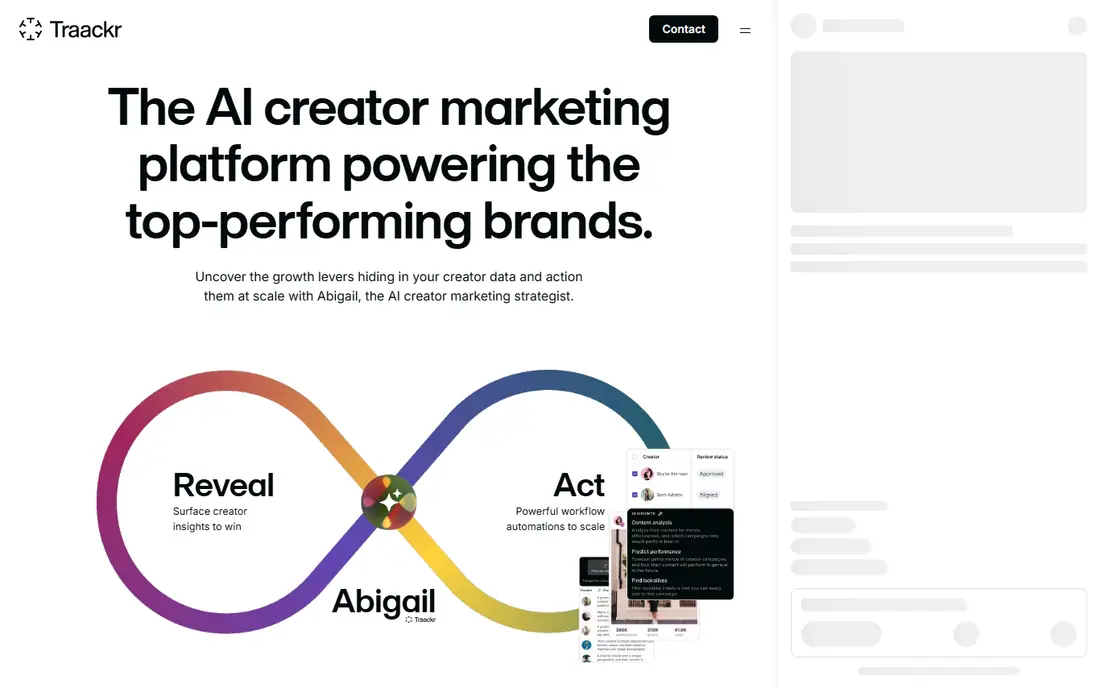
Traackr is built for teams that need to justify influencer spend to leadership. Its Brand Vitality Score combines visibility, trust and influence into a benchmark you can track against competitors, and its budget tools use past performance to guide spend by creator. That measurement focus suits B2B brands that run always-on expert programmes across several markets, where consistent reporting matters more than finding one viral post.
The cost is the barrier. Pricing is custom and reported annual plans start in the tens of thousands of dollars, with no free trial, so it only makes sense when influencer work is a real media channel for you. Coverage includes LinkedIn alongside Instagram, TikTok, YouTube and other channels, which helps B2B teams, though you should test depth in your niche before signing. For measurement-led enterprise teams, Traackr is a strong shortlist pick.
- Brand Vitality Score for benchmarking
- Strong multi-market measurement
- Audience authenticity checks
- Custom pricing with no free trial
- Database is smaller than some open-web discovery tools
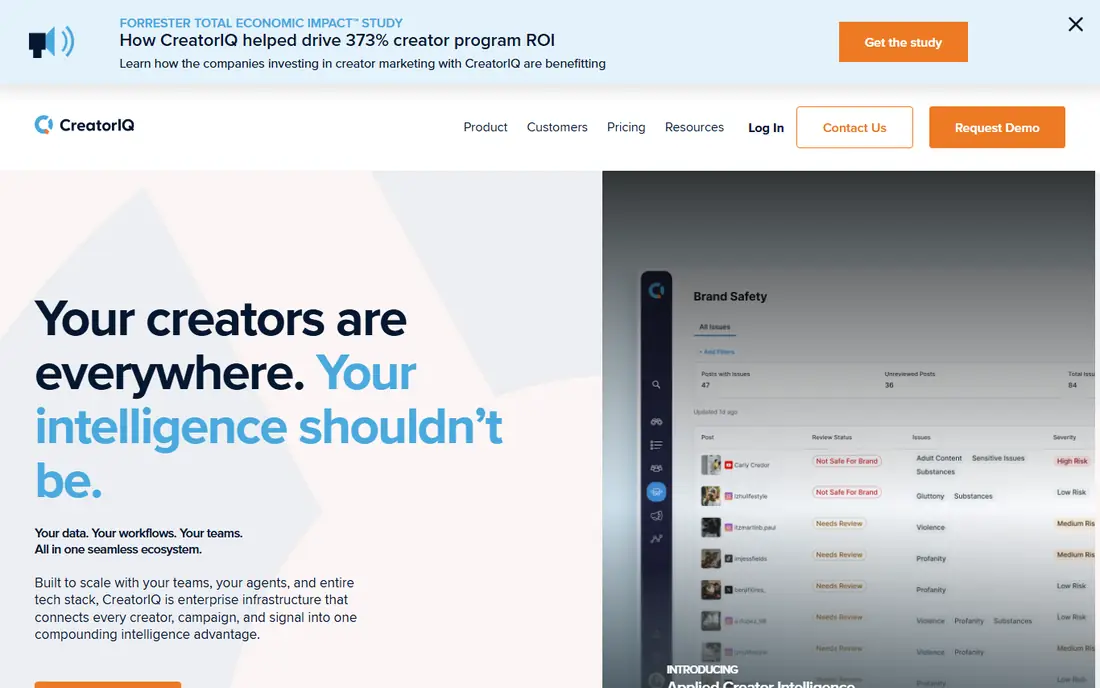
CreatorIQ suits global brands that need one system of record for creator work. Discovery, campaign management, payments, compliance and reporting sit together, with API access for teams that feed creator data into their own dashboards. That governance layer matters in B2B, where contracts, disclosure, brand safety and approval chains can be more complex than a single sponsored post. It also handles multi-market programmes without forcing each region onto a separate spreadsheet.
The trade-off is access. CreatorIQ is priced for enterprises, with annual contracts and no trial, so smaller B2B teams will find it out of reach. Its creator database is also more curated than an open-web search tool, which can limit options in very narrow technical niches. If you run large, governed programmes and need consistent global reporting, it earns its place at the top.
- Large-scale campaign execution
- API-driven data and reporting
- Strong compliance and payments tooling
- Enterprise pricing and annual contracts
- No free trial for small teams
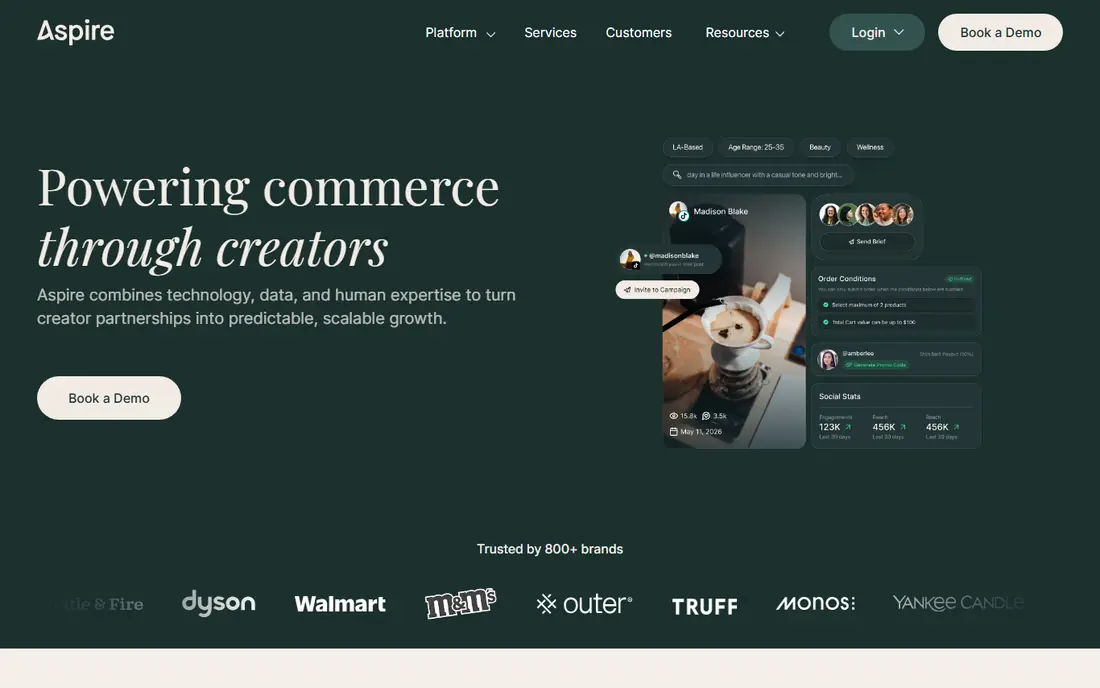
Aspire combines a creator marketplace with campaign workflows, so teams can find creators, brief them, collect content and track results in one place. That workflow saves time when you run many creators at once, and the marketplace model helps when you need to recruit quickly rather than building a list from scratch. Integrations with Shopify and other commerce tools also help when B2B work has a direct sales or trial component.
For pure B2B, Aspire needs care. Its strength leans toward consumer and ecommerce creators, so a B2B team must filter hard for industry expertise, LinkedIn presence and audience job titles, not just follower counts. Pricing is quote-based, so budget for an annual plan. Use Aspire when workflow and scale matter, and when your B2B creators also publish on Instagram, TikTok or YouTube alongside LinkedIn.
- Large creator marketplace
- Workflow automation for outreach and content
- Ecommerce integrations
- Strongest for consumer and ecommerce use
- B2B expert discovery needs careful filtering
GRIN is a relationship-first platform. Instead of treating each creator as a one-off post, it helps teams manage long-term relationships, product seeding, affiliate links, user-generated content and payouts. That long-term view fits B2B well when an expert, consultant or practitioner becomes a recurring voice for your brand, rather than a single campaign hire. The CRM keeps history, content and payments in one place, which helps when several team members work with the same creators.
The main limit is fit. GRIN was built for direct-to-consumer and ecommerce brands, so B2B teams should test whether its discovery and reporting cover LinkedIn experts and technical audiences well enough. Pricing is annual and enterprise-level. Shortlist GRIN when relationship management and commerce tracking matter, and when you plan to work with the same creators over many months.
- Strong creator CRM and relationship tools
- Gifting, affiliate and payout workflows
- Good support reputation
- Built mainly for ecommerce brands
- Enterprise-style annual pricing
Meltwater, which includes the former Klear influencer tools, pairs creator discovery with media monitoring and social listening. That combination helps B2B teams see how an expert, a topic or a competitor is discussed across news and social, not just in a single campaign dashboard. Visual search and audience analytics help vet creators by real audience traits, rather than by a polished profile alone. For brand and communications teams, having monitoring and influence in one vendor can simplify reporting.
The cost and complexity are real. Meltwater is quote-based and annual, and the full suite can be more than a small B2B team needs if the only job is finding ten LinkedIn experts. Test audience data in your exact niche, and ask which features are included in the quote versus add-ons. For larger B2B brands that already value media intelligence, it is a credible all-round choice.
- Large creator database with visual search
- Audience insights and sentiment reporting
- Media monitoring alongside influence
- Annual pricing in enterprise territory
- Breadth can feel complex for a small B2B team
Influencity is the most accessible full platform in this list for mid-market B2B teams. Discovery, CRM boards, automated tracking, gifting and reporting sit together at a published starting price, which makes budgeting far easier than with quote-only rivals. For a B2B team that needs to find creators, organise outreach and track content without hiring an agency, that completeness matters. The trial lets you test search quality in your niche before you commit.
The catch is data depth. Influencity draws heavily on public data, so audience insights may be thinner than enterprise tools with direct API access, and very narrow technical niches may return fewer strong matches. Check LinkedIn and YouTube coverage for your topic during the trial, and judge creators by audience quality and past B2B work, not follower totals. For many mid-market teams, it is the best balance of price and function here.
- Published starting price
- Discovery, CRM boards and tracking in one tool
- More accessible than enterprise platforms
- Public-data discovery has limits versus API-led enterprise tools
- B2B niche depth varies
Modash focuses on doing discovery and vetting well. Its database covers hundreds of millions of creator profiles, with AI visual search and audience insights that help you find experts by topic, audience location and authenticity signals. That matters in B2B, where a small but relevant audience of buyers beats a large general audience. Transparent pricing and a trial make it easier to test than most enterprise tools, and the cost stays far below enterprise annual contracts for many teams.
The trade-off is workflow. Modash is stronger at finding and vetting creators than at running full campaign operations, payments and content approvals, so larger teams may pair it with a CRM or a full-suite tool. For a B2B team whose main pain is finding the right experts and checking them properly, that focus is a strength, not a weakness. Start here if discovery is your bottleneck.
- Transparent pricing
- Very large creator database
- AI visual search and audience vetting
- Discovery-led, so campaign workflow is lighter than full-suite platforms
- Pricing rises with usage
Onalytica is the most B2B-specific name in this list. Rather than ranking creators by followers, it focuses on topic authority, helping brands find analysts, industry experts, practitioners and commentators who shape buying conversations. That approach fits enterprise software, professional services and industrial brands, where a respected analyst note or practitioner post can influence a deal more than a viral video. It also supports relationship mapping, so teams can see who influences whom in a niche.
The limits are transparency and scale. Pricing is quote-based, and the platform is less widely reviewed than general tools, so a demo on your exact topics is essential. Ask how it covers LinkedIn, how it scores authority, and what reporting you get for leadership. For B2B teams that already know consumer influencer tools miss the point, Onalytica deserves a demo before you default to a general platform.
- B2B-first approach to experts and analysts
- Influencer identification by topic authority
- Useful for enterprise B2B programmes
- Quote-based pricing
- Smaller public profile than general influencer platforms, so demos matter
Later Influence, formerly Mavrck, sits inside Later social media suite, so a social team can manage scheduled posts, link pages and creator campaigns from one account. That unity helps B2B teams where the same small team runs organic social and influencer work together. Creator discovery, user-generated content collection, gifting flows and campaign management are included, which covers the core workflow for many mid-size programmes.
The catch is discovery depth. Because Later draws from creators who have opted into its index, a very narrow B2B niche may return fewer matches than an open-web database like Modash. Test your hardest niche first, not your easiest one. If your team already uses Later for social, the combined workflow is a real advantage, and if not, judge it on discovery alone before you commit.
- Influencer tools inside a wider social suite
- Scheduling and link tools in one login
- Useful for social-led B2B teams
- Discovery draws on an opted-in creator index, so niche depth can be limited
- Pricing is quote-based
How we picked these
We compared official feature pages, pricing transparency, LinkedIn and multi-channel coverage, audience vetting, and public reviews, with a focus on B2B needs rather than consumer follower counts. We favoured platforms that are available now, in October 2026, and that cover enterprise, mid-market and B2B-specific approaches. Where pricing is quote-based we wrote See website rather than repeating third-party estimates as fact, and we noted published starting prices only where vendors list them.
How to buy a B2B influencer platform without wasting budget
Start with a shortlist test, not a sales deck. Pick your three hardest niches, search each platform for relevant experts, and check audience job titles, locations and past B2B content. A platform that looks strong on a broad topic can fail on a technical niche, and that failure only shows up when you test it yourself. Ask for a trial or a guided demo on your topics, and bring your own creator criteria to the session.
Measure what B2B buyers actually do
Likes and reach tell you little about B2B impact. Track qualified engagement from target accounts, content reuse by sales, webinar and event attendance, demo requests, and pipeline influence where your CRM allows it. Agree those measures before the campaign, and make sure the platform can report on them without manual spreadsheet work. If it cannot, its pretty dashboards will not help you renew the contract.
Handle disclosure and contracts properly
B2B creators still need clear disclosure, contracts and brand guidelines, even when the content feels like expert opinion rather than an ad. Confirm how the platform handles contracts, usage rights, payments, content approval and disclosure reminders, and keep those records outside the platform as well. Clear rules protect both your brand and the creator, and they make long-term expert relationships easier to sustain.
FAQ
What makes a B2B influencer platform different?
B2B platforms focus on experts, analysts and practitioners with relevant professional audiences, often on LinkedIn, rather than large consumer followings. They also emphasise audience job titles, topic authority, measurement and governance, because B2B deals involve longer cycles and several decision makers. A consumer tool can work, but only if you filter hard for relevance and audience quality.
How much do B2B influencer platforms cost?
Mid-market tools in this list publish starting prices around $199 to $320 per month, while enterprise platforms are quote-based and often run into tens of thousands of dollars per year. Always ask what is included, how many users and creators are covered, and whether reporting, API access and payments cost extra. A low headline price can hide add-ons that matter.
Is LinkedIn covered by these platforms?
Most platforms here cover LinkedIn alongside other channels, but depth varies a lot, especially for niche B2B topics. Test LinkedIn search, audience data and content tracking in your own niche during a trial or demo, rather than assuming coverage from a vendor channel list. Onalytica and Traackr are worth testing first if LinkedIn expertise is central to your programme.
How do I vet a B2B influencer?
Check past content for real expertise, audience job titles and locations, engagement quality, and any conflicts with competitors. Look for consistent posting on your topic, genuine comments from practitioners, and disclosure on past sponsored work. A small audience of buyers is usually worth more than a large audience of general followers.
Should a small B2B team use a platform or an agency?
A platform suits teams that will run influencer work regularly and want to build their own creator relationships and data. An agency suits one-off campaigns, new markets or teams with no time to manage outreach. Many small teams start with a mid-market platform like Influencity or Modash, and add agency help only for large launches.