Choosing Patient Engagement Software for Enterprise in 2026: 6 Options Compared
Need the best patient engagement software for enterprise? We compare 6 tools on cost, free access and who each suits. Prices and drawbacks included. No hype.
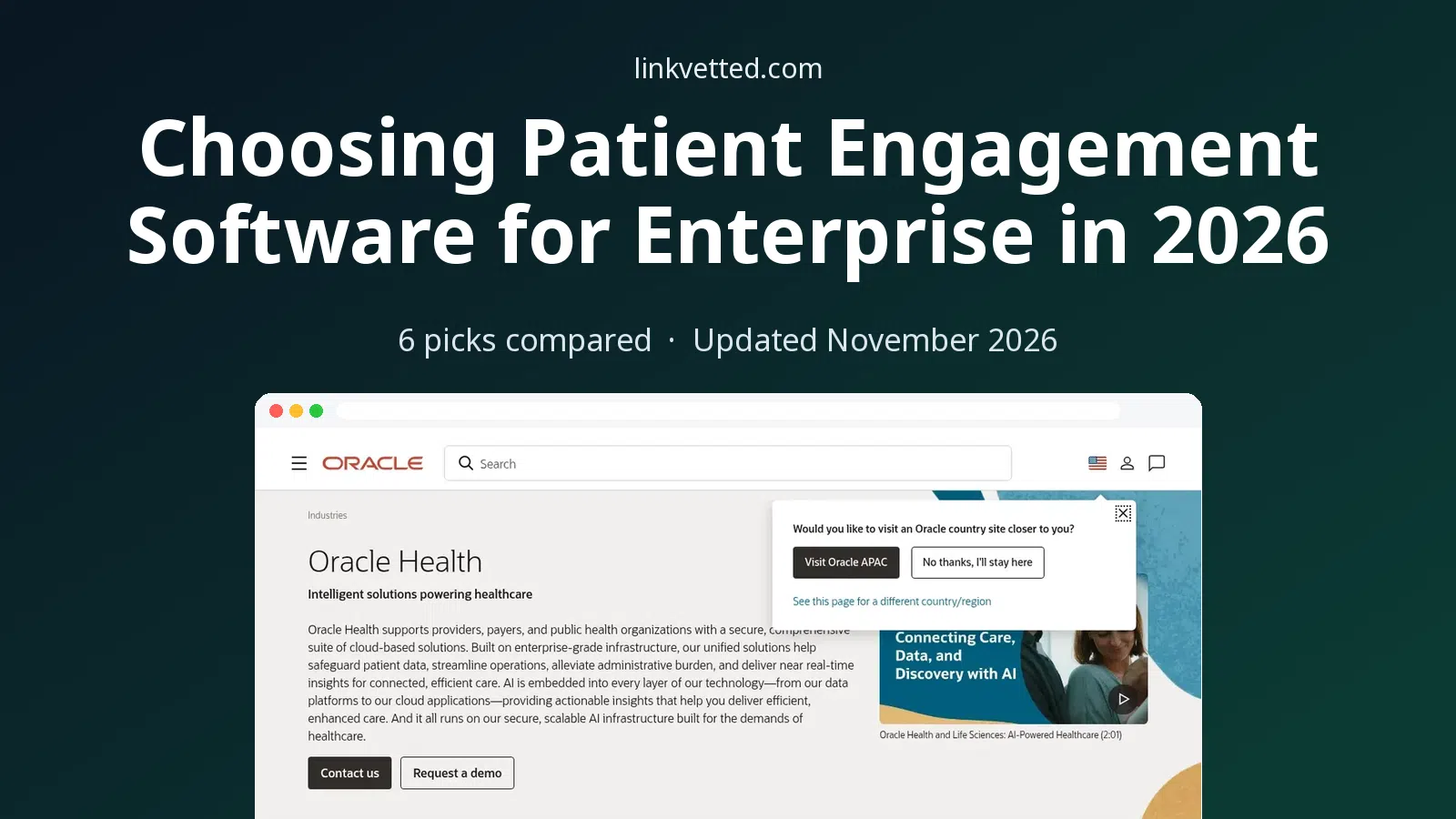
- Editor's choiceOracle Cerner HealtheLife
Oracle Health clinical environments
Starts atPricing on requestVisit oracle.comFull review - Great alternativeGet Well
Personalized digital care journeys
Starts atPricing on requestVisit getwellnetwork.comFull review - Also consider
 Epic MyChart
Health systems already running Epic
Starts atPricing on requestVisit epic.comFull review
Direct answer
For Oracle Health clinical environments, Oracle Cerner HealtheLife is where this list starts. Alternatives: Get Well for personalized digital care journeys, and Epic MyChart for Health systems already running Epic. The remaining 3 options are covered below with pricing notes and limits. None of these vendors publish plan prices, so pricing is on request for every option.
TL;DR:
- The list opens with Oracle Cerner HealtheLife, aimed at Oracle Health clinical environments.
- Oracle Cerner HealtheLife, Salesforce Health Cloud and the 4 others all need a premium plan or a trial, since no free plan is listed.
- Oracle Cerner HealtheLife comes with a trade-off: most handy only within Oracle Health stacks.
- Salesforce Health Cloud fits CRM-driven outreach and care coordination.
- Pricing across the list, from Oracle Cerner HealtheLife to Salesforce Health Cloud, is by quote only.
Last checked November 2026. Pricing on request: vendors did not publish plan prices when this guide was last checked (November 2026), so ask each vendor for a written quote.
Quick comparison
| Tool | Best for | Starts at | Free plan? | |
|---|---|---|---|---|
| Oracle Cerner HealtheLife | Oracle Health clinical environments | Pricing on request | Not stated | Visit |
| Get Well | Personalized digital care journeys | Pricing on request | Not stated | Visit |
| Epic MyChart | Health systems already running Epic | Pricing on request | Not stated | Visit |
 Phreesia | Patient intake and front-desk efficiency | Pricing on request | Not stated | Visit |
 Luma Health | Patient communication and access workflows | Pricing on request | Not stated | Visit |
 Salesforce Health Cloud | CRM-driven outreach and care coordination | Pricing on request | Free trial | Visit |
The best patient engagement software for enterprise
This LinkVetted guide covers 6 options for patient engagement software for enterprise. Each profile lists a starting price, free plan details, strengths and drawbacks, so you can drop poor fits quickly.
Oracle Cerner HealtheLife
Best for: Oracle Health clinical environments
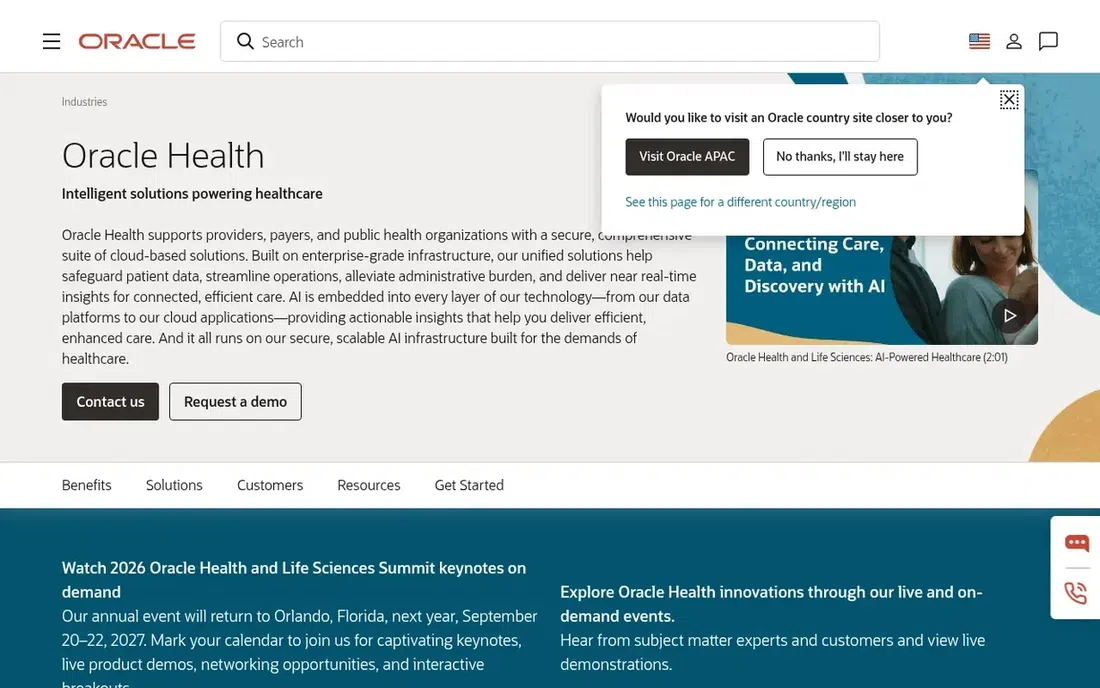
Oracle Cerner HealtheLife serves Oracle Health clinical environments. Teams needing deep CRM or standalone intake functions should weigh dedicated tools.
Where it falls short: Most handy only within Oracle Health stacks.
Check the vendor site for Oracle Cerner HealtheLife pricing; none is listed in this comparison. Trial and free access: Not stated.
- Steady delivery
- Vendor emphasis on secure
- Portal scope varies by configuration
Get Well
Best for: Personalized digital care journeys
Get Well works best for personalized digital care journeys. It suits enterprises that want guided digital journeys layered across inpatient and outpatient touchpoints.
Drawbacks to consider: Integration planning needed for enterprise scale.
Integration with existing clinical and portal systems needs scoping. Pricing for Get Well is not stated here, so ask the vendor for current figures. Free access: Not stated.
- Focus on readmissions and patient experience
- Precision care positioning via RhythmX AI
- Outcome goals rely on program design
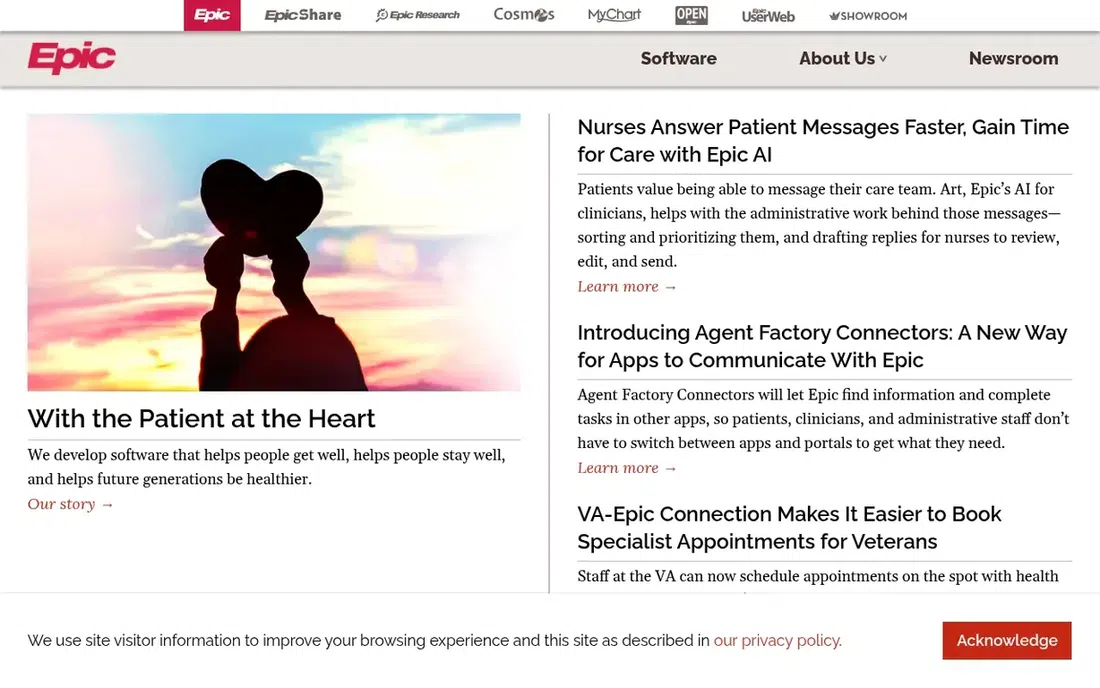
For Health systems already running Epic, Epic MyChart is a natural candidate. Epic MyChart is the patient-facing portal connected to Epic's clinical software, which the vendor describes as built to help people get well and stay well. It provides patients a single place for messaging, viewing results and managing appointments inside the same record clinicians use.
Strengths: Tight integration with the Epic clinical record.
Consider MyChart when record-level integration matters more than a la carte features. In daily use, organizations outside the Epic ecosystem will find little to use here, and portal configuration leans heavily on internal IT resources. No starting price is listed for Epic MyChart here; confirm pricing on the vendor site. Free plan details: Not stated.
Trade-offs to know: Configuration and rollout need internal IT effort.
- Results and scheduling
- Patient portal for messaging
- Value depends on an existing Epic footprint
In short, Phreesia is for patient intake and front-desk efficiency. Enterprise rollouts across numerous sites need planning and configuration. Beyond that, intake is the center of gravity, so organizations seeking wide portal or care-management features may need extra tools.
As for the details, Phreesia supplies patient intake software that, based on the vendor, helps healthcare organizations increase revenue, cut no-shows and end front-desk chaos. Its emphasis is on the check-in and intake experience, including digital forms and payment steps. Pricing for Phreesia is not stated here, so ask the vendor for current figures. Trial and free access: Not stated.
Where it falls short: Primarily intake-focused instead of full portal.
- Focus on reducing no-shows
- Intake workflows that cut front-desk load
- Configuration effort for enterprise rollouts
Luma Health targets patient communication and access workflows. Its tools center on helping patients reach the right next step, such as scheduling and messaging, whereas reducing manual front-office work. Integration depth with your specific EHR should be confirmed before committing, since workflows rely on that connection.
Downsides: Feature depth varies by configuration.
Worth adding: organizations needing a full clinical portal may pair it with an EHR-native choice instead. Worth adding: consider Luma when communication and access are the core gaps. Check the vendor site for Luma Health pricing; none is listed in this comparison. On free options: Not stated.
- Supports scheduling and outreach workflows
- Built for healthcare organizations
- Evaluate fit against your EHR integrations
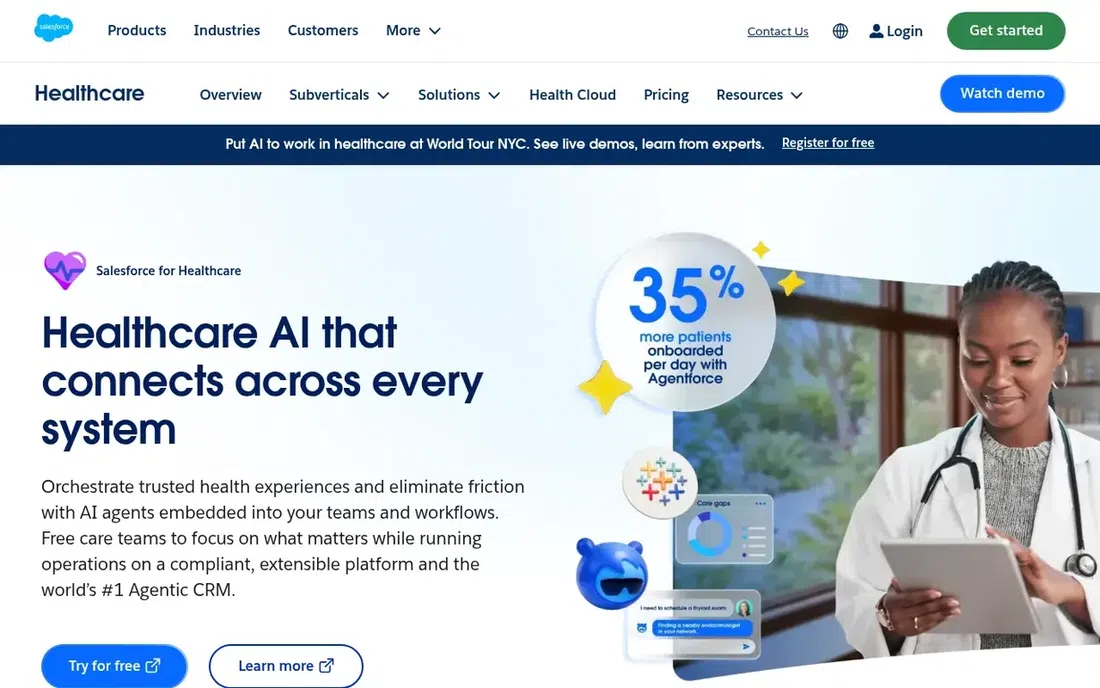
Where Salesforce Health Cloud fits: CRM-driven outreach and care coordination. Salesforce Health Cloud is a healthcare and life sciences product that, per the vendor, helps teams contextualize data, automate processes and synthesize actionable intelligence in live. It supports care coordination, service operations and outreach where a CRM approach suits.
Drawbacks to consider: Needs configuration to fit clinical workflows.
It is not a clinical portal, so patient-facing chart access usually comes from another system. Beyond that, substantial configuration is needed before it matches healthcare-specific workflows. On top of that, choose it when coordinated outreach and service operations matter more than a traditional portal. Salesforce Health Cloud does not show a starting price in this comparison, so check the vendor site for current pricing. Trial and free access: Free trial.
- Automation for outreach processes
- Actionable intelligence surfaced in live
- Not a patient portal replacement on its own
Selection criteria
Pre-purchase checklist
- Request quotes from Oracle Cerner HealtheLife, Salesforce Health Cloud and the others; the list shows no fixed prices.
- Run a trial of Salesforce Health Cloud with real work before paying for a year; your own workflow is the best test.
- Read the limits listed for Oracle Cerner HealtheLife first: most handy only within Oracle Health stacks.
- Check how data leaves Luma Health: formats, limits and whether exports are available on every plan.
- Check whether Get Well bills monthly or annually, and what cancelling early costs.
FAQ
Should an enterprise pick an EHR-native portal or a standalone product?
EHR-native portals for example Epic MyChart and Oracle Cerner HealtheLife keep engagement inside the clinical record, which eases data flow. Standalone products can add specialized intake, messaging or CRM capabilities.
Do these tools publish their prices?
No. None of the tools, from Oracle Cerner HealtheLife to Salesforce Health Cloud, shows a fixed starting price here, so budget time for quotes.
Can I try these tools before paying?
Often, yes. Salesforce Health Cloud offers a free trial. Use your own data and a real task during the test, and check what the free tier or trial limits before you rely on it. For the full picture, the cards above cover all 6 entries of this patient engagement software for enterprise list, including price, free plan and limits.
Is Oracle Cerner HealtheLife the right pick for everyone comparing patient engagement software for enterprise?
No single tool suits every team. Oracle Cerner HealtheLife comes first because it fits Oracle Health clinical environments, while Get Well suits personalized digital care journeys and Epic MyChart suits Health systems already running Epic. Match the tool to your own size, budget and workflow before deciding.
Does any tool for patient engagement software for enterprise here have a free plan?
A permanent free plan is not offered by Oracle Cerner HealtheLife, Salesforce Health Cloud or the other tools here. Salesforce Health Cloud offer a trial. Plan a short evaluation period instead.
Sources
- https://www.oracle.com/health
- https://www.getwellnetwork.com
- https://www.epic.com
- https://www.phreesia.com
- https://www.lumahealth.com
- https://www.salesforce.com/healthcare