Best Network Access Control Methods (2026): 6 Picks Checked on Vendor Pages
Compare 6 best network access control methods, with prices, free plans and who each fits. Trade-offs are spelled out for each entry. Read the profiles.
- Editor's choiceIvanti Neurons for Network Access Control
Visibility and control for local and remote endpoints
Starts atSee websiteVisit ivanti.comFull review - Great alternative
 Palo Alto Networks Prisma Access
Cloud-delivered secure remote access
Starts atSee websiteVisit paloaltonetworks.comFull review - Also considerFortinet FortiNAC
IoT visibility and integrated security
Starts atSee websiteVisit fortinet.comFull review
Direct answer
If you need visibility and control for local and remote endpoints, Ivanti Neurons for Network Access Control is the first tool to look at here. Listed starting prices: Portnox Cloud from $1 per device. Alternatives: Palo Alto Networks Prisma Access for Cloud-delivered secure remote access, and Fortinet FortiNAC for IoT visibility and integrated security. The other 3 tools in the list cover narrower or pricier cases.
TL;DR:
- Ivanti Neurons for Network Access Control is the opening pick, best for visibility and control for local and remote endpoints.
- Portnox Cloud fits Cloud-native NAC without hardware.
- Ivanti Neurons for Network Access Control, Portnox Cloud and the 4 others all need a premium plan or a trial, since no free plan is listed.
- What to know about Palo Alto Networks Prisma Access first: focus is remote access instead of LAN NAC.
Last checked November 2026. Prices and plan details were read from the vendors' own pages in November 2026; vendors change plans often, so confirm the current price on the vendor site before you buy.
Quick comparison
| Tool | Best for | Starts at | Free plan? | |
|---|---|---|---|---|
| Ivanti Neurons for Network Access Control | Visibility and control for local and remote endpoints | See website | Not stated | Visit |
| Palo Alto Networks Prisma Access | Cloud-delivered secure remote access | See website | Not stated | Visit |
| Fortinet FortiNAC | IoT visibility and integrated security | See website | Not stated | Visit |
| Cisco Identity Services Engine | Cisco-centric zero-trust policy enforcement | See website | Not stated | Visit |
| Aruba ClearPass | Granular multivendor policy enforcement | See website | Not stated | Visit |
| Portnox Cloud | Cloud-native NAC without hardware | $1 per device | Not stated | Visit |
The full network access control methods list
LinkVetted compared 6 network access control methods. The goal is a practical shortlist: published prices, free plan facts, best-fit use cases and honest limits for every entry.
Ivanti Neurons for Network Access Control
Best for: Visibility and control for local and remote endpoints
Where Ivanti Neurons for Network Access Control fits: visibility and control for local and remote endpoints. Ivanti Neurons for Network Access Control offers complete visibility and network access control for all local or remote endpoints, including IoT.
Teams seeking a purely cloud-native, hardware-free approach may find other choices more at once aligned. Ivanti is frequently considered when endpoint management and security tools are already in use and integration with existing workflows is valuable. Pricing for Ivanti Neurons for Network Access Control is not stated here, so ask the vendor for current figures. Free access: Not stated.
Downsides: Can be complicated to configure for large environments.
- Complete visibility for local and remote endpoints
- Comes with IoT device profiling
- May need integration effort with existing systems
Palo Alto Networks Prisma Access
Best for: Cloud-delivered secure remote access
Palo Alto Networks Prisma Access is aimed squarely at Cloud-delivered secure remote access. Palo Alto Networks Prisma Access is a cloud-delivered security system that supplies secure remote access for the hybrid workforce.
Where it falls short: Focus is remote access instead of LAN NAC.
Also, Prisma Access is oriented toward remote access and cloud-delivered security, so it may not replace on-premises NAC for local network enforcement. From a buyer's view, if your environment is primarily on-premises and you need device profiling at the switch level, a dedicated NAC system is likely a better fit. Palo Alto Networks Prisma Access does not show a starting price in this comparison, so check the vendor site for current pricing. As for free access: Not stated.
- Secure remote access for hybrid workforce
- Cloud-delivered security system
- Needs Palo Alto ecosystem for full benefits
Fortinet FortiNAC
Best for: IoT visibility and integrated security
Fortinet FortiNAC is designed for IoT visibility and integrated security. Fortinet FortiNAC is a network access control option that supplies enhanced visibility into IoT devices and supports access enforcement.
Where it falls short: May need extra Fortinet components for full features.
In daily use, FortiNAC gives the most value when paired with other Fortinet products, which may limit its appeal in multivendor environments. If you need cloud-native management without on-premises appliances, consider a cloud-delivered alternative. Check the vendor site for Fortinet FortiNAC pricing; none is listed in this comparison. Free options: Not stated.
- Enhanced visibility into IoT devices
- Supports network access control enforcement
- Best value within Fortinet ecosystems
Cisco Identity Services Engine
Best for: Cisco-centric zero-trust policy enforcement
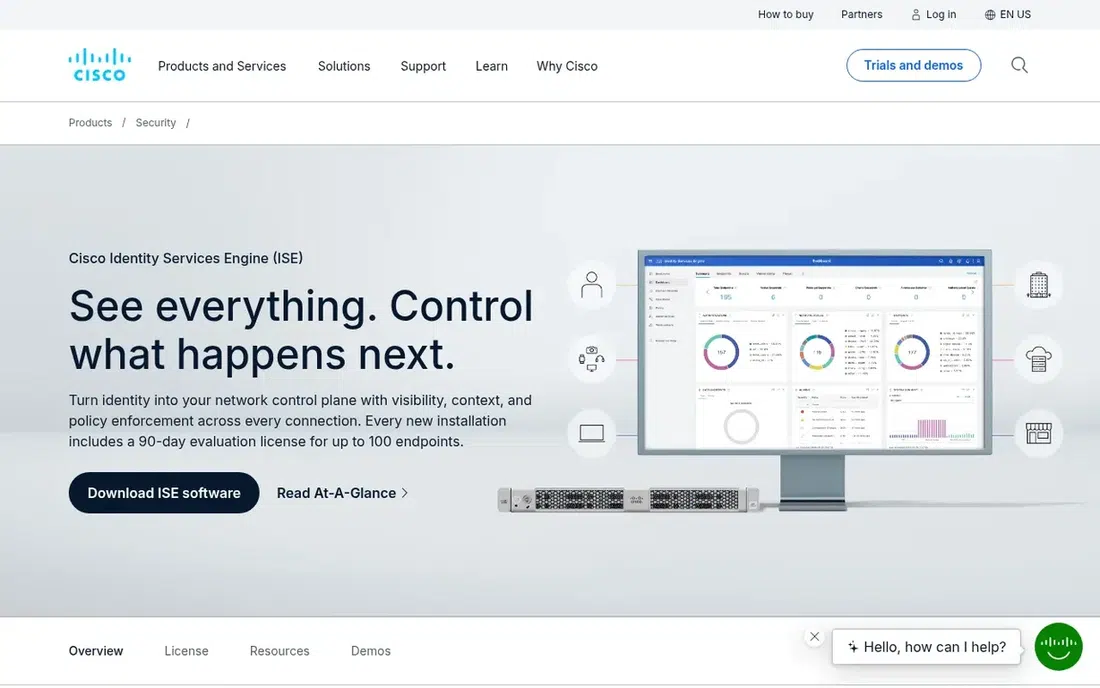
Think of Cisco Identity Services Engine for Cisco-centric zero-trust policy enforcement. ISE is commonly chosen when granular, context-aware access control is a priority and the team has the skills to operate a full policy system.
Upsides: Deep integration with Cisco networking.
The main drawbacks: Can be complicated to deploy and maintain.
As for the details, organizations with mixed-vendor networks may find competing products more at once adaptable. ISE can be complicated to deploy and administer, and its full value is most apparent in Cisco-heavy environments. This comparison lists no price for Cisco Identity Services Engine; ask the vendor. Trial and free access: Not stated.
- Device access
- Runs endpoint, user
- Best value within Cisco ecosystems
Aruba ClearPass
Best for: Granular multivendor policy enforcement
Aruba ClearPass is aimed squarely at granular multivendor policy enforcement. If you prefer a completely cloud-native model with minimal on-premises footprint, a cloud-delivered NAC may be a better fit. ClearPass demands thoughtful policy design and continuing tuning, which can strain smaller IT teams.
Worth adding: ClearPass is frequently selected when role-based access and guest management are central requirements and the team wants a mature policy engine. More specifically, whereas it supports multivendor environments, deeper SASE integration may need extra components. No starting price is listed for Aruba ClearPass here; confirm pricing on the vendor site. On free options: Not stated.
Where it falls short: Needs careful policy design.
- Supports multivendor network environments
- Full visibility and granular control
- May need extras for full SASE integration
Portnox Cloud
Best for: Cloud-native NAC without hardware
Choose Portnox Cloud for Cloud-native NAC without hardware. Portnox Cloud provides cloud-native network access control and zero trust network access to secure users, devices, and networks without hardware or VPNs.
As a cloud-native option, Portnox Cloud may not include every advanced on-premises NAC feature required by complicated, regulated environments. For everyday use, if you need deep integration with on-premises network infrastructure from a specific vendor, a traditional NAC system might be more suitable. Price to start with Portnox Cloud: $1 per device. Free options: Not stated.
Honest limits: May lack some advanced on-premises features.
- No hardware or VPNs required
- Cloud-native NAC and ZTNA
- Depends on cloud connectivity for management
How these tools were picked
LinkVetted looked at what each vendor publishes: pricing, plan limits, feature coverage for network access control methods and stated drawbacks. No hands-on testing is claimed. Plan names, prices and limits change often. Treat the figures here as a starting point and verify them with the vendor. The order reflects how well each tool fits the most common buying scenario for network access control methods, then price clarity, then free plan access. It is a starting point, not a verdict.
What to check before you buy
- Ask Ivanti Neurons for Network Access Control, Palo Alto Networks Prisma Access, Fortinet FortiNAC and others for a written quote, since no starting price is shown.
- Read the limits listed for Ivanti Neurons for Network Access Control first: may need integration effort with existing systems.
- Add up seats, add-ons and usage charges for Ivanti Neurons for Network Access Control before comparing it with cheaper entries.
- Confirm you can export your data from Palo Alto Networks Prisma Access, so leaving later does not mean losing records.
- Look at which plan of Portnox Cloud unlocks the features you need; entry tiers are often cut down.
FAQ
Does any tool for network access control methods here have a free plan?
A permanent free plan is not offered by Ivanti Neurons for Network Access Control, Portnox Cloud or the other tools here. Plan a short evaluation period instead.
Do these tools publish their prices?
Not all of them. Ivanti Neurons for Network Access Control, Palo Alto Networks Prisma Access, Fortinet FortiNAC and others publish no starting price, so expect a quote request for those. The rest, Portnox Cloud included, show a starting price, though seats and billing terms still change the final cost.
Is Ivanti Neurons for Network Access Control the right pick for everyone comparing network access control methods?
No single tool suits every team. Ivanti Neurons for Network Access Control comes first because it fits visibility and control for local and remote endpoints, while Palo Alto Networks Prisma Access suits Cloud-delivered secure remote access and Fortinet FortiNAC suits IoT visibility and integrated security. Match the tool to your own size, budget and workflow before deciding.
How do I choose between on-premises and cloud-native NAC?
On-premises NAC frequently gives you deeper integration with local network infrastructure and granular control, but needs hardware and maintenance. Consider your operational resources and whether you need advanced on-premises features.
How are the tools for network access control methods ordered?
The order follows typical fit for network access control methods, with Ivanti Neurons for Network Access Control first and Portnox Cloud last, then price clarity and free access. It is editorial judgement, not a score, so another team could rank the tools differently.
Sources
- https://www.ivanti.com/products/network-access-control
- https://www.paloaltonetworks.com/prisma/access
- https://www.fortinet.com/products/network-access-control
- https://www.cisco.com/c/en/us/products/security/identity-services-engine/index.html
- https://www.hpe.com/us/en/networking/clearpass-policy-manager.html
- https://www.portnox.com