Choosing Link Prospecting Tools in 2026: 6 Options Compared
A practical comparison of the best link prospecting tools for 2026, based on vendor documentation and public sources, with limits and fit for each tool.
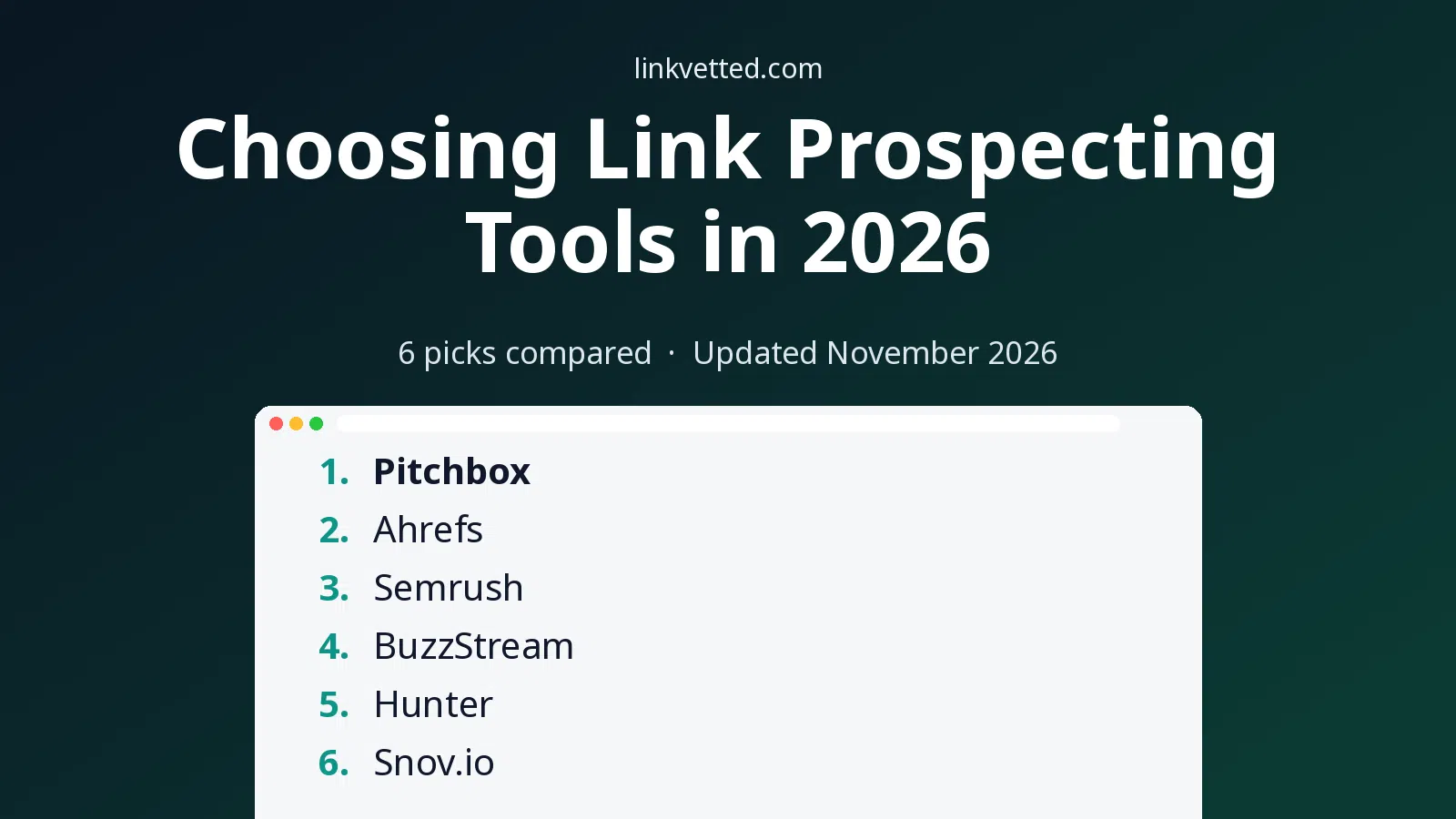
- Editor's choice
 Pitchbox
Running full outreach campaigns
Starts atSee websiteVisit pitchbox.comFull review - Great alternative
 Ahrefs
Competitor backlink prospecting
Starts atSee websiteVisit ahrefs.comFull review - Also consider
 Semrush
Teams already using an SEO suite
Starts atSee websiteVisit semrush.comFull review
Direct answer
My top pick is Pitchbox, because it covers the full prospecting workflow from finding prospects to managing outreach campaigns in one place. If you mainly need to find sites that mention your brand or competitors, I would look at Ahrefs. If budget is the deciding factor and you want a free database of outreach opportunities, Hunter is worth a look. Each fits a different stage of link prospecting.
TL;DR:
- Link prospecting works best when the tool covers search, qualification and outreach tracking rather than just one step.
- Pitchbox is the most complete option here for agencies that run repeatable outreach campaigns.
- Ahrefs and Semrush are strong when your prospecting starts from competitor backlinks and content gaps.
- Hunter and Snov.io suit teams that want contact finding and email outreach in the same workflow.
- BuzzStream is built around relationship tracking, so it fits teams that prospect the same sites repeatedly.
Last checked November 2026. Plan prices are not quoted in this guide because they change often; see each vendor's own pricing page for current figures before you buy.
Quick comparison
| Tool | Best for | Starts at | Free plan? | |
|---|---|---|---|---|
| Pitchbox | Running full outreach campaigns | See website | Not stated | Visit |
| Ahrefs | Competitor backlink prospecting | See website | Not stated | Visit |
| Semrush | Teams already using an SEO suite | See website | Not stated | Visit |
 BuzzStream | Relationship-based link outreach | See website | Not stated | Visit |
 Hunter | Finding contact emails fast | See website | Free plan | Visit |
 Snov.io | Email-led outreach at small scale | See website | Free trial | Visit |
The best link prospecting tools compared
I put this comparison together from vendor documentation, public product pages and help-centre articles. I did not run hands-on tests, so treat this as a fit-and-features guide rather than a lab review. The goal is to help you shortlist tools that match how your team actually prospects links.
Pitchbox is an outreach and link prospecting platform. It is aimed at agencies and in-house teams that run link building and digital PR campaigns on a repeating basis. The product combines prospect search, contact management and campaign tracking, so you are not stitching several tools together.
For link prospecting, the useful part is that you can search for prospects by topic and then move them into a campaign without exporting to a spreadsheet. Vendor documentation describes workflow features for managing outreach stages, follow-ups and reporting. That suits teams that need a record of who was contacted and where each prospect sits.
The limit is scale and budget. If you send a handful of pitches a month, the platform is more than you need, and you should check current terms directly with the vendor. Solo link builders may prefer a lighter option from this list.
- Prospect discovery and outreach in one place
- campaign and pipeline management
- built for agency workflows
- Not aimed at solo users
- pricing details need a sales conversation
Ahrefs is an SEO toolkit with a well-known backlink index. For link prospecting, its main value is that you can start from sites already linking to competitors and filter them by traffic, topic and link attributes. That gives you a target list grounded in real link data rather than guesswork.
The workflow is research-led. You pull a competitor's referring domains, filter out the ones you do not want, and export a list for outreach. The vendor also documents content research features that help you find pages worth pitching. Contact finding and outreach tracking are not the core of the product, so most teams pair it with a separate outreach tool.
Skip Ahrefs if you only need contact emails and a simple outreach list. It is a broad SEO suite, and the prospecting features come as part of that larger package.
- Large backlink index
- strong referring-domain filters
- useful content explorer for linkable assets
- Outreach tracking is limited
- full feature set needs a paid plan
Semrush is another all-in-one SEO platform with backlink analytics. For link prospecting, you can review a domain's backlinks, compare referring domains across competitors and look at anchor text patterns. That helps you build a prospect list from sites that link to similar content.
The advantage is context. Because keyword, content and backlink data sit in the same account, you can check whether a prospect's site actually covers your topic before you pitch. Vendor documentation covers the backlink and competitor research workflows in detail. Outreach itself is handled elsewhere or through separate features.
The drawback is that you pay for a large suite when you may only need the backlink research part. Smaller teams should confirm which plan includes the data they need before committing.
- Backlink analytics alongside keyword and content data
- competitor research in one dashboard
- broad feature coverage
- Prospecting is one module among many
- interface can feel crowded
BuzzStream is an outreach and relationship management tool for link building and digital PR. It is built around the idea that you contact the same publishers and editors more than once, so keeping a clean history of who you spoke to and what happened matters.
For link prospecting, BuzzStream helps you organise prospects, track outreach status and keep notes on contacts. Vendor documentation describes list management and email workflow features. It fits teams that prospect by hand and want a reliable record rather than a huge discovery database.
If your main problem is finding prospects in the first place, BuzzStream is not the strongest starting point. Pair it with a research tool, or choose a platform with discovery built in.
- Contact and relationship history in one place
- outreach tracking built in
- good for repeat prospecting
- Discovery is lighter than dedicated databases
- not a full SEO suite
Hunter is an email discovery and verification tool. For link prospecting, it solves a specific problem: once you know which site you want a link from, you need a contact address that works. Hunter lets you search by domain and find publicly listed email patterns.
The workflow is straightforward. You build a prospect list in a spreadsheet or another tool, then use Hunter to find and verify contacts before outreach. Vendor documentation covers domain search, email verification and basic campaign features. It is a practical add-on rather than a complete prospecting platform.
Skip it if you need backlink data or campaign management. Hunter is a contact layer, and it works best alongside a research tool and an outreach tool.
- Simple email discovery
- domain search for company contacts
- verification features
- Not a link database
- limited outreach management
Snov.io is an email outreach platform with contact discovery features. For link prospecting, it is useful when your process is list-first: you gather prospect domains, find contacts, then run email sequences and track replies.
Vendor documentation covers email search, verification and drip campaigns. That makes it a reasonable choice for small teams or solo link builders who want one tool for contacts and outreach without paying for a full SEO suite. It is less useful if you need backlink indexes or competitor link analysis.
The limit is depth. If you run large campaigns with complex approval steps, a dedicated outreach platform will fit better. Check the current plan limits before you build your workflow around it.
- Email finding and verification
- outreach sequences
- simple interface
- Weaker on SEO link data
- less suited to large agency pipelines
How I chose
I selected these tools by reading vendor documentation, product pages and public help-centre articles, then matching each tool to a specific link prospecting job. I looked at whether a tool helps you find prospects, qualify them, find contacts or manage outreach, and I noted where each one stops. I did not run hands-on tests, so I have not scored speed, data accuracy or support quality from personal use.
The shortlist favours tools that are currently operating and have clear public documentation. I left out tools where the prospecting use case was unclear or where the product seemed aimed at a different job. Where pricing is not published in a simple form, I have pointed you to the vendor rather than guessing. Use this guide to build a shortlist, then check current plans and terms directly with each vendor before you buy.
What to check before you buy
- Confirm the tool covers the step you actually struggle with: discovery, contact finding or outreach tracking.
- Check whether contact data and email verification are included or sold separately.
- Ask how exports work, since most teams still move prospect lists into a spreadsheet or CRM.
- Confirm the plan limits on searches, credits or contacts, because these shape daily use.
- Check whether the tool stores outreach history, which matters if you contact the same sites again.
- Review the vendor's current terms and data policies directly, especially for contact data.
FAQ
What are link prospecting tools used for?
They help you find websites and pages that could link to your content, identify the right contact, and track outreach. Some tools focus on discovery through backlink data, others on contact finding, and others on managing the outreach campaign itself. Most teams combine two or three tools rather than relying on one.
Do I need a paid tool to start link prospecting?
No. You can start with manual searches and a spreadsheet, and Hunter has a free plan for contact finding. Paid tools become useful when you need scale, repeatable workflows or a record of outreach history. Check each vendor's current plan details before deciding.
Which tool is best for finding competitor backlinks?
Ahrefs and Semrush are the main options here, because both provide backlink data you can filter by referring domain. You can build a prospect list from sites linking to competitors, then qualify those sites before outreach. Pair either with an outreach tool for contact finding and campaign tracking.
Can I use these tools for digital PR campaigns?
Yes. Pitchbox and BuzzStream are built around outreach workflows that suit digital PR, including contact history and campaign tracking. Research tools like Ahrefs and Semrush help you find the publishers and pages worth pitching. The right mix depends on whether your team is research-led or relationship-led.
How do I choose between an all-in-one suite and a dedicated outreach tool?
Choose an all-in-one suite if you also need keyword, content and backlink research in the same account. Choose a dedicated outreach tool if your research is already covered and your main problem is managing contacts and follow-ups. Many teams use one of each, which keeps the workflow clear.
Sources
- https://pitchbox.com
- https://ahrefs.com
- https://semrush.com
- https://www.buzzstream.com
- https://hunter.io
- https://snov.io
Related guides
- The 5 Best Companies for GTM Sales Prospecting Tools in 2026, Ranked
- 6 Best Donor Prospecting Software for Major Gifts Teams for 2026, Vetted and Compared
- Best Donor Prospecting Software for Universities in 2026: Prices, Free Plans and 5 Picks
- Best Prospecting Software for Outbound Sales Teams in 2026: Prices, Free Plans and 5 Picks