Best Keyword Research Tool for AI in 2026: 8 Tools Compared
We compare the best keyword research tool for ai in 2026, from full SEO suites to AI-first clustering tools, with pricing and practical advice for teams.
- Editor's choice
 Semrush
Large scale keyword and competitor research
Starts at$139 per monthVisit semrush.comFull review - Great alternative
 Ahrefs
Difficulty and traffic potential
Starts at$129 per monthVisit ahrefs.comFull review - Also consider
 Keyword Insights
Clustering and topical authority
Starts at$58 per monthVisit keywordinsights.aiFull review
TL;DR:
- Full suites give the most trusted volume and difficulty data, while AI tools give faster clustering, briefs and question mining.
- Low competition tools help new sites find winnable topics, while suites help established sites plan at scale.
- Credit limits matter, since clustering and SERP analysis can burn credits fast on large lists.
- AI suggestions need checking against real SERP data, since generated keywords can look plausible without real demand.
Quick comparison
| Tool | Best for | Starts at | Free plan? | |
|---|---|---|---|---|
| Semrush | Large scale keyword and competitor research | $139 per month | Yes | Visit |
| Ahrefs | Difficulty and traffic potential | $129 per month | No | Visit |
| Keyword Insights | Clustering and topical authority | $58 per month | Free trial | Visit |
 LowFruits | Low competition long tail topics | $29 per month | No | Visit |
 Scalenut | AI clusters plus content creation | $59 per month | Free trial | Visit |
 Frase | AI briefs and question research | $39 per month | Free trial | Visit |
 Surfer SEO | Keyword planning into writing | $49 per month | No | Visit |
 Keywrds.ai | AI generated keywords and questions | $19 per month | Free trial | Visit |
The best keyword research tools for AI
Keyword research for AI covers two jobs that now overlap. Classic research finds volume, difficulty and SERP competitors, while AI features cluster keywords, generate topic ideas and draft briefs. The tools below mix those jobs in different proportions. We compared official pricing and feature pages to show which tool leads on data, which leads on AI workflow, and which suits new sites.
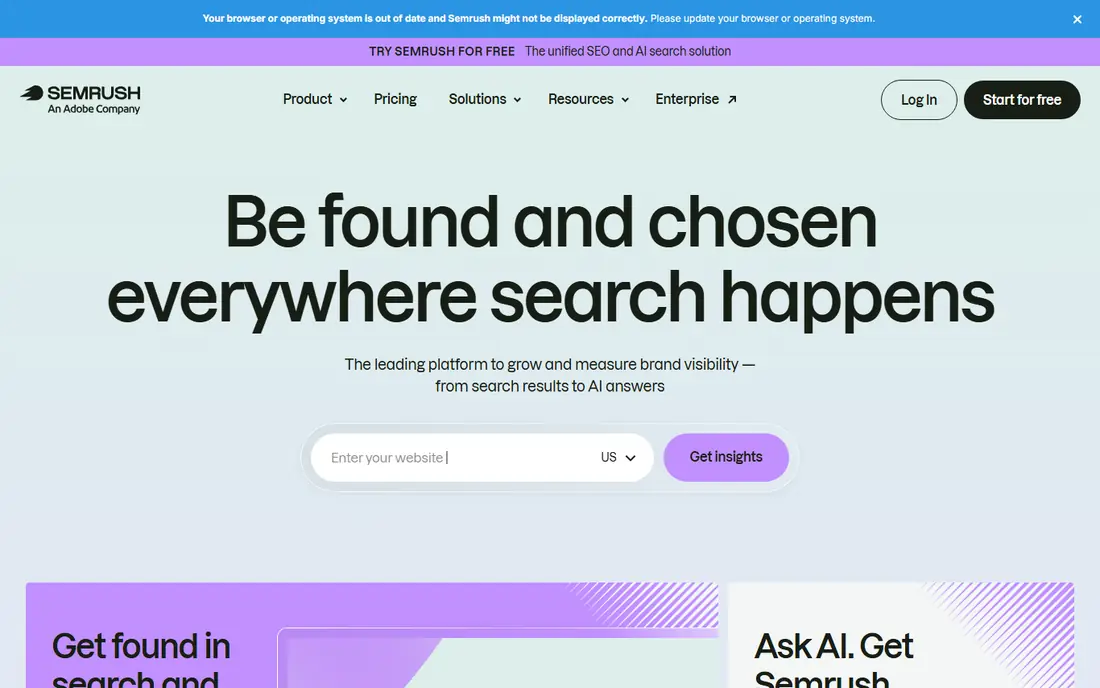
Semrush remains the most complete research starting point for teams that publish at scale. The Keyword Magic Tool expands seed terms into large lists with intent, difficulty, volume and SERP features, while topic grouping turns those lists into clusters. Competitor gap analysis shows keywords rivals rank for that your site misses.
AI features add search visibility tracking and content assistance, but the core value is still data depth. Small teams may find the price high for research alone. For agencies and content teams that need trusted data plus AI visibility, Semrush is the safest anchor tool.
- Keyword Magic Tool with intent and grouping
- Huge keyword database and competitor data
- AI search tracking on higher plans
- Higher price for full content features
- Interface holds many tools beyond research
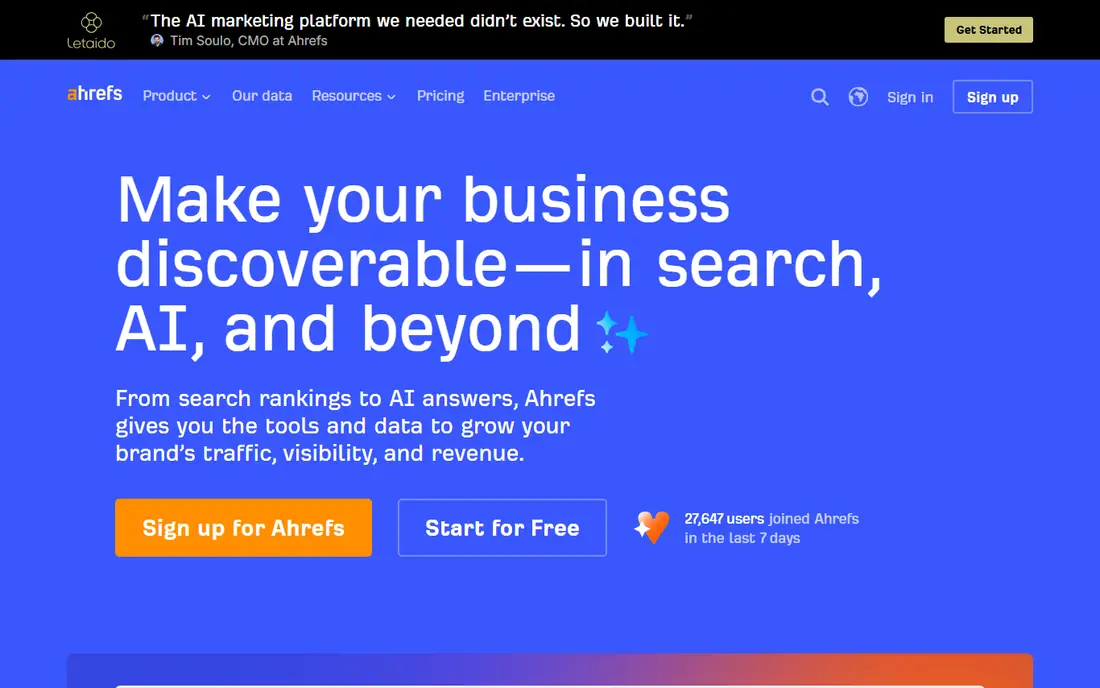
Ahrefs Keywords Explorer helps teams judge which keywords are worth pursuing, not just which ones have volume. Difficulty, traffic potential and parent topic clustering show whether a page can rank and how much traffic it might win. AI seed ideas expand a seed term into related topics without leaving the workflow.
The lack of a full free plan means teams must pay to test the full database, though a low cost starter tier exists. Add-ons and extra seats also raise costs. For teams that trust Ahrefs difficulty data, it remains the best check against overpromising AI suggestions.
- Keywords Explorer with AI seed ideas
- Trusted difficulty and traffic potential scores
- Parent topic clustering
- No full free plan
- Extra users and add-ons raise costs
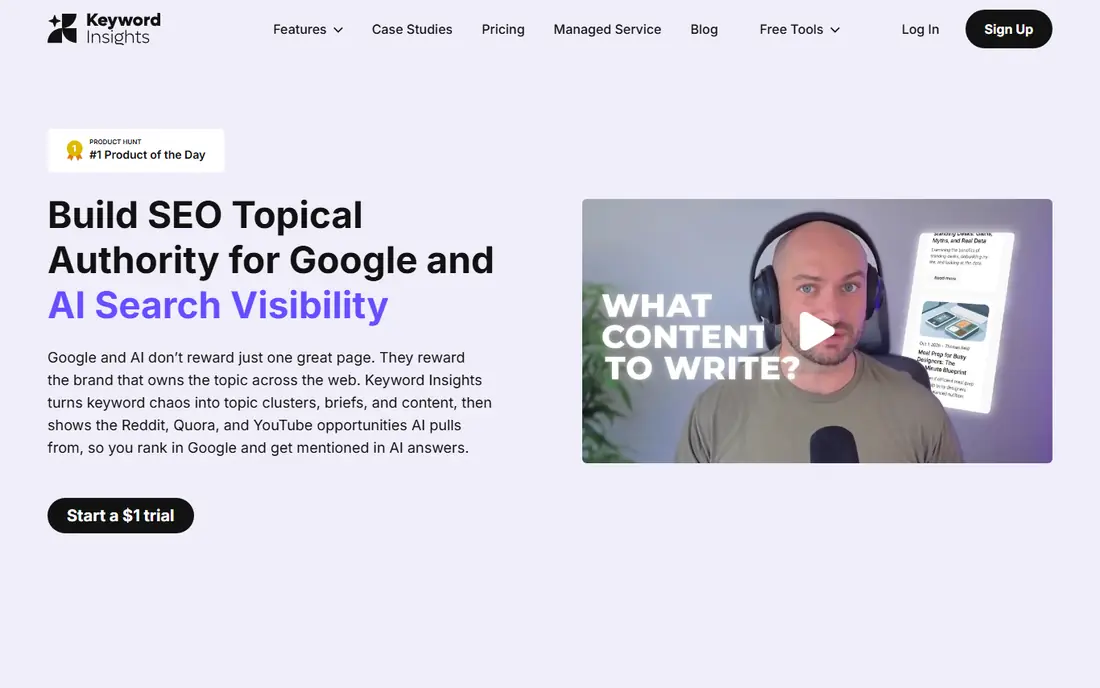
Keyword Insights solves the messy middle of research, turning a long keyword list into clusters that map to pages. SERP similarity grouping shows which keywords belong on one page and which need separate pages, which prevents cannibalization. Intent detection and briefs then turn each cluster into a writing plan.
You still need keywords from Semrush, Ahrefs or another source to feed it, and large lists consume credits quickly. The trial helps teams test clustering on a real list before committing. For sites planning topical authority, this tool saves hours of spreadsheet work.
- SERP similarity clustering into page plans
- Intent detection and content briefs
- Turns long lists into clear site structure
- Credits burn fast on large lists
- Needs a research source for initial keywords
LowFruits looks for keywords where weak sites already rank on page one, such as forums, thin pages and user generated content. That weakness first view helps new sites find topics they can actually win in the first year, rather than chasing high volume terms dominated by strong domains. AI suggestions expand seed terms into related opportunities.
The toolset is narrower than a full suite, with less depth on backlinks, audits and tracking. Pay as you go credits also expire after a year, so plan usage. For new sites and niche blogs, LowFruits is the most practical research pick.
- SERP weakness detection for beatable rankings
- Low price with pay as you go option
- Built in rank tracking
- Narrower toolset than full suites
- Volume data is less deep than Semrush or Ahrefs
Scalenut covers the full path from keyword clusters to published drafts, with AI writing, optimization and GEO tracking in one platform. Teams can research a topic, build a cluster, draft an article and optimize it without switching tools. That guided flow suits founders and small teams that want speed.
Starter plan volumes limit articles, clusters and tracked prompts, so growing teams need higher tiers. AI drafts also need human editing, fact checking and original input. For teams that want research plus production in one subscription, Scalenut is a strong all rounder.
- Keyword clusters plus AI drafting and optimization
- AI visibility tracking on higher plans
- Guided workflow from research to draft
- Starter volumes are low
- AI drafts still need editing and fact checking
Frase turns keyword research into briefs writers can follow, pulling questions, headings and competitor structure from top results. That question focus helps content answer what searchers actually ask, including AI overview style queries. Scoring and drafting sit in the same workflow, so research flows straight into writing.
Starter limits of one seat and a set article count suit solo creators, while teams need higher tiers. Keyword database depth trails Semrush and Ahrefs, so Frase works best paired with a suite or as a brief tool for focused topics.
- Research briefs from top ranking pages
- Question mining for headings and FAQs
- Content scoring plus publishing workflow
- Starter limits seats and articles
- Smaller keyword database than suites
Surfer bridges research and writing through its Topical Map, which plans clusters around a niche, and its Content Editor, which scores drafts against top pages. Teams can move from a topic idea to a structured draft without losing the research context. Audits flag published pages that need refreshes for declining topics.
Surfer is not a full keyword database like Semrush or Ahrefs, so volume and difficulty checks still need a suite for serious planning. Document caps on lower plans also matter for high volume teams. As a research to writing bridge, it works well.
- Topical Map for cluster planning
- Content Editor scoring as you write
- Audit tools for existing pages
- Not a full keyword database
- Document limits on lower plans
Keywrds.ai uses AI to generate keywords, questions, topics and blog outlines from a seed term, which helps bloggers brainstorm fast. The low entry price makes it an easy second tool for idea generation, and unlimited projects suit creators with many niches. People Also Ask answers add FAQ material for briefs.
Data depth is the limit. Search volume and difficulty figures are estimates rather than suite grade data, and integrations are few. Use Keywrds.ai for ideation and outlines, then verify winning topics in Semrush, Ahrefs or LowFruits before investing in a full article.
- AI generated keywords, questions and outlines
- Low entry price
- Unlimited projects on paid tiers
- Volume and difficulty data are estimates
- Limited integrations and language coverage
How we picked these
We compared official pricing and feature pages, and we favored tools that are actively sold and that support AI assisted keyword research in 2026. We weighed database depth, clustering, question mining, brief quality, AI drafting links and price. We did not claim hands-on testing, and we left out generic chatbots with no keyword data or SERP features.
How to use AI keyword tools without bad data
Verify AI ideas against SERP data
AI tools can suggest keywords that sound right but have little search demand or impossible competition. Check volume, difficulty and top ranking pages in a suite before writing. A keyword that passes both AI ideation and SERP checks is worth the effort.
Cluster before you write
Grouping keywords by SERP similarity prevents ten thin posts competing for one topic. Use Keyword Insights, Semrush grouping or Surfer Topical Map to map clusters to pages. One strong page per cluster usually beats many weak pages.
Favor winnable topics for new sites
New sites should start with low competition terms where weak pages rank, even if volume is modest. LowFruits and Ahrefs difficulty data help find those openings. Early wins build traffic and authority for harder terms later.
Watch credit burn on large lists
Clustering, SERP analysis and AI generation consume credits fast. Start with a focused seed list, cluster it, then expand only the winning clusters. Buying a larger plan after a trial beats paying for credits you never use well.
FAQ
What is the best AI keyword research tool overall?
Semrush is the best overall anchor, thanks to database depth plus AI grouping and visibility tracking. Keyword Insights is the best clustering add-on, while LowFruits is the best pick for new sites. Most teams pair one suite with one AI workflow tool.
What are the best AI tools for keyword research on a budget?
LowFruits and Keywrds.ai offer the lowest entry prices, while Frase and Surfer add briefs and scoring at moderate prices. Start with a low cost tool for ideas, then verify topics in a suite free plan or trial before scaling.
How does AI keyword clustering work?
Clustering groups keywords that share similar search results, which suggests they belong on the same page. Tools compare SERP overlap, intent and topic similarity to form clusters. Human review still matters, since edge cases can join the wrong cluster.
Can AI replace traditional keyword research?
No, AI speeds up ideation, clustering and briefs, but volume, difficulty and SERP data still need trusted sources. Use AI for speed and structure, and use suite data for decisions about which topics deserve full articles.
How do I find keywords for AI search and overviews?
Mine questions from Frase, Keywrds.ai and People Also Ask data, then structure answers clearly with headings and FAQs. Track AI visibility in Semrush or Scalenut where available. Clear, factual answers with original detail tend to surface better than thin keyword stuffed pages.