Choosing Hosting Provider for Ecommerce Platforms in 2026: 6 Options Compared
Best hosting provider for ecommerce platforms in 2026: 6 contenders with entry costs and free tiers. Concise write-ups of every option. Skim the table first.
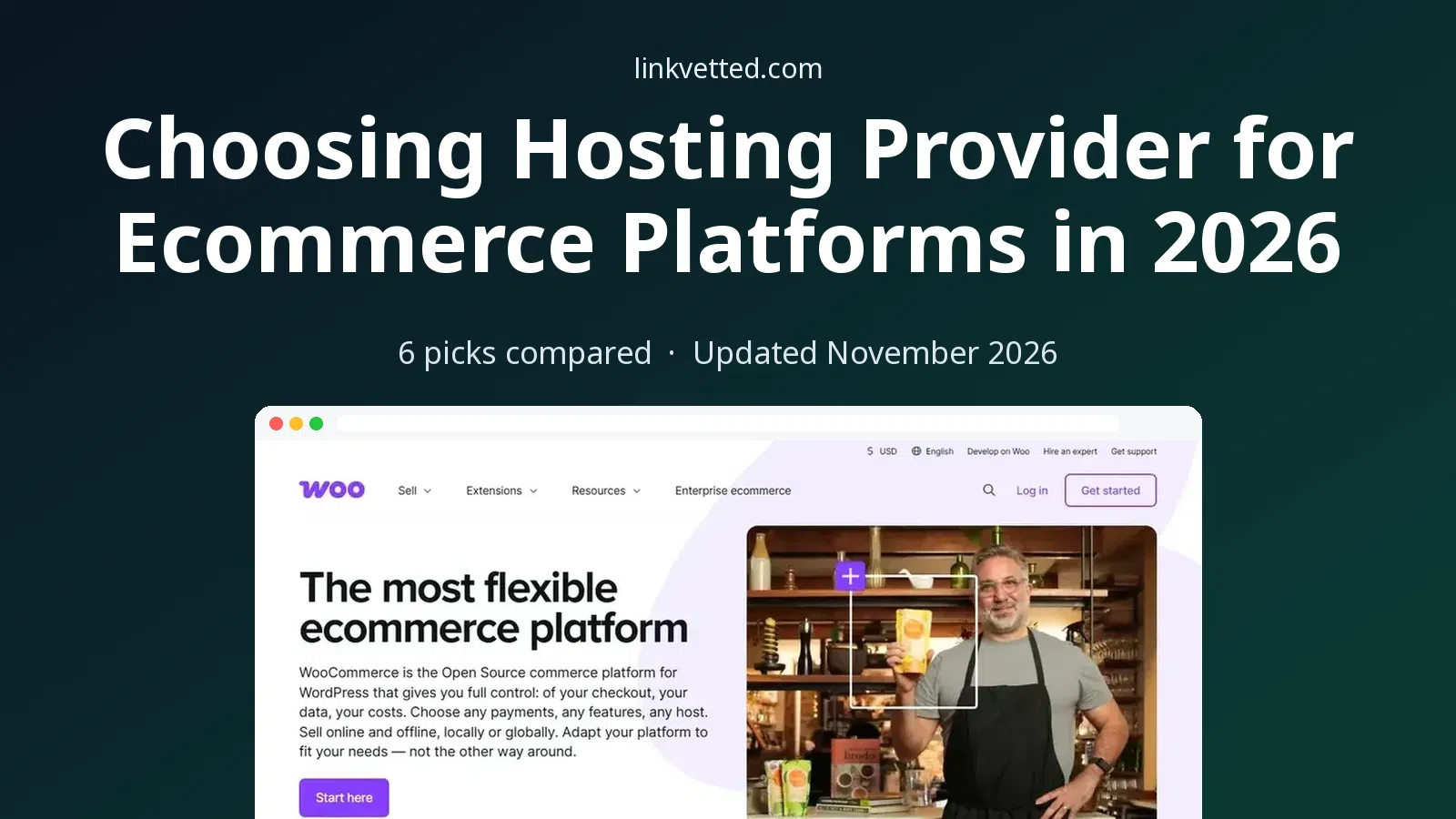
- Editor's choice
 WooCommerce
Open-source store control
Starts at$29 a monthVisit woocommerce.comFull review - Great alternative
 Salesforce Commerce Cloud
Commerce within the Salesforce ecosystem
Starts atSee websiteVisit salesforce.comFull review - Also consider
 Shopify
All-in-one hosted storefronts
Starts at$19 a monthVisit shopify.comFull review
Direct answer
WooCommerce is the first pick on this list for open-source store control. Listed starting prices: WooCommerce from $29 a month, Shopify from $19 a month and Squarespace from $12 a month. Look at Salesforce Commerce Cloud for Commerce within the Salesforce ecosystem, and at Shopify for all-in-one hosted storefronts. The full list of 6 tools follows, with prices and free plan facts.
TL;DR:
- WooCommerce takes the first slot, best suited to open-source store control.
- Before buying Squarespace, weigh this: Commerce depth is modest.
- Neither WooCommerce nor BigCommerce, nor any of the other 4 tools, has a permanent free plan; trials and quotes are the norm.
- BigCommerce suits scalable multi-channel commerce.
- For the cheapest start, look at Squarespace: $12 per month.
Last checked November 2026. Prices and plan details were read from the vendors' own pages in November 2026; vendors change plans often, so confirm the current price on the vendor site before you buy.
Quick comparison
| Tool | Best for | Starts at | Free plan? | |
|---|---|---|---|---|
| WooCommerce | Open-source store control | $29 a month | Not stated | Visit |
| Salesforce Commerce Cloud | Commerce within the Salesforce ecosystem | See website | Not stated | Visit |
| Shopify | All-in-one hosted storefronts | $19 a month | Free trial | Visit |
 Squarespace | Design-led small storefronts | $12 a month | Free trial | Visit |
 Adobe Commerce | Enterprise B2B and B2C experiences | See website | Not stated | Visit |
 BigCommerce | Scalable multi-channel commerce | See website | Not stated | Visit |
Tool-by-tool breakdown
Short on time? The summary and table above give the quick view of 6 hosting provider for ecommerce platforms, and the profiles that follow give the detail behind each entry.
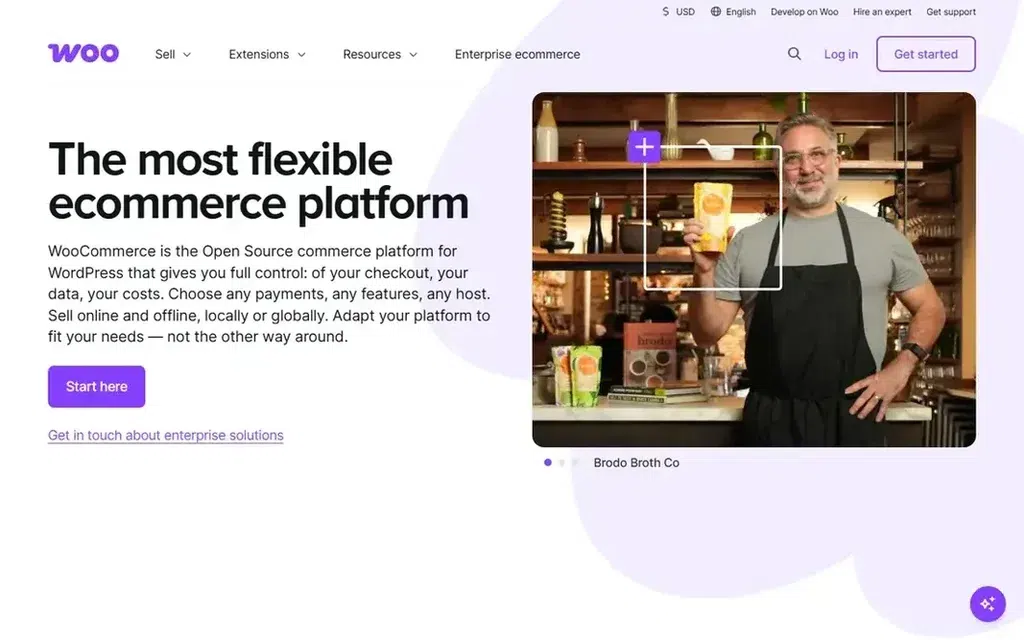
WooCommerce targets open-source store control. Choose WooCommerce when control and openness outweigh convenience. In daily use, since it is open source, teams can shape the store around their own requirements and choose their hosting environment.
WooCommerce is the open-source ecommerce system that helps merchants and developers build companies for the long term. Merchants without technical support may find continuing upkeep heavier than on a completely hosted product. WooCommerce pricing: $29 per month. Free plan details: Not stated.
Points against: More technical upkeep required.
- Open-source ecommerce platform
- Geared toward merchants and developers
- Hosting is separate from the product
Salesforce Commerce Cloud works best for Commerce within the Salesforce ecosystem. It suits organizations already working in the Salesforce ecosystem that want commerce tied into their existing operations.
Salesforce Commerce Cloud shows no starting price here, so confirm the cost on the vendor site. Free access: Not stated.
The main drawbacks: Integration planning required.
- Suits Salesforce-connected operations
- Commerce Cloud offering from Salesforce
- Best value for existing Salesforce users

Shopify works best for all-in-one hosted storefronts. Shopify presents itself as an all-in-one commerce system that merges storefront building with tools for managing a business.
The trade-off is that deep infrastructure customization stays restricted compared to self-hosted choices. More specifically, choose Shopify when speed of setup and integrated tools matter more than low-level control. Entry price for Shopify: $19 per month. Free plan details: Free trial.
Limits to weigh: App extras can expand complexity.
- Hosting and commerce tools in one system
- AI-assisted store building
- Less control over server-level configuration
Squarespace was built for design-led small storefronts. Commerce features are available for sellers who want a refined storefront without deep technical work.
Watch-outs: Fewer developer-level controls.
As for the details, the system is less suited to large catalogs or complicated B2B operations. Pick Squarespace when presentation and simplicity matter more than commerce extensibility. The starting price for Squarespace: $12 per month. Free options: Free trial.
- Domain name setup included
- Configurable website templates
- Commerce depth is modest
Think of Adobe Commerce for enterprise B2B and B2C experiences. Adobe Commerce, also known as Magento, is positioned as an AI-powered composable ecommerce system for B2B and B2C companies. It emphasizes personalized experiences at global scale.
For everyday use, smaller merchants may find the product heavier than needed. On top of that, pick Adobe Commerce when personalization and global B2B or B2C operations are central requirements. Complexity is the primary caution: composable architectures demand planning and specialist skills. Adobe Commerce shows no starting price here, so confirm the cost on the vendor site. Free access: Not stated.
Main advantages: AI-powered personalization.
What to check first: Implementation complexity.
- Composable commerce architecture
- Global scale positioning
- Needs specialist resources

For scalable multi-channel commerce, BigCommerce is a natural candidate. The system targets merchants who expect to expand across markets and sales channels without rebuilding their storefront.
Teams wanting a very straightforward storefront may prefer a lighter builder. More specifically, smaller sellers may find the system's scope bigger than they need at launch. BigCommerce does not show a starting price in this comparison, so check the vendor site for current pricing. Trial and free access: Not stated.
Limits to weigh: Setup demands planning.
- Built for brands, regions, channels
- Single scalable foundation
- Feature depth may exceed small-store needs
Selection criteria
The comparison looks at four things: starting price, free access, how well the feature set matches hosting provider for ecommerce platforms, and the main limit of each tool. Figures are shown as the vendors publish them. Billing terms, seat minimums and add-ons can change the real cost. We ordered the tools by general fit, then by how clearly pricing is shown, then by free access. A buyer with unusual needs may reorder them.
Before you commit
- Ask Salesforce Commerce Cloud, Adobe Commerce and BigCommerce for a written quote, since no starting price is shown.
- Use real work to test the free trial from Shopify and Squarespace, rather than a demo project.
- Read the limits listed for WooCommerce first: hosting is separate from the platform.
- Find out whether the entry plan of Adobe Commerce covers your must-haves or only a trimmed-down version.
- Ask BigCommerce whether prices are locked for the first term and what happens at renewal.
FAQ
How are the hosting provider for ecommerce platforms ordered?
WooCommerce sits first and BigCommerce last because the order follows typical fit for hosting provider for ecommerce platforms, then price clarity and free access. It is a judgement call, so read each profile for fit and limits.
When should I choose WooCommerce over a hosted system?
WooCommerce is open source and does not bundle hosting itself. So it fits teams that want to choose their own hosting and shape the stack.
Can I try these options before paying?
Often, yes. Shopify and Squarespace offer a free trial. Use your own data and a real task during the test, and check what the free tier or trial limits before you rely on it. All 6 picks in this hosting provider for ecommerce platforms comparison list a starting price, free plan details and the main limits on their cards above.
Is WooCommerce the right pick for everyone comparing hosting provider for ecommerce platforms?
No single tool suits every team. WooCommerce comes first because it fits open-source store control, while Salesforce Commerce Cloud suits Commerce within the Salesforce ecosystem and Shopify suits all-in-one hosted storefronts. Match the tool to your own size, budget and workflow before deciding.
Do these tools publish their prices?
Not all of them. Salesforce Commerce Cloud, Adobe Commerce and BigCommerce publish no starting price, so expect a quote request for those. The rest, WooCommerce included, show a starting price, though seats and billing terms still change the final cost.
Sources
- https://woocommerce.com
- https://www.salesforce.com/commerce
- https://www.shopify.com
- https://www.squarespace.com
- https://business.adobe.com/products/magento/magento-commerce.html
- https://www.bigcommerce.com