Best Goal Setting Software for OKR Tracking for 2026: Our 6 Vetted Picks
Best goal setting software for OKR tracking in 2026: 6 contenders with entry costs and free tiers. Every tool lists pros and cons. Built for quick decisions.
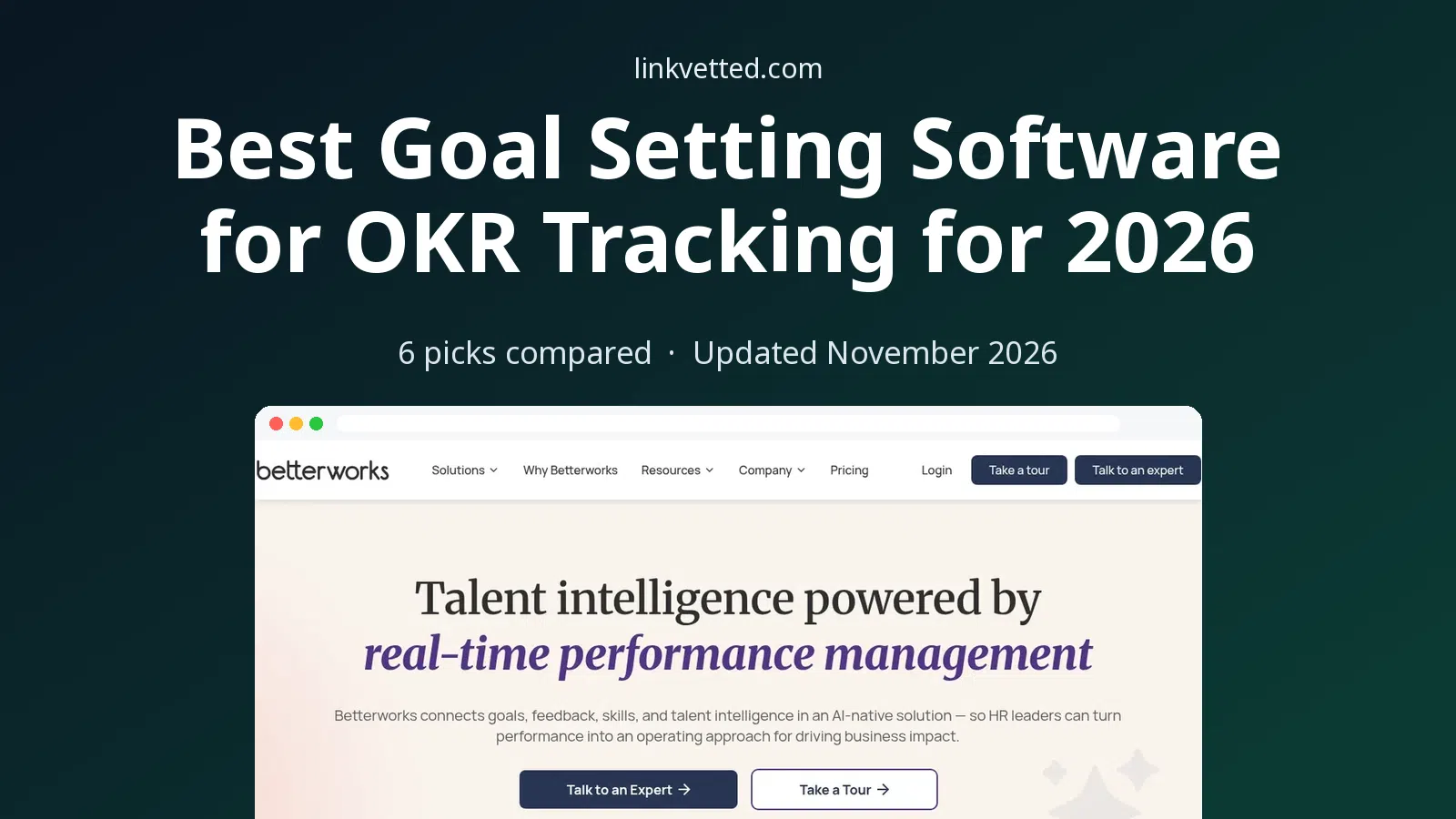
- Editor's choice
 Weekdone
Structured goals with weekly reporting
Starts atSee websiteVisit weekdone.comFull review - Great alternative
 Betterworks
Live performance and talent intelligence
Starts at$8 per user a monthVisit betterworks.comFull review - Also consider
 Perdoo
Focused OKR and strategy execution
Starts at€6.40 per user a monthVisit perdoo.comFull review
Direct answer
If you need structured goals with weekly reporting, Weekdone is the first tool to look at here. Listed starting prices: Betterworks from $8 per user a month, Perdoo from €6.40 per user a month and Lattice from $4 per seat per month. Betterworks is the stronger choice for live performance and talent intelligence, while Perdoo suits focused OKR and strategy execution. The other 3 tools in the list cover narrower or pricier cases.
TL;DR:
- Number one here is Weekdone, a fit for structured goals with weekly reporting.
- 15Five suits continuous performance management with goals.
- Check the limits for Workboard before you commit: enterprise orientation may overwhelm small teams.
- 15Five is the lowest-priced starter here at $2 per employee per month.
Last checked November 2026. Prices and plan details were read from the vendors' own pages in November 2026; vendors change plans often, so confirm the current price on the vendor site before you buy.
Quick comparison
| Tool | Best for | Starts at | Free plan? | |
|---|---|---|---|---|
| Weekdone | Structured goals with weekly reporting | See website | Yes | Visit |
| Betterworks | Live performance and talent intelligence | $8 per user a month | Not stated | Visit |
| Perdoo | Focused OKR and strategy execution | €6.40 per user a month | Yes | Visit |
| Workboard | Enterprise strategy execution with OKRs | See website | Not stated | Visit |
 Lattice | OKRs tied to performance management | $4 per seat per month | Not stated | Visit |
 15Five | Continuous performance management with goals | $2 per employee a month | Not stated | Visit |
The 6 tools in detail
LinkVetted put together this guide to goal setting software for OKR tracking for readers who want a clear shortlist without reading every vendor page. It compares 6 tools on starting price, free plans, who each one suits and where each one falls short.
Weekdone serves structured goals with weekly reporting. Weekdone presents itself as OKR software for goal tracking and weekly status reporting. As for the details, Weekdone leans toward goal tracking and weekly reporting instead of broader talent or performance management.
Where it falls short: Best fit for teams that like weekly cadence.
Confirm how weekly reporting maps to your existing meeting cadence before rolling it out. On top of that, organizations needing those capabilities may combine it with other tools. This comparison lists no price for Weekdone; ask the vendor. Weekdone has a free plan.
- Weekly plans and status reporting
- Live progress views
- Less emphasis on talent management
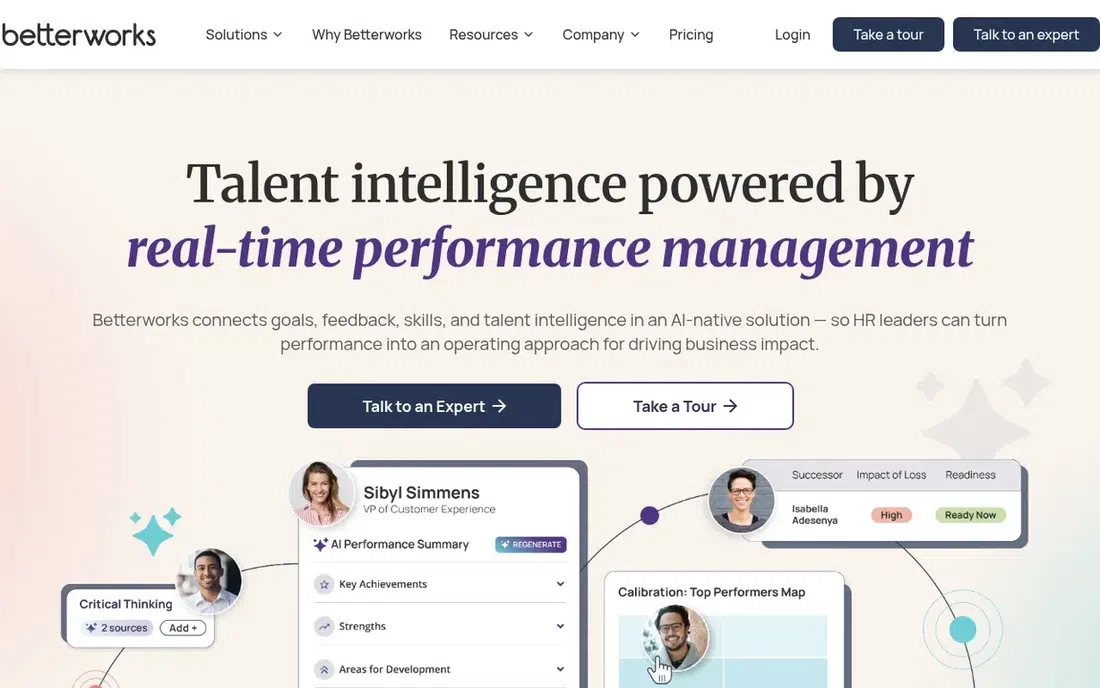
Betterworks is a good fit for live performance and talent intelligence. Betterworks presents itself as live performance management and talent intelligence software. Its homepage describes connecting goals, feedback, skills and talent intelligence to drive execution and better talent decisions.
Downsides: Not a goal-only tool.
If your priority is only structured goal tracking with weekly reporting, a focused choice may be simpler to run. The product's breadth means setup and adoption take planning, and small teams may prefer a leaner OKR tool. Price to start with Betterworks: $8 per user per month. Trial and free access: Not stated.
- Frames performance as a growth engine
- Links goals with feedback and skills
- Feature breadth may need onboarding effort
Perdoo is aimed squarely at focused OKR and strategy execution. Success relies on internal OKR discipline.
Limits to weigh: Narrower than full HR suites.
Worth adding: check how reporting and alignment features match your planning cycle before choosing. Also, Perdoo describes itself as OKR and strategy execution software made for the AI era, positioned as capable enough to run a business yet straightforward enough for company-wide adoption. Perdoo pricing: €6.40 per user per month. You can start on Perdoo without paying.
- OKR-first positioning
- Strategy execution emphasis
- Adoption relies on internal discipline
Workboard
Best for: Enterprise strategy execution with OKRs
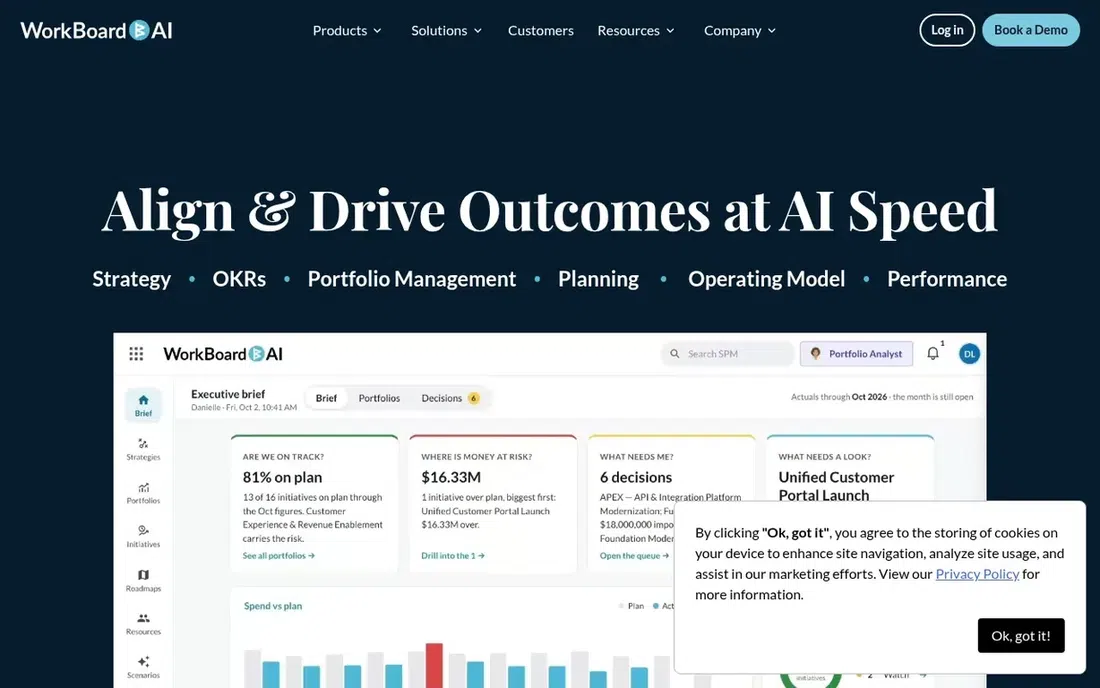
Workboard makes the most sense for enterprise strategy execution with OKRs. Its homepage emphasizes aligning people and capital to strategic outcomes.
Workboard does not show a starting price in this comparison, so check the vendor site for current pricing. Trial and free access: Not stated.
The main drawbacks: Enterprise orientation may overwhelm small teams.
- Brings talent management elements
- Frames OKRs within strategy execution
- Strategy suite is wide in scope
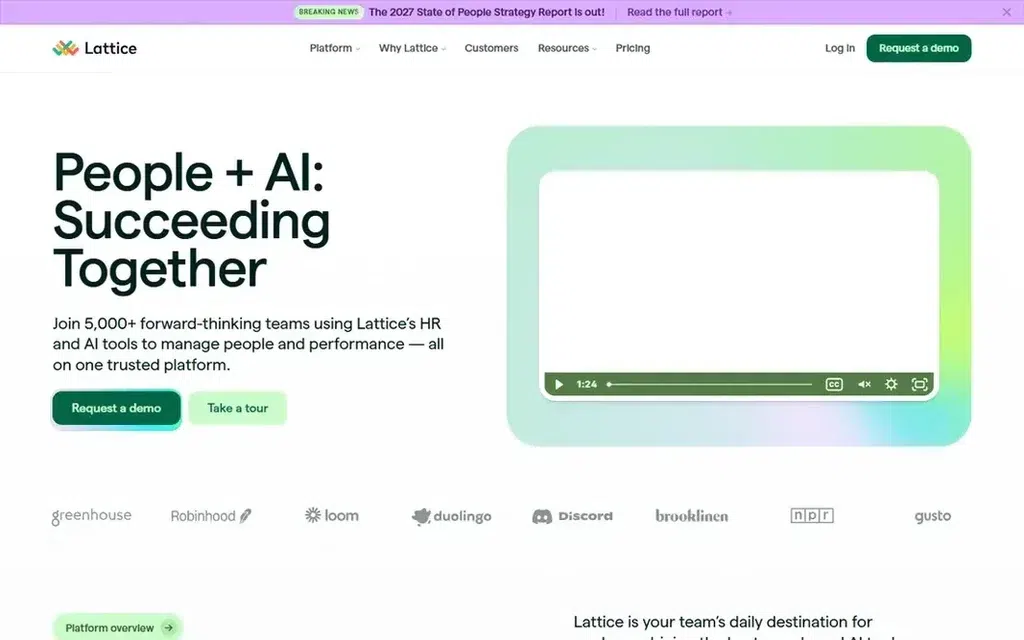
Lattice is built with OKRs tied to performance management in mind. Teams that want OKRs connected to reviews, feedback and manager workflows in one place are the clearest fit, notably when the organization already values a consolidated HR stack.
In daily use, organizations looking for a narrow, goal-only tool could compare more straightforward choices. Lattice starts at: $4 per seat per month. Free plan details: Not stated.
The main drawbacks: Best value when HR features are used.
- Merges goals with performance and people tools
- Single product for HR workflows
- Wide product may feel heavy for OKR-only needs
15Five works best for continuous performance management with goals. Since the system centers on performance management, organizations wanting deep OKR-specific reporting may have to compare dedicated OKR tools. More specifically, confirm how goal features support your review and check-in rhythm before adopting.
What to check first: OKR depth may vary by configuration.
In daily use, smaller teams may also prefer a more straightforward setup. In practice, 15Five is presented as a continuous performance management system that aims to build effective managers, engaged employees and high-performing organizations. On cost, 15Five starts like this: $2 per employee per month. Trial and free access: Not stated.
- Engagement-oriented framing
- Focus on manager effectiveness
- Performance-first instead of OKR-first
How we built this list
LinkVetted looked at what each vendor publishes: pricing, plan limits, feature coverage for goal setting software for OKR tracking and stated drawbacks. No hands-on testing is claimed. Prices and plan limits come from vendor pages and can change, so confirm them on the vendor site before you buy. Position on the page reflects fit for a typical buyer first, with price clarity and free access breaking ties. Treat it as a guide, not a ruling.
A buyer's checklist
- Get a written quote from Weekdone and Workboard; the list shows no starting price for them.
- Look at free plan limits closely: Weekdone and Perdoo have one, and the caps decide whether it is usable for real work.
- Read the limits listed for Weekdone first: less emphasis on talent management.
- Confirm that Weekdone connects to the apps your team already uses, on the plan you would actually buy.
- Confirm you can export your data from Workboard, so leaving later does not mean losing records.
FAQ
Can small teams use enterprise OKR systems?
They can, but wide suites may add complexity a small team does not need. Focused tools frequently suit smaller organizations better, whereas bigger businesses benefit from alignment and reporting across numerous teams.
What should OKR tracking software contain?
Look for structured goal setting, alignment across teams, progress reporting and a cadence for check-ins. The right mix relies on whether you want OKRs inside a broader performance system or as a focused standalone system.
How should we plan an OKR tool migration?
Map current goals, owners and reporting first, then confirm how the new tool takes care of history and permissions. Run a restricted rollout before company-wide adoption so cadence and reporting stay consistent.
Is Weekdone the right pick for everyone comparing goal setting software for OKR tracking?
No single tool suits every team. Weekdone comes first because it fits structured goals with weekly reporting, while Betterworks suits real-time performance and talent intelligence and Perdoo suits focused OKR and strategy execution. Match the tool to your own size, budget and workflow before deciding.
Can I try these tools before paying?
Often, yes. Weekdone and Perdoo have a free plan. Use your own data and a real task during the test, and check what the free tier or trial limits before you rely on it.
How are the tools for goal setting software for OKR tracking ordered?
The order follows typical fit for goal setting software for OKR tracking, with Weekdone first and 15Five last, then price clarity and free access. It is editorial judgement, not a score, so another team could rank the tools differently.
Sources
- https://weekdone.com
- https://www.betterworks.com
- https://www.perdoo.com
- https://www.workboard.com
- https://lattice.com
- https://www.15five.com