8 Best Food Delivery Apps US in 2026
Looking for the best food delivery apps us shoppers use most? We compare eight services on coverage, fees, subscriptions and restaurant choice across the US.
- Editor's choice
 DoorDash
Widest US coverage
Starts atFreeVisit doordash.comFull review - Great alternative
 Uber Eats
Wide choice and Uber One perks
Starts atFreeVisit ubereats.comFull review - Also consider
 Grubhub
Prime member value
Starts atFreeVisit grubhub.comFull review
TL;DR:
- DoorDash has the widest coverage in the US, while Uber Eats is the strongest second choice in most cities.
- Grubhub+ is free with Amazon Prime, which makes it the best value subscription for Prime members who order often.
- Delivery fees are only part of the total cost. Menu markups, service fees and tips often add far more than the delivery fee itself.
- ChowNow and Slice suit customers who want to support local restaurants directly, with less markup on some orders.
Quick comparison
| Tool | Best for | Starts at | Free plan? | |
|---|---|---|---|---|
| DoorDash | Widest US coverage | Free | Yes | Visit |
| Uber Eats | Wide choice and Uber One perks | Free | Yes | Visit |
| Grubhub | Prime member value | Free | Yes | Visit |
 Instacart | Grocery plus restaurant delivery | Free | Yes | Visit |
 GoPuff | Convenience and late night orders | Free | Yes | Visit |
 ChowNow | Direct local restaurant orders | Free | Yes | Visit |
 Slice | Local pizza shops | Free | Yes | Visit |
 Favor Delivery | Texas delivery | Free | Yes | Visit |
The best food delivery apps us customers can use
Food delivery in the US is dominated by a few large apps, plus smaller services that serve local restaurants or specific regions. These eight cover national choice, grocery, convenience and local pizza, so you can pick by city, budget and taste.
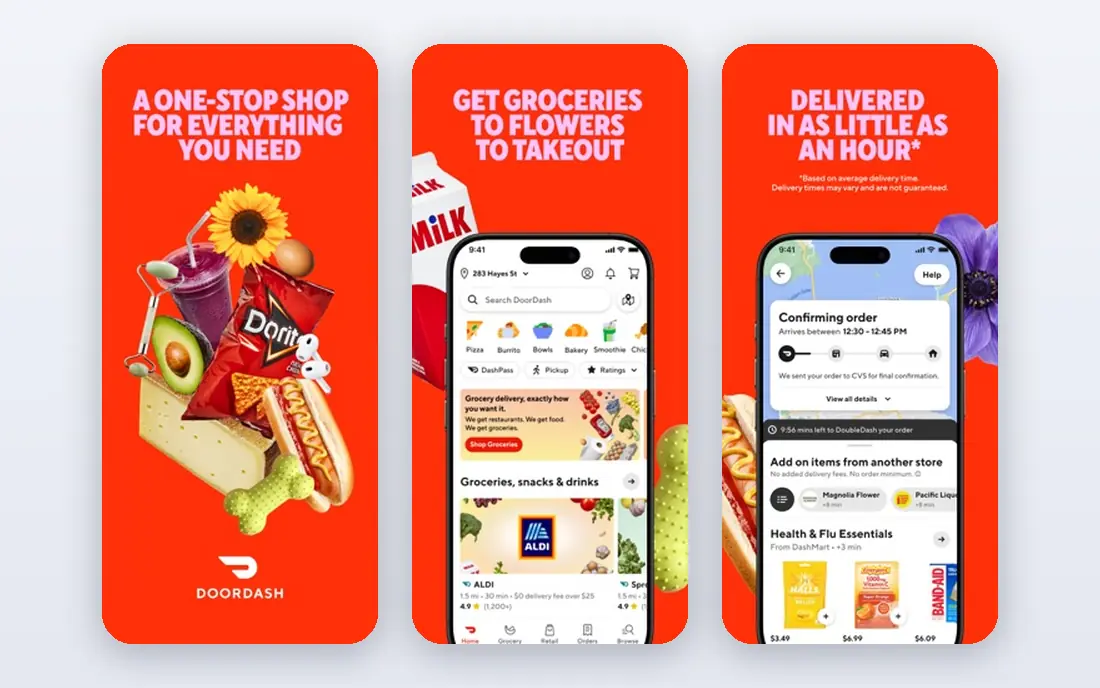
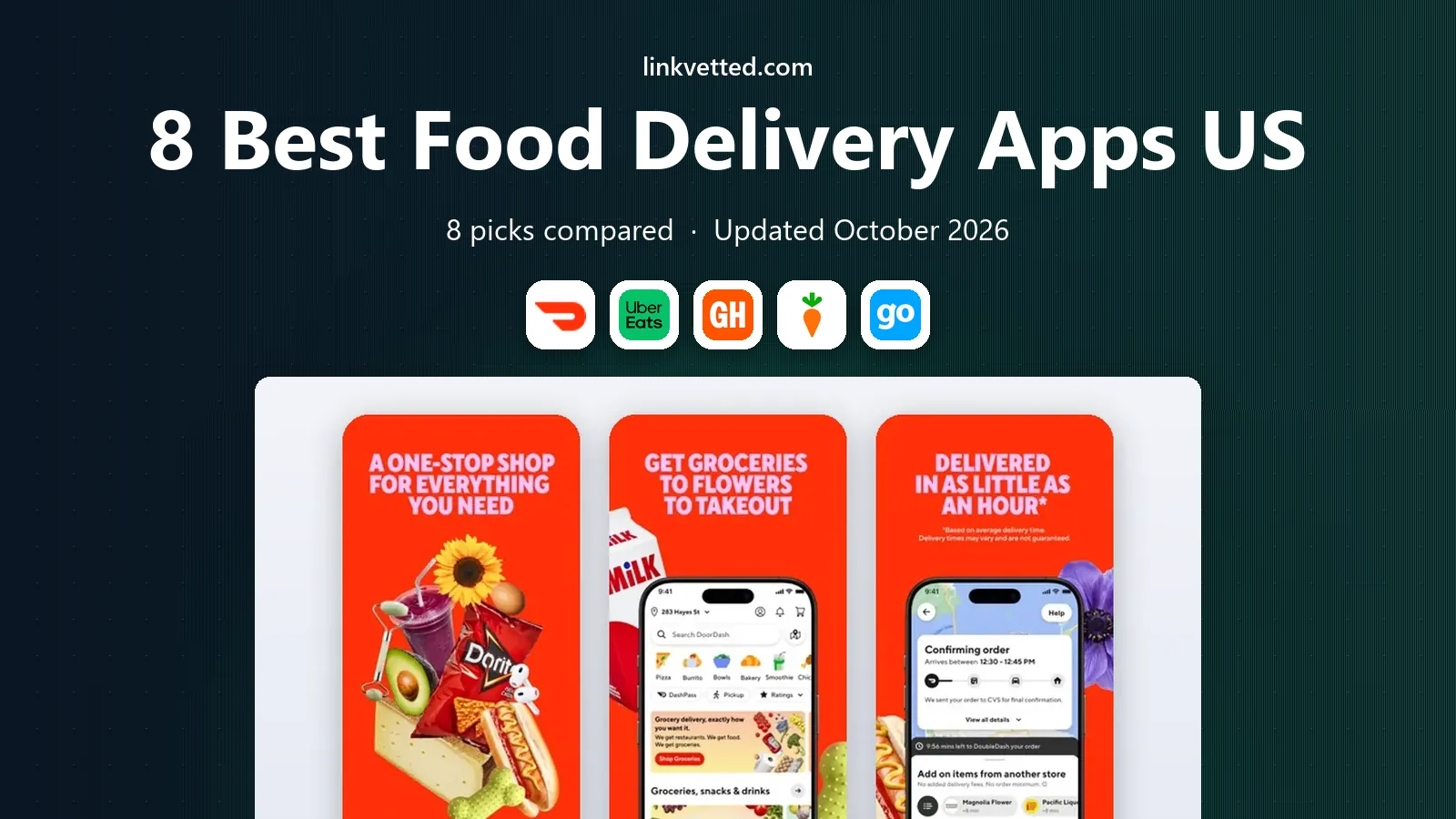
DoorDash is our pick for most US customers because it works in the most places and lists the most restaurants, grocers and retailers. Ordering is simple, tracking is clear, and DashPass at $9.99 per month cuts delivery and service fees on eligible orders over a set amount. Student and partner discounts appear often.
The catch is total cost. Restaurants often set higher menu prices in the app to cover commission, and service fees, delivery fees and tips stack on top. Compare the app total with pickup before you order, and use DashPass only if you order often enough to cover its monthly cost.
- Largest restaurant and retail coverage
- DashPass cuts fees for frequent orders
- Strong tracking
- Menu prices can exceed in store prices
- Fees and tips add up fast
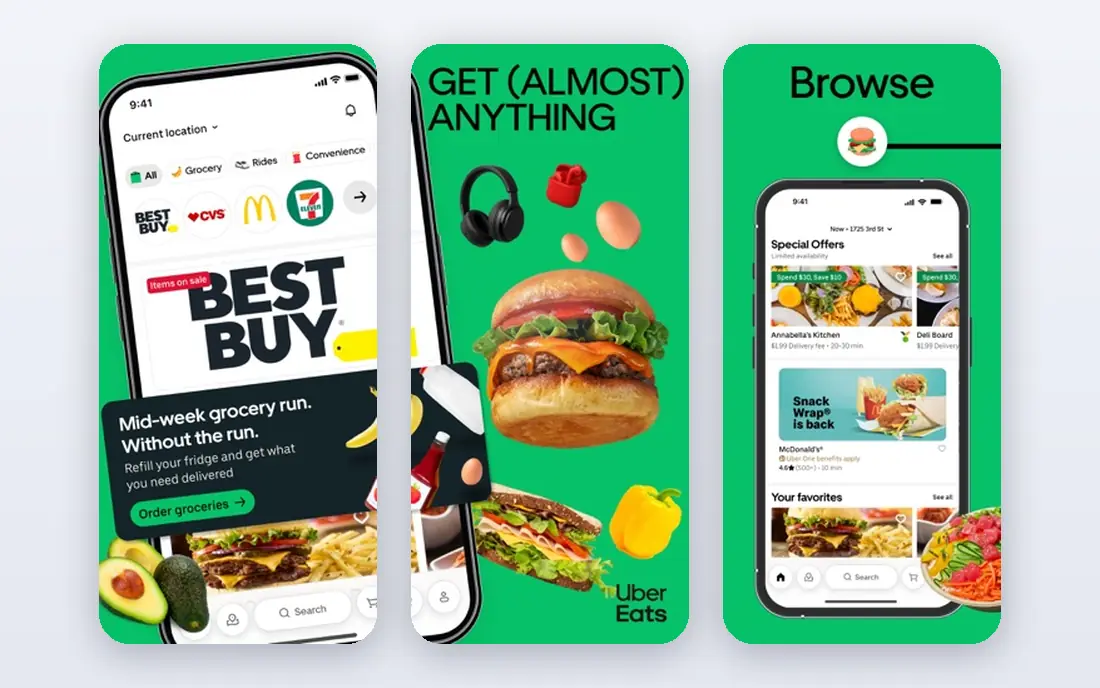
Uber Eats is the strongest rival to DoorDash in most large and mid sized cities. It lists a wide range of restaurants, plus grocery and convenience items in many areas, and it shares an account with Uber rides. Uber One at $9.99 per month cuts delivery and service fees on eligible orders and adds grocery perks.
Pricing shifts with demand and distance, so the same order can cost more at peak times. Uber Eats suits customers who already use Uber and want one membership for rides and food. For the lowest total, still check DoorDash and Grubhub for the same restaurant before you pay.
- Broad city coverage
- Uber One bundles food and ride perks
- Good search and filters
- Fees vary with demand
- Menu markups still apply
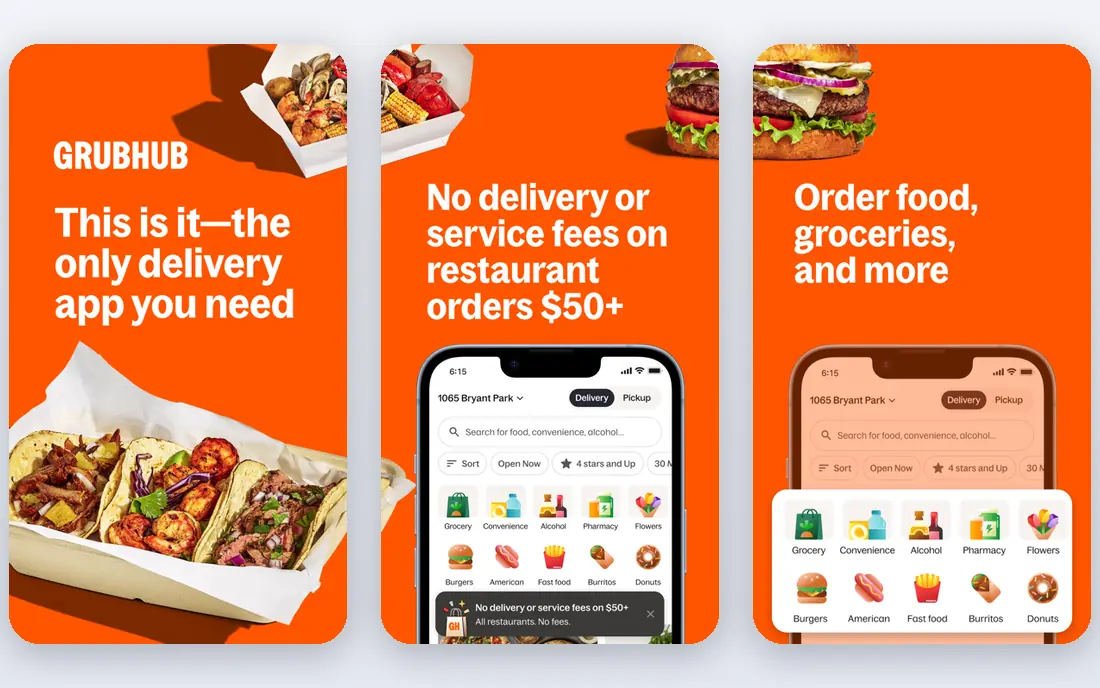
Grubhub remains a major US option, with a large restaurant list and strong search filters for cuisine, price and dietary needs. Its best value comes through Amazon Prime, which includes Grubhub+ at no extra cost for eligible members. That membership cuts delivery fees on eligible orders and adds member deals.
Outside major cities, Grubhub coverage can be thinner than DoorDash. Fees, service charges and menu markups still apply, so the subscription saves on fees rather than on food prices. Prime members should check Grubhub first, since the membership is already paid for.
- Grubhub+ free with Amazon Prime
- Large restaurant list
- Good filtering
- Coverage is thinner in some smaller cities
- Fees still apply on many orders
Instacart started as a grocery service and now also delivers restaurant food in many areas. That mix suits households that want one app for weekly groceries and an occasional takeout order. Scheduled delivery helps plan around work, and Instacart+ at $9.99 per month cuts delivery and service fees on eligible orders.
Restaurant choice is smaller than the food first apps, and grocery fees depend on store, order size and time slot. Use Instacart when groceries are the main job and restaurant delivery is a bonus, rather than as your only food app.
- Grocery and restaurant orders in one app
- Scheduled delivery
- Instacart+ cuts fees
- Grocery delivery fees vary
- Restaurant choice is smaller than DoorDash
GoPuff runs its own local warehouses, which lets it deliver snacks, drinks, household essentials and some prepared items quickly, often late at night. It suits a late snack run, a missing ingredient or a small essentials order better than a full family dinner from a sit down restaurant.
The menu is convenience focused, so you will not find the same restaurant depth as DoorDash or Uber Eats. Delivery fees and minimums vary by market. GoPuff is best as a second app for quick, small orders rather than as a replacement for a restaurant app.
- Fast convenience delivery
- Late night hours in many cities
- Snacks, drinks and essentials
- Limited full restaurant menus
- Delivery area is smaller than national food apps
ChowNow helps local restaurants take orders directly, often through their own websites and apps, with ChowNow handling ordering and delivery logistics. Because restaurants pay a flat fee model rather than a high per order commission in many setups, menu prices can be closer to in store prices.
The trade off is choice. ChowNow lists fewer restaurants than the national marketplaces, and coverage varies by city. If you have a favourite local spot that uses ChowNow, ordering direct there can save money and support that restaurant more than a marketplace order.
- Orders go direct to restaurants
- Less commission pressure on menus
- Local focus
- Smaller restaurant list
- Delivery coverage varies by city
Slice is built for independent pizza shops, helping them take online orders without joining a large marketplace on marketplace terms. Customers get a focused pizza search, with filters for style, toppings and local shops, plus deals from participating stores. That focus makes it easy to find a local shop rather than a chain.
It will not replace a general food app, since the menu is pizza centred. Coverage also varies, with stronger lists in cities where independent shops have joined. Pizza lovers should check Slice before a general app, since local shops often price more fairly there.
- Focus on independent pizza shops
- Direct ordering tools
- Good pizza search
- Pizza only focus
- Coverage varies by area
Favor Delivery serves Texas cities with restaurant, grocery, alcohol where allowed, and essentials delivery through local runners. It is well established in cities such as Austin, Houston, Dallas and San Antonio, and it suits Texans who want a local alternative to the national apps.
The limit is geography. Favor does not serve customers outside Texas, so travellers and other states need a national app. For Texas residents, Favor is worth comparing on fees and restaurant choice, since local competition can mean better deals.
- Strong Texas coverage
- Restaurant, grocery and essentials
- Local runner model
- Texas only
- Smaller national footprint
How we picked these
We compared official app pages, pricing and membership pages, and public coverage reports for food delivery services operating in the United States in October 2026. We kept services with live ordering, clear fee and membership terms, and real restaurant or grocery coverage. We weighed coverage, restaurant choice, total cost, subscription value, tracking and local restaurant support, because the cheapest app on paper is not always the cheapest at checkout.
How to keep delivery costs down
Compare the same restaurant on two apps before you order. Menu prices, delivery fees and service fees differ, and a small difference on each line can add several dollars to one order. Pickup is often the cheapest option of all, so use delivery for convenience and pickup when you are already out.
Use one subscription, not three. DashPass, Uber One, Grubhub+ and Instacart+ each cost $9.99 per month in many listings, and holding several at once rarely pays. Pick the app you order from most, check whether Prime already gives you Grubhub+, and cancel a membership in months when you order less.
Watch the hidden layers of cost
Menu markup is the largest hidden layer. Restaurants often raise app menu prices to cover commission, so the food itself costs more than in store. Service fees, delivery fees, small order fees and tips add further layers. A quick check of the restaurant own menu can show whether the markup is worth the convenience.
Order in ways that cut fees
Larger orders spread fixed fees over more food, and meeting a subscription minimum can remove a delivery fee. Group orders with household members when you can, avoid peak surcharge times if the app shows them, and check for member deals before you add extras. Small habits like these save more over a month than chasing a single promo code.
FAQ
Which food delivery app is cheapest in the US?
There is no single cheapest app, because menu prices and fees vary by restaurant, city and time. Uber Eats often shows lower total markups in some comparisons, while Grubhub+ is cheapest for Prime members since the membership is included. Compare the same order on two apps for your own restaurants to get a true answer.
Is DoorDash or Uber Eats better?
DoorDash usually wins on coverage and restaurant count, while Uber Eats wins for customers who already use Uber and want Uber One perks across rides and food. Both charge similar fee layers. Try both in your city, since restaurant choice and delivery times differ by neighbourhood.
Are DashPass and Uber One worth it?
They are worth it if you order often enough to save more in fees than the $9.99 monthly cost. Four orders a month on one platform is a rough break even point in many comparisons, but your own order sizes matter. If you order once a month, pay per order instead.
Can I get free delivery?
Yes, in some cases. DashPass, Uber One, Grubhub+ and Instacart+ offer free or reduced delivery on eligible orders over a set amount. Grubhub+ is free with Amazon Prime for eligible members. Free delivery still leaves service fees, menu markups and tips, so check the full checkout total.
Which app is best for local restaurants?
ChowNow and Slice are built to support local and independent restaurants directly, with models that put less commission pressure on menus. Ordering direct from a restaurant own website, where available, can also help. For the widest local choice, DoorDash and Grubhub still list more local spots in most cities.