Best Food Delivery App for Fast Delivery Times in 2026: 8 Apps Compared
We compare the best food delivery app for fast delivery times, with average times, coverage, subscriptions, fees and ordering tips for US orders in 2026.
- Editor's choice
 DoorDash
Fastest average delivery and widest coverage
Starts atFreeVisit doordash.comFull review - Great alternative
 Uber Eats
Dense cities and Uber users
Starts atFreeVisit ubereats.comFull review - Also consider
 Grubhub
Reliable estimates and Northeast cities
Starts atFreeVisit grubhub.comFull review
TL;DR:
- DoorDash is our pick for fastest average delivery in the US comparisons we reviewed, with reported averages around 26 to 32 minutes, though your city and time of day matter more than any national average.
- Grubhub is often the most likely to arrive earlier than its quoted time, which makes its estimates feel more dependable even when its average is slightly slower.
- Uber Eats is strongest in dense cities and for Uber users, but its average delivery time in comparisons was often the slowest of the big three.
- Speed depends on restaurant prep time, driver supply and distance, so the fastest app in your neighbourhood may differ from the national winner.
- Subscriptions from DoorDash, Uber Eats and Grubhub all cost $9.99 per month in the comparisons we reviewed, and they mainly save on delivery fees, not on prep time.
Quick comparison
| Tool | Best for | Starts at | Free plan? | |
|---|---|---|---|---|
| DoorDash | Fastest average delivery and widest coverage | Free | Yes | Visit |
| Uber Eats | Dense cities and Uber users | Free | Yes | Visit |
| Grubhub | Reliable estimates and Northeast cities | Free | Yes | Visit |
 goPuff | Fast convenience and snack delivery | Free | Yes | Visit |
 Instacart | Fast grocery and restaurant delivery | Free | Yes | Visit |
 ChowNow | Local restaurants with direct ordering | Free | Yes | Visit |
 Slice | Fast pizza delivery from local shops | Free | Yes | Visit |
 Amazon Fresh | Fast grocery delivery for Prime members | Free | Yes | Visit |
The best food delivery apps for fast delivery times
We compared official feature pages, app store listings, pricing pages and public delivery time comparisons. Our pick for most US users is DoorDash for speed and coverage, with Grubhub as a strong second choice when estimate reliability matters.
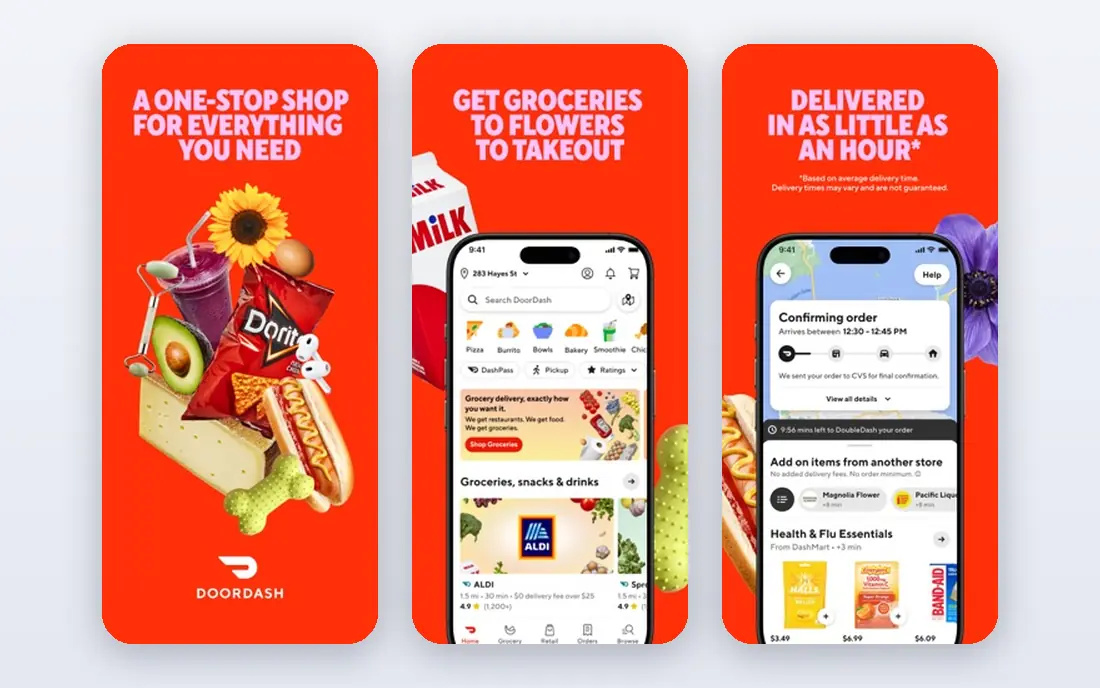
DoorDash leads this list because it combines the widest coverage with the fastest reported averages. One comparison citing Intouch Insight put DoorDash at about 26 minutes on average, versus about 36 minutes for Grubhub and 38 minutes for Uber Eats, while another multi-city comparison put DoorDash at 32 minutes, still ahead of its rivals. Coverage in more than 7,000 cities also means DoorDash is often the only fast option in suburbs and smaller markets.
The honest catch is reliability of the estimate. In the same research, DoorDash was most likely to miss its promoted time, with about 29 percent of deliveries later than quoted. That does not cancel the speed advantage, but it means you should treat the quoted time as a guide, not a promise, especially at weekend dinner peak times.
- Widest US coverage
- Reported fastest average times in several comparisons
- DashPass at $9.99 per month for $0 delivery fees on eligible orders
- Most likely among the big three to miss its quoted time in one comparison
- Fees and small order fees vary by order
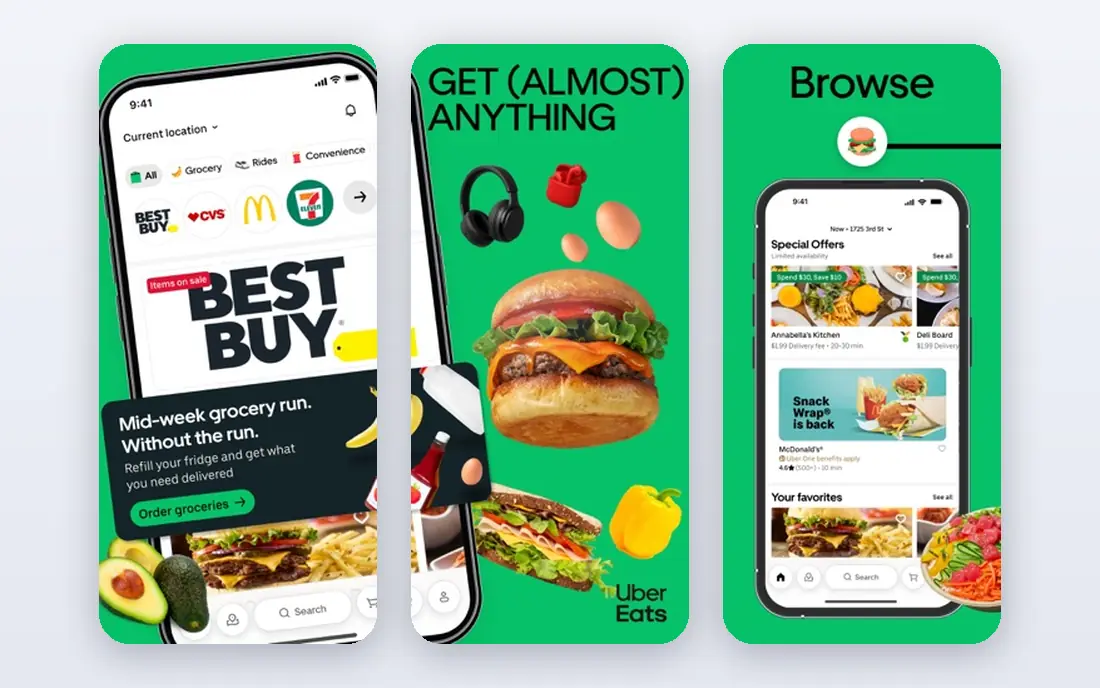
Uber Eats is a strong choice in dense cities, where its driver overlap with Uber rides can help, and for users who already use Uber One for rides and delivery benefits. The app tracks orders clearly, offers a wide restaurant range, and Uber One at $9.99 per month can cut delivery fees on eligible orders. For a city-centre user, the difference from DoorDash is often small in practice.
The weakness is the average. Comparisons we reviewed put Uber Eats at about 34 to 38 minutes on average, behind DoorDash, and one study found Uber Eats most likely to be late against its estimated time. Restaurant prep time still drives much of that gap, so pick a nearby restaurant with a short prep estimate if speed is your main goal.
- Strong in dense cities
- Uber One at $9.99 per month
- Wide restaurant range and good tracking
- Slower average times than DoorDash in several comparisons
- Fees vary by restaurant and time
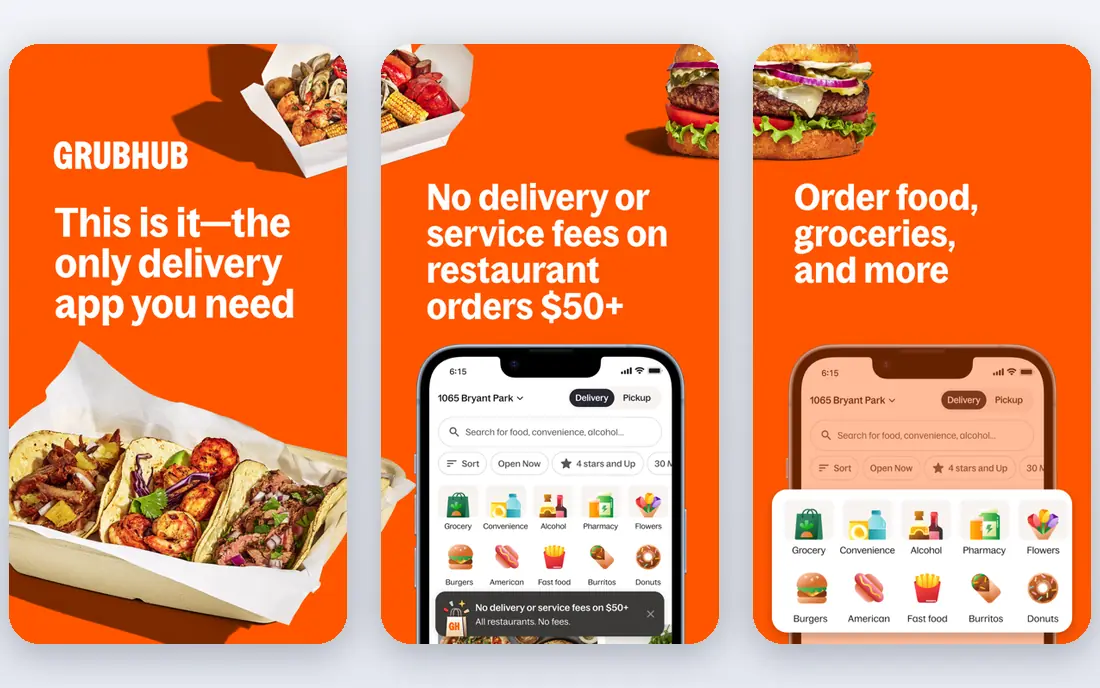
Grubhub earns its place through estimate reliability, which matters when you need food by a certain time. In one consumer study, three-fourths of Grubhub deliveries arrived earlier than the promoted time, ahead of Uber Eats at 72 percent and DoorDash at 69 percent, and Grubhub was also most likely to beat its post-order estimate. That makes Grubhub a good pick when you value a dependable arrival window over the fastest possible average.
The trade-off is coverage and average speed. Grubhub covers about 4,000 cities in the comparisons we reviewed, fewer than DoorDash, and its average of about 35 to 36 minutes sits between DoorDash and Uber Eats. In Northeast legacy markets, where Grubhub is strongest, that gap often disappears, so local performance should guide your choice.
- Most likely to arrive earlier than quoted in one study
- Grubhub+ at $9.99 per month
- Strong in older Northeast markets
- Slower average than DoorDash in several comparisons
- Smaller coverage than DoorDash
goPuff is different from the big three, because it delivers from its own local centres rather than from restaurants, which can make delivery very fast for snacks, drinks and essentials. Orders are often ready in minutes, and late-night availability in many cities suits users who want a quick snack rather than a full meal. That model is why goPuff belongs in a speed list, even though it is not a restaurant app.
The limit is menu. You will not find a full restaurant dinner on goPuff, and coverage depends on whether your city has a goPuff centre nearby. For a fast convenience order, goPuff is excellent, but for a restaurant meal, DoorDash, Uber Eats or Grubhub will serve you better.
- Very fast delivery from local micro-fulfilment centres
- Snacks, drinks and essentials in one order
- Late-night availability in many cities
- Food range is convenience items, not full restaurant menus
- Coverage is city-based, not nationwide
Instacart is included because grocery speed matters, and its live shopper model can deliver a full shop faster than a weekly store trip. You can watch picking in real time, approve replacements, and get delivery in a chosen window, which is useful when you need ingredients quickly. Some areas also offer restaurant and retail delivery through Instacart, which widens its use.
The honest drawback is picking time. A grocery order needs a shopper to walk the store, so it will rarely beat a restaurant order for pure speed, and peak times can push windows later. For groceries and household essentials, Instacart is a fast, practical choice, but it should not be judged by restaurant delivery averages alone.
- Fast grocery delivery with live shopper updates
- Some restaurant and retail options
- Instacart+ for fee savings
- Speed varies by store and shopper availability
- Grocery orders take longer to pick than a restaurant order
ChowNow suits users who want to support a local restaurant directly while still getting delivery. Orders go to the restaurant, rather than through a marketplace that takes a large commission, and many restaurants offer pickup or delivery through ChowNow with clear timing. That direct link can mean fresher communication about prep time and order status.
The limit is scale. ChowNow does not have the driver network of DoorDash, so delivery speed depends on the restaurant and its local partners, and coverage is smaller. If your favourite local place uses ChowNow, it is a good, often cheaper route, but for the widest fast choice, the big three still lead.
- Direct ordering that supports local restaurants
- Often lower fees for restaurants
- Clear pickup and delivery options
- Coverage is smaller than the big three
- Delivery speed depends on the restaurant own drivers or partners
Slice is a specialist pick, and specialists can be fast. By focusing on local pizzerias, Slice streamlines ordering, reordering and delivery timing for one food type, and it helps small shops compete with large chains. For a Friday pizza order, that focus often means a smoother, faster experience than searching a general marketplace.
The obvious limit is scope. Slice will not help with sushi, tacos or groceries, and if your local pizzerias are not on Slice, the app is of little use. As a second app for pizza night, though, Slice is worth installing, especially if you order from the same local shop regularly.
- Focused on local pizzerias
- Easy reordering
- Pickup and delivery with clear timing
- Pizza only, so not a general food app
- Coverage depends on local pizzerias joining Slice
Amazon Fresh fits Prime members who want groceries delivered quickly, with same-day windows in many cities and a wide range of fresh and pantry items. Ordering through an Amazon account is simple, and delivery windows are clear, which helps when you need groceries by a certain time. For a household shop, that speed and range are strong.
The trade-off is that Amazon Fresh is a grocery service, not a restaurant delivery app, and its best value sits behind Prime membership. Availability also varies by city, so check your postcode before relying on it. For groceries, it is a fast option, but for a hot restaurant meal, DoorDash or Uber Eats remains the better pick.
- Fast grocery delivery windows for Prime members
- Wide product range
- Integration with Amazon accounts
- Best value needs Prime
- Restaurant meals are not the focus
- Availability varies by city
How we picked these
We compared official feature pages, pricing pages, app store listings and public delivery time comparisons, focusing on apps still active in the US in October 2026. We included the big three restaurant platforms, plus convenience, grocery and specialist apps, because fast delivery means different things for a pizza, a grocery shop and a snack order. Where delivery times came from third-party comparisons, we described them as reported averages, not as guarantees, because prep time, distance and driver supply vary by order.
Getting food faster, whatever app you use
The app matters, but order choices matter more. A nearby restaurant, a short prep time and an off-peak order will beat any app switch on a busy Friday night.
Order close and simple
Pick a restaurant near you, with a short quoted prep time, and keep the order simple during peak hours, because complex orders take longer to prepare. Check the quoted delivery range before you confirm, and compare the same restaurant across two apps if speed matters, because prep and driver availability can differ by platform. A restaurant five minutes away will usually beat a favourite twenty minutes away, however good the app.
Time your order around peaks
Weekday lunch and weekend dinner are the slowest windows, with comparisons showing weekend dinner orders taking 20 to 35 percent longer than weekday averages. Ordering just before peak, or choosing pickup for a nearby restaurant, can save more time than switching apps. If you must order at peak, allow extra time and track the order, rather than planning around the earliest quoted minute.
Use subscriptions only if you order often
DashPass, Uber One and Grubhub+ all cost $9.99 per month in the comparisons we reviewed, and they mainly cut delivery fees on eligible orders. They do not make the kitchen cook faster, so a subscription is worth it only if you order often enough to save more in fees than the monthly cost. Check minimum order rules and eligible restaurants in your area before subscribing, because coverage varies.
FAQ
What is the best food delivery app for fast delivery times?
DoorDash is our pick for fastest average delivery and widest coverage, based on several US comparisons that put it ahead of Grubhub and Uber Eats. Grubhub is our pick if estimate reliability matters most, because it was most likely to arrive earlier than quoted in one study. Your local results may differ, so compare the same restaurant on two apps in your area before deciding.
Why do delivery times vary so much by city?
Delivery time depends on restaurant prep time, driver supply, distance and traffic, all of which vary by city and neighbourhood. DoorDash tends to lead in suburbs and smaller markets, Grubhub and Uber Eats can lead in dense Northeast cities, and Sun Belt metros show a different pattern again. National averages are a starting point, not a promise for your street.
Is DoorDash faster than Uber Eats?
In the comparisons we reviewed, yes, DoorDash averaged about 26 to 32 minutes, while Uber Eats averaged about 34 to 38 minutes, though the exact gap varied by study and city. Uber Eats can be faster in dense cities where its driver overlap helps, and restaurant prep time can outweigh the platform gap. For a single order, the quoted time for that restaurant on each app is more useful than a national average.
Do subscriptions make delivery faster?
No, subscriptions such as DashPass, Uber One and Grubhub+ mainly reduce delivery fees on eligible orders, and they do not make restaurants prepare food faster or drivers arrive sooner. They can save money if you order often, and some offer priority support or other perks, but they are not a speed upgrade. Order timing and restaurant choice have a larger effect on actual delivery time.
What is the fastest way to get food delivered?
Order from a nearby restaurant with a short prep estimate, keep the order simple, and order outside peak dinner hours if you can. Compare quoted times across apps for the same restaurant, and consider pickup if the restaurant is close, because pickup removes driver wait time entirely. For snacks and essentials, a convenience service such as goPuff can be faster than a restaurant order.