Best FODMAP App in 2026: 8 Apps Compared
Looking for the best fodmap app? We compared 8 low FODMAP apps for food checks, symptom tracking, and reintroduction, so you can pick with confidence.
- Editor's choice
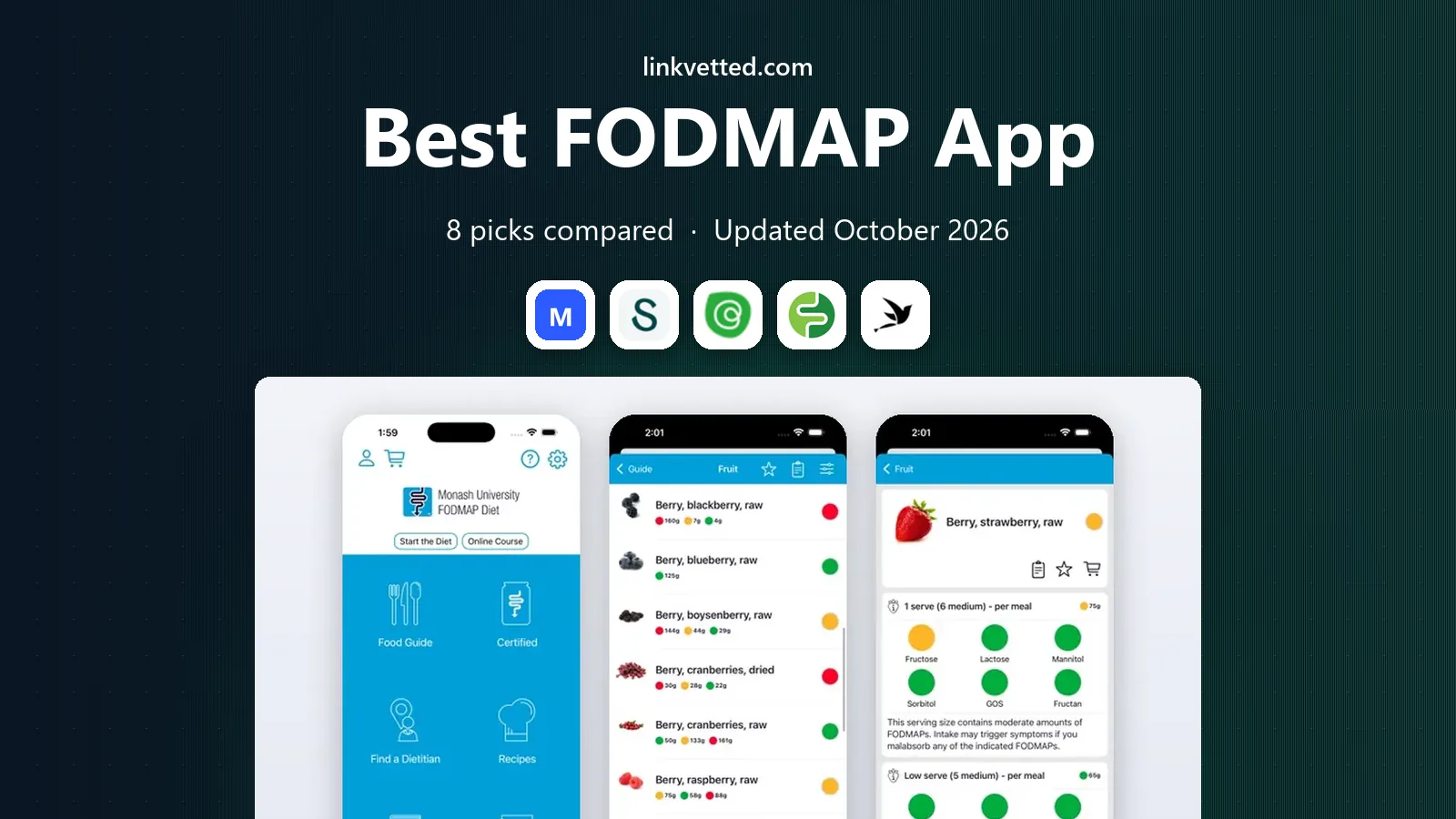
 Monash University FODMAP Diet
Tested food data and serving sizes
Starts at$7.99 one-timeVisit monashfodmap.comFull review - Great alternative
 Spoonful
Scanning packaged foods while shopping
Starts atFreeVisit spoonfulapp.comFull review - Also consider
 Cara Care
Tracking gut symptoms day by day
Starts atFreeVisit cara.careFull review
TL;DR:
- The Monash University FODMAP Diet app remains the reference for tested foods and safe serving sizes, while other apps add scanning, tracking, or coaching.
- A scanner such as Spoonful is best at the grocery store, but it cannot replace a symptom diary when you are testing reintroduction foods.
- Free apps can cover basic lookups, yet the fuller food databases, meal planners, and dietitian links usually sit behind a paid plan.
- This is general information only and is not medical advice. Talk with your doctor or a registered dietitian before starting or changing a low FODMAP diet.
Quick comparison
| Tool | Best for | Starts at | Free plan? | |
|---|---|---|---|---|
| Monash University FODMAP Diet | Tested food data and serving sizes | $7.99 one-time | No | Visit |
| Spoonful | Scanning packaged foods while shopping | Free | Yes | Visit |
| Cara Care | Tracking gut symptoms day by day | Free | Yes | Visit |
 FODMAP Friendly | Checking certified low FODMAP products | See website | See website | Visit |
 Fast FODMAP Lookup and Learn | Quick food lookups and learning | Free | Yes | Visit |
 FODMAP Companion | Simple elimination and reintroduction tracking | $14.99 one-time | No | Visit |
 Bowelle | A simple daily IBS diary | See website | See website | Visit |
 mySymptoms | Detailed food and symptom analysis | See website | See website | Visit |
The best fodmap apps
A good low FODMAP app does one job well first, then adds a second job without getting in your way. Some apps focus on food data, some on scanning packaged products, and some on the diary work that shows how you felt after a meal. We compared official app pages, pricing, and feature lists to find eight options that cover those different needs.
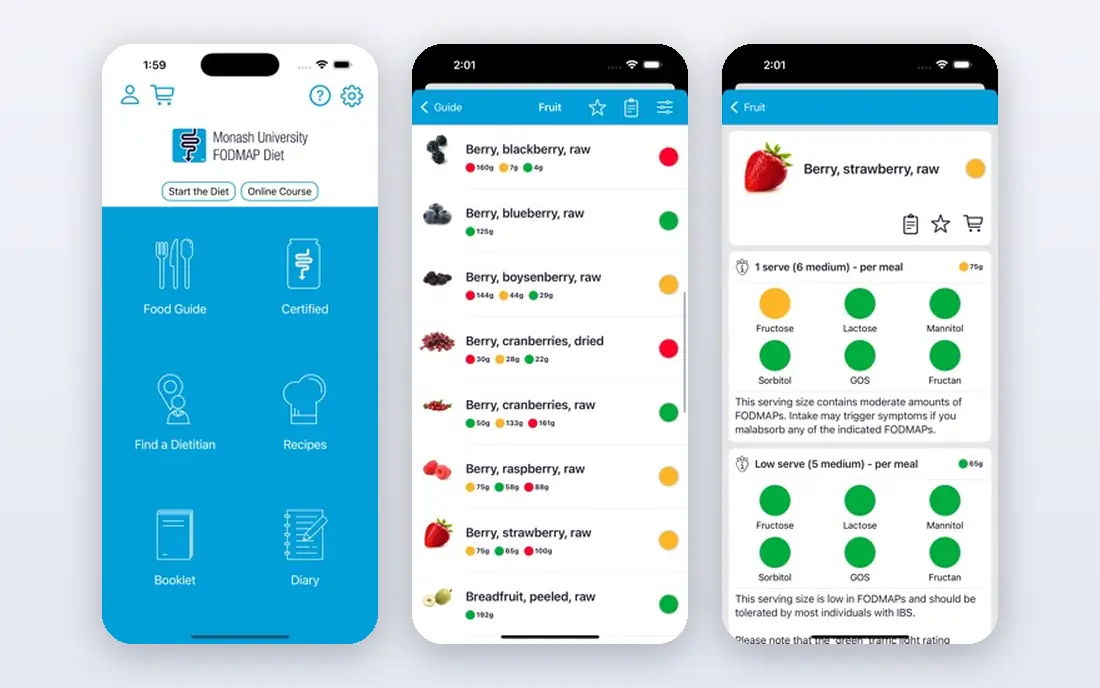
Monash University created the low FODMAP diet, and its app is the closest thing to an official food reference. Foods carry green, amber, or red ratings, and many entries show the tested serving size that sits behind the rating. That detail matters, because a food can be fine in a small portion and a problem in a larger one. If you cook at home and want to check ingredients before you eat, this is our pick for most people.
The trade-off is that the app is a reference first and a diary second. It does not offer the deep pattern tools found in a full symptom tracker, and some users find search slower than in newer apps. Still, when two apps disagree, we would trust the Monash data first and use another app for daily logging if needed.
- Built by the team behind the low FODMAP diet
- Traffic light ratings with serving sizes
- Large tested food database
- One-time purchase with no free plan
- Diary tools are basic compared with dedicated trackers
Spoonful answers the question you ask most often in a store: is this specific product a good choice for me. Scan a barcode or a package photo and you get a green, yellow, or red result based on the diets you set. It also flags hidden gluten and cross-contact risks, which helps if you manage more than one dietary need at once. The alternative suggestions are handy when a favorite product fails the check.
The limit is clear. Spoonful checks products, it does not track how you feel after eating them. The free plan is also tight, with only a small number of scans and searches each month, so regular shoppers will likely need the paid plan. Pair it with a diary app if you are still learning your triggers.
- Barcode and photo scanning
- Low FODMAP, gluten free, and allergen settings
- Suggests alternative products
- Free plan limits scans and searches
- No symptom tracking or diary

Cara Care is built around the daily record, not just a food list. You log meals, bowel movements, pain, and stress in a few taps, and the app helps you see which foods show up on better and worse days. That structure suits people who want a clear record to take to a clinician. The optional 12-week low FODMAP program adds dietitian chat for users who want guided support.
The food log itself is less detailed than some rivals, so ingredient-level tracking takes more effort. Some reports and program content also require a paid plan. Even so, for symptom tracking with a low FODMAP focus, Cara Care is one of the most practical choices here.
- Built for gut health
- Food, stool, pain, and stress logging
- Optional guided low FODMAP program
- Deeper program features sit behind a subscription
- Food logging is simpler than in a dedicated diary
FODMAP Friendly runs a certification program that tests products for FODMAP content, and its app and site help shoppers find certified options. That independent testing angle is useful when a label alone does not tell you enough. If you buy many packaged foods, a certified mark gives you one more reason to feel sure about a choice.
This is not the app to pick if you want a complete diet plan. It works best as a shopping companion next to a food reference such as Monash or a diary such as Cara Care. Check the current app listing before you rely on it, since features and pricing can differ by platform.
- Certification program with lab testing
- Helpful for packaged foods
- Clear brand and product focus
- Not a full diary or meal planner
- App availability and pricing vary by store
Fast FODMAP is built for speed. Search starts the moment you type, and offline search means you can check a food without a signal. That sounds minor until you are standing in a kitchen or a restaurant and want an answer in seconds. A weekly meal planner and a link to your dietitian add practical value for people working through the diet with professional support.
The app also uses learning games to help you remember high, medium, and low FODMAP foods. That approach will appeal to some users and feel like extra noise to others. It is free to start, which makes it an easy second app to keep beside a trusted food reference.
- Very fast search as you type
- Offline search
- Meal planner and dietitian link options
- Smaller public profile than Monash
- Learning games may not suit every user
FODMAP Companion keeps the focus narrow, and that is its strength. It covers the elimination phase and the reintroduction phase, with meal logging, gut tracking, and a list of confirmed trigger foods. The one-time price is refreshing in a market full of monthly plans, and the export option helps you share results with a dietitian.
The catch is scale. Its food database covers a couple of hundred foods, far fewer than the large reference apps. If you eat a wide range of foods or cook with less common ingredients, you will still need a bigger lookup tool. For disciplined phase tracking, though, it is a clean and affordable choice.
- Built for the two FODMAP phases
- One-time price with no subscription
- Trigger food list you can share
- Food database is smaller than the big references
- No free plan to try first
Bowelle suits people who want a diary they will actually open every day. Entries are quick, the focus stays on symptoms and bowel habits, and the simple layout lowers the chance you give up after a week. That consistency matters, because a patchy diary rarely shows a clear pattern.
Bowelle is not a food reference, so do not expect tested FODMAP data or barcode scanning. Use it beside Monash or Spoonful if you need both food checks and a symptom record. Its simplicity is a feature for some users and a limit for others who want deeper charts.
- Fast daily entries
- Clear symptom and stool tracking
- Easy to keep up over weeks
- Not a FODMAP food database
- Limited analysis compared with larger trackers
mySymptoms is the most detailed tracker in this list. You can log foods, drinks, symptoms, stress, sleep, medication, and other factors, then review reports that look for links across days. That depth helps when symptoms have more than one possible cause and a simple diary leaves too many gaps.
The price of that depth is effort. Setting up your foods and factors takes time, and the interface feels more like a health record than a friendly consumer app. If you want a quick daily check-in, pick Bowelle or Cara Care instead. If you want a detailed record for a clinician, mySymptoms earns its place.
- Detailed diary with many factors
- Pattern reports over time
- Export options for clinicians
- Setup takes more time
- Interface feels more clinical than friendly
How we picked these
We compared official app pages, app store listings, pricing pages, and public feature descriptions for apps that are still available in October 2026. We favored apps with a clear FODMAP focus, a working food database or diary, and honest pricing, and we left out apps that only mention FODMAP in passing. We also mixed reference apps, scanners, and trackers, because no single app does all three jobs equally well.
What to look for before you download
Start with the job you need most. If you are new to the diet, a trusted food reference should come first, because wrong portion data can undo careful eating. If you shop for packaged foods often, a scanner saves time and reduces guesswork. If you are testing reintroduction foods, a diary matters more than either, since your own reactions are the data that count.
Check privacy and data handling before you log health details. A diary holds sensitive information, so look for a clear privacy policy, an export option, and control over what you share. Also check whether the app works offline, since kitchens and stores do not always have a good signal. Finally, keep your expectations fair. An app can guide choices and record patterns, but it cannot diagnose IBS or replace a clinician. If symptoms are severe, new, or getting worse, get medical care rather than adjusting your diet alone.
FAQ
What is the best free FODMAP app?
Spoonful and Fast FODMAP Lookup and Learn are good free starting points, with Spoonful best for scanning and Fast FODMAP best for quick lookups. Free plans have limits, so check scan counts, food database size, and diary features before you settle. A paid reference app may still be worth it if you cook often.
Is the Monash app worth paying for?
For most people starting the low FODMAP diet, yes. It gives tested foods and serving sizes from the team that developed the diet, which is hard to match elsewhere. Pair it with a free diary if you also want symptom tracking, rather than expecting one app to do everything.
Do FODMAP apps replace a dietitian?
No. Apps give food data and a place to record symptoms, but a dietitian can review your history, check for nutritional gaps, and guide reintroduction safely. This is general information only and is not medical advice. Use an app to support professional care, not to replace it.
How long should I follow the elimination phase?
That depends on your clinician and your symptoms, and guidance varies by person. Many programs run for a limited period before structured reintroduction, rather than treating elimination as a permanent diet. Do not stay on a strict elimination diet longer than advised without professional input.
Can a FODMAP app help with IBS?
It can help you track foods and symptoms and spot patterns to discuss with a clinician. It cannot diagnose IBS or prove that a food caused a symptom on its own. A careful diary, honest portion notes, and medical advice together give a much clearer picture.