Best Feature Flag Tools in 2026: 8 Tools Compared
Compare the best feature flag tools in 2026, with pricing, free tiers, rollouts, targeting and open-source options for teams of every size in 2026 now.
- Editor's choice
 LaunchDarkly
Enterprise feature management
Starts atFreeVisit launchdarkly.comFull review - Great alternative
 Split
Experimentation and feature delivery
Starts atSee websiteVisit harness.ioFull review - Also consider
 Flagsmith
Open-source feature management
Starts atFreeVisit flagsmith.comFull review
TL;DR:
- Feature flags let teams release code separately from turning a feature on, which reduces risky big-bang launches.
- Free tiers differ sharply: some cap flags or API calls, while others offer self-hosted open-source use.
- Pricing units matter more than headline prices, since some tools charge per seat, some per user and some per request.
- For experimentation, choose a tool with built-in A/B testing; for simple rollouts, a simpler flag tool will do.
Quick comparison
| Tool | Best for | Starts at | Free plan? | |
|---|---|---|---|---|
| LaunchDarkly | Enterprise feature management | Free | Yes | Visit |
| Split | Experimentation and feature delivery | See website | Free trial | Visit |
| Flagsmith | Open-source feature management | Free | Yes | Visit |
 ConfigCat | Simple, reliable flag delivery | Free | Yes | Visit |
 Statsig | Feature flags plus product analytics | See website | Free trial | Visit |
 Unleash | Self-hosted enterprise flags | See website | Yes | Visit |
 DevCycle | Developer-friendly flag management | See website | Free trial | Visit |
 GrowthBook | Flags plus experimentation | Free | Yes | Visit |
The best feature flag tools
Feature flag tools let developers turn features on or off without redeploying code, roll out gradually to a percentage of users, and turn a broken feature off fast. The tools below cover enterprise, open-source and experimentation-focused needs.
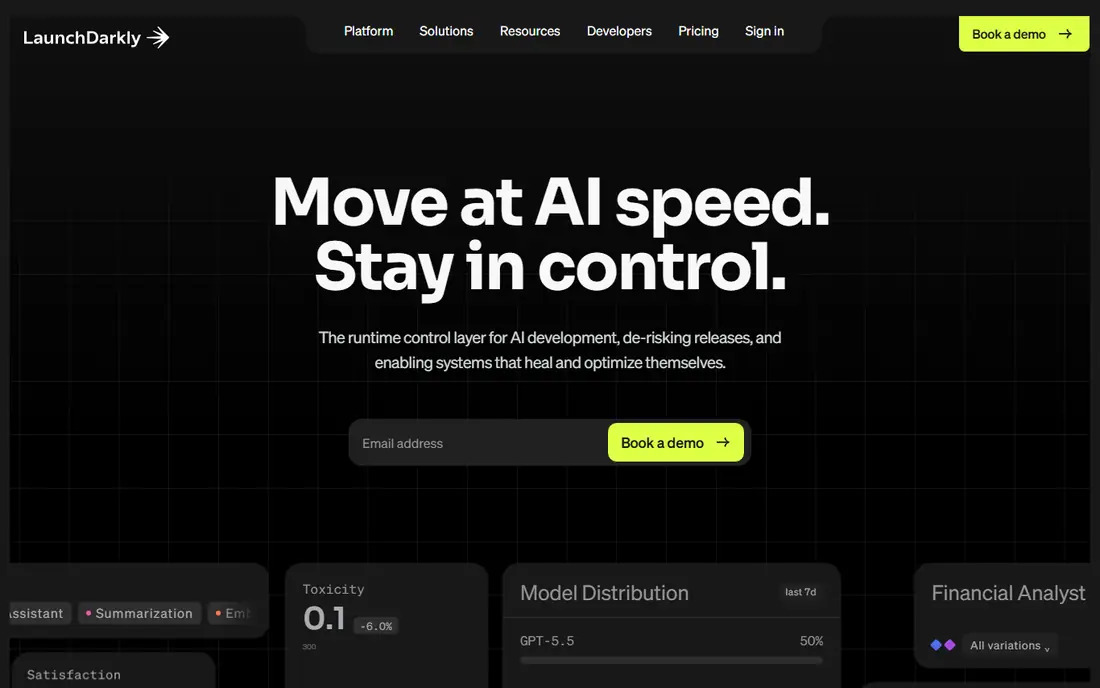
LaunchDarkly is the most established feature flag platform, with support for many languages, detailed targeting rules and segments, and integrations with common DevOps and analytics tools. Teams use it to roll out features gradually, test with internal users first, and kill a faulty feature without a new deploy. Its audit logs and permissions also suit regulated teams.
The cost model needs care. Pricing depends on seats, monthly active users and plan tier, so a fast-growing product can see the bill rise with adoption. For a large team that needs governance and scale, LaunchDarkly remains the benchmark; for a small team, a simpler tool may be enough.
- Very broad SDK support
- Strong targeting and segments
- Many integrations
- Pricing scales with usage and seats
- Full value needs higher plans
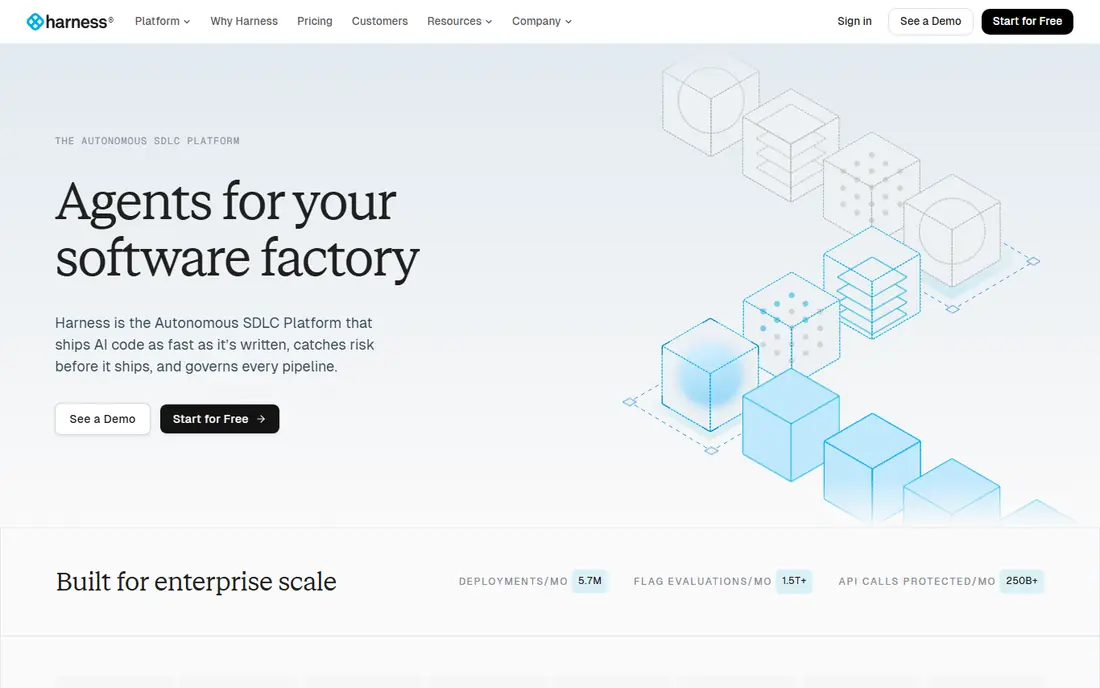
Split, now part of Harness, focuses on feature delivery tied to measurement: ship a feature behind a flag, split traffic, and see how each version affects key metrics. That link between flags and experiment results suits growth-stage companies that run frequent tests and need to prove impact. Its analytics layer goes deeper than a basic flag toggle.
The trade-offs are pricing and hosting. Split is quote-based and SaaS only, so teams that need self-hosting or a published self-serve price should look at Flagsmith, Unleash or GrowthBook. For experimentation-led teams, the measurement depth is the reason to choose it.
- Strong experimentation and analytics
- Feature data focus
- Good for growth teams
- Pricing is quote-based
- SaaS only, no self-hosted option
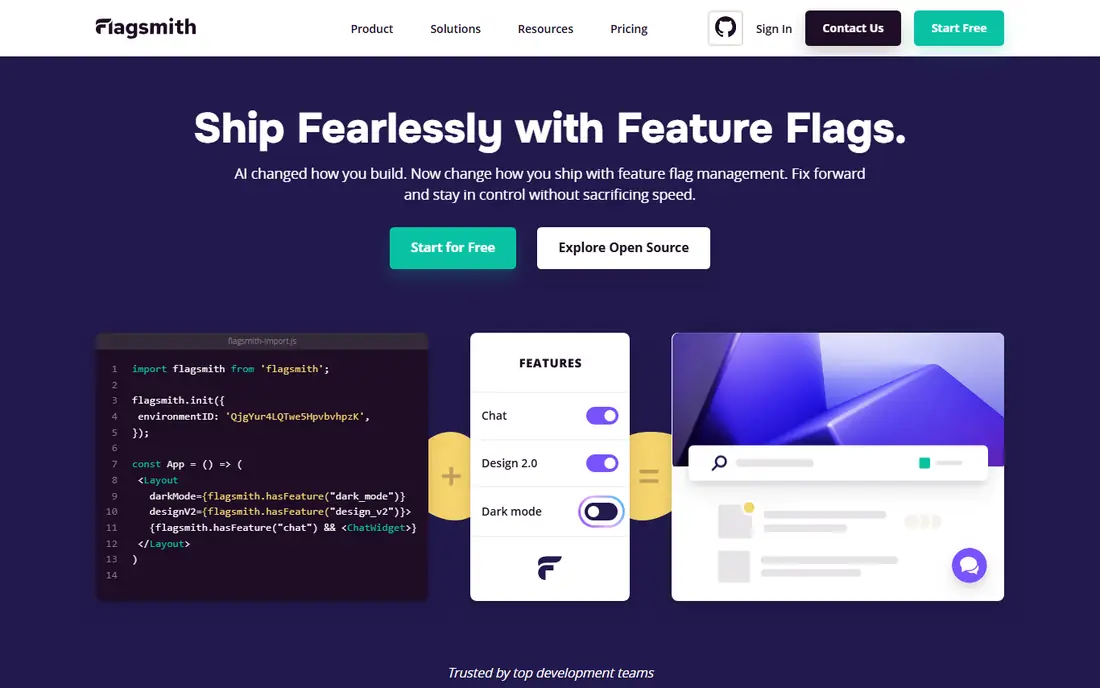
Flagsmith gives teams an open-source feature flag and remote configuration platform that can run self-hosted or as a hosted service. It covers boolean flags, percentage rollouts, user targeting and remote config values, which handle most standard release needs. The hosted free tier covers up to 50,000 API requests per month, with paid plans from around $45 per month.
The open-source model is the appeal and the limit: you gain control and data ownership, but enterprise features such as advanced permissions sit on paid tiers. For data-sensitive teams and startups that want a hosted start with a self-hosted path, Flagsmith is a strong pick.
- Open-source core
- Self-hosted option
- Hosted free tier for small use
- Enterprise features are paid
- Smaller integration set than LaunchDarkly
ConfigCat suits teams that want feature flags without a complex platform: create flags, target users or percentages, and deliver config through a global content delivery network. Unlimited seats make it easy for a whole team to manage flags, and the free plan covers 10 flags with generous config downloads. Paid plans start around $110 to $120 per month depending on billing.
The simplicity has a cost. ConfigCat flag evaluation is more basic than LaunchDarkly or Split, and teams that need deep experimentation or complex targeting may outgrow it. For straightforward rollouts and remote config, its clarity is a strength.
- Simple setup
- Unlimited seats
- Global CDN delivery
- Clear pricing tiers
- Flag architecture is simpler than rivals
- Higher paid tiers cost more
Statsig combines feature flags with experimentation and product analytics, so a team can ship a feature, run an experiment and read the results in one place. Its real-time event handling suits products with high traffic and frequent releases, and its stats engine helps teams avoid common experiment errors. Product teams that already want analytics will find the combined value high.
For a team that only needs on-off flags, Statsig is heavier and pricier than necessary, since pricing scales with events. Choose it when measurement and experimentation are core to your release process, not an afterthought.
- Combines flags, experiments and analytics
- Real-time data
- Strong for product teams
- Pricing scales with events
- Can be more than a simple flag tool needs
Unleash is an open-source feature management platform built for medium and large organizations that need governance, gradual rollouts and multi-environment control. It can run self-hosted or in the cloud, supports many SDKs, and offers strategies for percentage rollouts, user targeting and scheduled releases. Its enterprise features cover permissions, audit and change requests.
Self-hosting gives control but needs DevOps effort, and the enterprise cloud plan is priced per user, which can add up for a large team. For organizations with strict data or governance rules, Unleash balances openness with enterprise control.
- Open-source core
- Self-hosted and cloud options
- Strong governance features
- Enterprise cloud pricing is per user
- Setup needs DevOps time
DevCycle focuses on a clean developer workflow for feature flags, with SDKs for web, mobile and server, plus options for local and edge evaluation that keep flag checks fast. Its dashboard is straightforward, and its targeting and rollout tools cover the common cases without a steep learning curve. Small and mid-sized engineering teams often find it quicker to adopt than enterprise platforms.
The ecosystem is smaller than LaunchDarkly, and some advanced enterprise features are thinner. For a team that values developer speed over enterprise breadth, DevCycle is a practical choice.
- Clean developer experience
- Good SDK coverage
- Local and edge evaluation options
- Smaller ecosystem than LaunchDarkly
- Pricing needs a quote check
GrowthBook pairs feature flags with a full experimentation layer, including A/B testing, Bayesian statistics and integrations with analytics warehouses. Teams can roll out a feature, split users into test groups and read results without buying a separate experiment platform. The open-source version can be self-hosted free, and the cloud version offers a free tier for small teams.
The paid cloud plans are per user, and getting the most from its stats engine needs careful metric setup. For teams that run regular experiments and want flags and testing in one open tool, GrowthBook is hard to beat.
- Open-source
- Combines flags with A/B testing
- Self-hosted option
- Free cloud tier
- Paid cloud pricing is per user
- Analytics setup needs care
How we picked these
We compared vendor pricing pages, documented SDK support, hosting options, targeting features and experimentation depth, and favored tools with a clear pricing or free tier and a real user base. We included enterprise, open-source and experimentation-focused tools so teams can match a tool to governance needs and budget. We did not claim hands-on testing; the findings reflect published features, pricing and reported developer use.
How to choose a feature flag tool
Start with your release pattern. If you ship weekly and only need safe rollouts and kill switches, a simple tool like ConfigCat or Flagsmith will serve you well. If you run experiments every week, choose GrowthBook, Statsig or Split for built-in testing and measurement. If you work in a regulated industry, check audit logs, permissions and data residency before you compare prices.
Next, model the real price. Count seats, monthly active users and expected flag evaluations, and ask vendors to price that volume in writing. Also check SDK support for your stack, how flag changes propagate, and what happens if the flag service is down: local caching and sensible defaults protect your product during an outage. Finally, agree on flag hygiene: every flag needs an owner and a removal date, or your codebase will fill with dead toggles.
Also test how each tool handles a sudden outage or a bad rollout. A flag service that fails open with the last known value is safer than one that blocks a release, and a clear rollback path matters more than a long feature list. Ask about rate limits, SDK caching and support response times, since those details decide how the tool behaves on your busiest day, not just in a demo.
FAQ
What is a feature flag?
A feature flag is a switch in code that lets you turn a feature on or off without redeploying. Teams use flags for gradual rollouts, testing with a small group, and quickly disabling a faulty feature.
Are there free feature flag tools?
Yes. LaunchDarkly, Flagsmith, ConfigCat and GrowthBook offer free tiers or open-source self-hosting. Free tiers usually cap flags, API calls, users or features, so check those limits against your expected use.
What is the best feature flag tool for startups?
Flagsmith and GrowthBook are strong startup picks because they offer free tiers, open-source options and room to grow. ConfigCat also suits startups that want simple, predictable flag delivery without experiment complexity.
How is LaunchDarkly different from GrowthBook?
LaunchDarkly focuses on enterprise feature management, targeting and governance at scale. GrowthBook combines flags with open-source A/B testing, which suits teams that want experimentation built in without a separate tool.
Do feature flags slow down an application?
Flag checks are usually fast, especially with local or cached evaluation, but high-frequency checks and remote calls can add latency if poorly designed. Choose a tool with SDK caching for your stack and test flag evaluation under realistic traffic.