8 Best ERP Systems for Professional Services in 2026
We compared the best erp for professional services for project accounting, billing and reporting, so firms can shortlist a system that fits their work in 2026.

- Editor's choice
 Sage Intacct
Project accounting and dimensional reporting
Starts atSee websiteVisit sage.comFull review - Great alternative
 Oracle NetSuite
Unified suite covering CRM, projects, and finance
Starts atSee websiteVisit netsuite.comFull review - Also consider
 Deltek Vantagepoint
Project based architecture, engineering, and consulting firms
Starts atSee websiteVisit deltek.comFull review
TL;DR:
- Sage Intacct and Oracle NetSuite suit mid sized firms that need strong project accounting, multi entity support, and revenue recognition.
- Deltek Vantagepoint suits architecture, engineering, and consulting firms that live by projects, utilisation, and proposals.
- Workday and Unit4 suit large firms that need enterprise finance, HR, and resource planning in one system.
- Microsoft Dynamics 365 and Acumatica suit firms already in Microsoft ecosystems or firms that want flexible user pricing.
- Implementation often costs as much as the first year licence, so budget for migration, training, and change management from the start.
Quick comparison
| Tool | Best for | Starts at | Free plan? | |
|---|---|---|---|---|
| Sage Intacct | Project accounting and dimensional reporting | See website | No | Visit |
| Oracle NetSuite | Unified suite covering CRM, projects, and finance | See website | No | Visit |
| Deltek Vantagepoint | Project based architecture, engineering, and consulting firms | See website | No | Visit |
 Workday Financial Management | Large enterprise finance and workforce planning | See website | No | Visit |
 Microsoft Dynamics 365 | Firms already using Microsoft tools | See website | No | Visit |
 Acumatica | Flexible consumption pricing for mid sized firms | See website | No | Visit |
 Unit4 | Services focused enterprise ERP | See website | No | Visit |
 Certinia | Salesforce based professional services automation | See website | No | Visit |
The best ERP systems for professional services
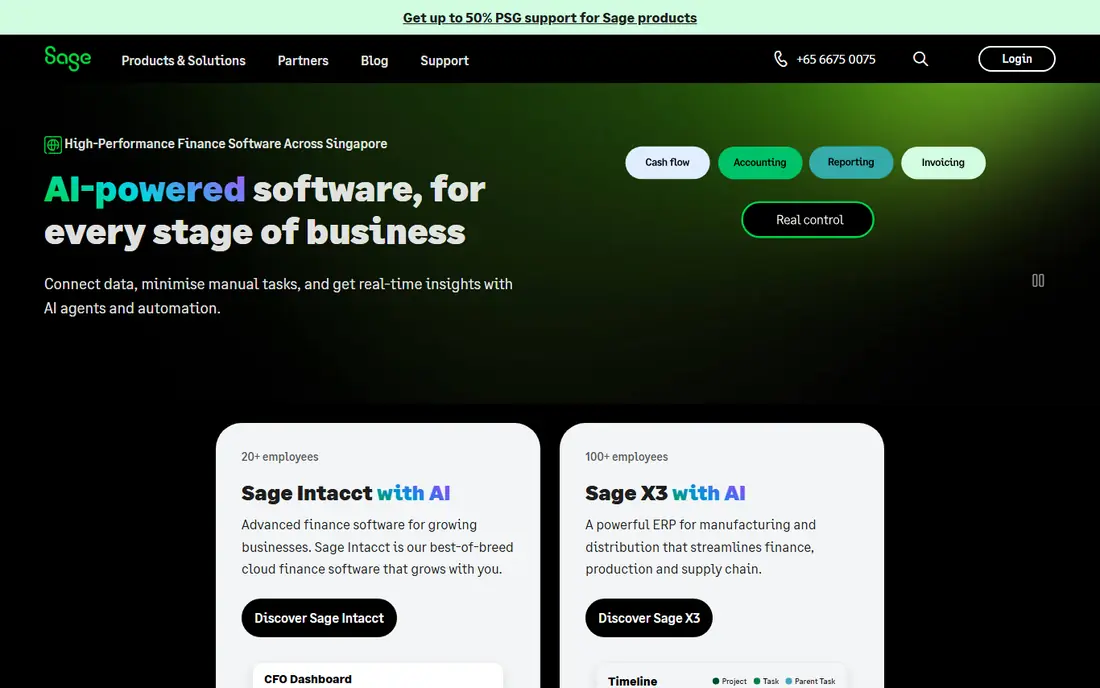
Sage Intacct is a cloud financial management system that many professional services firms choose for project accounting. Its dimensional general ledger lets managers slice profitability by client, project, service line, office, and employee without a maze of separate accounts. Multi entity consolidation, automated revenue recognition, and real time reporting help finance teams close faster and answer partner questions with current data. Modules for projects, time, expenses, and revenue recognition are priced separately, so the total can rise above the base licence, with annual licence ranges often reported around $15,000 to $55,000 for mid sized firms. Implementation typically takes 3 to 6 months for mid sized firms. Sage Intacct suits firms that want finance led reporting depth and are willing to invest in a careful rollout.
- Strong project accounting, dimensional general ledger, multi entity consolidation
- Project and revenue modules priced separately, implementation needs a good partner
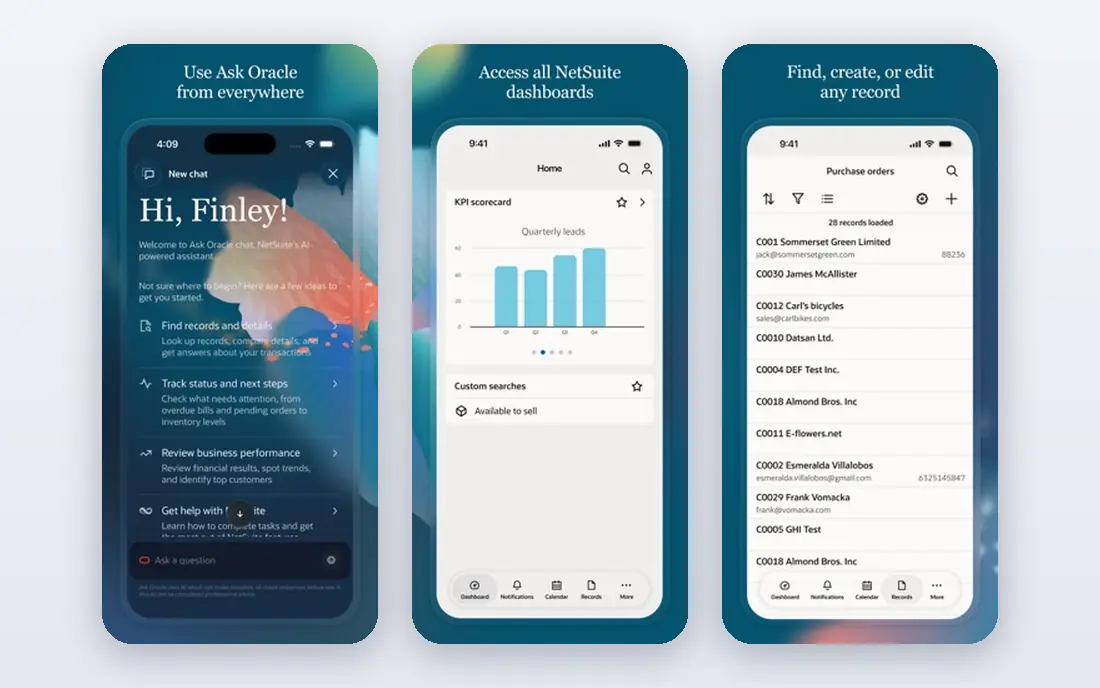
Oracle NetSuite gives professional services firms a unified cloud suite, with financials, customer relationship management, project management, and billing in one database. That unity helps when a project moves from proposal to delivery to invoice without rekeying data between systems. Multi currency, multi subsidiary, and tax support also help firms with international clients and entities. The breadth is also a risk. Implementation for mid sized firms often takes 4 to 10 months, and SuiteProjects and user licences add to the base platform cost, with annual totals often reported around $25,000 to $100,000. NetSuite suits growing firms that want one system for finance and operations, and that can commit to a structured implementation.
- Single database for finance, CRM, projects, and inventory, global multi currency support
- Broad scope can mean longer implementation, SuiteProjects adds to base cost
Deltek Vantagepoint
Best for: Project based architecture, engineering, and consulting firms
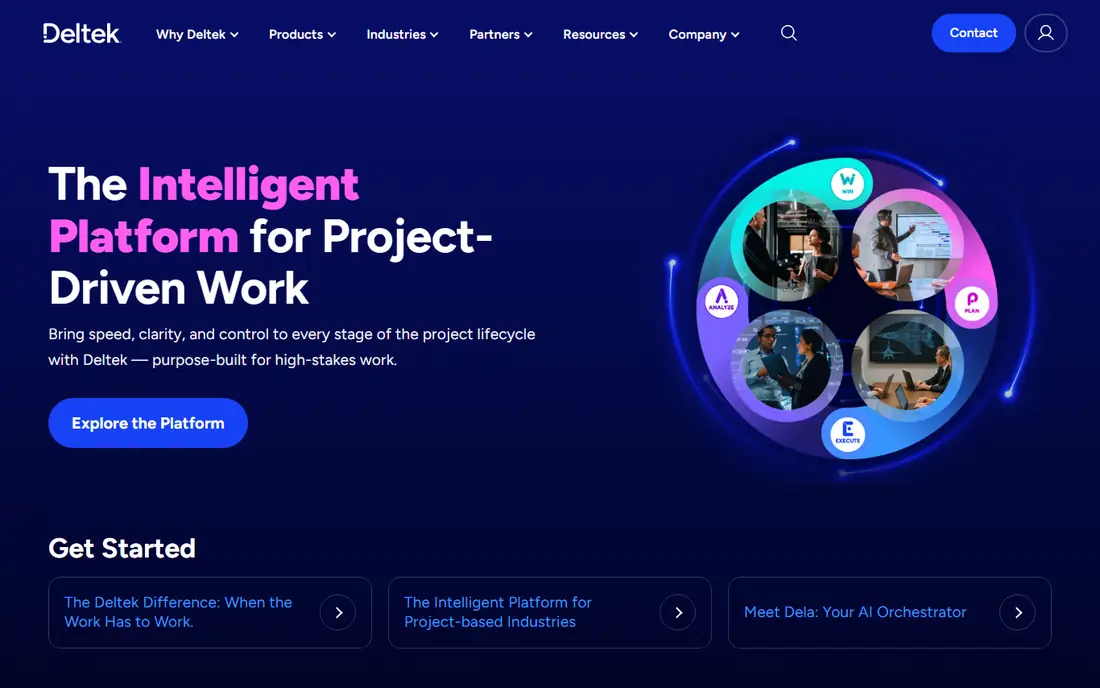
Deltek Vantagepoint is purpose built for project based firms, especially in architecture, engineering, construction, and consulting. It combines project accounting, resource planning, time and expenses, billing, and CRM in a system designed around projects rather than adapted from general accounting. Resource views show staff availability, skills, and utilisation, which helps managers staff new work without overloading teams. Vantagepoint is less natural for firms whose revenue does not flow through discrete projects, since its strengths assume project based delivery. Implementation quality depends heavily on the partner, so check references from firms like yours. Deltek suits project firms that want a system built for their workflow, not a general ERP with project add-ons.
- Purpose built for project firms, strong resource planning, proposal and CRM tools
- Less suited to firms outside project based industries, partner implementation matters
Workday Financial Management
Best for: Large enterprise finance and workforce planning
Workday Financial Management is a cloud finance system for large professional services firms that need strong controls, continuous accounting, and combined finance and HR reporting. It handles multi book accounting, expenses, grants, and project accounting, with audit trails that suit regulated and publicly listed firms. When finance and HR share one system, workforce planning and project staffing can draw on the same employee and cost data. Pricing is enterprise and quoted, often reported above $125,000 per year for large firms, and implementation for complex global rollouts can take 6 to 18 months. Workday suits large firms, especially those already using Workday for HR, that need enterprise controls and are ready for a major program.
- Continuous accounting, strong controls, combined finance and HR data
- Enterprise pricing, implementation can take 6 to 18 months for complex firms
Microsoft Dynamics 365 combines Finance with Project Operations, giving professional services firms project accounting, resource scheduling, billing, and financial reporting in a Microsoft ecosystem. Teams that already live in Outlook, Teams, and Excel will find the interface familiar, and integrations with Power BI help reporting. Per user pricing is often reported around $90 to $200 per user per month depending on modules, with Microsoft ecosystem discounts common. The module mix needs careful scoping, since Finance, Project Operations, and supply chain tools are licensed separately and can overlap. Dynamics 365 suits Microsoft centric firms that want project and finance tools without leaving the Microsoft stack, and that can manage per user costs as headcount grows.
- Deep Microsoft 365 and Teams integration, Finance plus Project Operations, familiar interface
- Per user pricing adds up, project and finance modules need careful scoping
Acumatica is a cloud ERP that prices by transactions and resources used, rather than by named user, which helps firms where many staff need occasional access. It offers project accounting, time and expenses, billing, and financial reporting, with cloud or hybrid deployment. Annual licence ranges are often reported around $15,000 to $75,000 for mid sized firms, depending on volume and modules. Its partner network is smaller than those of NetSuite or Microsoft, so partner choice matters, especially for services specific workflows. Project depth is strong for many firms, but very large or highly specialised firms should test resource planning and revenue recognition in a demo. Acumatica suits mid sized firms that want flexible pricing and broad ERP coverage without per user licence growth.
- Transaction based pricing, not per named user, strong project accounting, cloud and hybrid options
- Smaller partner network than NetSuite or Dynamics, project depth varies by edition
Unit4 builds ERP for people centric organisations, including professional services, nonprofits, and public sector bodies. Its resource optimisation tools help large firms model staffing, utilisation, and profitability across projects, while finance and project accounting share one system. That services focus means workflows for time, expenses, billing, and project reporting are central, not added later. Pricing is enterprise and quoted, often reported above $125,000 per year for large firms, with implementation timelines similar to other enterprise systems. Unit4 is less well known in North America than Workday, so check local partner coverage. Unit4 suits large services firms, especially in Europe, that want a people centric ERP with strong resource planning.
- Built for people centric services, strong resource optimisation, project and finance integration
- Enterprise pricing and implementation, less known in North America than Workday
Certinia, formerly FinancialForce, provides professional services automation and financial management natively on Salesforce. For firms that already run sales, CRM, and delivery on Salesforce, Certinia keeps project, resource, billing, and revenue data in the same platform, without syncing between systems. Its PSA depth covers project planning, resource scheduling, time, expenses, and billing, with financial management for services firms. The Salesforce requirement is also the limit. Firms not on Salesforce would need to adopt that platform as well, which raises cost and complexity. Pricing is quoted and can be high for small firms. Certinia suits Salesforce centric consulting, technology, and services firms that want PSA and finance tightly linked to CRM.
- Native Salesforce integration, project, resource, and billing on one platform, strong PSA depth
- Requires Salesforce, pricing is quoted and can be high for small firms
How we picked these
We compared official vendor pages, product documentation, implementation guides, and public reviews for ERP systems used by professional services firms in October 2026. We looked for systems with genuine project accounting, time and expense capture, billing, revenue recognition, and resource planning, not only general accounting. We favored a mix of finance led, project led, and enterprise systems, so firms of different sizes can shortlist sensibly. We did not claim hands-on testing that did not happen. Pricing is mostly quoted, so treat ranges as planning guides and get a scoped quote that includes implementation, training, and support.
What to check before you choose
Start with project accounting, not general ledger
Professional services revenue flows through projects, so project accounting is the core test. Check that the system tracks budgets, actuals, commitments, and profitability by project, phase, and task, and that time and expenses flow into billing without manual rework. If a system only offers project tags on general ledger entries, it will frustrate finance and project managers as volume grows.
Test revenue recognition for your contract types
Fixed fee, time and materials, milestone, and multi period contracts need different revenue rules. Ask vendors to show automated recognition under ASC 606 or IFRS 15 for your actual contract types, including changes, overruns, and write offs. Manual deferred revenue spreadsheets are often the first process to break as a firm scales, so automate this early.
Check resource planning and utilisation reporting
Resource management should show who is available, with which skills, across active and proposed projects, and flag conflicts before they happen. Partners and managers need utilisation, realisation, and profitability by person, team, and service line. Demo resource planning with your own staff structure, not a generic sample, and check that reporting updates without a data warehouse project.
Budget the full first year cost
Licence cost is rarely more than a third of first year total cost for a mid sized rollout. Implementation, data migration, integrations, training, and change management often add 0.5 to 2 times the first year licence. Get a written implementation plan with timeline, partner references from similar firms, and a clear go live scope, then protect time for testing and training.
FAQ
What is the best erp for service companies that are small?
Sage Intacct and Acumatica are strong starting points for small to mid sized service firms, because they offer project accounting without full enterprise complexity. Deltek Vantagepoint suits small project firms in architecture and engineering. Very small firms may start with a PSA tool plus accounting software, then move to ERP when project volume and reporting needs grow.
How long does a professional services ERP implementation take?
Small firms using purpose built PSA tools can go live in 4 to 12 weeks. Mid sized firms implementing NetSuite, Sage Intacct, or Deltek typically take 3 to 6 months. Enterprise deployments of Workday, Unit4, or SAP can take 6 to 18 months, especially with global entities, complex integrations, and multi currency needs.
Do I need ERP or just project management software?
Project management software tracks tasks and deadlines, but ERP adds finance, billing, revenue recognition, and resource profitability in one system. If you need project profitability, utilisation reporting, and automated billing tied to finance, ERP or a strong PSA plus finance combination is warranted. If you only need task tracking, a lighter tool may be enough.
What is project accounting?
Project accounting tracks revenue, costs, budgets, and profitability for each client project, phase, and task, separate from general company accounts. It links time, expenses, subcontractor costs, and billing to a project, so managers can see margin while work is in progress. Standard accounting shows company totals, but project accounting shows which projects make money.
How much does ERP for professional services cost?
Annual licence ranges often run $15,000 to $55,000 for Sage Intacct, $25,000 to $100,000 for NetSuite, and above $125,000 for large Workday or Unit4 deployments, before implementation. Implementation often adds 0.5 to 2 times the first year licence. Get a scoped quote with modules, users or transactions, implementation, and support included.
Can ERP handle multi entity and multi currency firms?
Yes, but check depth. NetSuite, Sage Intacct, Workday, and Unit4 all support multi entity consolidation and multi currency, with varying localisation. Test consolidation, intercompany transactions, and currency conversion with your actual entity structure, and confirm tax and reporting support for each country you operate in.
Sources
https://www.sage.com https://www.netsuite.com https://www.deltek.com https://www.workday.com https://www.microsoft.com https://www.acumatica.com https://www.unit4.com https://www.certinia.com