Best Enterprise Resource Planning Software in 2026: 9 Systems Compared
Compare the best enterprise resource planning software in 2026, with ERP systems for finance, inventory, manufacturing and multi entity groups and reporting.
- Editor's choice
 Oracle NetSuite
Multi entity growth companies
Starts atSee websiteVisit netsuite.comFull review - Great alternative
 Microsoft Dynamics 365 Business Central
Microsoft ecosystem mid market firms
Starts at$80 per user per monthVisit microsoft.comFull review - Also consider
 Odoo
Modular budget ERP
Starts atSee websiteVisit odoo.comFull review
TL;DR:
- Microsoft Dynamics 365 Business Central is the clearest mid market pick for Microsoft 365 users, with published pricing from $80 per user per month.
- Oracle NetSuite suits fast growing, multi entity companies, while Odoo and ERPNext suit budget conscious teams that accept more setup work.
- Most top enterprise resource planning software is quote based, so implementation cost often matters more than the licence fee alone.
- The best enterprise resource planning tools cover finance, inventory, purchasing and reporting in one system, rather than stitching together separate apps.
- Plan for months of implementation for larger systems, and insist on a written scope, timeline and total cost before signing.
Quick comparison
| Tool | Best for | Starts at | Free plan? | |
|---|---|---|---|---|
| Oracle NetSuite | Multi entity growth companies | See website | No | Visit |
| Microsoft Dynamics 365 Business Central | Microsoft ecosystem mid market firms | $80 per user per month | Free trial | Visit |
| Odoo | Modular budget ERP | See website | Yes | Visit |
 Acumatica | Unlimited user distributors and manufacturers | See website | No | Visit |
 Sage Intacct | Finance led multi entity firms | See website | No | Visit |
 SAP S/4HANA Cloud | Large enterprise standardisation | See website | No | Visit |
 SAP Business One | Smaller product companies | See website | Free trial | Visit |
 Infor CloudSuite | Industry specific manufacturers | See website | No | Visit |
 Workday Financials | Large enterprise finance teams | See website | No | Visit |
The best enterprise resource planning software
ERP software joins finance, inventory, purchasing, sales, manufacturing and reporting in one system, so a company stops reconciling separate spreadsheets. The systems below are all actively sold in October 2026, and they span mid market firms to global enterprises. Price, implementation effort and industry fit differ far more than feature lists suggest.
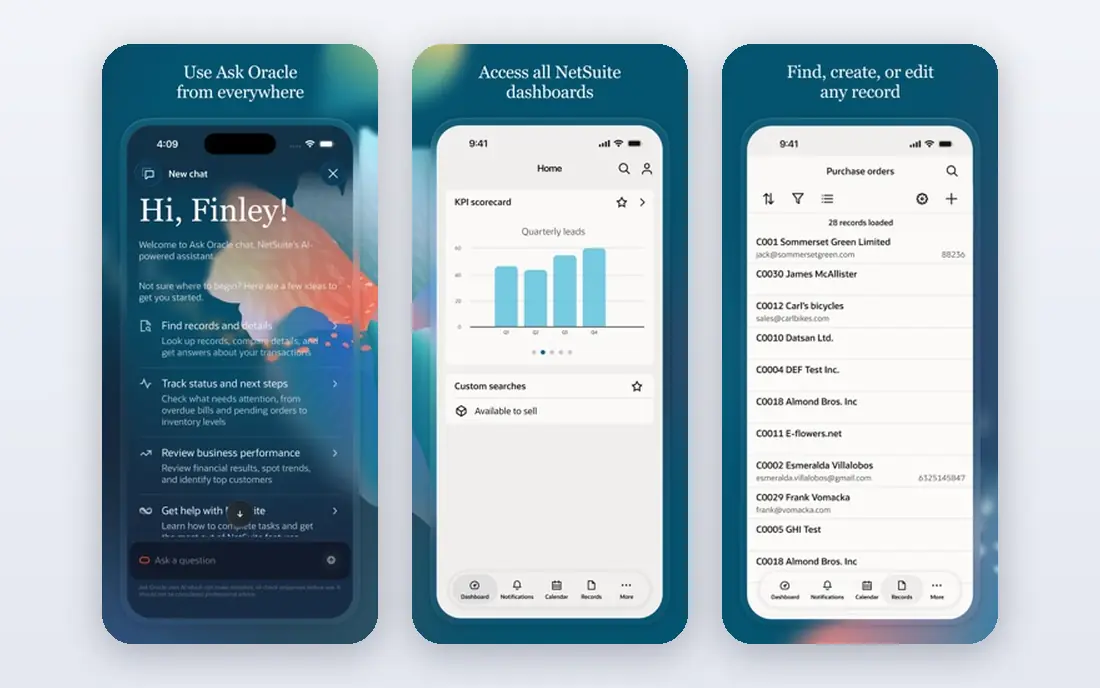
NetSuite is a cloud ERP built for companies that outgrow accounting software and need finance, inventory, order management and reporting in one place. Multi entity and multi subsidiary handling is a core strength, which matters for groups with several companies, currencies or locations. Its module range also lets a firm add manufacturing, warehouse or e-commerce functions without a new system.
The caution is cost and effort. NetSuite is quote based, and implementation typically runs for months with partner help. Licence, implementation and ongoing admin costs together can be substantial. For a growing, multi entity company, that investment can be justified. For a single entity small firm, Business Central or Odoo will usually be cheaper and faster.
- Strong multi entity, multi currency and consolidation tools
- Broad finance and operations modules
- Proven with fast growing firms
- Quote based pricing
- Implementation is a major project
- Costs rise with users and modules
Microsoft Dynamics 365 Business Central
Best for: Microsoft ecosystem mid market firms
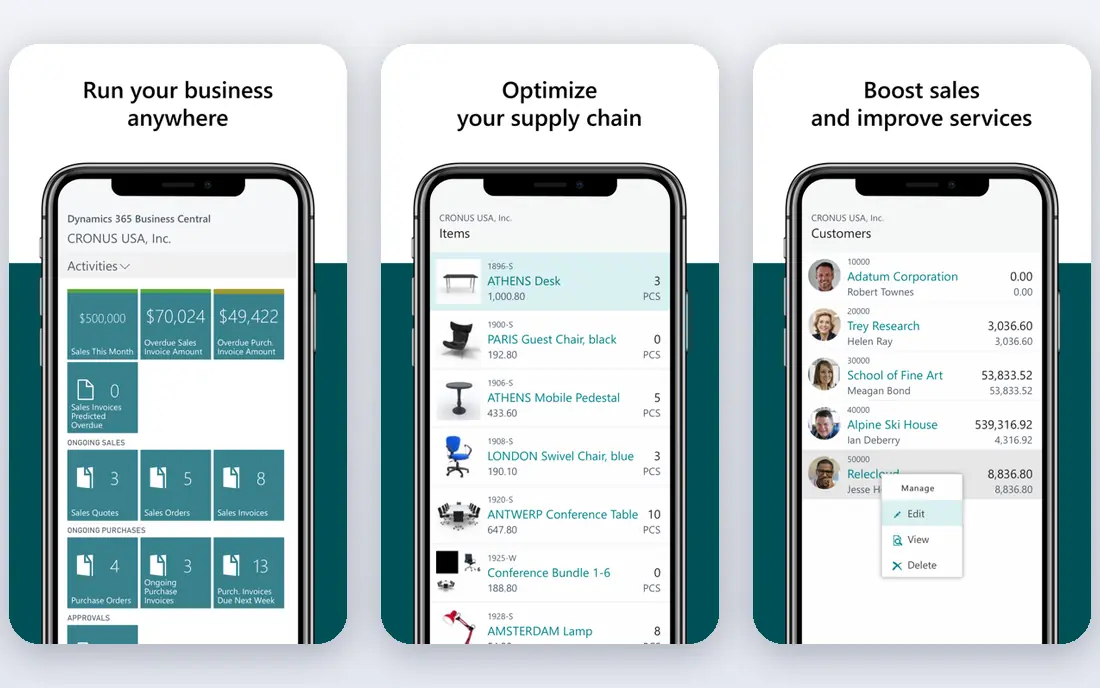
Business Central is the most transparent mid market ERP here, with Essentials listed at $80 per user per month and Premium at $110. For a company already on Microsoft 365, Outlook and Teams integration is a real daily benefit, and finance, sales, purchasing and inventory are covered in one system. That combination makes it our pick for many mid market buyers.
Complex manufacturing, warehousing or multi company setups still need partner help, and Premium is required for full manufacturing and service management. Budget for implementation on top of licences, and confirm which tier your processes need before signing. For a Microsoft centric firm, Business Central is hard to beat on clarity and fit.
- Published per user pricing
- Strong Microsoft 365 and Teams integration
- Solid finance, inventory and manufacturing
- Partner led setup for complex needs
- Manufacturing depth needs the Premium tier
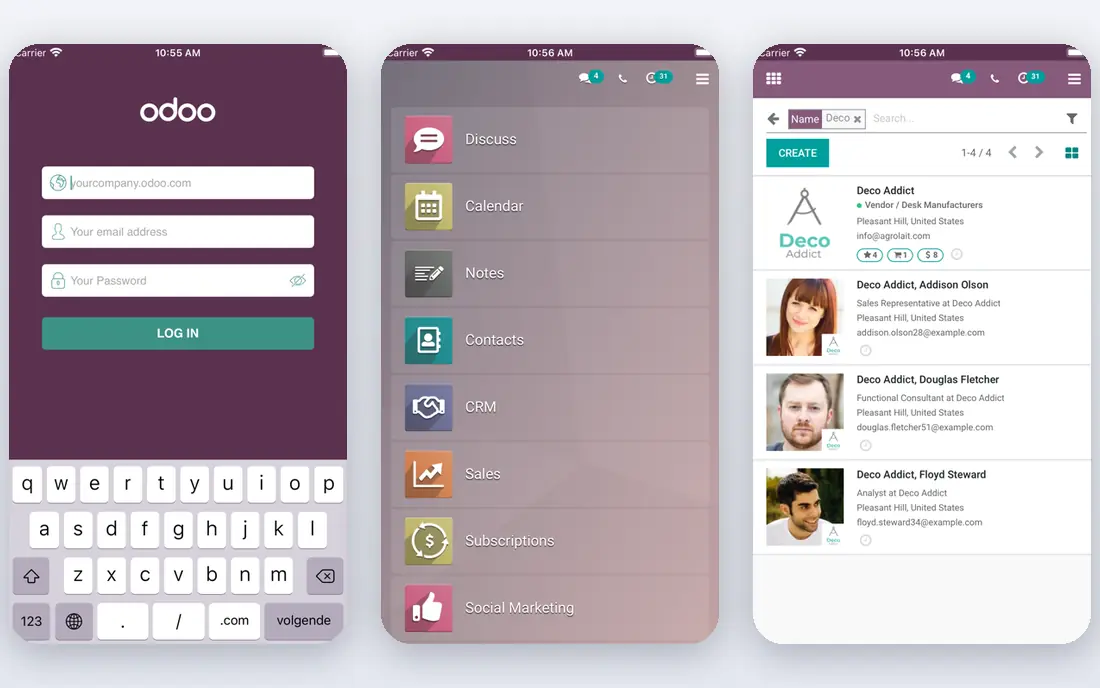
Odoo is the budget play in ERP, and its modular design is the reason. A company can start with accounting and inventory, then add sales, CRM, manufacturing or HR apps as needed. The Community edition is open source and free to self host, while Enterprise adds paid apps and support on a per user basis. That flexibility suits cost conscious firms with technical capacity.
The trade-off is effort. Odoo rewards a team that can configure, test and maintain it, or a good partner who can. A company that wants a fully guided, out of the box enterprise rollout may prefer NetSuite or Business Central. A company that wants low licence cost and control over its stack will find Odoo compelling.
- Modular apps let you start small
- Open source Community edition is free
- Wide app range from CRM to manufacturing
- Setup and customisation need technical skill
- Support quality varies by partner
Acumatica charges by resources used rather than by named user, which helps distributors, manufacturers and project firms with many light or occasional users. Finance, distribution, manufacturing and project accounting are strong, and deployment can be cloud or hybrid. That model can be cheaper than per user pricing once user counts grow large.
The pricing model also makes comparison harder, since cost tracks transaction volume and resources, not seats. Get a written quote based on your actual transaction volume and user pattern, and ask how costs change as volume grows. For a user heavy operation, Acumatica's model is a genuine advantage. For a small, stable team, per user ERP may be simpler to budget.
- Unlimited user model suits firms with many occasional users
- Strong distribution and manufacturing
- Cloud or hybrid deployment
- Pricing is consumption based and quote only
- Implementation needs a reseller partner
Sage Intacct is a finance first cloud ERP, and it shines for multi entity services, subscription and nonprofit organisations that need clean consolidations, dimensional reporting and audit trails. Finance teams often prefer its reporting and close tools to broader ERP systems that treat finance as one module among many.
Manufacturers and stock heavy distributors should check fit carefully, since inventory and production depth is thinner than Acumatica, NetSuite or SAP. Pricing is quote based, and partner estimates for mid sized firms run into five figures per year. For a finance led, multi entity firm, Intacct is a strong pick. For a factory, look elsewhere first.
- Strong multi entity finance and consolidation
- Good for services, subscriptions and nonprofits
- Solid reporting and dashboards
- Quote based pricing
- Inventory and manufacturing depth is thinner than rivals
SAP S/4HANA Cloud is the enterprise standard for large companies that want one global system for finance, supply chain, manufacturing and procurement. Its depth, compliance tools and partner ecosystem are unmatched at very large scale, and it supports complex, multi country operations that mid market tools cannot.
The cost and effort are equally large. Implementation is a major program, often measured in months or years, and public cloud edition buyers must accept standard processes with limited customisation. Mid market firms should not start here unless they are a subsidiary of a larger SAP group. For a large enterprise, S/4HANA remains the benchmark.
- Deep enterprise finance, supply chain and manufacturing
- Global scale and compliance depth
- Huge partner ecosystem
- High cost and long implementation
- Standardisation limits customisation in public cloud edition
SAP Business One brings SAP to smaller product centric companies, with finance, sales, purchasing, inventory and light production in one system. It suits manufacturers and distributors that want SAP credibility and a partner network, without the scale or cost of S/4HANA. Deployment can be cloud or on premise, which helps firms with specific hosting needs.
Pricing is quoted through partners, so budget clarity is lower than Business Central. A firm that grows well beyond mid market may also outgrow Business One and face a migration to S/4HANA. For a product company in the small to mid range, Business One is a credible, proven ERP choice.
- SAP brand and partner network at smaller scale
- Solid finance, inventory and production for product firms
- Cloud or on premise
- Pricing is partner quoted
- Smaller ecosystem than S/4HANA
- Growth beyond mid market may need migration
Infor CloudSuite is built around industry editions, which means a manufacturer gets workflows, terminology and processes designed for its sector rather than a generic template. Production, supply chain and distribution depth is strong, and cloud deployment removes on premise maintenance. That industry focus is its main advantage over generalist ERP.
The caution is fit. A generalist services firm will get less from an industry edition, and pricing is quote based through partners. Check that your sector edition matches your actual processes, and ask for reference customers in your industry. For a manufacturer in a covered sector, Infor is a strong, specialised contender.
- Industry specific editions for manufacturing, distribution and healthcare
- Deep production and supply chain tools
- Cloud deployment
- Quote based pricing
- Industry fit matters, so generalist firms may find it less flexible
Workday Financials suits large enterprise finance teams, especially in services, healthcare, education and public sector work. Financial management, planning, procurement and reporting are modern and well integrated, and Workday's human capital tools can sit alongside finance for a fuller enterprise picture. Reporting and audit controls are strong.
Manufacturers should look elsewhere, since Workday has no manufacturing depth, and pricing is enterprise quote only. Implementation is also a major program. For a large finance led organisation that does not manufacture, Workday is a leading ERP choice, and it pairs naturally with Workday HR for firms that want both.
- Strong enterprise finance, planning and reporting
- Excellent for large services and public sector organisations
- Modern cloud design
- Quote based enterprise pricing
- No manufacturing depth
- Implementation is a large program
How we picked these
We compared official product and pricing pages, plus current ERP guides, for systems actively sold in October 2026. We required a real ERP scope, covering finance plus at least inventory, purchasing or operations, not just accounting software. We covered mid market and enterprise tiers, and we noted where pricing is quote based, since most ERP vendors do not publish a simple monthly price.
How to choose an ERP without a costly mistake
Define must have processes first
List the processes that must work on day one, such as multi entity consolidation, lot tracking, project billing or subscription revenue. Rank them, and test each one in a demo with your own data example. A system that fails a must have process is not a bargain at any price.
Compare total cost over five years
Add licences, implementation, partner hours, training, integrations and annual support over five years, not just year one. A cheap licence with a long implementation can cost more than a pricier licence with a faster rollout. Ask vendors for a written total cost estimate, with assumptions stated.
Check partner quality, not just software
Most ERP success depends on the implementation partner. Ask for reference customers in your industry and size, speak to them directly, and check how the partner handles data migration, testing and go live support. A weak partner can sink even the best ERP product.
Plan data migration and testing early
Clean your chart of accounts, customer, supplier and inventory data before migration, and test with real transactions, not sample data. Run parallel reporting for a month if possible, and keep the old system readable until the new one has proven its month end close.
FAQ
What is the best enterprise resource planning software overall?
There is no single best ERP for every company. NetSuite leads for multi entity growth firms, Business Central leads for Microsoft centric mid market firms, and SAP S/4HANA leads for large global enterprises. The right system depends on size, industry, entities and existing software, so shortlist by those factors first.
What is the top enterprise resource planning software for a mid sized business?
Business Central, Odoo, Acumatica and Sage Intacct are the strongest mid market options, with Business Central offering the clearest published pricing. Odoo suits budget conscious teams with technical skill, Acumatica suits user heavy distributors, and Intacct suits finance led firms. Test must have processes in each before choosing.
What are the top 10 ERP software in the world by usage?
The largest ERP vendors by market presence include SAP, Oracle, Microsoft, Infor, Workday, Sage, Epicor, Acumatica and Odoo, with NetSuite as Oracle's mid market cloud ERP. Rankings shift by segment, since SAP leads large enterprise, Microsoft and NetSuite lead mid market, and Odoo leads open source adoption. Use segment rankings, not global lists, for a buying decision.
How much does ERP software cost?
Licence costs range from free open source and $80 per user per month for Business Central, to quote based enterprise pricing that can reach six figures per year with implementation. Implementation often costs as much as, or more than, first year licences. Always request a written total cost for licences, implementation, training and support.
How long does ERP implementation take?
A single app or lightly configured mid market rollout can take weeks, while a multi module enterprise rollout takes months or longer. Data quality, customisation and testing are the main drivers of time. Insist on a phased plan with clear milestones, and avoid a big bang go live during your busiest period.
Is Odoo a real ERP, or just accounting software?
Odoo is a real ERP, with modules for accounting, inventory, sales, purchasing, manufacturing, CRM and HR in its Enterprise edition, plus a free open source Community edition. Its depth depends on configuration and partner quality, so a poorly configured Odoo setup can feel thin. A well configured setup competes with mid market ERP rivals.