Best Enterprise Accounting Software in 2026: 8 Platforms
Our best enterprise accounting software guide compares SAP, Oracle, NetSuite, Sage Intacct, and Workday on multi-entity close, controls, and total cost.
- Editor's choice
 SAP S/4HANA Finance
Global standardisation and consolidation
Starts atSee websiteVisit sap.comFull review - Great alternative
 Oracle Fusion Cloud ERP
Cloud finance and procurement at scale
Starts atSee websiteVisit oracle.comFull review - Also consider
 Oracle NetSuite
Multi-entity ERP for growing firms
Starts atSee websiteVisit netsuite.comFull review
TL;DR:
- SAP S/4HANA, Oracle Fusion, and Workday suit the largest global firms, while NetSuite and Sage Intacct suit upper mid-market firms with multi-entity needs.
- Multi-entity consolidation, audit controls, and close speed matter more than a long feature list, since most platforms cover core ledgers.
- Published prices are rare: Dynamics 365 Finance lists a per-user price, while most rivals quote by users, entities, and modules.
- Our pick for multi-entity finance teams is Sage Intacct for finance depth, with NetSuite as the broader ERP choice when operations matter too.
Quick comparison
| Tool | Best for | Starts at | Free plan? | |
|---|---|---|---|---|
| SAP S/4HANA Finance | Global standardisation and consolidation | See website | Free trial | Visit |
| Oracle Fusion Cloud ERP | Cloud finance and procurement at scale | See website | No | Visit |
| Oracle NetSuite | Multi-entity ERP for growing firms | See website | No | Visit |
 Sage Intacct | Multi-entity finance depth | See website | No | Visit |
 Workday Financial Management | Finance plus workforce data in one cloud | See website | No | Visit |
 Microsoft Dynamics 365 Finance | Microsoft-based enterprise finance | $210 per user per month | Free trial | Visit |
 Infor CloudSuite | Industry-specific enterprise finance | See website | No | Visit |
 Acumatica | User-heavy firms without per-seat fees | See website | No | Visit |
The best enterprise accounting software
Money note: enterprise accounting prices are usually quoted, not listed, and implementation can cost as much as licences. Treat any figure here as a starting point, get a written quote for your entities and users, and budget for implementation, training, and support.

SAP S/4HANA Finance fits large global firms that want to standardise finance across many countries and entities. Its finance, close, consolidation, and treasury tools are built for scale, and its partner network supports complex rollouts.
The catch is total cost and time, since licensing is quoted and implementation often runs for many months. Choose SAP when standardisation and global control matter more than speed to go live. Check the current plan page before you pay, since prices and free limits change, and start with the free or trial option when one is offered.
- Deep finance, close, and treasury tools
- Global multi-entity support
- Large partner network
- Quote-based pricing
- Long implementation
- Customisation needs care
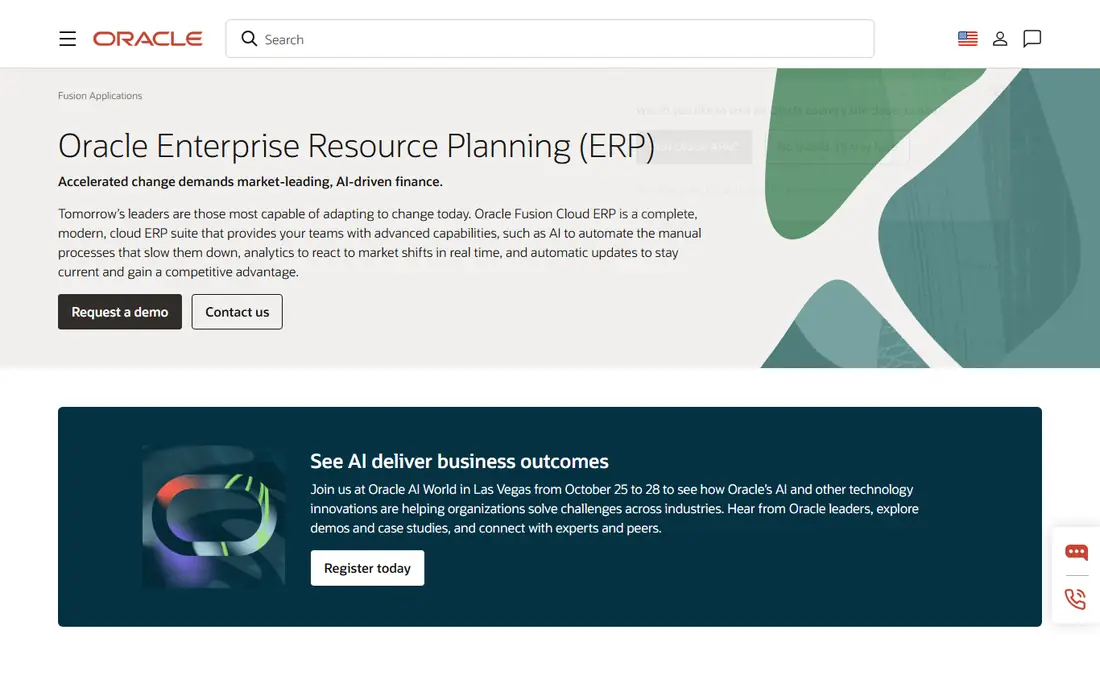
Oracle Fusion Cloud ERP fits large firms that want cloud finance and procurement with strong controls. Its suite covers accounting, procurement, and planning, and its controls suit firms with strict audit needs.
The trade-off is complexity, since setup and change management take time and the Oracle ecosystem can be hard to leave. Shortlist Oracle Fusion if your firm already uses Oracle systems or needs deep procurement alongside finance. Check the current plan page before you pay, since prices and free limits change, and start with the free or trial option when one is offered.
- Cloud finance, procurement, and planning in one suite
- Strong controls
- Oracle ecosystem
- Quote-based pricing
- Complex setup
- Oracle stack lock-in risk
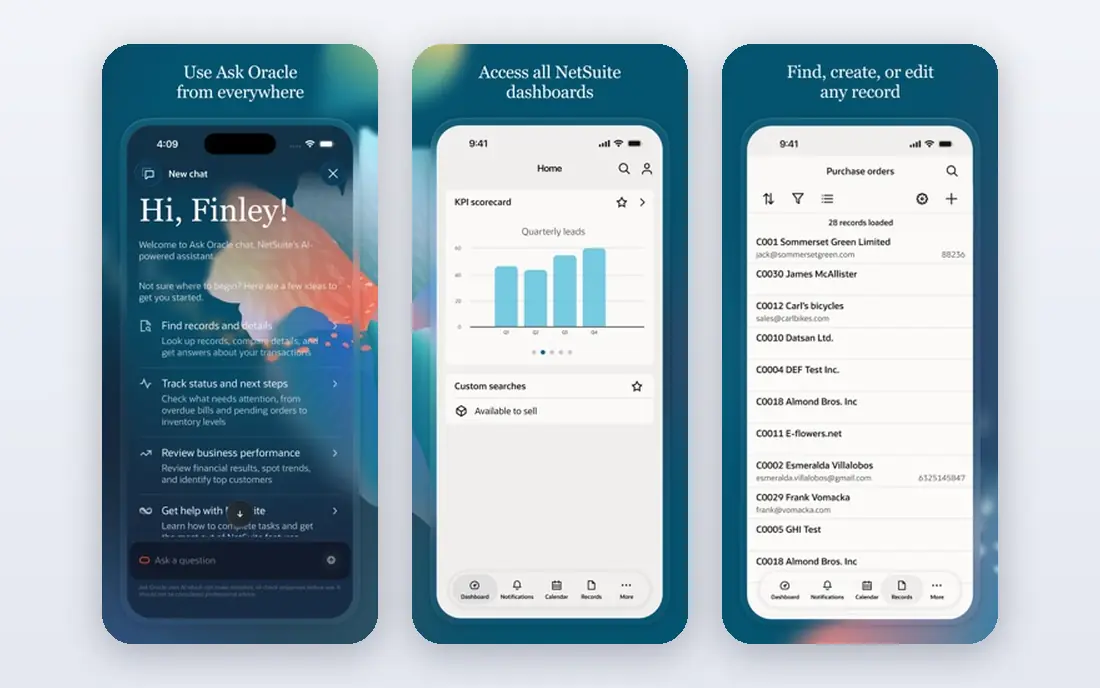
Oracle NetSuite fits growing multi-entity firms that need finance plus operations in one cloud system. Its OneWorld design handles subsidiaries, currencies, and consolidation, while inventory and order tools cover operations.
The catch is price growth, since each added user and module raises the bill, and custom work adds implementation cost. Pick NetSuite when operations matter as much as finance, and price the full module list before signing. Check the current plan page before you pay, since prices and free limits change, and start with the free or trial option when one is offered.
- OneWorld multi-entity management
- Finance plus inventory and operations
- Cloud delivery
- Quote-based pricing
- Cost grows with users and modules
- Customisation adds cost
Sage Intacct fits finance-led firms with complex multi-entity needs and a focus on close and reporting. Its dimensional reporting lets finance teams slice results by department, location, or project without a maze of accounts, and consolidation tools help multi-entity closes.
The limit is operations depth, since inventory and manufacturing are thinner than in NetSuite or SAP. Choose Intacct for finance depth and reporting, and add a separate operations system if you need heavy inventory control. Check the current plan page before you pay, since prices and free limits change, and start with the free or trial option when one is offered.
- Dimensional reporting
- Multi-entity consolidation
- Strong close and audit tools
- Quote-based pricing
- Thinner inventory and manufacturing than full ERP rivals
Workday Financial Management fits large services firms that want finance and workforce data in one cloud system. Its unified reporting helps leaders see people costs alongside financial results, and its planning tools support budgeting and forecasting.
The trade-off is scope and time, since implementation is long and the best fit is large, services-led firms rather than manufacturers. Shortlist Workday if HR and finance reporting together is a core need, not just a nice extra. Check the current plan page before you pay, since prices and free limits change, and start with the free or trial option when one is offered.
- Unified finance and HR reporting
- Global consolidation
- Strong planning tools
- Quote-based pricing
- Implementation is long
- Best fit is services and large firms
Microsoft Dynamics 365 Finance fits enterprises already invested in Microsoft business applications. Its finance, tax, and cash tools connect with Microsoft 365 and other Dynamics apps, which helps firms that already use that stack.
The catch is list price, since Finance starts at a high per-user figure, and partner-led setup adds cost. Choose it when Microsoft integration and enterprise finance depth both matter, and price user types carefully. Check the current plan page before you pay, since prices and free limits change, and start with the free or trial option when one is offered.
- Multi-entity accounting
- Tax and cash management
- Microsoft 365 integration
- High per-user list price
- Partner-led setup
- Complexity for smaller firms
Infor CloudSuite fits manufacturers and distributors that want industry-specific processes rather than generic finance. Its industry editions cover manufacturing, distribution, and services workflows alongside finance, which can cut custom work.
The limit is fit, since industry depth helps in its target sectors and matters less outside them. Shortlist Infor if your industry is a core strength of its edition, and check reference customers in that sector. Check the current plan page before you pay, since prices and free limits change, and start with the free or trial option when one is offered.
- Industry-focused finance and operations
- Cloud delivery on AWS
- Manufacturing depth
- Quote-based pricing
- Industry fit varies
- Partner-led implementation
Acumatica fits firms with many users who would face a large bill under per-seat pricing. Its consumption model charges by resources rather than by user count, which helps distributors, manufacturers, and project firms with large teams.
The trade-off is volume, since spend tracks transaction levels, so a busy period can raise the bill. Model your transaction volume honestly before signing, and compare the total with a per-seat quote. Check the current plan page before you pay, since prices and free limits change, and start with the free or trial option when one is offered.
- Consumption-based pricing with unlimited users
- Finance plus distribution and projects
- Cloud or on-premise
- Quote-based by resources
- Spend tracks transaction volume
- Partner-led setup
How we picked these
We compared official product pages, pricing notes, and public analyst summaries for each platform, and we checked multi-entity, consolidation, controls, and integration claims. We did not run trials or implementation projects, so treat timelines and costs as ranges to confirm in a quote. We gave extra weight to platforms with clear audit trails, strong close tools, and a partner ecosystem for implementation.
How to choose enterprise accounting software without a costly mistake
Start with entities, currencies, and close needs. A firm with many subsidiaries, intercompany deals, and foreign currencies needs consolidation and controls that a single-entity tool cannot fake. List your entities, reporting rules, and close calendar before any demo, and ask each vendor to show that exact close, not a generic demo.
Next, price the total, not the licence. Ask for licence cost by user type, implementation cost, data migration cost, and annual support, and ask how the price changes when you add entities or users. A low first-year licence can hide a large implementation bill, and a quote that omits training will cost you later.
Finally, check the exit and integration path. Ask how data exports work, which systems connect out of the box, and how long a typical firm of your size takes to go live. Talk to reference customers of similar size and complexity, and avoid a vendor that will not share them.
FAQ
What is the best enterprise accounting software?
For large global firms, SAP S/4HANA, Oracle Fusion, and Workday are the usual shortlist. For upper mid-market multi-entity firms, NetSuite and Sage Intacct are often stronger fits. The best choice depends on entities, industry, and existing systems.
What is the top accounting software for enterprises with many subsidiaries?
NetSuite OneWorld and Sage Intacct are both built for multi-entity work, with consolidation and intercompany handling. SAP and Oracle Fusion also handle complex global structures, but with longer implementations and higher total cost.
How much does enterprise accounting software cost?
Licences often run from tens of thousands to millions per year, depending on users, entities, and modules, and implementation often adds a large multiple. Most vendors quote rather than list prices, so get a written quote and a total cost plan.
How long does implementation take?
Six to eighteen months is common for large firms, depending on entity count, data quality, and customisation. Rushing a timeline usually raises cost and risk, so plan data cleanup and training into the schedule.
Can a mid-market firm use SAP or Oracle Fusion?
Yes, but only with a clear budget and a long timeline, since both are built for scale and complexity. Many mid-market firms get a faster result from NetSuite, Sage Intacct, or Dynamics 365, and move up only when entity or industry needs demand it.