Best Email Drip Campaign Software in 2026: 9 Tools Compared
Compare the best email drip campaign software for 2026, with visual builders, behavior triggers, ecommerce flows and pricing for growing lists today now.
- Editor's choice
 ActiveCampaign
Complex automation
Starts at$15 per monthVisit activecampaign.comFull review - Great alternative
 Mailchimp
Simple welcome series
Starts at$13 per monthVisit mailchimp.comFull review - Also consider
 Klaviyo
Ecommerce flows
Starts at$20 per monthVisit klaviyo.comFull review
TL;DR:
- ActiveCampaign leads for complex drip logic, with conditions, goals and behavior triggers in a visual builder.
- Mailchimp and MailerLite suit simple welcome and nurture sequences, with easy editors and free plans for small lists.
- Klaviyo and Drip lead for ecommerce drips, because order and browsing data drive flows that general tools cannot match.
- Brevo and Omnisend add SMS to drip campaigns, which helps for time-sensitive offers and appointment reminders.
- Price at your real contact or profile count, because drip tools charge by list size and the starter rate rarely lasts as you grow.
Quick comparison
| Tool | Best for | Starts at | Free plan? | |
|---|---|---|---|---|
| ActiveCampaign | Complex automation | $15 per month | Free trial | Visit |
| Mailchimp | Simple welcome series | $13 per month | Yes | Visit |
| Klaviyo | Ecommerce flows | $20 per month | Yes | Visit |
 Drip | Ecommerce behavior flows | $39 per month | Free trial | Visit |
 Brevo | Budget multi-channel drips | $9 per month | Yes | Visit |
 MailerLite | Simple funnels | $19 per month | Yes | Visit |
 Omnisend | Fast ecommerce setup | $16 per month | Yes | Visit |
 Kit | Creator sequences | $39 per month | Yes | Visit |
 GetResponse | Funnels plus email | $19 per month | Free trial | Visit |
The best email drip campaign software
A drip campaign sends the right message at the right time, without manual work for each subscriber. These nine tools cover simple sequences, complex branching, ecommerce flows and multi-channel drips, with clear pricing at stated list sizes.
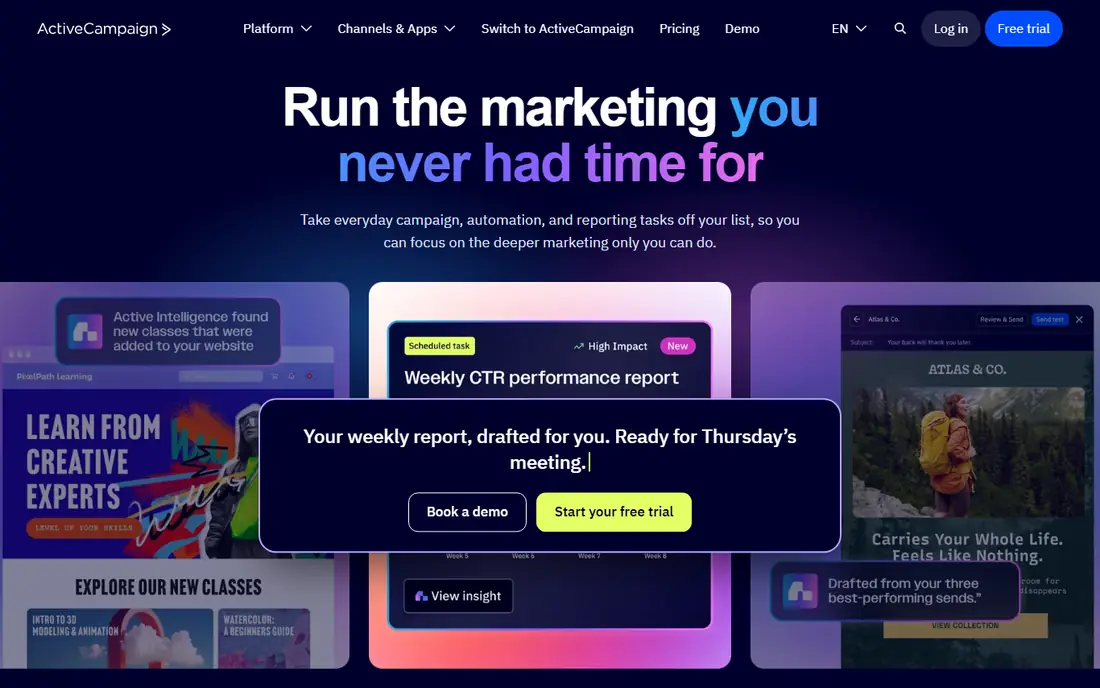
ActiveCampaign is the strongest choice when a drip is more than a timed series of emails. You can branch by opens, clicks, purchases, site visits, tags and deal stage, then set goals that move contacts out of a flow when they convert. That logic helps lead nurture, onboarding and win-back campaigns feel personal rather than generic.
The cost is time. A deep automation needs a map, test contacts and a review of edge cases, such as what happens when a contact meets two triggers at once. Start with one core flow and prove it, then add branches. For teams that live in automation, ActiveCampaign is worth the learning curve.
- Deep visual builder
- Behavior and CRM triggers
- Strong segmentation
- No permanent free plan
- Complex builds need testing time
Mailchimp suits a team that wants a welcome series, a nurture sequence and a monthly newsletter without a steep setup. The editor is familiar, templates are strong, and customer journeys cover common triggers such as signup, purchase and date-based events. A free plan for 250 contacts and 500 sends lets a new sender test drips before paying.
Advanced branching and predictive segmentation sit on higher plans, and contact pricing rises quickly. If your drip needs only a few timed steps and simple splits, Mailchimp will feel fast and friendly. If you need deep behavior logic, compare ActiveCampaign before you build a large library in Mailchimp.
- Easy builder and templates
- Free plan for small lists
- Predictive segmentation on higher plans
- Automation depth is less than ActiveCampaign
- Pricing climbs with contacts
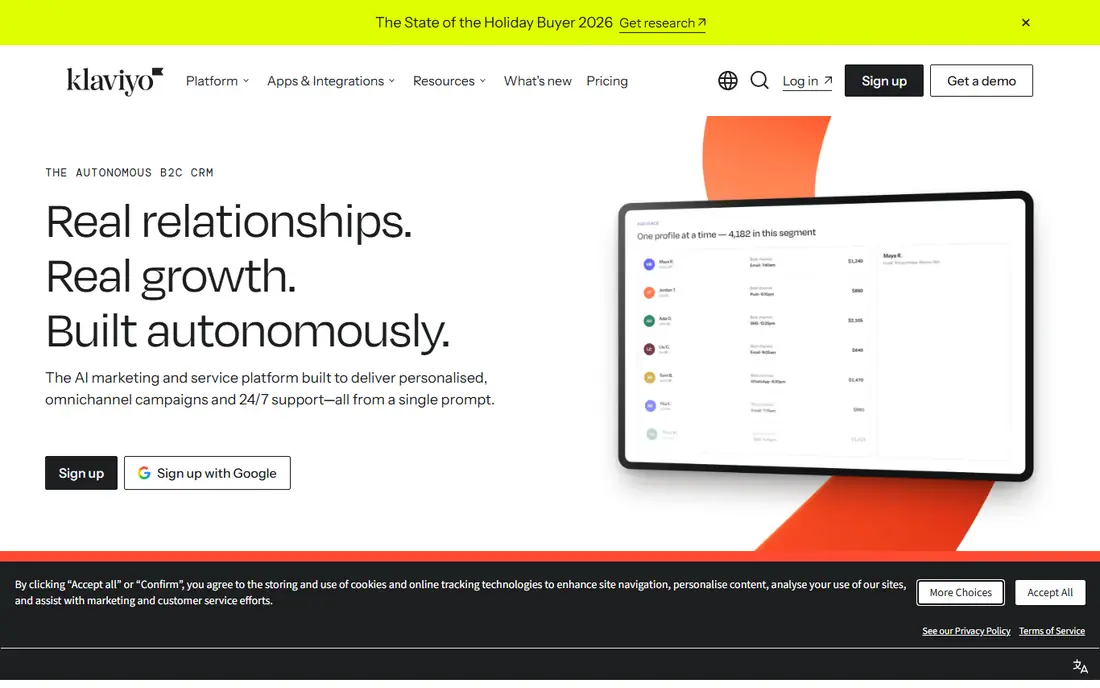
Klaviyo turns store data into drip campaigns that general tools struggle to match. Welcome, abandoned cart, browse abandonment, post-purchase and win-back flows can trigger from real purchases, viewed products and predicted lifetime value. That data depth means a flow can change its message based on what a shopper actually bought, not only on an email open.
Pricing follows profile count, so a store with many one-time buyers should model the bill at real profile numbers, including inactive profiles. Test flows with live order data, because Klaviyo value shows in flow revenue, not in template looks alone. For Shopify and similar stores, it is the drip leader in this list.
- Order and browsing triggers
- Strong ecommerce segments
- A/B testing and analytics
- Pricing rises with profiles
- Less suited to non-ecommerce nurture
Drip, the ecommerce marketing platform, focuses on behavior-driven flows for online stores. It tracks browsing, purchases and engagement, then lets you build workflows that respond to those actions with email and SMS. Pricing starts at $39 per month for 2,500 people, with a 14-day trial, which positions it above basic newsletter tools but below enterprise suites.
Small stores with simple needs may find Klaviyo or Omnisend cheaper at low volumes. Drip makes sense when you want deep ecommerce segmentation and you will use behavior triggers across many flows. Check the price at your people count, because Drip tiers rise in steps as your audience grows.
- Behavior-based ecommerce workflows
- Strong segmentation
- Visual builder for stores
- No permanent free plan
- Starting price is higher than simple email tools
Brevo gives small teams a low cost way to run multi-channel drips. You can build email workflows, add SMS steps for urgent reminders, and use WhatsApp where it fits your audience. The free plan allows 300 emails per day, and Starter starts at $9 per month, with pricing based on sends rather than only contacts.
That send-based model suits teams with a large list but modest send frequency, while frequent senders should check volume costs. Automation logic is solid for common flows but less deep than ActiveCampaign for complex branching. For a budget drip that needs SMS as well as email, Brevo is hard to beat.
- Low starting price
- Email plus SMS and WhatsApp
- Free plan with daily send limit
- Automation depth is less than ActiveCampaign
- Reporting is simpler
MailerLite suits creators and small businesses that want a simple funnel: a landing page, a signup form, a welcome sequence and a sales email. The automation builder is visual and easy to follow, with delays, conditions and actions that cover most basic drips. A free plan for 250 subscribers and Comfort plans from $19 per month at 1,000 subscribers keep costs clear.
It will not match Klaviyo for store behavior or ActiveCampaign for complex logic, and that is fine for many users. If your drip is linear with a few branches, MailerLite gives a calm, reliable experience. Test the builder with your longest sequence, because ease at three steps does not always hold at twenty steps.
- Clean automation builder
- Landing pages included
- Free plan for small lists
- Fewer behavior triggers than ecommerce tools
- No built-in CRM depth
Omnisend is built for fast ecommerce automation. Pre-built workflows for welcome, abandoned cart, order confirmation and win-back let a store launch drips in hours, not weeks, with product recommendations added to emails. Email plus SMS in one flow helps for cart recovery, where a timely text can prompt a return visit.
B2B teams that need lead scoring, deal pipelines and long nurture logic will get less from Omnisend than from ActiveCampaign. For a store that wants proven ecommerce flows without building each one from scratch, Omnisend offers a fast, focused start. Check SMS costs separately, because text sends are often billed apart from email.
- Pre-built ecommerce workflows
- Email plus SMS
- Product recommendations
- Less suited to B2B nurture
- Pricing rises with contacts
Kit, formerly ConvertKit, is designed for creators, course sellers and newsletter writers. Tag-based sequences let you send different drips based on interests, purchases and form choices, without complex visual branching. Built-in commerce tools help creators sell digital products and paid newsletters alongside email sequences.
The free plan covers up to 10,000 subscribers but does not include sequences, so creators who need drips must pay, with paid plans from $39 per month at 1,000 subscribers on some listings. If your audience is built around content and courses, Kit fits well. If you run a product store, Klaviyo or Omnisend will fit better.
- Tag-based sequences for creators
- Commerce tools
- Free plan up to 10,000 subscribers without sequences
- Paid sequences start higher than rivals
- Fewer ecommerce store triggers than Klaviyo
GetResponse combines drip email with funnels, landing pages and webinars, which suits launches and course sales. You can build a visual automation that starts with a signup, sends a nurture series, invites contacts to a webinar, and follows up based on attendance. Starter pricing at $19 per month for 1,000 contacts keeps it accessible for small teams.
The breadth can feel crowded at first, so focus on one funnel path before exploring every feature. For a creator or small business that runs webinars as part of a drip, GetResponse can replace separate funnel and webinar tools. For pure ecommerce flows, Klaviyo remains stronger.
- Visual automation plus funnels and webinars
- Landing pages
- Ecommerce features
- No permanent free plan
- Many features can overwhelm new users
How we picked these
We compared official pricing pages, automation features and public reviews for tools that support timed and triggered email sequences. We favored tools with a visual builder, segmentation, testing and analytics, and with pricing stated at a clear contact or profile count. Where a vendor offers only a trial, we listed Free trial rather than a free plan, to avoid overstating access.
How to build a drip that converts
Start with one clear goal per flow
Each drip should have one job, such as welcoming a new subscriber, recovering a cart, or nurturing a lead to a call. A flow with mixed goals sends mixed messages and is hard to measure. Write the goal down, choose one success metric, and build only the steps that serve that goal.
Map triggers, delays and exits
Draw the flow before you build it in software. Note the trigger, each delay, each branch condition, and the exit rule when a contact converts or unsubscribes. A simple map prevents contacts getting stuck in loops or receiving duplicate offers, which is the most common drip mistake we see in reviews.
Write for the step, not the whole series
Each email should do one thing well, such as answer one objection, share one story, or offer one next step. Short, specific emails usually perform better in a drip than long essays that try to cover everything. Test subject lines and calls to action on a small segment before you send to the full list.
Measure, prune and refresh
Check open, click, conversion and unsubscribe rates by step, not only for the flow as a whole. A step with a sharp drop needs a rewrite, a shorter delay or a different offer. Prune dead branches, update old offers, and review each flow every quarter, because audience needs and product prices change.
FAQ
What is the best drip campaign software?
ActiveCampaign leads for complex automation, Klaviyo leads for ecommerce, and Mailchimp or MailerLite lead for simple welcome and nurture sequences. The best choice depends on whether you need branching logic, store data or simple timed emails. Start with your main flow type, then shortlist two tools and test them with real contacts.
What is the best drip email campaign platform for ecommerce?
Klaviyo is the strongest ecommerce drip platform, with order and browsing triggers, segments and predictive tools. Drip and Omnisend are strong alternatives, with Drip focused on behavior workflows and Omnisend on fast pre-built flows. Compare pricing at your profile count and test cart recovery flows with live store data.
How many emails should a drip campaign have?
Most welcome and nurture drips work well with three to seven emails, spaced over days or weeks depending on urgency. A cart recovery drip may need only two or three messages, while a course launch may need more. Watch unsubscribe and complaint rates by step, and stop adding emails when extra steps no longer lift conversions.
Can I run drip campaigns for free?
Yes, Mailchimp, Brevo, MailerLite, Klaviyo and Kit offer free plans, but free plans often limit contacts, sends or sequences. Kit free plan, for example, does not include sequences, so you may need a paid plan for drips. Check the free plan limits for sequences, automation steps and contact counts before you build a large flow.
What is the difference between a drip campaign and a newsletter?
A drip campaign is triggered by an action or date and sends a timed series to each person individually, while a newsletter is sent to a whole list at one time. Drips suit welcome, onboarding and cart recovery, where timing matters for each person. Newsletters suit updates, stories and offers that apply to the whole audience at once.
How do I avoid spam complaints in drip campaigns?
Use confirmed signup where possible, set clear expectations at signup, and honor unsubscribes at once. Keep frequency reasonable, avoid misleading subject lines, and prune inactive contacts regularly. A clean list and relevant timing matter more for deliverability than any single tool feature.