Best Email Apps Alternatives to Superhuman in 2026: 9 Apps Compared
Best email apps alternatives to Superhuman compared for 2026, with AI triage, shared inboxes, privacy options and prices for Gmail and Outlook users for 2026.
- Editor's choice
 Shortwave
AI triage in Gmail
Starts atFreeVisit shortwave.comFull review - Great alternative
 Spark Mail
Free all-rounder
Starts atFreeVisit sparkmailapp.comFull review - Also consider
 Missive
Shared team inboxes
Starts at$14 per user per monthVisit missiveapp.comFull review
TL;DR:
- Shortwave is the closest AI-first replacement for Gmail users who want Superhuman-style speed and summaries.
- Spark is the best free all-rounder, with Gmail, Outlook, iCloud, and IMAP accounts in one inbox.
- Missive suits teams that share an inbox, while SaneBox cleans mail without forcing a new app.
- HEY and Proton Mail suit people who want a fresh start or stronger privacy, at the cost of some flexibility.
- Superhuman costs $30 per month to start, so most alternatives here save money without losing the core speed benefit.
Quick comparison
| Tool | Best for | Starts at | Free plan? | |
|---|---|---|---|---|
| Shortwave | AI triage in Gmail | Free | Yes | Visit |
| Spark Mail | Free all-rounder | Free | Yes | Visit |
| Missive | Shared team inboxes | $14 per user per month | Free trial | Visit |
 HEY | Fresh inbox model | $99 per year | No | Visit |
 Proton Mail | Private email service | Free | Yes | Visit |
 Canary Mail | Privacy across accounts | Free | Yes | Visit |
 SaneBox | Cleaner inbox in any app | See website | Free trial | Visit |
 Spike | Chat-style team email | See website | Free trial | Visit |
 Mimestream | Gmail on a Mac | $4.99 per month | Free trial | Visit |
The best email apps alternatives to Superhuman
Superhuman built its name on speed, keyboard shortcuts, split inboxes, and AI help, with Starter pricing at $30 per month. The apps below offer much of that experience for less, and we compared their official pricing pages, account support, AI features, and platform coverage to build this list.
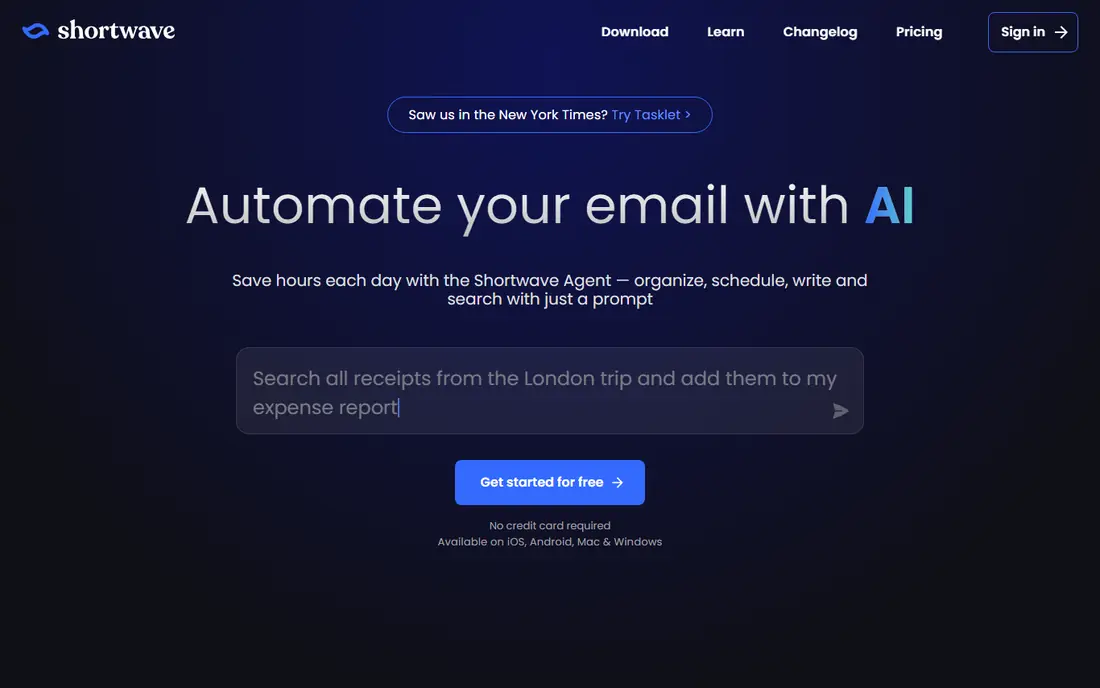
Shortwave is the closest match if you love Superhuman but live in Gmail. It bundles threads, summarizes long conversations, drafts replies in your voice, and lets you search years of mail in plain language. For people who process hundreds of Gmail messages a week, those AI tools cut triage time in a way a plain client cannot.
The limit is account support. Shortwave does not cover Outlook, iCloud, or IMAP accounts, so a mixed-account user will need a second app. Pricing has varied in 2026 listings, with Pro around $18 per month and Business around $30 per seat, plus a limited free plan. If Gmail is your only account, Shortwave is the first alternative to test.
- AI summaries, natural-language search, and thread bundling
- Built by former Google engineers
- Strong Gmail focus
- Gmail and Google Workspace only
- No free plan on some higher business tiers in newer listings
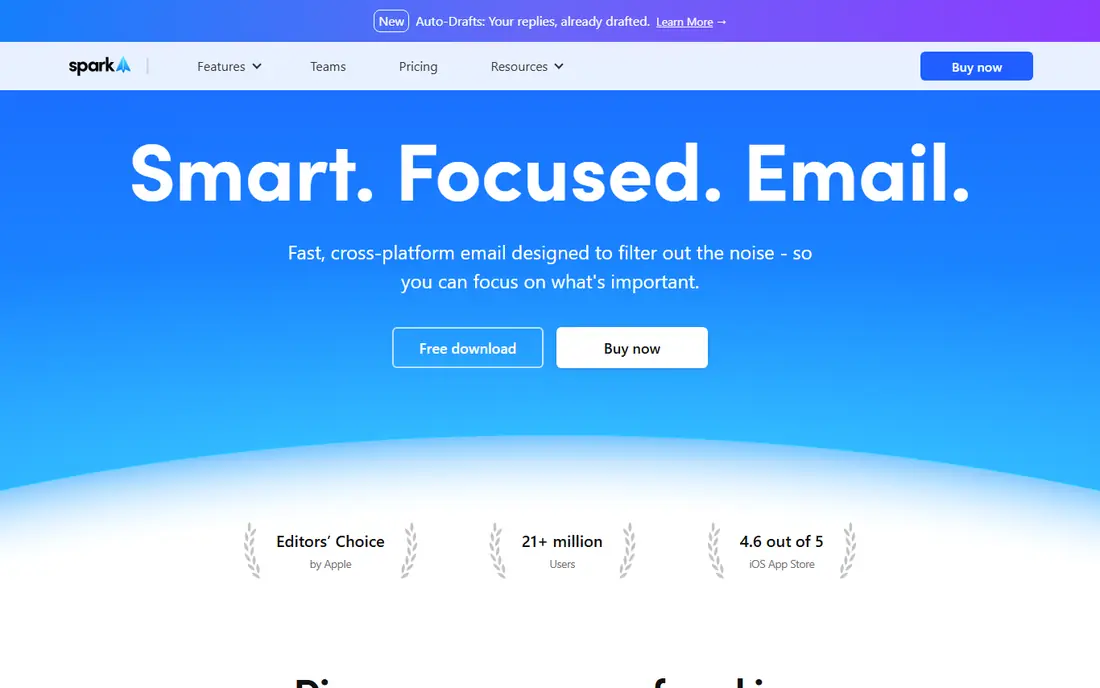
Spark, from Readdle, is our pick for most people leaving Superhuman on price alone. The free plan unifies several accounts, sorts mail into a smart inbox, and works on Mac, Windows, iPhone, iPad, and Android. Paid Plus at $10 per month, or $8.25 billed annually, adds more AI writing and summaries, while Pro adds team features.
The catch is that Spark is a general client first and an AI tool second. Its AI help is useful, but it does not match Shortwave depth for Gmail-only users. For a household or freelancer with Gmail plus Outlook plus iCloud, Spark is the simplest free replacement, and the paid upgrade is still far below Superhuman pricing.
- Free plan with smart inbox
- Covers Gmail, Outlook, iCloud, Yahoo, and IMAP
- Team comments and shared drafts
- Best AI features sit on paid plans
- Some Pro features have been listed as coming soon
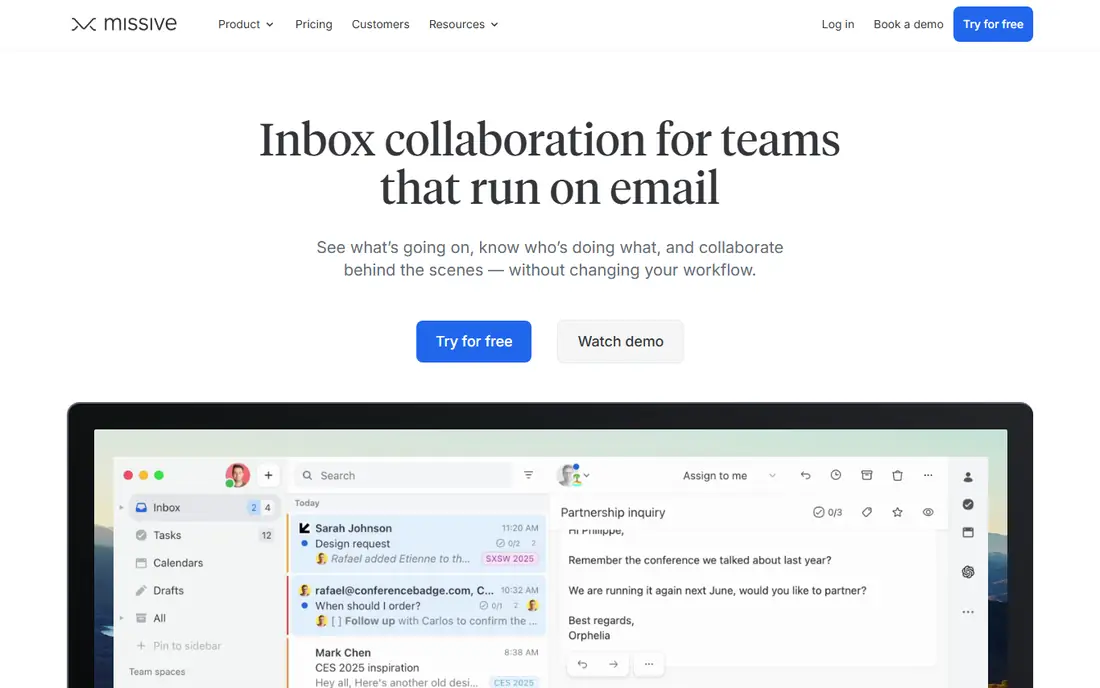
Missive suits a small team that shares support, sales, or info inboxes and currently uses Superhuman for speed alone. Colleagues can assign conversations, comment internally, draft together in real time, and see who replied, without forwarding threads or losing context. That shared view prevents double replies, which is a common pain in shared Gmail or Outlook boxes.
Pricing starts at $14 per user per month billed annually, with a 30-day trial and higher tiers for more automation. A solo user will find Shortwave or Spark cheaper and simpler. A team of two or more that lives in a shared inbox should test Missive first, since its collaboration layer is the reason to pay.
- Shared inboxes with live co-drafting
- Email plus SMS and social channels
- Internal chat beside mail
- Built for teams, so solo users pay for features they may not use
- No permanent free plan
HEY, from 37signals, rethinks email rather than speeding up the old inbox. New senders wait in the Screener until you approve them, newsletters go to the Feed for reading later, and receipts go to Paper Trail, so the main inbox stays for people who matter. That structure helps people who feel buried by promotions and automated mail.
The trade-off is commitment. HEY works best with a new HEY address, costs $99 per year, and does not unify Gmail or Outlook accounts the way Spark does. If you want a calmer inbox and are willing to change your address habits, HEY is a refreshing alternative. If you must keep existing accounts, Spark or Canary will fit better.
- Screener approves new senders
- Feed and Paper Trail separate newsletters and receipts
- Ad-free and tracker-blocking
- Requires a new HEY address for the full model
- No free plan
- Weaker for mixed-account users
Proton Mail is the privacy-first alternative for people who want a paid-for service rather than an ad-funded one. Mail between Proton users is end-to-end encrypted, stored mail is zero-access encrypted, and the free plan includes 1 GB storage, one address, and 150 messages per day. Paid Mail Plus at $4.99 per month, or $47.88 per year, adds storage, addresses, and a custom domain.
The limits matter for power users. Using Proton inside Apple Mail or Outlook requires Proton Mail Bridge, which is paid-only, and subject lines and metadata are not end-to-end encrypted. If privacy and a clean, subscription-funded model matter more than Superhuman speed tricks, Proton is a strong pick. If speed inside Gmail is the goal, Shortwave fits better.
- End-to-end encryption between Proton users
- Zero-access storage
- Free plan with 1 GB storage
- Desktop clients need Bridge on paid plans
- Search on large archives is less smooth
- Custom domain limits are tight
Canary Mail combines Spark-style account coverage with a stronger privacy pitch. It sorts mail with AI on every plan, including the free one, blocks tracking pixels by default, and works across Gmail, Outlook, Exchange, iCloud, Yahoo, and IMAP in one inbox. That mix suits people with several accounts who do not want to move to a new address.
Growth costs $36 per year and adds AI writing, thread summaries, read receipts, and send later, while Pro+ at $100 per year adds PGP features. The free plan is limited to two devices, so a user with a phone, tablet, and two computers may need to pay. For mixed accounts plus privacy, Canary is a balanced alternative to Superhuman.
- AI sorting across Gmail, Outlook, iCloud, and IMAP
- Tracker blocking
- Free plan for unlimited accounts on two devices
- AI writing and summaries need a paid plan
- No Screener-style approval step
SaneBox is different from the rest of this list, because it is not an app you switch to. It works server-side with your existing provider and moves low-priority mail into folders, sends a daily digest, and helps you snooze messages. If you like Apple Mail or Outlook and only want less noise, SaneBox fixes the inbox without a learning curve.
The downside is scope. SaneBox will not give you Superhuman keyboard speed, shared drafts, or AI writing, and pricing has been listed from around $3.49 per month on annual plans to higher tiers in other comparisons, so confirm the current tier on the vendor site. Use SaneBox when the app is fine and the volume is the problem. Use Shortwave or Spark when the app itself needs replacing.
- Works inside your existing email app
- Server-side filtering with no client switch
- Useful digest and snooze tools
- Not a full email client
- Pricing varies by tier and has changed in 2026 listings
- No AI drafting
Spike turns email threads into a chat-like conversation, which suits teams that find formal email threads slow and hard to follow. It adds notes, tasks, group chat, and calls beside mail, so a small team can stay in one app for daily coordination. For startups and agencies that live in chat tools, that blend can feel more natural than a traditional inbox.
Not everyone likes the chat view for long, formal threads, and Spike pricing should be confirmed on the vendor site before purchase, since listings vary. If your team already uses Slack or Teams for chat, Spike may duplicate tools. If email is still your main team channel, Spike offers a Superhuman alternative with a different, more conversational feel.
- Conversational email view that reads like chat
- Built-in notes, tasks, and calls
- Works with Gmail and Outlook
- Chat view divides opinion
- Pricing is less transparent than Spark or Shortwave
- Smaller ecosystem
Mimestream is a niche pick, but a good one for Mac users who live in Gmail. It is a native macOS app that uses the Gmail API, so labels, categories, and search behave like Gmail, with Mac speed and keyboard habits built in. At $49.99 per year, or $4.99 per month, it costs far less than Superhuman and feels faster than a browser tab.
The limits are clear. There is no Windows or Android version, and Outlook or iCloud users get nothing here. A Mac-only Gmail user who wants speed without AI overload should test Mimestream during its 14-day trial. Everyone else should choose Spark, Shortwave, or Canary for broader account support.
- Native Mac app built for Gmail
- Fast and lightweight
- Uses the Gmail API for labels and categories
- Mac only
- Gmail and Google Workspace only
- No Windows, Android, or iCloud support
How we picked these
We compared official pricing pages, account support lists, AI features, and platform coverage for email clients and services available in October 2026. We favored tools that cover Gmail or Outlook, offer a free plan or trial, and provide a distinct reason to switch from Superhuman, such as lower price, shared inboxes, privacy, or a new inbox model. We did not claim hands-on testing, and prices should be confirmed on the vendor site, since email pricing changed during 2026 for several tools on this list.
What to check before you switch
Start with your accounts, not the feature list. A Gmail-only tool will frustrate an Outlook user, and a new-address service will frustrate someone who must keep a work address. List every account you check daily, then filter this list to tools that cover all of them. Test keyboard shortcuts, search, and mobile apps for a full work week before paying.
Speed, AI, and privacy trade-offs
Superhuman speed comes from shortcuts, split inboxes, and AI triage working together. Shortwave matches the AI part for Gmail, Spark matches the multi-account part for free, and Proton matches the privacy part. No single cheap tool matches all three at once. Decide which leg matters most, and accept a weaker second leg, rather than paying $30 per month for a bundle you only half use.
FAQ
What is the cheapest good alternative to Superhuman?
Spark Mail is the cheapest good all-rounder, with a useful free plan and Plus at $10 per month. Canary Mail also offers a free plan, and Mimestream costs $4.99 per month for Mac Gmail users. Shortwave is stronger for Gmail AI, but its paid plan costs more than Spark.
Is Shortwave better than Superhuman for Gmail?
Shortwave is often better for Gmail users who want AI summaries, bundling, and natural-language search at a lower price. Superhuman still leads on cross-account speed, since it also covers Microsoft 365, and on polish for power users. If Gmail is your only account, test Shortwave first.
Can I use these apps with Outlook?
Yes, Spark, Missive, Canary Mail, and Spike support Outlook alongside Gmail and other providers. Shortwave and Mimestream do not, since they are Gmail-only. HEY and Proton Mail work as separate services, with forwarding or bridge tools for other accounts on paid plans.
Do these email apps read my mail for ads?
Proton Mail and Canary Mail state that they do not use mail for ad targeting, and Proton uses a subscription model rather than ads. Spark and Shortwave use AI features that process mail to provide summaries and sorting, so read each privacy policy for data handling and training rules. Use a strong password and two-step verification on any email account.
Should I switch if I already pay for Superhuman?
Switch only if price, account coverage, or team sharing is the issue. Superhuman remains strong for keyboard-first Gmail and Outlook users who value its polish. If $30 per month feels high, Spark or Shortwave will save money, and Missive will help a team share an inbox more clearly.