Best EHS Software in 2026: 8 Tools Compared
Compare the best EHS software for incidents, audits, inspections, and compliance. We cover enterprise suites and frontline tools for teams of all sizes.
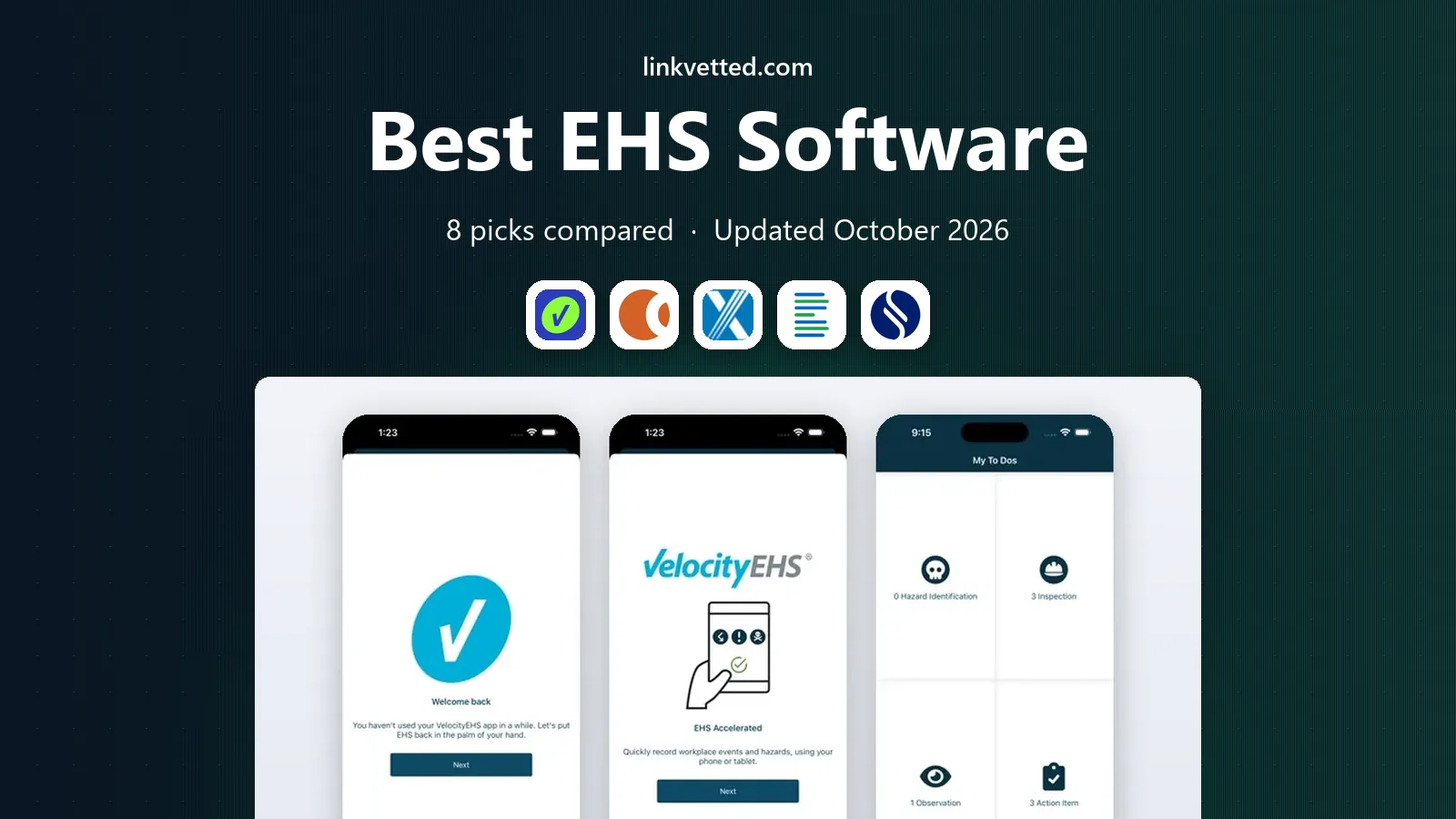
- Editor's choice
 VelocityEHS
Mid-to-enterprise EHS
Starts atSee websiteVisit ehs.comFull review - Great alternative
 Cority
Enterprise EHSQ
Starts atSee websiteVisit cority.comFull review - Also consider
 Intelex
Configurable EHSQ
Starts atSee websiteVisit intelex.comFull review
TL;DR:
- Enterprise buyers should shortlist VelocityEHS, Cority, Intelex, and Benchmark Gensuite for multi-site EHS and compliance.
- SafetyCulture suits frontline teams that need mobile inspections fast, with a free tier for small teams.
- EHS Insight and Evotix suit mid-size teams that want faster setup without a full enterprise rollout.
- EHS software helps with records and follow-up, but it does not replace trained staff, correct procedures, or timely reporting.
Quick comparison
| Tool | Best for | Starts at | Free plan? | |
|---|---|---|---|---|
| VelocityEHS | Mid-to-enterprise EHS | See website | No | Visit |
| Cority | Enterprise EHSQ | See website | No | Visit |
| Intelex | Configurable EHSQ | See website | No | Visit |
 Benchmark Gensuite | Multi-site compliance | See website | No | Visit |
 Sphera | Operational risk and EHS | See website | No | Visit |
 SafetyCulture | Frontline inspections | Free | Yes | Visit |
 EHS Insight | Modular mid-size EHS | See website | No | Visit |
 Evotix | Frontline safety engagement | See website | No | Visit |
The best EHS software
EHS software, short for environment, health, and safety software, manages incidents, audits, inspections, training, and compliance records. The right tool depends on company size, site count, and whether field workers or EHS managers are the main users. These eight tools cover that range.
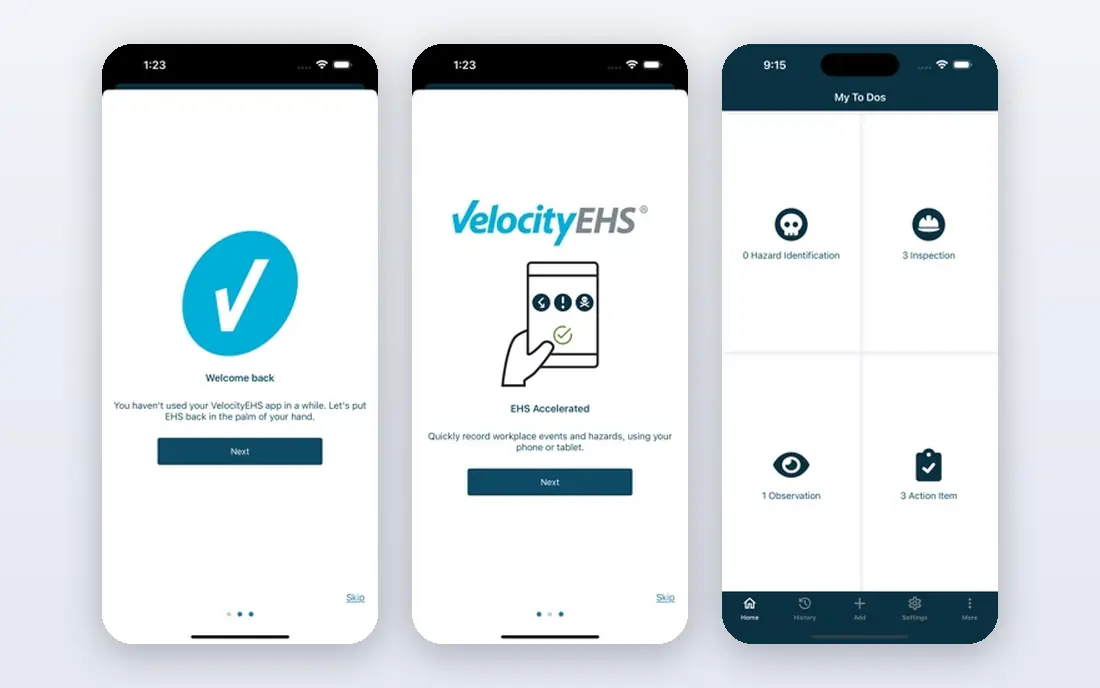
VelocityEHS suits mid-size and enterprise companies that need a broad EHS platform in one place. Its modules cover incidents, audits, inspections, chemical management, and training, with reporting that helps managers spot trends across sites. The platform is built for companies that must show consistent records during inspections and audits.
Pricing is quote-based, so you need a scoping call to get a firm figure, and module choices shape the total. Implementation also needs planning, especially for chemical data and multi-site rollouts. For a company moving from spreadsheets to a real EHS system, VelocityEHS offers a faster path than a full enterprise suite while still covering core needs.
- Broad EHS modules
- Chemical management
- Incident and audit tools
- Quote-based pricing
- Implementation planning needed
- Module costs add up
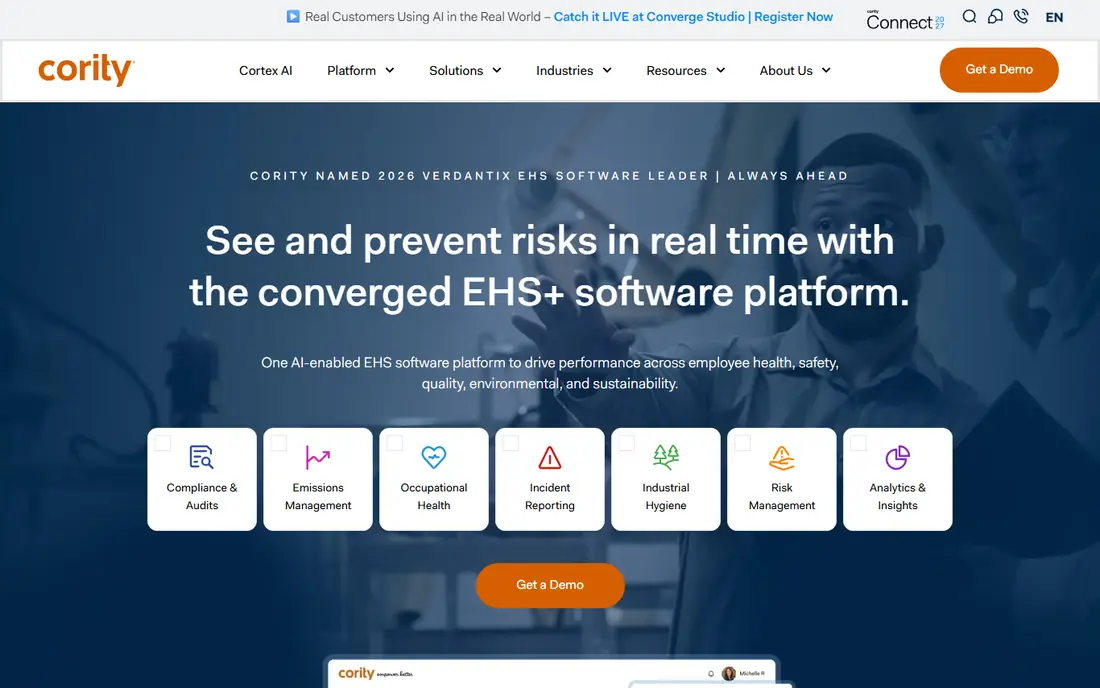
Cority suits global enterprises that run environment, health, safety, quality, and occupational health together. Its platform covers incidents, audits, risk, industrial hygiene, occupational health, and sustainability, with analytics for leaders across regions. That breadth helps a large company keep one system of record instead of many local tools.
The trade-off is scale and time. Pricing is quote-based, implementation can take months for a full rollout, and the platform needs a dedicated admin team. Smaller companies will find Cority more than they need. For a global enterprise with complex compliance and health programs, Cority is a leading shortlist option.
- Enterprise EHSQ depth
- Occupational health
- Sustainability and quality modules
- Quote-based pricing
- Long implementation
- Needs dedicated admin
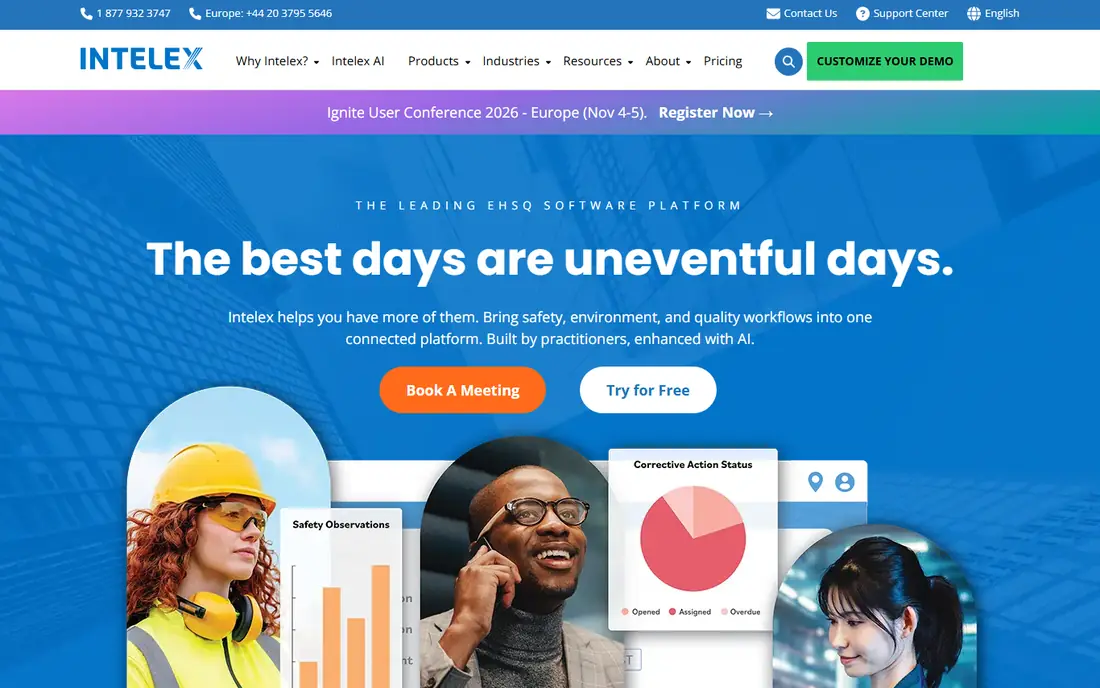
Intelex suits enterprises that need EHSQ software shaped to their exact processes. Its configurable workflows cover incidents, audits, inspections, permits, and quality events, and its reporting tools help managers track corrective actions to closure. Companies with unique approval chains or regulatory needs often value that flexibility.
Configuration is both the strength and the cost. You need clear processes before you build workflows, or the system can mirror messy habits. Pricing is quote-based, and rollout time grows with customization. For an enterprise that cannot fit a fixed template, Intelex offers control that simpler tools lack.
- Highly configurable workflows
- EHSQ coverage
- Strong reporting
- Quote-based pricing
- Configuration takes time
- Needs process clarity first
Benchmark Gensuite suits multi-site organizations that need collaborative compliance across plants, regions, and teams. Its platform covers incidents, audits, inspections, permits, and environmental compliance, with shared workflows that help sites follow the same process. Dashboards give leaders a view across locations without chasing spreadsheets.
As an enterprise platform, it needs scoping, configuration, and training, and pricing is quote-based. Smaller single-site teams may find it heavier than needed. For a company with many sites and a need for consistent compliance records, Benchmark Gensuite offers scale and collaboration in one system.
- Multi-site collaboration
- Compliance workflows
- Broad EHS modules
- Quote-based pricing
- Enterprise setup
- Learning curve for new users
Sphera suits companies that manage operational risk alongside EHS, including process safety, environmental compliance, and sustainability reporting. Its platform links safety events to risk, permits, and environmental data, which helps leaders in energy, chemicals, and manufacturing see risk in context. Analytics support reporting for both operations and leadership.
The broad scope means scoping matters. You must define which modules, sites, and users are in phase one, or the rollout can grow too fast. Pricing is quote-based, and implementation takes time. For a high-risk operation that needs EHS plus operational risk in one platform, Sphera is a strong enterprise candidate.
- Operational risk focus
- EHS and sustainability coverage
- Enterprise analytics
- Quote-based pricing
- Broad scope needs scoping
- Implementation time
SafetyCulture suits frontline teams that need mobile inspections, checklists, and issue tracking without a long rollout. Workers can complete inspections on a phone, even offline in many cases, and managers can assign corrective actions from the same app. The free tier covers small teams, while paid plans add analytics, integrations, and more users.
Advanced governance and enterprise reporting are lighter than in Cority or Intelex, so very large companies may need a second system for deep compliance. Paid tiers also add cost as teams grow. For a safety manager who needs field adoption fast, SafetyCulture offers the simplest path to digital inspections.
- Free tier for small teams
- Mobile inspections
- Easy checklist builder
- Paid tiers needed for advanced analytics
- Enterprise governance is lighter
EHS Insight suits smaller and mid-size safety teams that want to deploy fast and buy only the modules they need. Its platform covers incidents, audits, inspections, and corrective actions, with mobile forms for field use. Modular pricing lets a team start with core safety tools and add environmental or training modules later.
Pricing varies by modules and users, so a firm quote needs a scoping conversation. Enterprise depth is lighter than in Cority or Intelex, which matters for global compliance programs. For a mid-size company moving off spreadsheets, EHS Insight offers a practical balance of speed, cost, and coverage.
- Modular pricing approach
- Fast deployment for mid-size teams
- Mobile forms
- Pricing varies by modules
- Enterprise depth is lighter
- Needs module planning
Evotix, formerly known as Assure, suits companies that want frontline workers to report hazards, near misses, and observations easily. Its mobile tools lower the barrier to reporting, while managers track actions, audits, and trends in one dashboard. That engagement focus helps build a safety culture where reporting feels normal, not punitive.
Pricing is quote-based, and Evotix has a smaller footprint than the largest enterprise suites, so very complex global programs may need deeper tools. Adoption still needs a plan: workers need training, feedback on reports, and visible follow-up, or reporting will fade. For a company that wants more frontline reports and faster action, Evotix is a focused choice.
- Frontline engagement focus
- Mobile reporting
- Incident and audit tools
- Quote-based pricing
- Smaller footprint than enterprise suites
- Needs adoption plan
How we picked these
We compared official feature pages, pricing pages, and module coverage for tools that manage EHS work, not just generic forms. We kept enterprise suites, mid-size platforms, and frontline inspection tools, because EHS buyers range from global directors to site safety managers. We left out single-purpose checklist apps with no incident or audit tracking and tools with no clear current product page. We compared published features and pricing rather than claiming hands-on safety audits.
How to choose EHS software
Start with the records an inspector or auditor will ask for. List your incident logs, OSHA 300 records where relevant, audit findings, training records, permits, and corrective actions. The tool must track each record to closure, with an owner and a due date, or it will not solve the spreadsheet problem. Test that workflow with a real incident before you buy.
Next, test field use with real workers. Give a frontline worker a phone, ask them to log a hazard, and time how long it takes. If the form is long, confusing, or fails offline, adoption will drop. Check language options, offline mode, and photo capture, because those details decide whether field teams actually use the system.
Finally, scope cost and rollout honestly. Enterprise suites need months and a dedicated owner, while frontline tools can run in days. Ask every vendor for a written timeline, module list, user count, and total first-year cost, including training and support. A tool that fits your team size and rollout capacity will deliver more safety value than a larger tool that never gets fully adopted.
FAQ
What is EHS software?
EHS software manages environment, health, and safety work in one system, including incidents, inspections, audits, training, permits, and compliance records. It replaces spreadsheets and paper forms with tracked workflows, reminders, and reports. It helps with records and follow-up, but it does not guarantee compliance on its own.
What is the best EHS software for small teams?
SafetyCulture is a strong small-team pick because it offers a free tier and fast mobile inspections. EHS Insight also suits mid-size teams that want modular tools without enterprise cost. Start with the inspections and incidents you handle most, then add modules as needs grow.
How much does EHS software cost?
Pricing varies widely. SafetyCulture offers a free tier and paid plans per user per month, while enterprise suites such as Cority, Intelex, VelocityEHS, and Benchmark Gensuite use quote-based pricing that can reach five or six figures per year. Ask for a scoped quote based on modules, sites, and users.
Will EHS software keep us OSHA compliant?
It helps greatly by organizing OSHA 300 logs, incident tracking, audit trails, and training records, but it does not guarantee compliance. You still need correct procedures, trained people, and timely reporting. Think of the software as the record system and reminder system, not the safety program itself.
How long does EHS software take to implement?
Simple frontline tools such as SafetyCulture can run in days. Mid-size platforms often take four to twelve weeks with configuration and training. Enterprise suites can take three to nine months for a full multi-module rollout. Ask for a written timeline before you sign.