Best Ecommerce Marketing Companies in 2026: 8 Agencies Compared
We compared the best ecommerce marketing companies on SEO, paid media, email, and marketplace skills to help store owners pick an agency that fits their size.
- Editor's choice
 Thrive Internet Marketing Agency
Full service ecommerce growth
Starts atSee websiteVisit thriveagency.comFull review - Great alternative
 WebFX
Data driven growth at scale
Starts atSee websiteVisit webfx.comFull review - Also consider
 NP Digital
Content led global growth
Starts atSee websiteVisit npdigital.comFull review
TL;DR:
- Thrive and WebFX suit stores that want full service coverage under one roof, from SEO and paid ads to web design.
- Tinuiti is the strongest pick for marketplace heavy brands, especially those selling on Amazon and Walmart.
- Coalition Technologies leads for ecommerce SEO, while SmartSites suits smaller stores that need paid and organic help at a lower entry point.
- Ask every agency for a named team, a reporting cadence, and a clear split between media spend and agency fees.
- A cheaper agency that owns only one channel often costs more in missed sales than a pricier full service partner.
Quick comparison
| Tool | Best for | Starts at | Free plan? | |
|---|---|---|---|---|
| Thrive Internet Marketing Agency | Full service ecommerce growth | See website | No | Visit |
| WebFX | Data driven growth at scale | See website | No | Visit |
| NP Digital | Content led global growth | See website | No | Visit |
 Tinuiti | Marketplace and retail media | See website | No | Visit |
 SmartSites | Small to midsize stores | See website | No | Visit |
 Coalition Technologies | Ecommerce SEO | See website | No | Visit |
 Hawke Media | Flexible month to month help | See website | No | Visit |
 Disruptive Advertising | Paid ads and lifecycle marketing | See website | No | Visit |
The best ecommerce marketing companies
An ecommerce marketing company should do more than run ads. It should improve product pages, search visibility, email revenue, and marketplace listings, and it should report results in revenue terms, not only clicks. The agencies below were compared on official service pages, public reviews, ecommerce specialization, and fit for different store sizes. Pricing for agencies is almost always quoted after a discovery call, so we list See website where no public starting rate applies.
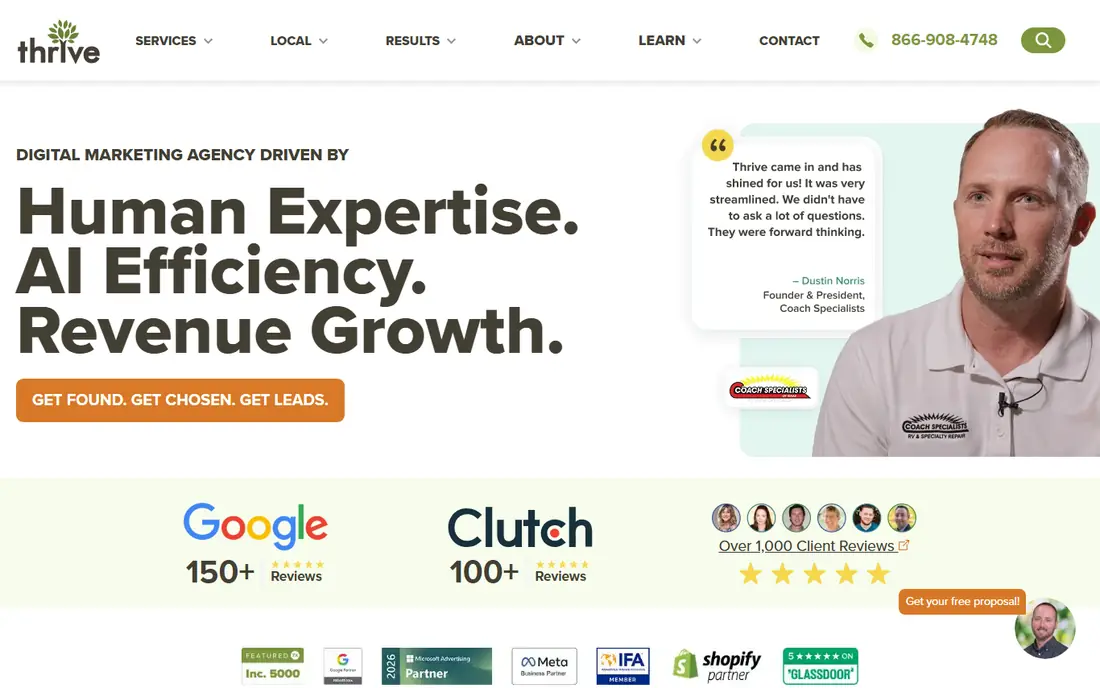
Thrive is a good first call for a store that wants one agency to handle most of its marketing. Its ecommerce work covers SEO, paid search and social, Amazon marketing, email, and web design, which reduces the need to coordinate several vendors. Stores that are growing fast often value that single point of accountability, especially when paid and organic work need to support the same product launches.
The catch with any large agency is the team. Ask who will work on your account day to day, how often you will meet, and what reports you will receive each month. Thrive public reviews are generally strong, but results depend on that assigned team. For stores that want breadth and flexibility, Thrive is a solid default.
- Broad SEO, PPC, Amazon, and web design services
- Month to month flexibility on many plans
- Strong Shopify experience
- Large agency, so team quality varies by account
- Custom quotes make early budgeting harder
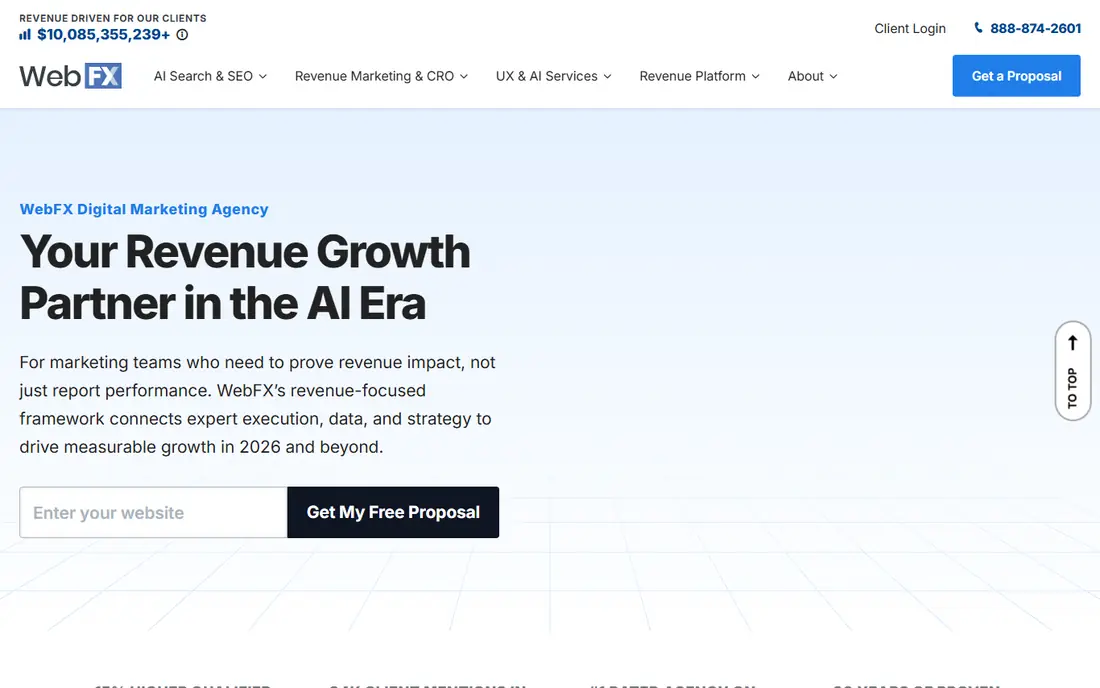
WebFX suits mid market and larger stores that want marketing tied closely to data. Its services include SEO, paid media, content, email, and conversion rate work, backed by reporting tools that track revenue by channel. That data focus helps when a store needs to justify spend across many product lines and decide where the next dollar should go.
Smaller stores should be realistic about fit. WebFX is built for scale, and a tiny catalog with a small budget may get less senior attention than at a boutique agency. Ask for a minimum engagement range and for examples in your product category. For stores ready to scale, WebFX offers depth that few rivals match.
- Large team and proprietary reporting tools
- Broad SEO, PPC, and content services
- Experience with mid market and enterprise stores
- Custom pricing only
- May be more agency than a very small store needs
NP Digital is known for content led growth, combining SEO, content creation, paid media, and conversion work. Stores that rely on search traffic, buying guides, and category pages benefit from that mix, because content and technical SEO reinforce each other over time. Its global footprint also helps brands selling in several countries.
The trade off is scope and cost. NP Digital fits startups to enterprises on paper, but its best work often comes with larger engagements. Small stores should ask for a focused scope, such as SEO plus paid search, rather than a full retainer they cannot use. For content driven ecommerce growth, NP Digital is a strong contender.
- Strong content and SEO expertise
- Global reach
- Paid media and CRO services
- Enterprise leaning scope
- Pricing is quote based and can be high for small brands
Tinuiti is the agency to shortlist when marketplaces drive a large share of revenue. Its teams specialize in Amazon Ads, Walmart Connect, and other retail media, alongside paid search, social, and lifecycle marketing. That focus matters, because marketplace advertising has its own rules for listings, search terms, and retail readiness that general agencies often miss.
A store that sells only through its own website will get less value from Tinuiti marketplace depth. Ask about the balance between marketplace and direct site work in your proposal, and about how retail media results are measured against site sales. For marketplace heavy brands, Tinuiti is a leading choice.
- Deep Amazon, Walmart, and retail media expertise
- Strong measurement tools
- Large ecommerce client base
- Less ideal for stores with no marketplace presence
- Enterprise leaning minimums
SmartSites is a practical pick for small to midsize stores that need paid and organic help without an enterprise contract. Its work covers PPC, SEO, social, email, and Shopify web design, which covers the core needs of most growing stores. Public reviews often praise responsiveness and clear reporting, two traits that matter a lot when a store owner is also running operations.
Larger stores with complex catalogs or global needs may outgrow SmartSites, or may need a more specialized partner for marketplaces. Ask about experience with your platform and catalog size, and about who owns creative testing. For most small and midsize stores, SmartSites offers a good balance of price and coverage.
- PPC, SEO, and Shopify design in one place
- Approachable for smaller budgets
- Strong public review ratings
- Less suited to very large enterprise programs
- Service depth varies by engagement size
Coalition Technologies has built its name on ecommerce SEO, especially technical work, Shopify optimization, and content that ranks for product and category terms. Stores that depend on organic search for steady, lower cost traffic benefit from that specialization, because technical fixes and content often compound over months. Its case work frequently shows ranking and revenue gains for retail clients.
SEO alone is not a full marketing plan. A store that needs fast paid growth should pair Coalition with a paid media partner or ask whether Coalition can cover paid work in scope. Set expectations on timelines, since SEO rarely delivers in the first month. For search driven stores, Coalition is a top specialist.
- Deep technical and Shopify SEO expertise
- Strong ecommerce focus
- Detailed reporting
- SEO led scope, so paid media buyers may need a second partner
- Timelines for SEO results are long
Hawke Media suits brands that want flexibility. Instead of a single large retainer, clients can pick services such as paid media, SEO, email, creative, or web development, and adjust as needs change. That model helps seasonal brands and startups that are still learning which channel works best, because they are not locked into a long contract for the wrong service.
Flexibility needs direction. A brand that buys too many thin services at once may get shallow results in each channel. We suggest starting with one or two core services, agreeing on success metrics, and expanding only when those metrics hold. For brands that value month to month control, Hawke Media is a useful partner.
- Many services available a la carte
- Month to month flexibility
- Experience across direct to consumer brands
- A la carte model needs strong client direction
- Results depend on which services are chosen
Disruptive Advertising focuses on paid acquisition and lifecycle marketing, with Google Ads, Meta Ads, and email work at the core. Stores that need to scale paid traffic while improving repeat purchase rates often like that combination, because ads bring new buyers and email keeps them coming back. Its free audit can also help a store owner see gaps before committing.
Paid led agencies work best when a store already has a site that converts. If product pages, checkout, or fulfillment need work first, fix those before scaling ad spend. Ask about creative testing volume and how email revenue is reported separately from ad revenue. For paid growth with retention support, Disruptive Advertising is a strong pick.
- Strong Google and Meta ads focus
- Lifecycle and email work
- Free audit offers a low risk first step
- Paid led scope, so organic SEO may need separate support
- Fit depends on ad budget size
How we picked these
We compared official service pages, public reviews, ecommerce specialization, and service breadth for agencies active in October 2026. We favored agencies with proven ecommerce work, clear service descriptions, and fit for different store sizes, from small Shopify stores to enterprise marketplace brands. We did not claim hands on testing, since agency work cannot be tested like software. Pricing is quote based for most agencies, so we list See website where no public starting rate applies.
How to choose an ecommerce marketing company
Start with your bottleneck, not a service list
A store with weak traffic needs SEO and paid help, a store with traffic but low conversion needs CRO and product page work, and a store with one time buyers needs email and retention. Name the bottleneck first, then buy the service that fixes it. An agency that sells every service to every store is not listening.
Ask for the team, the cadence, and the fee split
Request bios for the account lead and the people doing daily work, a meeting and reporting schedule, and a clear split between media spend and agency fees. Ask how creative testing, budget shifts, and underperformance are handled. Vague answers at sales stage usually predict vague reporting later.
Judge results in revenue terms
Clicks, impressions, and rankings matter only when they lead to orders and repeat buyers. Ask for case studies with revenue, return on ad spend, and timeframes, and ask how results were measured. Be wary of agencies that report only traffic growth for a store that needs profit growth.
Run a focused trial before a large retainer
Start with a defined scope, a 90 day goal, and a review point. A trial reveals communication quality, reporting clarity, and real results faster than a sales deck does. If the trial meets its goal, expand scope with confidence.
FAQ
What is the best ecommerce marketing company for a small store?
SmartSites and Thrive are strong starting points for small stores, because they cover paid and organic basics without requiring an enterprise budget. Coalition Technologies suits small stores that depend on search traffic. Start with a focused scope, prove results over 90 days, and expand only when revenue supports it.
How much does an ecommerce marketing company cost?
Most agencies price by monthly retainer or project, quoted after a discovery call, and media spend is usually separate. Small store retainers often start in the low thousands per month, while enterprise programs cost far more. Always ask for the agency fee, the media budget, and any setup fees separately.
What does the best ecommerce marketing company do differently?
The best agencies tie work to revenue, report clearly, test creative and offers often, and fix site issues that block conversion. They also say no to channels that do not fit a store, rather than selling every service. That discipline matters more than a long service list.
Should I hire one agency or several specialists?
One full service agency suits stores that want a single accountable partner and have a budget to support it. Several specialists suit stores with a clear bottleneck in one channel, such as marketplace ads or SEO. Many stores start with one agency, then add a specialist only for the channel that needs deeper skill.
How long before an ecommerce agency shows results?
Paid ads can show early signals within weeks, while SEO and content work often take three to six months to compound. Email and CRO work can show faster gains when a store already has traffic. Agree on leading indicators for the first 90 days, such as conversion rate and email revenue, alongside sales.
What questions should I ask before signing?
Ask who will work on your account, how often you will meet, how fees and media spend are split, how results are measured, and what happens if targets are missed. Ask for two client references in your category and call them. Clear answers on those points predict a smoother engagement.