6 Best Demand-Side Platform for Ecommerce Marketing for 2026, Vetted and Compared
Searching for the best demand-side platform for ecommerce marketing? Here are 6 options with prices and free plans. Real limits included. See the full list.
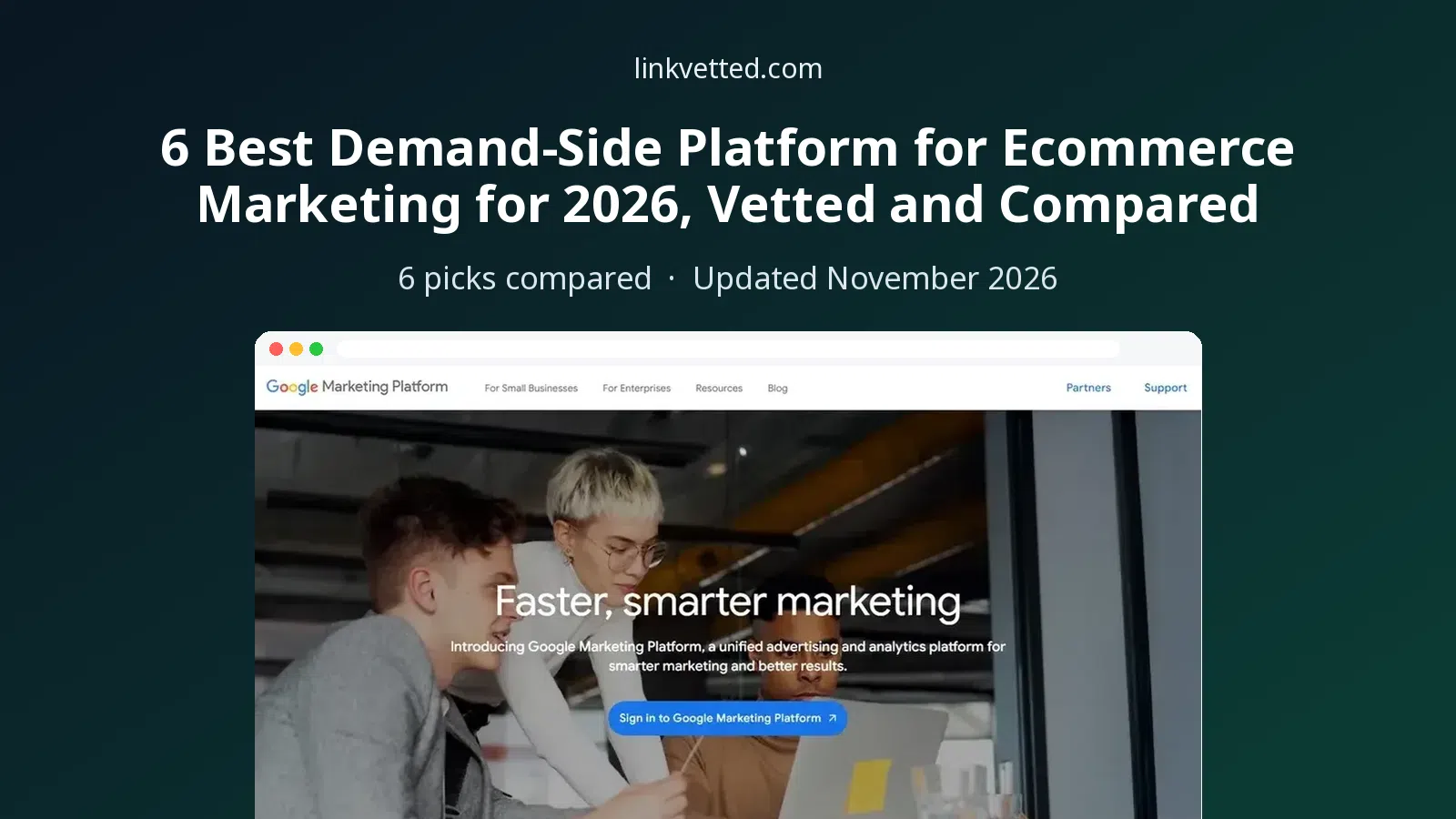
- Editor's choiceGoogle Display & Video 360
End-to-end campaign management
Starts atPricing on requestVisit marketingplatform.google.comFull review - Great alternativeMediaMath
API-first, composable DSP control
Starts atPricing on requestVisit mediamath.comFull review - Also consider
 Amazon DSP
Reaching Amazon shoppers programmatically
Starts atPricing on requestVisit advertising.amazon.comFull review
Direct answer
This list puts Google Display & Video 360 first for end-to-end campaign management. MediaMath is the stronger choice for API-first, composable DSP control, while Amazon DSP suits reaching Amazon shoppers programmatically. The other 3 tools in the list cover narrower or pricier cases. None of these vendors publish plan prices, so pricing is on request for every option.
TL;DR:
- Google Display & Video 360 is the opening pick, best for end-to-end campaign management.
- Google Display & Video 360, Criteo and the 4 others all need a premium plan or a trial, since no free plan is listed.
- Pricing across the list, from Google Display & Video 360 to Criteo, is by quote only.
- Criteo fits commerce-driven retargeting and shopping ads.
- Before buying StackAdapt, weigh this: wide feature set takes time to learn.
Last checked November 2026. Pricing on request: vendors did not publish plan prices when this guide was last checked (November 2026), so ask each vendor for a written quote.
Quick comparison
| Tool | Best for | Starts at | Free plan? | |
|---|---|---|---|---|
| Google Display & Video 360 | End-to-end campaign management | Pricing on request | Not stated | Visit |
| MediaMath | API-first, composable DSP control | Pricing on request | Not stated | Visit |
| Amazon DSP | Reaching Amazon shoppers programmatically | Pricing on request | Not stated | Visit |
 StackAdapt | AI-assisted multi-channel orchestration | Pricing on request | Not stated | Visit |
 The Trade Desk | Teams comparing choices in this category | Pricing on request | Not stated | Visit |
 Criteo | Commerce-driven retargeting and shopping ads | Pricing on request | Not stated | Visit |
The 6 tools in detail
LinkVetted compared 6 tools for demand-side platform for ecommerce marketing. The goal is a practical shortlist: published prices, free plan facts, best-fit use cases and honest limits for every entry.
Google Display & Video 360
Best for: End-to-end campaign management

Choose Google Display & Video 360 for end-to-end campaign management. Google Display & Video 360 is described as an end-to-end campaign management product, spanning media planning, creative development, measurement, and optimization. From a buyer's view, the breadth of the product can be daunting for lean ecommerce teams.
Honest limits: Best value for established media teams.
It rewards users with dedicated media staff. For ecommerce marketers, it fits teams that want a single workflow from planning to reporting and are already comfortable inside Google advertising tools. It does well for advertisers running coordinated campaigns across display, video, and other channels. Pricing for Google Display & Video 360 is not stated here, so ask the vendor for current figures. Trial and free access: Not stated.
- Suits teams inside the Google ecosystem
- Covers planning through optimization
- Feature depth can overwhelm new users
MediaMath
Best for: API-first, composable DSP control
For API-first, composable DSP control, MediaMath is a natural candidate. For ecommerce marketers with engineering resources, it can fit teams that want to assemble a custom programmatic stack instead of accept a fixed workflow.
Where it falls short: Technical setup required.
Pricing for MediaMath is not stated here, so ask the vendor for current figures. Free plan details: Not stated.
- Composable setup for custom stacks
- Emphasis on transparency and control
- Less turnkey for small teams
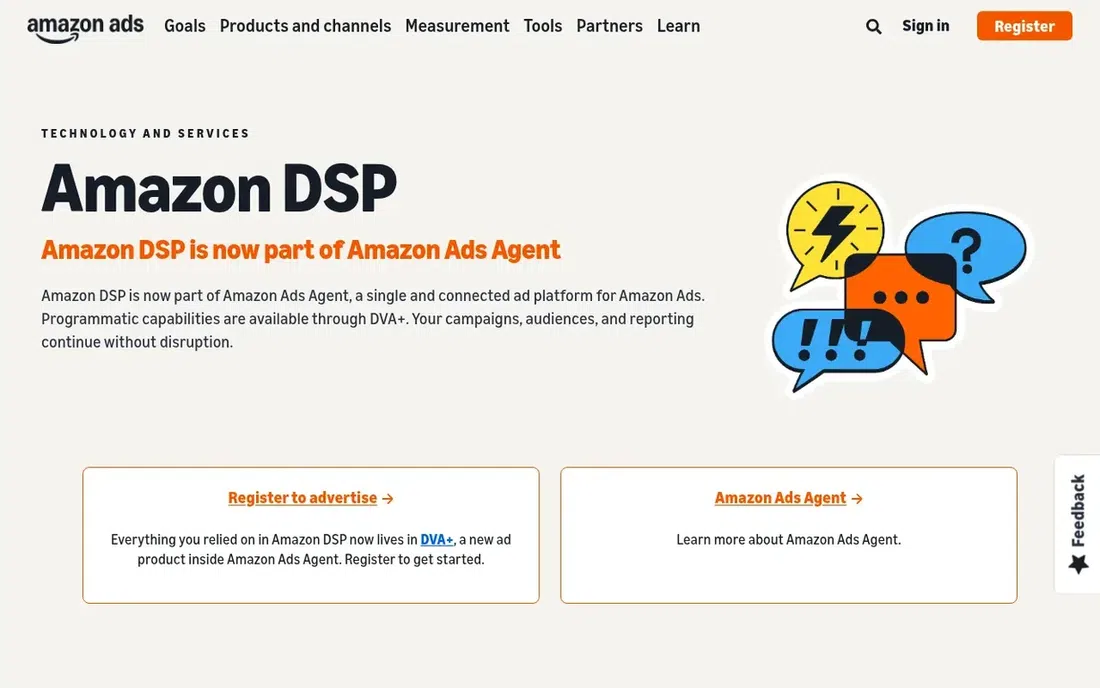
Amazon DSP is built with reaching Amazon shoppers programmatically in mind. The homepage frames it as a way to reach shoppers where they browse and buy, making it a natural choice for retail-focused advertisers.
Limits to weigh: Tied closely to the Amazon ecosystem.
It suits ecommerce brands that already sell on Amazon and want to extend campaigns beyond the marketplace. Amazon DSP shows no starting price here, so confirm the cost on the vendor site. Free options: Not stated.
- Fits brands already selling on Amazon
- Access to Amazon and external inventory
- Less suited to non-Amazon-first brands
Choose StackAdapt for AI-assisted multi-channel orchestration. It suits ecommerce marketers who want to coordinate native, display, and other channels without stitching tools together.
What StackAdapt does well: AI built into each stage.
Where it is weaker: Wide feature set takes time to learn.
Pricing for StackAdapt is not stated here, so ask the vendor for current figures. Free access: Not stated.
- Audiences, creative, channels
- Fits multi-channel marketers
- AI workflows still need human oversight

The Trade Desk works best for teams comparing choices in this category. Its homepage stresses an omnichannel approach with a single goal of helping advertisers reach their targets.
Where it is weaker: Needs in-house programmatic skill.
The system is not a plug-and-play retail tool, so smaller ecommerce teams without programmatic staff may find onboarding heavy. No starting price is listed for The Trade Desk here; confirm pricing on the vendor site. Free options: Not stated.
- Aimed at both brand and performance goals
- Omnichannel reach across formats
- Setup can be complicated for small teams
Criteo is aimed squarely at commerce-driven retargeting and shopping ads. Criteo presents itself as a global commerce intelligence system, with ads powered by commerce AI and a large set of commerce data.
Watch-outs: Commerce focus may limit brand campaigns.
No starting price is listed for Criteo here; confirm pricing on the vendor site. On free options: Not stated.
- Focus on shopping moments
- Solid fit for retail catalogs
- Narrower than full omnichannel DSPs
How we built this list
We compared the tools on published pricing, free plan or trial availability, feature coverage for demand-side platform for ecommerce marketing, and the limits each vendor documents. Prices and plan limits come from vendor pages and can change, so confirm them on the vendor site before you buy. We ordered the tools by general fit, then by how clearly pricing is shown, then by free access. A buyer with unusual needs may reorder them.
What to check before you buy
- Request quotes from Google Display & Video 360, Criteo and the others; the list shows no fixed prices.
- Before choosing Google Display & Video 360, weigh its main limit: feature depth can overwhelm new users.
- Compare total cost, not headline price: for StackAdapt, add extra seats, add-ons and any usage-based charges.
- Check the support hours and onboarding help Criteo offers; smaller vendors vary a lot here.
- Ask whether Amazon DSP integrates with your current software, and whether that comes standard or as an add-on.
FAQ
Does any tool for demand-side platform for ecommerce marketing here have a free plan?
A permanent free plan is not offered by Google Display & Video 360, Criteo or the other tools here. Plan a short evaluation period instead.
How are the tools for demand-side platform for ecommerce marketing ordered?
The order follows typical fit for demand-side platform for ecommerce marketing, with Google Display & Video 360 first and Criteo last, then price clarity and free access. It is editorial judgement, not a score, so another team could rank the tools differently.
Is Amazon DSP only for Amazon sellers?
Amazon DSP reaches audiences on Amazon and on external apps and websites, so it can extend beyond the marketplace.
Is Google Display & Video 360 the right pick for everyone comparing demand-side platform for ecommerce marketing?
No single tool suits every team. Google Display & Video 360 comes first because it fits end-to-end campaign management, while MediaMath suits API-first, composable DSP control and Amazon DSP suits reaching Amazon shoppers programmatically. Match the tool to your own size, budget and workflow before deciding.
What should ecommerce brands look for in a DSP?
Prioritize access to shopping-relevant inventory, conversion measurement, and audience data that matches your sales channels. Also check how much programmatic expertise the product assumes, since some DSPs are more turnkey than others.
Do these tools publish their prices?
No. None of the tools, from Google Display & Video 360 to Criteo, shows a fixed starting price here, so budget time for quotes.
Sources
- https://marketingplatform.google.com/about/display-video-360
- https://www.mediamath.com
- https://advertising.amazon.com/solutions/products/amazon-dsp
- https://www.stackadapt.com
- https://www.thetradedesk.com
- https://www.criteo.com