8 Best Dynamic Pricing Tools for Retailers to Protect Margin and Sales
We compared the best dynamic pricing tool for retailers on competitor tracking, rules, AI optimisation and integrations, using vendor pages and reviews.
- Editor's choice
 Prisync
Competitor tracking for ecommerce
Starts at$99 per monthVisit prisync.comFull review - Great alternative
 Omnia Retail
Automated repricing for retailers
Starts atSee websiteVisit omniaretail.comFull review - Also consider
 Competera
AI price optimisation at scale
Starts atSee websiteVisit competera.aiFull review
TL;DR:
- Start with the pricing job you actually have: competitor tracking, rule-based repricing or AI optimisation need different tools.
- Guardrails matter more than clever models: minimum margins, MAP rules and price change limits protect you from a race to the bottom.
- Check data quality and coverage for your categories and channels before you judge a tool on its dashboard.
- Most enterprise tools price by catalogue size and scope, so get a scoped quote rather than comparing headline prices alone.
Quick comparison
| Tool | Best for | Starts at | Free plan? | |
|---|---|---|---|---|
| Prisync | Competitor tracking for ecommerce | $99 per month | Free trial | Visit |
| Omnia Retail | Automated repricing for retailers | See website | No | Visit |
| Competera | AI price optimisation at scale | See website | No | Visit |
 Pricefx | Enterprise price management | See website | No | Visit |
 Wiser | Price intelligence for large retailers | See website | No | Visit |
 BlackCurve | Automated pricing for smaller retailers | See website | Free trial | Visit |
 Price2Spy | Price monitoring and repricing | See website | Free trial | Visit |
 Pricemoov | Price optimisation for retailers and brands | See website | No | Visit |
The best dynamic pricing tool for retailers
We compared official product and pricing pages, documentation and public reviews for tools that track competitor prices, apply pricing rules or optimise prices for retailers. We focused on tools that work for retail and ecommerce catalogues in October 2026, not hospitality or airline revenue tools, and we note where pricing is quoted rather than published.
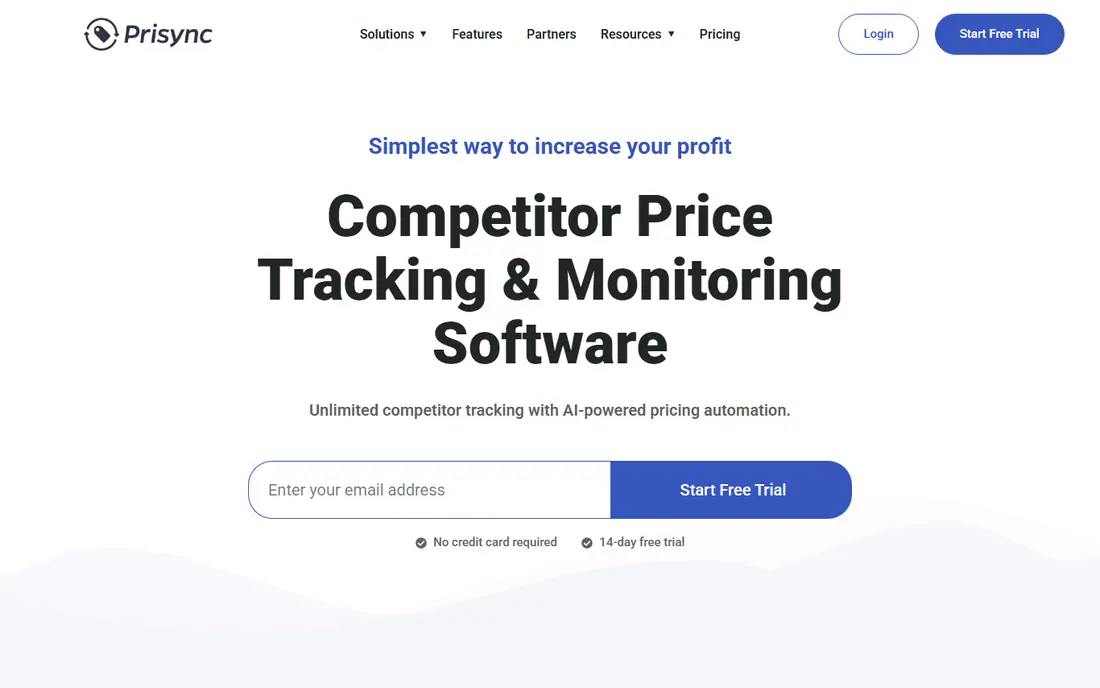
Prisync suits ecommerce teams that need to see competitor prices clearly and react with rules they control. You track competitor URLs, set rules such as matching or staying just below a rival while protecting a minimum margin, and get alerts when a key product moves. That transparency helps a pricing manager explain a price change to a category lead, which matters when a change affects margin. The starting price in the material we reviewed was $99 per month, which makes Prisync accessible for mid-size stores that cannot justify an enterprise contract. The limit is depth: for very large catalogues with complex demand patterns, an AI optimisation platform may find more margin, but it will also need more data and governance. If your main gap is visibility and disciplined repricing, Prisync is a strong, low-friction start.
- Clear competitor tracking and alerts
- Rule-based dynamic pricing
- Accessible starting price for mid-size stores
- AI optimisation is less deep than enterprise platforms
- Large catalogues need higher plans

Omnia Retail, based in the Netherlands, focuses on automated pricing decisions for retailers with large catalogues and frequent promotions. Rather than only showing competitor prices, it applies pricing rules and goals you define, then executes price changes across channels. Its published material stresses transparent decision logic, so a pricing team can see why a price moved, which helps when a merchandiser questions a change. Pricing in third-party comparisons was listed around $431 to $500 per month as a starting point, but the vendor prices by scope, so treat that as a guide and request a quote for your catalogue size and channels. Omnia suits retailers who already have clean product feeds and want automation at scale. If your catalogue data is messy, fix feeds and matching first, since automation will amplify bad matches as fast as good ones.
- Transparent rule-based automation
- In-house competitor data collection
- Strong for omnichannel retail
- Pricing is quoted, not published as a simple plan
- Implementation needs clean product data
Competera targets large retailers that want AI to set optimal prices across thousands of products, using demand, seasonality, competitor moves and other signals. Its platform combines competitive data collection with a pricing engine that can recommend or apply prices in real time, with guardrails for margin and business rules. For a retailer with a large catalogue and reliable sales history, that scale is the point: manual repricing cannot cover every product every day. The trade-off is scope. Competera is an enterprise platform priced by catalogue size and deployment, so it suits retailers with a pricing team that can validate recommendations and manage exceptions. Smaller retailers without clean historical data will get less value from AI optimisation and may do better with rule-based repricing. Ask for a pilot on a defined category, with clear success measures for margin and sales, before a full rollout.
- AI optimisation using demand signals
- Real-time competitor data
- Built for large retail catalogues
- Enterprise scope and price
- Needs historical sales data to perform well
Pricefx is a broader price management platform that covers list pricing, quoting, rebates and optimisation, which suits retailers and distributors with complex pricing structures. If your problem includes channel-specific prices, customer-specific discounts and approval workflows, not just competitor matching, Pricefx gives you a single system for those rules. Its configurability helps large organisations that need to align pricing across sales, finance and merchandising. That breadth comes with implementation effort and enterprise pricing, so it is not a quick plug-in for a small store. Pricefx fits retailers and B2B sellers whose pricing complexity is the main constraint, rather than a lack of competitor data alone. Compare it against a focused repricing tool on total project cost, including implementation and internal time, not just the subscription.
- Full price management from list prices to optimisation
- Strong for B2B and complex pricing
- Configurable workflows
- Implementation is a project
- Overkill for a small ecommerce store
Wiser, formerly Wiser Solutions, provides price intelligence and retail analytics for enterprise retailers and brands. It tracks prices across online stores and marketplaces, monitors assortment and promotions, and gives reporting that category managers can use for range and pricing decisions. That breadth helps a retailer who needs a market view, not just a single competitor feed. Coverage is the key check. Ask Wiser to show data quality for your exact categories, retailers and regions, including match rates and update frequency, before you commit. Pricing is quoted by scope, so a pilot on your top categories is a sensible first step. Wiser suits large retailers and brands that need consistent market intelligence across channels, with a team to act on it.
- Broad price intelligence and retail analytics
- Marketplace and assortment coverage
- Enterprise reporting
- Quoted pricing
- Depth varies by market and category coverage
BlackCurve targets small and mid-size retailers and ecommerce sellers who want automated pricing without an enterprise project. You set pricing rules and guardrails, connect your store, and let the tool adjust prices within limits you control. That simplicity matters for a small team where the pricing manager also runs merchandising, marketing or operations. The limit is scale and depth. BlackCurve will not replace an enterprise AI platform for a very large catalogue, and some advanced features sit on higher plans. For a retailer with hundreds or low thousands of products who needs disciplined repricing and margin protection, it is a practical middle ground between manual spreadsheets and an enterprise contract. Use the trial on your best-selling category first.
- Automated pricing rules for SMEs
- Simpler setup than enterprise platforms
- Trial available
- Less AI depth than enterprise tools
- Catalogue and channel limits on lower plans
Price2Spy focuses on price monitoring with repricing, giving retailers detailed competitor data, alerts and rules for adjusting prices. It suits teams that track many competitor sites and want control over matching, including product variants and marketplace listings. The tool has been around for years, which shows in its breadth of monitoring options, even if the interface is more functional than modern rivals. Pricing depends on the number of tracked URLs and the features you need, so get a quote based on your real catalogue, not a generic plan. Price2Spy fits retailers who value monitoring depth and are comfortable managing rules themselves. If you want AI recommendations rather than rules you write, an optimisation platform such as Competera or Omnia may fit better.
- Detailed competitor monitoring
- Repricing rules and alerts
- Flexible tracking across sites
- Interface feels more functional than polished
- Pricing depends on tracked URLs and features
Pricemoov offers price optimisation for retailers and brands, using demand elasticity, competitor prices and business rules to recommend prices that protect margin while supporting sales. Its European roots give it useful coverage for retailers selling in France and neighbouring markets, and its reporting helps pricing teams explain recommendations to merchandisers. That combination suits mid-size and large retailers who want optimisation without a full enterprise overhaul. As with other optimisation tools, value depends on data quality and a clear pilot. Start with one or two categories where you have clean sales history and clear margin goals, measure the result against a control group if you can, and expand only where the model beats your current rules. Pricemoov is a strong candidate for retailers who have outgrown rule-based repricing but do not yet need the largest enterprise platform.
- Price optimisation with elasticity and competitor signals
- Good for European retail coverage
- Clear reporting
- Quoted pricing
- Best value with a defined category pilot
How we picked these
We compared vendor product and pricing pages, documentation and public reviews, and we kept tools that serve retail or ecommerce pricing, offer competitor tracking or repricing or optimisation, and are available in October 2026. We did not run pricing experiments on live catalogues, so we report published features and pricing where available and mark quoted tools as See website. Catalogue size, channel mix and data quality affect results more than any single feature, so pilot on your own data before a long contract.
How to choose a dynamic pricing tool
Define the pricing job first
If you lack visibility, a tracking tool such as Prisync or Price2Spy may be enough. If you have visibility but change prices too slowly, a rule-based repricer such as Omnia or BlackCurve helps. If you have large catalogues and clean sales history, AI optimisation from Competera or Pricemoov can add value. Buying optimisation before you have clean data usually disappoints.
Set guardrails before you automate
Decide minimum margins, MAP and MSRP rules, maximum daily price changes and products that should never auto-reprice, such as loss leaders or regulated items. Test rules on a small category, review every change for a week, and only then expand automation. Guardrails protect margin and brand trust when a competitor drops price sharply.
Measure margin, not just sales
A lower price can raise unit sales while cutting total profit, so track gross margin, revenue per product and sell-through together. Run a pilot with a control group where possible, and agree success measures with finance before you start. If a tool cannot report margin impact clearly, that is a warning sign.
FAQ
What is the best dynamic pricing software for retailers?
It depends on size and job. Prisync and BlackCurve suit mid-size ecommerce teams, Omnia Retail suits retailers that want automated repricing at scale, and Competera suits large retailers with clean sales data for AI optimisation. Start from your catalogue size, channel mix and data quality, then pilot two tools on the same category.
How does dynamic pricing work for retailers?
Dynamic pricing tools collect competitor prices, stock and promotion signals, then apply rules or AI models to adjust your prices within guardrails you set. Rule-based tools follow instructions such as matching a rival while protecting margin, while AI tools predict the price most likely to meet a margin or sales goal. Human review should remain in place for key products and large changes.
Will dynamic pricing start a price war?
It can, if every retailer simply matches the lowest price without guardrails. Protect minimum margins, avoid auto-matching on every product, and use different strategies by category: compete hard on hero products where share matters, and protect margin on long-tail items where price sensitivity is lower. Review competitor reactions weekly, not just daily.
Is dynamic pricing legal for retailers?
Dynamic pricing itself is legal in most markets, but you must follow rules on price discrimination, MAP agreements, misleading pricing and consumer protection in each market where you sell. Do not share prices or coordinate pricing with competitors, and keep a record of pricing decisions and guardrails. Check local rules with legal advice for regulated categories.
How much does dynamic pricing software cost?
Costs vary widely. Prisync was listed from $99 per month in the material we reviewed, while Omnia Retail and enterprise tools are quoted by catalogue size and scope and can run into thousands per month. Smaller tools such as BlackCurve and Price2Spy price by usage or tracked products, so get a quote based on your real catalogue and channels.
What data do I need before using AI price optimisation?
You need clean product matching, reliable sales history, cost and margin data, and competitor price feeds for your key categories. Without those, an AI model will make confident recommendations from weak inputs. Fix product data and matching first, pilot on one category, and compare model results against your current rules before expanding.