Best Due Diligence Software in 2026: 9 Tools Compared
Compare the best due diligence software in 2026. We review 9 data rooms and diligence tools for M and A, Q and A, redaction and deal tracking work now.
- Editor's choice
 Datasite
Large M and A deals
Starts atSee websiteVisit datasite.comFull review - Great alternative
 Intralinks
Cross-border banker-led deals
Starts atSee websiteVisit intralinks.comFull review - Also consider
 iDeals
Mid-market diligence
Starts atSee websiteVisit idealsvdr.comFull review
TL;DR:
- Datasite and Intralinks remain the defaults for large, banker-led deals, but both are quote-based and can be expensive for mid-market work.
- iDeals, Firmex and SecureDocs suit mid-market diligence with clearer pricing and faster setup.
- DealRoom suits teams that need pipeline, diligence and integration tracking in one workspace, not just a data room.
- Q and A workflow, permission controls, audit logs and redaction matter more than storage size for most diligence work.
- Get total deal cost in writing, including page or storage limits, users, Q and A and support, before you open a room.
Quick comparison
| Tool | Best for | Starts at | Free plan? | |
|---|---|---|---|---|
| Datasite | Large M and A deals | See website | No | Visit |
| Intralinks | Cross-border banker-led deals | See website | No | Visit |
| iDeals | Mid-market diligence | See website | Free trial | Visit |
 Ansarada | Deal readiness and AI scoring | See website | Free trial | Visit |
 Firmex | Repeat mid-market deals | See website | Free trial | Visit |
 DealRoom | Pipeline plus diligence | See website | No | Visit |
 SecureDocs | Simple flat-rate rooms | See website | Free trial | Visit |
 CapLinked | Flat-rate mid-market deals | $399 per month | Free trial | Visit |
 Drooms | European transactions | See website | Free trial | Visit |
The best software for due diligence
We compared official product pages, data room features, Q and A tools, permission controls, audit logs and pricing models for due diligence software available in October 2026. Due diligence software here means virtual data rooms and deal platforms that let buyers, sellers, lawyers and advisors share documents securely, ask questions, track views and control who sees what. This article is general information only and is not legal or financial advice.

Datasite, formerly Merrill, is the data room many large deal teams expect. It handles huge document sets, managed indexing, translation, AI-assisted redaction and Q and A, with dedicated support for complex sell-side processes. Bankers and lawyers know its workflows, which reduces friction when many parties join a room.
Cost is the barrier. Pricing is quote-based and commonly reported at 25,000 dollars per year and higher for large deals, with per-page or deal-based models in some cases. Small and mid-market teams will pay for capacity they never use. For a large, cross-border sale with many bidders, Datasite remains a safe, expected choice.
- Industry standard for large deals
- Managed index and AI redaction
- Strong support
- Quote-based and expensive
- Overkill for small deals
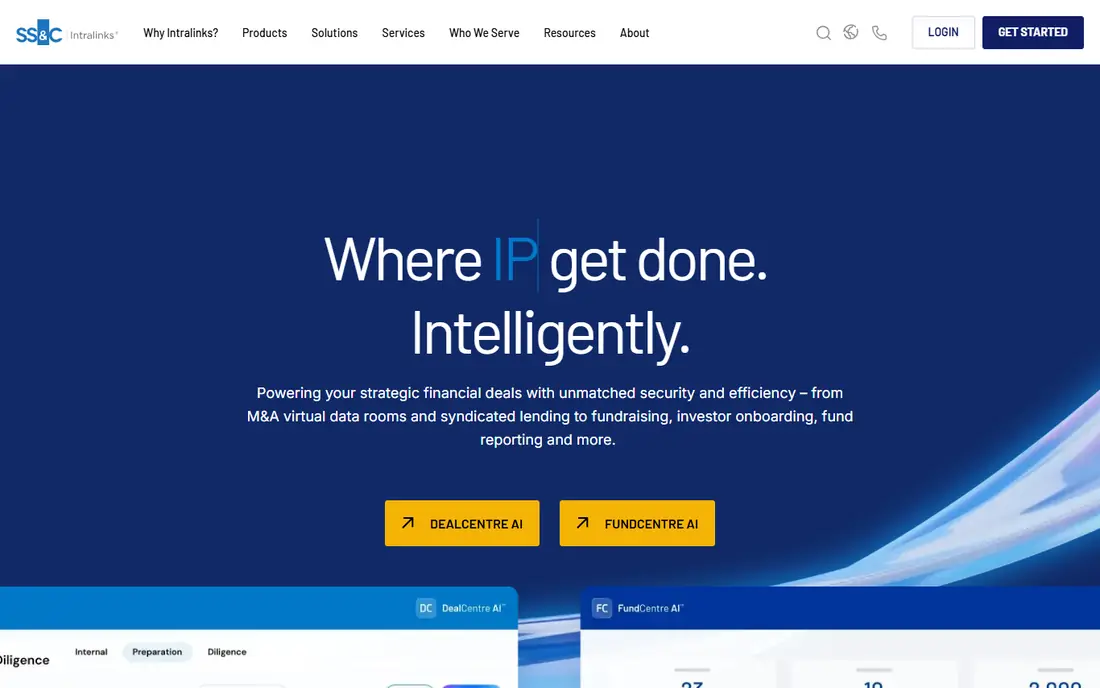
Intralinks, part of SS and C, is another banker-led standard, especially for cross-border and regulated transactions. Permissions, watermarking, audit logs and information rights management give deal teams tight control over sensitive documents, and its DealCentre AI tools help with Q and A and document work. Large banks and law firms use it widely.
Pricing is custom and varies by deal size, pages and users, so mid-market teams should request a full quote before assuming it fits. The interface is also more enterprise than modern rivals, which can slow small teams. If your bank or counterparty already uses Intralinks, joining their room is often simpler than choosing a different tool.
- Global reach and banking adoption
- Strong permissions and audit controls
- AI tools
- Quote-based pricing
- Interface feels enterprise-heavy for small teams
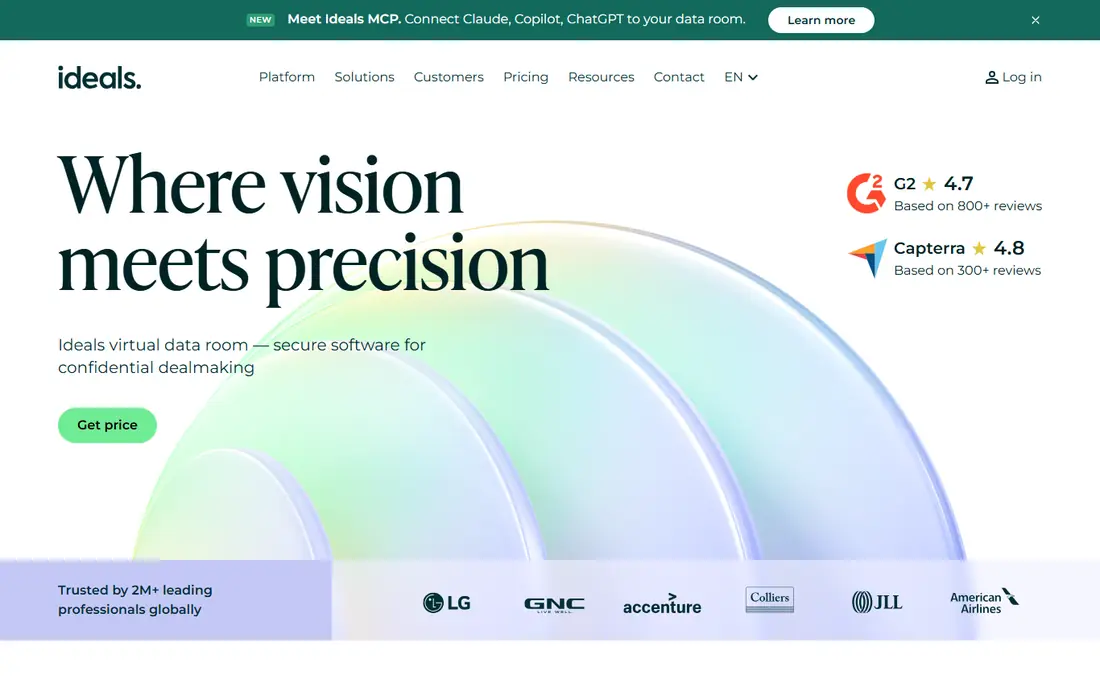
iDeals, also written Ideals, is a popular mid-market to enterprise data room with a modern interface and strong diligence workflows. Q and A, bulk redaction, document indexing and activity reports help deal teams run a clean process, and support is available around the clock. It also offers AI redaction and document tools on higher tiers.
Pricing is quote-based across Core, Premier and Enterprise tiers, though entry figures around 500 dollars per month appear in recent guides. Confirm which AI features, storage limits and user counts sit in your tier, since they vary. iDeals suits teams that want a polished room without Datasite-level enterprise cost.
- Modern interface
- Strong Q and A and redaction
- 24/7 support
- Quote-based tiers
- AI features vary by plan
Ansarada focuses on getting a company ready for a deal, not just hosting documents. Its readiness score, AI search, AI sorting and redaction, and bidder prediction tools help sellers spot gaps before buyers do. Structured Q and A and activity tracking keep the sell-side process organized, and the platform serves M and A, capital raising and governance work.
Pricing is storage-tiered and quote-based for larger deals, with entry figures around 244 dollars per month for small storage in recent guides. Costs can rise as document volume grows, so check storage limits early. Ansarada fits sellers who want preparation and insight, not just a secure folder.
- Deal readiness scoring
- AI search, sorting and redaction
- Bidder prediction signals
- Storage-tiered pricing can grow
- Quote-based for larger deals
Firmex serves advisory firms, law firms and companies running several deals at once. Subscription or per-project pricing, clean permission controls, redaction and reporting make it practical for repeat use, and the interface is straightforward for external reviewers. It also handles compliance and litigation sharing beyond M and A.
AI features are lighter than Datasite or Ansarada, so teams that want deep AI analysis may need another tool. Pricing is often quote-based, though recent guides cite figures around 625 to 995 dollars per month for some plans. Firmex suits firms that run diligence regularly and want predictable, repeatable rooms.
- Flat subscription or per-deal options
- Clean permissions
- Good for repeat deals
- AI toolset is lighter than Datasite
- Pricing is quote-based in many cases
DealRoom is different because diligence is only part of the job. It tracks pipeline, diligence requests, documents, tasks and post-merger integration in one workspace, with playbooks and deal-level chat. Corporate development teams and advisory firms that manage many deals like seeing the whole lifecycle, not just a single room.
If you only need a single data room for one sale, DealRoom may feel broader than necessary, and its brand recognition with bankers is lower than Datasite or Intralinks. Pricing is annual and quote-based, tied to deal volume in many cases. For buyer-led teams running a program of deals, DealRoom offers a wider view than a standalone room.
- Pipeline, diligence and integration in one workspace
- Deal playbooks
- Chat and tasks
- Less of a pure data room brand
- Pricing is quote-based and annual
SecureDocs appeals to teams that want a simple, predictable room. Flat-rate subscription pricing, fast setup and unlimited users on some plans make budgeting easy, and the interface is clean for smaller deals, fundraising and legal sharing. Recent guides cite starting figures around 250 to 450 dollars per month, though you should confirm current pricing on the site.
Advanced AI, analytics and large-deal support are thinner than enterprise rivals, so very large or complex deals may outgrow it. For a mid-market sale, a financing or a straightforward diligence process, SecureDocs offers clarity and speed without enterprise complexity.
- Simple flat-rate subscription
- Fast setup
- Unlimited users on some plans
- Fewer AI and advanced analytics features
- Less suited to huge deals
CapLinked offers flat-rate pricing from 399 dollars per month on its Team plan in recent guides, which is refreshingly clear in a quote-heavy market. Built-in digital rights management, permissions, watermarking and activity tracking cover core diligence needs, and admin is simple for small deal teams.
AI analysis and advanced deal intelligence are lighter than Ansarada or Datasite, and its brand is less known to large banks. For US mid-market teams that want a predictable price and a solid room, CapLinked is a practical choice. Confirm storage and user limits in your plan before you upload a large data set.
- Published flat-rate pricing
- Built-in DRM controls
- Simple admin
- Fewer AI features than rivals
- Smaller global brand
Drooms is a German data room provider with a strong position in European M and A and real estate. EU hosting, GDPR-focused controls, multilingual support and an AI assistant help cross-border European deals, and entry tiers in recent guides start around 595 euros per month. It suits deals where data location and European compliance matter.
US teams may find Drooms less familiar to their bankers and advisors, and larger deals are custom-priced. If your deal is centered in Europe, or you need EU-hosted data as a first-class feature, Drooms deserves a place on the shortlist alongside iDeals and Datasite.
- EU hosting and GDPR focus
- Multilingual AI assistant
- Strong in real estate and M and A
- Less familiar to US bankers
- Pricing is custom for larger deals
How we picked these
We compared official product pages, data room features, Q and A workflows, permission and audit controls, redaction tools and pricing models in October 2026. We kept only platforms that support secure document sharing, permissioned access and audit trails for diligence, and that are live today. We favored tools with clear Q and A, redaction and reporting, and we used See website wherever pricing was quote-based rather than inventing a figure.
How to choose due diligence software
Start with deal size and who leads it. If a bank leads a large deal, ask which room they expect, since joining their standard tool avoids friction. If you lead a mid-market deal, prioritize clear pricing, fast setup and Q and A workflow over brand size. Test permissions with a real reviewer group, since a single permission error can expose sensitive documents.
Then check total cost and limits. Ask about pages, storage, users, Q and A, redaction, support hours and data export at deal close. Confirm where data is hosted, how long audit logs are kept, and how you close and archive a room. For AI features, ask whether AI processing is included in your tier and where document data is processed, since that matters for confidentiality.
FAQ
What is the best software for due diligence for mid-market M and A?
iDeals, Firmex, SecureDocs and CapLinked suit mid-market M and A because they combine solid Q and A, permissions and clearer pricing than enterprise rooms. Ansarada adds deal readiness scoring for sellers. Compare total deal cost, not just monthly price, since storage and user limits vary.
What are the best due diligence tools for large banker-led deals?
Datasite and Intralinks lead for large banker-led deals because banks and law firms already know them and they handle huge document sets with strong controls. Both are quote-based and expensive for small deals. If your counterparty uses one, joining that room is usually the simplest path.
How much does due diligence software cost?
Costs range from a few hundred dollars per month for simple flat-rate rooms to 25,000 dollars per year and higher for enterprise deals, with per-page and storage models in between. Always ask for total deal cost, including pages, storage, users, Q and A and support, since headline prices rarely cover everything.
Is a virtual data room the same as cloud storage?
No. A data room adds permissioned access, watermarking, audit logs, Q and A, redaction and activity reporting that generic cloud storage lacks. For diligence, those controls matter for confidentiality and for proving who saw what and when. Use cloud storage for internal work, and a data room for external diligence.
How do I keep diligence documents secure?
Use granular permissions, watermarking, two-factor authentication and audit logs, and limit downloads where possible. Train reviewers on handling sensitive files, and close access promptly when a bidder exits. Review the vendor's security certifications and data hosting location before you upload confidential material.