7 Best Digital Advertising Platforms for Small Businesses in 2026
Compare the best digital advertising platforms for 2026, with targeting, minimum budgets, and honest trade-offs for search, social, and retail ads now.
- Editor's choice
 Google Ads
High-intent search traffic
Starts atSee websiteVisit ads.google.comFull review - Great alternative
 Meta Ads
Social demand and retargeting
Starts atSee websiteVisit facebook.comFull review - Also consider
 Microsoft Advertising
Cheaper search clicks
Starts atSee websiteVisit ads.microsoft.comFull review
TL;DR:
- Search platforms capture people already looking for a product, while social platforms create demand among people who match a profile.
- Most platforms charge no platform fee, and you pay per click, per impression, or per action, so budget control comes from bids and daily caps.
- Start with one or two platforms that match where your customers actually spend time, and expand only after you have conversion data.
- Creative quality, landing page fit, and conversion tracking matter as much as targeting settings.
- Set a daily budget cap, a cost-per-result limit, and a weekly review, so a bad campaign cannot run unchecked.
Quick comparison
| Tool | Best for | Starts at | Free plan? | |
|---|---|---|---|---|
| Google Ads | High-intent search traffic | See website | No | Visit |
| Meta Ads | Social demand and retargeting | See website | No | Visit |
| Microsoft Advertising | Cheaper search clicks | See website | No | Visit |
 LinkedIn Ads | B2B decision-makers | See website | No | Visit |
 TikTok Ads | Short video reach under 35 | See website | No | Visit |
 Amazon Ads | Shoppers already on Amazon | See website | No | Visit |
 Pinterest Ads | Planning and shopping intent | See website | No | Visit |
The best digital advertising platforms
A digital advertising platform lets a business pay to show ads to a chosen audience, whether they are searching, scrolling, watching video, or shopping. The best digital advertising platforms below cover the best digital advertising service and software choices for search, social, video, and retail, with different costs, audiences, and creative needs.
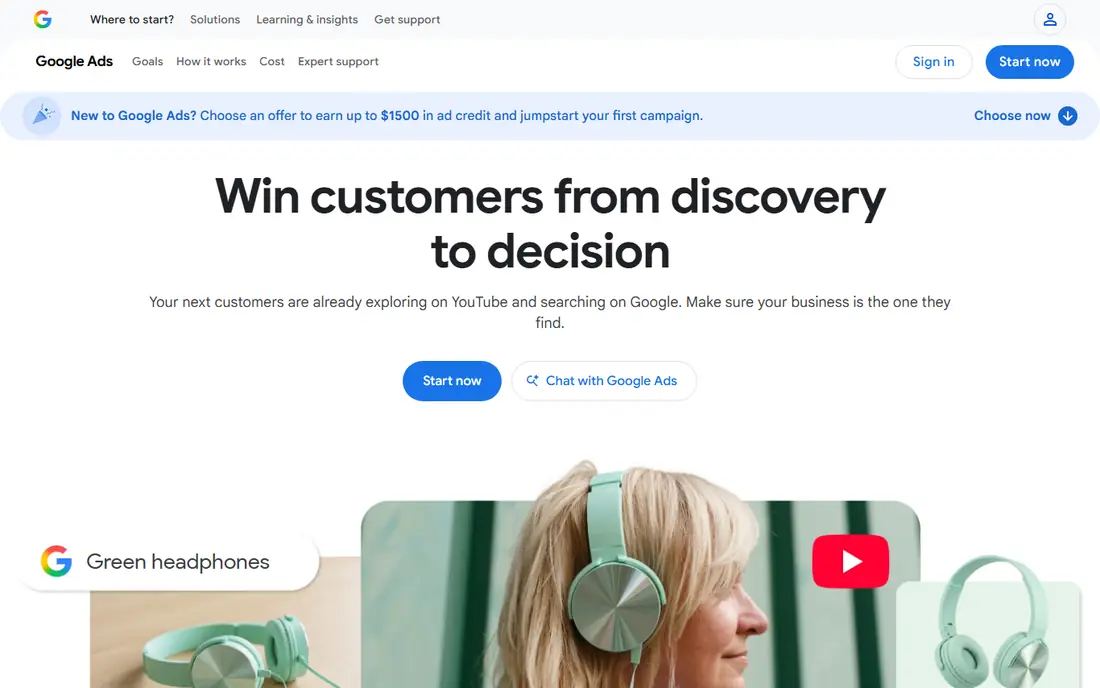
Google Ads is the first platform most service businesses should test, because it reaches people at the moment they search for a solution. Search ads, Shopping ads, Performance Max campaigns, and YouTube video ads all run from one account, which helps a business that sells both services and products. Conversion tracking, keyword controls, and location targeting let a local business focus spend on its service area, rather than paying for clicks from far away. The weakness is cost and complexity. In competitive fields such as legal services, home services, and finance, clicks can cost several dollars each, and a poorly structured account can waste budget on irrelevant searches. Google Ads charges no platform fee, and you pay per click or impression, so the real cost is your media budget plus management time. Start with a focused keyword set, a clear landing page, and a daily cap, and expand only when cost per lead is acceptable. For high-intent demand, no other platform in this list matches Google Ads as a starting point.
- Captures people actively searching
- Wide reach across search, YouTube, and display
- Strong conversion tracking
- Click costs are high in competitive industries
- Account setup and keyword management take skill
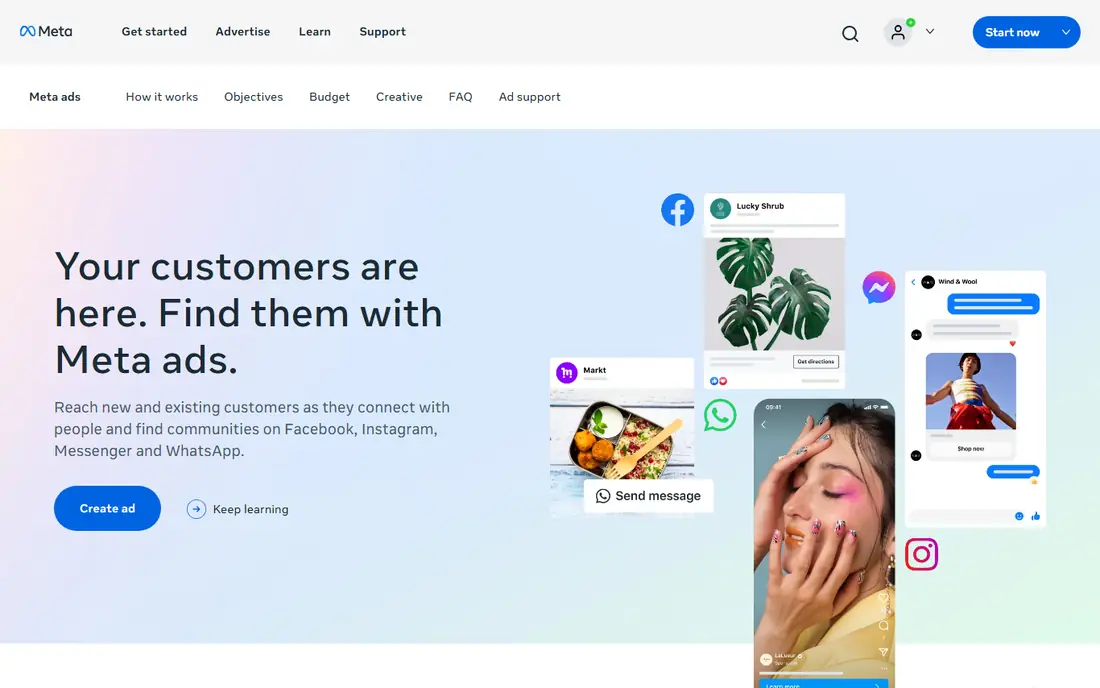
Meta Ads, covering Facebook and Instagram, suits a business that needs to create demand, not just capture it. It offers image, carousel, video, Reels, and Stories formats, with targeting by interests, behaviors, and custom audiences built from website visitors or customer lists. Retargeting is a particular strength, because a business can show a follow-up ad to someone who visited a product page but did not buy. Meta clicks are often cheaper than Google search clicks, but intent is lower, so conversion rates can also be lower. Creative fatigue is real, and an ad that worked for two weeks may stop working as the same audience sees it again. Meta charges no platform fee, and you pay per impression or action, with low minimum daily budgets on some objectives. For a consumer brand, a local business, or an online store, Meta Ads is a strong second platform after search, provided you can produce fresh creative regularly.
- Large audience across Facebook and Instagram
- Strong retargeting and lookalike options
- Low minimum daily budgets on some objectives
- Lower purchase intent than search
- Creative fatigue sets in quickly and needs fresh ads
Microsoft Advertising is a smart add-on once a Google Ads campaign works, because it captures similar search intent at often lower click costs. It serves ads on Bing, Yahoo, and partner sites, and it can import campaigns from Google Ads, which cuts setup time. For a B2B business or a service aimed at an older, desktop-based audience, Microsoft Advertising can deliver qualified leads at a better cost per lead than Google alone. The limit is volume. Search volume on Bing is far smaller than on Google, so Microsoft Advertising rarely replaces Google as a main channel. It also skews older and more desktop-based, which suits some businesses and not others. There is no platform fee, and you pay per click, so testing it with a small daily budget is low risk. If your Google campaigns are profitable, add Microsoft Advertising next and compare cost per lead side by side.
- Same search intent as Google at often lower costs
- Reaches Bing, Yahoo, and partner audiences
- Easy import from Google Ads
- Smaller search volume than Google
- Audience skews older and more desktop-based
LinkedIn Ads is the best digital advertising platform for reaching a specific job title, not just a demographic. A B2B company can target by title, seniority, company size, and industry, with sponsored content, message ads, text ads, and dynamic ads. That precision helps when a product is only relevant to a few thousand decision-makers, and broad social targeting would waste most of the budget. LinkedIn is expensive. Click costs are often several dollars, with minimum daily budgets and minimum bids that make small tests costly. There is no platform fee, but media costs add up quickly if the offer and landing page are weak. For a B2B business with a high deal value, that cost can be justified by lead quality. For a low-price consumer product, LinkedIn is usually the wrong channel. Test it only if a single customer is worth enough to cover a higher cost per lead.
- Targeting by job title, company, seniority, and industry
- Strong for B2B lead generation
- Professional audience context
- High click costs and minimum bids
- Volume is smaller than Meta or Google for most niches
TikTok Ads suits a consumer brand that can make short, native-feeling video and wants to reach a younger audience. In-feed video, Spark Ads that boost creator posts, and shopping features help a store turn views into product visits. Reach can be cheap compared with search, and a good video can travel beyond paid placement if viewers share it. The trade-off is creative demand and minimums. TikTok campaigns often need a daily minimum that is higher than Meta's smallest tests, and video that looks like a polished TV ad often performs worse than a simple creator-style clip. Trends also change fast, so a creative approach that works this month may feel dated next month. There is no platform fee, and you pay per impression or click. For a brand with video skills and a younger audience, TikTok is worth testing. For a service business with no video capacity, search and Meta will be more practical.
- Low-cost reach for short video
- Strong for younger audiences and creator-style ads
- Shopping features for online stores
- Campaign minimums are higher than Meta for small tests
- Video creative needs are high and trends change fast
Amazon Ads is essential for a brand that sells on Amazon, because it puts products in front of shoppers who are already comparing options and ready to buy. Sponsored Products, Sponsored Brands, and display formats help a new product gain visibility, defend a bestseller against rivals, and learn which search terms actually lead to sales. That purchase intent is close to search intent, but inside a store where checkout is one step away. Amazon Ads does nothing for a business that does not sell on Amazon, and competition on popular product terms can push click costs up quickly. There is no platform fee, and you pay per click, with low technical minimums on some formats, though a useful daily budget is higher in practice. For an Amazon seller, start with Sponsored Products on your best-converting terms, protect your brand terms, and expand only when advertising cost of sales is acceptable. For a service business, skip Amazon Ads and focus on search and social.
- Reaches shoppers at the point of purchase
- Sponsored Products and Brands formats
- Useful sales and search term data
- Only helps brands that sell on Amazon
- Competition on popular product terms is intense
Pinterest Ads suits products people plan to buy, such as home goods, fashion, food, beauty, and travel ideas. Users save pins to boards for future projects, so an ad can keep working after the first view, unlike a fast-moving social feed. Visual formats, shopping links, and keyword plus interest targeting help a store reach planners before they choose a brand. Pinterest is smaller than Meta or TikTok, and it is less suited to urgent service leads, such as emergency plumbing, or to narrow B2B targeting. There is no platform fee, and you pay per impression or click. For a product brand with strong photography and a planning-heavy purchase, Pinterest can deliver efficient traffic and a longer creative lifespan. For a local service business that needs leads this week, search ads will usually deliver faster results.
- Audience is often planning a purchase
- Visual formats suit products, home, food, and style
- Longer ad lifespan than social feeds
- Smaller audience than Meta or TikTok
- Less suited to urgent service leads or B2B targeting
How we picked these
We compared official platform pages, audience reach, targeting options, ad formats, pricing models, and minimum budget rules, and we cross-checked them against recent advertising platform comparisons and public cost benchmarks. We favored platforms with self-serve accounts, clear conversion tracking, and a track record for small businesses, not just enterprise advertisers. We left out niche ad networks with no self-serve option or unclear pricing, because a small business cannot test them easily.
How to run a first campaign without wasting budget
Start with one offer and one landing page
Pick one product or service, one clear offer, and one landing page that matches the ad message. A campaign that sends traffic to a general homepage wastes clicks, because visitors must hunt for the offer. Test the landing page on a phone first, because most social and video traffic arrives on mobile.
Set caps, then watch cost per result
Set a daily budget cap you can afford to lose for two weeks, and track cost per lead or cost per sale, not just clicks. Pause an ad set if cost per result stays above your break-even point for a full week, and move budget to the ad set that performs best. Check search terms and audience reports weekly, and exclude irrelevant terms or audiences early.
Refresh creative before fatigue sets in
For social and video platforms, plan two or three creative versions at launch, and replace the weakest one each week. Change the opening image or first three seconds of video first, because that is what stops a scroll. Keep the offer and landing page steady while you test creative, so you know what actually changed the result.
FAQ
What is the best digital advertising platform for a small business?
Google Ads suits a service business with clear search intent, while Meta Ads suits a consumer brand that needs to create demand. Most small businesses do best starting with one of those two, then adding Microsoft Advertising or another channel once the first channel is profitable.
What is the best digital advertising service for B2B?
LinkedIn Ads suits B2B targeting by job title and company, while Google Ads suits B2B search intent and Microsoft Advertising offers cheaper search clicks. The best mix depends on deal value: high-value B2B can justify LinkedIn costs, while lower-value B2B often does better on search.
What is the best digital advertising software for managing campaigns?
Platform-native tools, such as Google Ads and Meta Ads Manager, are enough for most small businesses. Third-party tools can help with reporting across platforms, but they do not replace good tracking, clear offers, and regular creative refreshes. Start with native tools, and add a management tool only when reporting across platforms takes too much time.
How much should a small business spend on digital advertising?
A practical starting point is a daily budget you can sustain for at least two weeks, with a cost-per-result target based on your margins. Many guides suggest a few hundred dollars per month per platform for a meaningful test, but the right amount depends on click costs in your industry. Start small, measure cost per lead or sale, and scale only when the result covers its cost.
Is Google Ads or Meta Ads better?
Neither is universally better. Google Ads captures people already searching, which usually means higher intent and higher click costs. Meta Ads reaches people who match a profile but are not searching, which usually means cheaper clicks and lower intent. Use Google for demand capture and Meta for demand creation and retargeting, and compare cost per sale, not cost per click.
Do I need a large budget to advertise on TikTok or Pinterest?
Not necessarily, but minimums and creative needs differ. TikTok campaigns often need a higher daily minimum than Meta, while Pinterest can work with smaller budgets for product brands. In both cases, budget matters less than creative fit: a strong native video or a strong product image will outperform a larger budget spent on a weak ad.
Sources
- https://www.scalixai.com/blog/best-ppc-platforms-2026
- https://www.thewayhow.com/learn-something/paid-advertising-platforms
- https://www.flozic.ai/blog/best-advertising-apps
- https://ads.google.com
- https://www.facebook.com/business/ads
- https://ads.microsoft.com
- https://www.linkedin.com/advertising
- https://ads.tiktok.com
- https://advertising.amazon.com
- https://ads.pinterest.com