Best Developer Portal Software for Internal APIs in 2026: Prices, Free Plans and 6 Picks
Weighing the best developer portal software for internal APIs? We lined up 6 products by cost, free access and fit. Limits and pricing notes included. No hype.
- Editor's choice
 MuleSoft Anypoint Platform
Enterprise integration and API governance
Starts at$2,000 a monthVisit mulesoft.comFull review - Great alternative
 Postman
API design and collaboration hub
Starts at$9 per monthVisit postman.comFull review - Also consider
 Redocly
OpenAPI reference docs and SDKs
Starts at$249 per monthVisit redocly.comFull review
Direct answer
MuleSoft Anypoint Platform leads the list, best for enterprise integration and API governance. Listed starting prices: MuleSoft Anypoint Platform from $2,000 a month, Postman from $9 per month and Redocly from $249 per month. If your case is different, Postman suits API design and collaboration hub and Redocly suits OpenAPI reference docs and SDKs. The other 3 tools in the list cover narrower or pricier cases.
TL;DR:
- This list starts with MuleSoft Anypoint Platform, which is built for enterprise integration and API governance.
- Free plans exist at 2 of 6 tools (MuleSoft Anypoint Platform, Postman).
- What to know about Postman first: portal features are secondary to tooling.
- For open source internal developer portal, Backstage is worth a look.
Last checked November 2026. Prices and plan details were read from the vendors' own pages in November 2026; vendors change plans often, so confirm the current price on the vendor site before you buy.
Quick comparison
| Tool | Best for | Starts at | Free plan? | |
|---|---|---|---|---|
| MuleSoft Anypoint Platform | Enterprise integration and API governance | $2,000 a month | Yes | Visit |
| Postman | API design and collaboration hub | $9 per month | Yes | Visit |
| Redocly | OpenAPI reference docs and SDKs | $249 per month | Free trial | Visit |
 SwaggerHub | API design and documentation for teams | See website | Not stated | Visit |
 Kong Konnect | API and AI connectivity control | $25 a month plus usage | Free trial | Visit |
 Backstage | Open source internal developer portal | See website | Not stated | Visit |
Every option for developer portal software for internal APIs explained
Choosing developer portal software for internal APIs usually comes down to price, fit and limits. This LinkVetted guide sets 6 tools side by side on those three points, with the facts kept short and checkable.
MuleSoft Anypoint Platform targets enterprise integration and API governance. MuleSoft Anypoint Platform is presented as a single cross-platform AI control plane with one registry to find, govern, orchestrate, and control AI agents and costs across the enterprise. In practice, for internal APIs, it gives you a governance-minded environment where teams can register and run services alongside broader integration work.
Its emphasis on governance and control means less focus on straightforward self-service documentation. Consider it when internal API governance and cross-platform control are central, and look to lighter tools for straightforward documentation needs. MuleSoft Anypoint Platform pricing: $2,000 per month. MuleSoft Anypoint Platform has a free plan.
Honest limits: Enterprise-oriented complexity.
- Enterprise integration heritage
- Cross-platform AI control plane
- Wide product needs investment
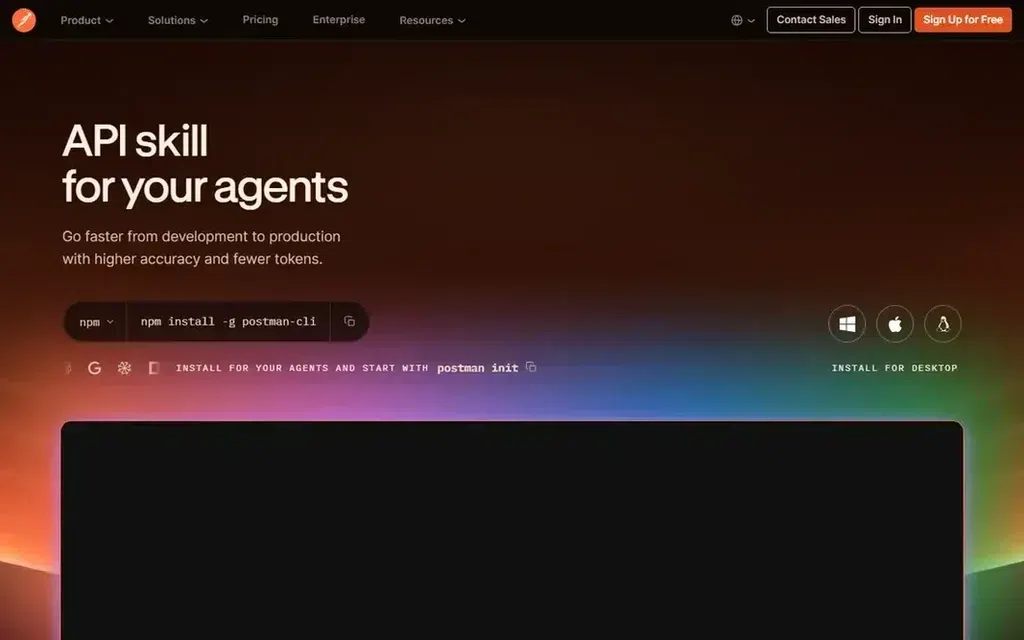
Think of Postman for API design and collaboration hub. Postman is an API engineering product that supports the journey from development to production, with tooling for designing, testing, and collaborating on APIs.
Strengths: Design, test.
The main drawbacks: Portal features are secondary to tooling.
Also, choose it when collaboration and API tooling matter more than a dedicated service catalog. In practice, Postman is not primarily a governance or catalog layer, so organizations needing a formal internal portal with ownership metadata may have to pair it with another tool. Entry price for Postman: $9 per month. Postman offers a free plan.
- Works well for internal API workflows
- Capable collaboration features
- Governance needs deliberate setup
In short, Redocly is for OpenAPI reference docs and SDKs. Redocly, from the makers of Redoc, turns OpenAPI descriptions into reference docs, a MCP server, SDKs, and tests, kept current on every pull request. For everyday use, Redocly is documentation-focused, so it does not aim to be a complete internal portal with ownership and catalog features.
Watch-outs: Less of a full service catalog.
More specifically, teams needing wide discovery across services may want to combine it with a catalog tool. Also, pick Redocly when OpenAPI-driven reference docs and generated artifacts are the priority, and keep expectations narrow on governance. What you pay to start with Redocly: $249 per month. As for free access: Free trial.
- Keeps docs current on pull requests
- Creates SDKs and tests
- Concentrated on documentation workflow
For API design and documentation for teams, SwaggerHub is a natural candidate. SwaggerHub, from Swagger, supplies API documentation and design tools for users, teams, and enterprises, with an open source and professional toolset. In practice, SwaggerHub leans toward design and documentation, so organizations needing a wide internal portal with ownership tracking may need extra tooling.
Points against: Portal capabilities are documentation-centric.
Choose it when documentation quality and design collaboration are the primary goals, and pair it with a catalog tool if discovery across numerous services matters. For internal APIs, it helps teams define and document interfaces so consumers can understand them, making it a natural fit for design-first workflows. No starting price is listed for SwaggerHub here; confirm pricing on the vendor site. Trial and free access: Not stated.
- Open source and professional toolset
- Eases API development for teams
- Governance features are restricted
Kong Konnect is a good fit for API and AI connectivity control. Kong Konnect is described by Kong as a fabric of modern connectivity, centralizing LLM access, automating API workflows, and securing digital ecosystems at scale. For internal APIs, it supplies a way to govern connectivity across services and teams, with workflow automation and access control as core themes.
Drawbacks to consider: Portal is one part of a bigger stack.
For everyday use, the system's breadth means a ramp-up time. Teams seeking only a straightforward developer portal may find it more than necessary. Its value relies on adopting the wider Kong approach to connectivity. The starting price for Kong Konnect: $25 per month plus usage. On free options: Free trial.
- Automates API workflows
- Secures connectivity at scale
- Wide system with a ramp-up time
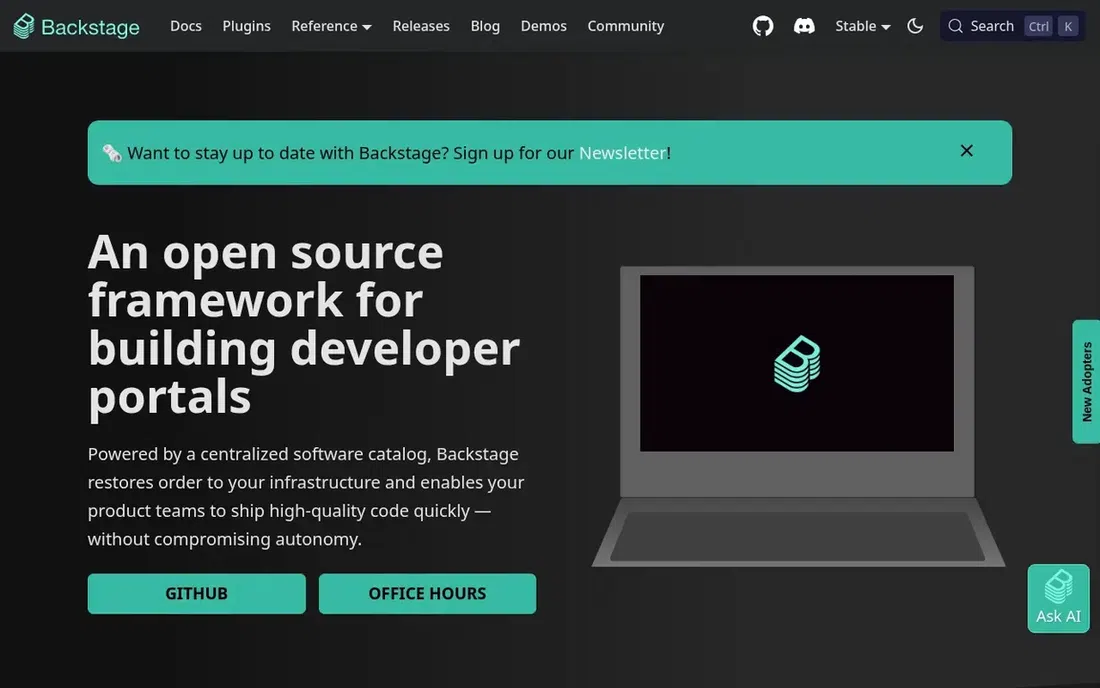
Backstage was built for open source internal developer portal. Backstage is an open source framework for building developer portals, centered on a software catalog and a plugin-based system. As for the details, teams without dedicated system engineers may find the setup heavy.
Limits to weigh: Customization needs engineering effort.
On top of that, the trade-off is operational overhead: running and extending Backstage means continuing maintenance and plugin management. In practice, since it is a framework instead of a turnkey product, it appeals to platform teams with the engineering capacity to shape the portal around their own standards and workflows. Backstage shows no starting price here, so confirm the cost on the vendor site. Free options: Not stated.
- Backed by an open source community
- Software catalog for services and APIs
- Needs setup and maintenance
Our selection method
For each of the 6 tools we noted price, free plan or trial, fit for developer portal software for internal APIs and the main limit, using vendor pages and documentation. Plan names, prices and limits change often. Treat the figures here as a starting point and verify them with the vendor. We ordered the tools by general fit, then by how clearly pricing is shown, then by free access. A buyer with unusual needs may reorder them.
What to check before you buy
- Ask SwaggerHub and Backstage for a written quote, since no starting price is shown.
- Check what the free option really includes: MuleSoft Anypoint Platform and Postman offer a free plan, and usage caps differ.
- Run a trial of Redocly and Kong Konnect with real work before paying for a year; your own workflow is the best test.
- Before choosing MuleSoft Anypoint Platform, weigh its main limit: enterprise-oriented complexity.
- Price SwaggerHub for your actual team size; headline prices rarely include add-ons or overage.
- Confirm you can export your data from Kong Konnect, so leaving later does not mean losing records.
FAQ
What should an internal developer portal for APIs include?
A handy internal portal generally merges a service or API catalog, clear reference documentation, ownership information, and access controls. Governance features help keep APIs consistent as teams change them.
Which options for developer portal software for internal APIs have a free plan?
MuleSoft Anypoint Platform and Postman offer a free plan in this list. Free plans usually cap users, projects or features, so check the limits on the vendor page. Several others offer a trial instead.
Do these tools publish their prices?
Not all of them. SwaggerHub and Backstage publish no starting price, so expect a quote request for those. The rest, MuleSoft Anypoint Platform included, show a starting price, though seats and billing terms still change the final cost.
Can these tools govern AI agents alongside internal APIs?
Some systems now extend governance to AI connectivity: Kong Konnect centralizes LLM access, and MuleSoft Anypoint Platform describes a registry for governing AI agents. Otherwise, documentation and catalog tools may handle your internal API needs.
Can I try these tools before paying?
Often, yes. MuleSoft Anypoint Platform and Postman have a free plan and Redocly and Kong Konnect offer a free trial. Use your own data and a real task during the test, and check what the free tier or trial limits before you rely on it.
How are the tools for developer portal software for internal APIs ordered?
MuleSoft Anypoint Platform sits first and Backstage last because the order follows typical fit for developer portal software for internal APIs, then price clarity and free access. It is a judgement call, so read each profile for fit and limits.
Sources
- https://www.mulesoft.com
- https://www.postman.com
- https://redocly.com
- https://swagger.io
- https://konghq.com
- https://backstage.io