Best Data Pipeline Software for IoT in 2026: 6 Tools Compared
Best data pipeline software for IoT: 6 contenders ranked by fit, with entry costs and free tiers. Each listing flags where it falls short. Refreshed for 2026.
- Editor's choice
 Talend Data Fabric
Integration and governance across environments
Starts atSee websiteVisit talend.comFull review - Great alternative
 Confluent Cloud
Live streaming of IoT events
Starts at$385 per monthVisit confluent.ioFull review - Also consider
 Informatica Intelligent Data Management Cloud
Enterprise cloud data management and governance
Starts atSee websiteVisit informatica.comFull review
Direct answer
Talend Data Fabric comes first here, mainly for integration and governance across environments. Listed starting prices: Confluent Cloud from $385 per month. For a different need, Confluent Cloud covers live streaming of IoT events and Informatica Intelligent Data Management Cloud covers enterprise cloud data management and governance. The other 3 tools in the list cover narrower or pricier cases.
TL;DR:
- Talend Data Fabric is the opening pick, best for integration and governance across environments.
- A fair warning about AWS IoT Analytics: tied to the AWS ecosystem.
- For large-scale device connectivity and management, Azure IoT Hub is worth a look.
- The lowest published monthly entry price here is $385 per month, from Confluent Cloud.
- 2 of 6 tools offer a free plan: Confluent Cloud, AWS IoT Analytics.
Last checked November 2026. Prices and plan details were read from the vendors' own pages in November 2026; vendors change plans often, so confirm the current price on the vendor site before you buy.
Quick comparison
| Tool | Best for | Starts at | Free plan? | |
|---|---|---|---|---|
| Talend Data Fabric | Integration and governance across environments | See website | Not stated | Visit |
| Confluent Cloud | Live streaming of IoT events | $385 per month | Yes | Visit |
| Informatica Intelligent Data Management Cloud | Enterprise cloud data management and governance | See website | Not stated | Visit |
| AWS IoT Analytics | Managed IoT analytics on AWS | See website | Yes | Visit |
| Databricks Lakehouse Platform | Unified analytics and AI on IoT data | See website | Not stated | Visit |
 Azure IoT Hub | Large-scale device connectivity and management | See website | Free trial | Visit |
Data Pipeline Software for IoT profiles
If you are comparing data pipeline software for IoT, this page covers 6 tools in one place: what each is best for, what it costs to start, whether it has a free plan, and the main limit to know about.
Talend Data Fabric is a good fit for integration and governance across environments. Talend is not a dedicated IoT connectivity product, so device ingestion must come from another service.
The main drawbacks: Enterprise-focused complexity.
Its enterprise scope can also mean a steeper setup than light tools. For IoT, it can serve as the integration and governance layer that moves device data into analytics and operational systems. This comparison lists no price for Talend Data Fabric; ask the vendor. Free plan details: Not stated.
- Governance across environments
- Part of Qlik Talend Cloud
- Not an IoT device gateway
Confluent Cloud is aimed squarely at live streaming of IoT events. Confluent Cloud is a live data streaming system for streaming, connecting, processing, governing, and querying data. As for the details, since it centers on streaming, Confluent Cloud may need extra components for batch analytics or long-term warehousing.
It also demands streaming architecture expertise. From a buyer's view, for more straightforward batch-oriented device data processing, a managed IoT analytics service might be simpler to adopt. The starting price for Confluent Cloud: $385 per month. Confluent Cloud includes a free tier.
Trade-offs to know: May be more than straightforward pipelines need.
- Link, process
- Made for live data flows
- Streaming focus needs architecture planning
Informatica Intelligent Data Management Cloud
Best for: Enterprise cloud data management and governance
Informatica Intelligent Data Management Cloud makes the most sense for enterprise cloud data management and governance. Informatica Intelligent Data Management Cloud, now part of Salesforce, offers enterprise cloud data management options geared toward powering AI-ready data. Informatica is not an IoT device connectivity service, so you still need a gateway or broker for device data.
Its enterprise focus can mean significant configuration effort. As for the details, in IoT pipelines, it usually acts as the management, quality, and governance layer that prepares device data for analytics and AI. Check the vendor site for Informatica Intelligent Data Management Cloud pricing; none is listed in this comparison. Trial and free access: Not stated.
Drawbacks to consider: Enterprise-scale complexity.
- Wide data governance capabilities
- AI-ready data management
- Needs separate IoT ingestion layer
AWS IoT Analytics
Best for: Managed IoT analytics on AWS
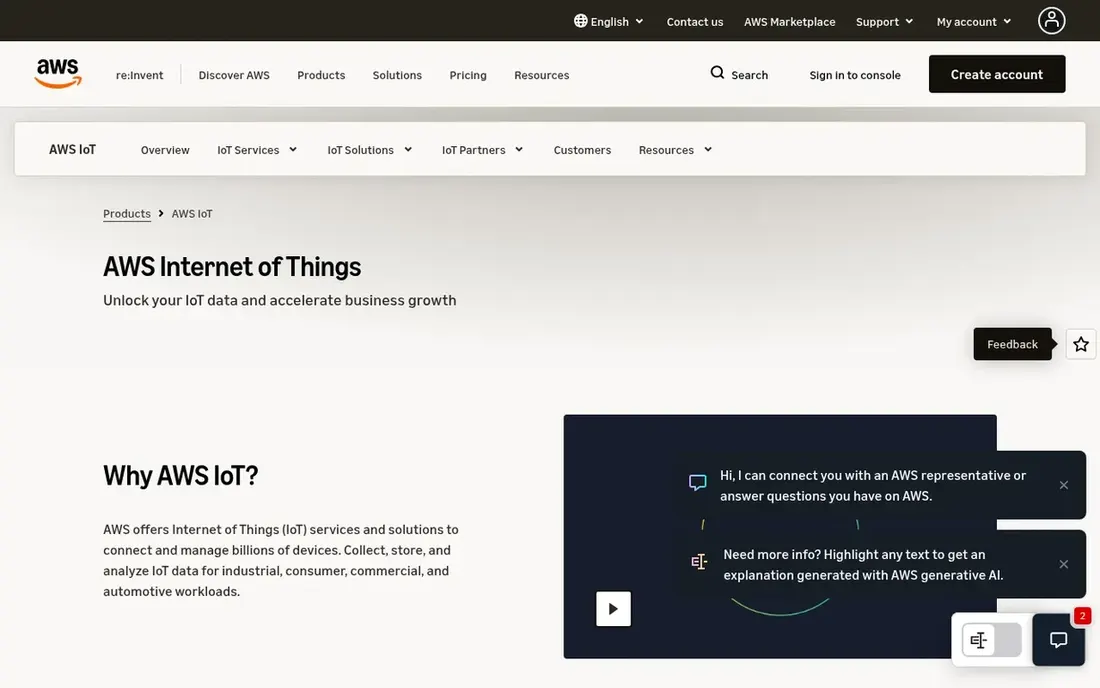
AWS IoT Analytics works best for managed IoT analytics on AWS. The service is aimed at industrial, consumer, commercial, and automotive IoT scenarios where teams have to process device data and build options without assembling every component themselves. Since it is an AWS service, the primary limit is ecosystem lock-in; teams with substantial investments in other clouds may find integration harder.
Drawbacks to consider: Less suited to multi-cloud strategies.
It also assumes familiarity with AWS tooling and permissions. As for the details, AWS IoT Analytics is a managed service within the AWS IoT portfolio for collecting and analyzing data from connected devices. Pricing for AWS IoT Analytics is not stated here, so ask the vendor for current figures. AWS IoT Analytics has a free plan.
- Supports device data collection and analysis
- Managed service cuts operations
- Tied to the AWS ecosystem
Databricks Lakehouse Platform
Best for: Unified analytics and AI on IoT data
Databricks Lakehouse Platform is designed for unified analytics and AI on IoT data. Databricks Lakehouse Platform provides a unified environment for data, analytics, and AI, with support for ETL, data warehousing, and governance. Databricks is not an IoT device connectivity service, so you still need a gateway or broker to ingest device data.
On top of that, for IoT pipelines, it can serve as the analytics and processing layer where device data is transformed and modeled. If your central need is device management instead of analytics, Azure IoT Hub or AWS IoT Analytics may be a better starting point. No starting price is listed for Databricks Lakehouse Platform here; confirm pricing on the vendor site. Free plan details: Not stated.
Points against: Needs data engineering expertise.
- Supports ETL and data warehousing
- Governance across data workloads
- Not a dedicated IoT device gateway
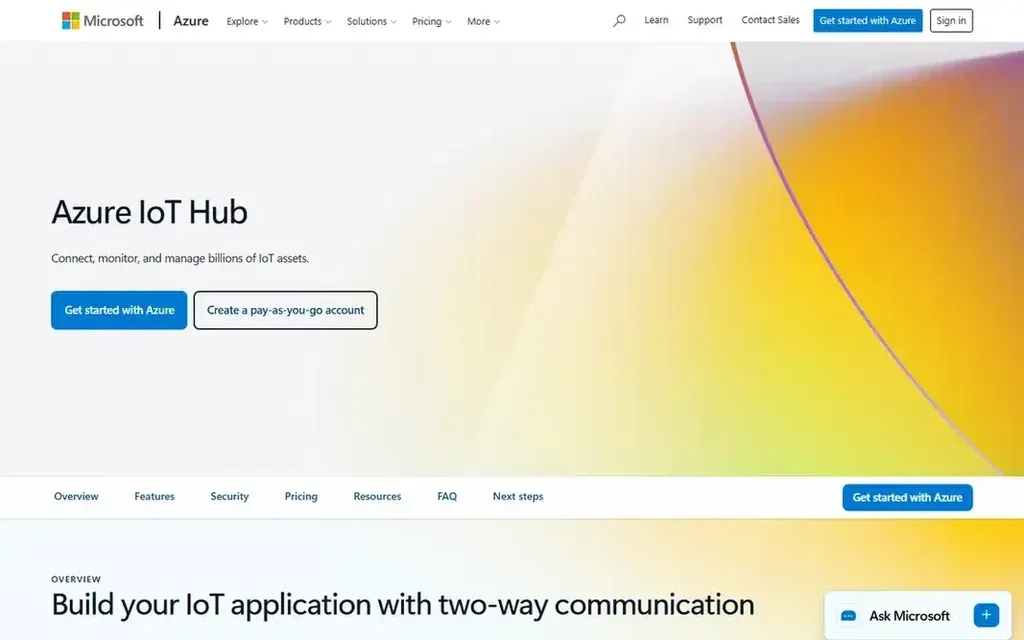
For large-scale device connectivity and management, Azure IoT Hub is a natural candidate. Azure IoT Hub is a cloud system for connecting, monitoring, provisioning, and configuring IoT devices at scale.
Worth adding: teams outside the Azure ecosystem may prefer a more self-contained pipeline tool. Pricing for Azure IoT Hub is not stated here, so ask the vendor for current figures. Free plan details: Free trial.
What to check first: Pipeline analytics need other Azure services.
- Cloud system for monitoring device fleets
- Made for managing plenty of devices
- Best value within the Azure ecosystem
How we compared the tools
The comparison looks at four things: starting price, free access, how well the feature set matches data pipeline software for IoT, and the main limit of each tool. Treat prices as a snapshot: vendors change plans often, so check the vendor site for the figure that applies today. Position on the page reflects fit for a typical buyer first, with price clarity and free access breaking ties. Treat it as a guide, not a ruling.
What to check before you buy
- Ask Talend Data Fabric, Informatica Intelligent Data Management Cloud, AWS IoT Analytics and others for a written quote, since no starting price is shown.
- Read the fine print on the free plans from Confluent Cloud and AWS IoT Analytics; seat, project and feature caps differ.
- Take the trial from Azure IoT Hub and push a live task through it before you pay.
- Before choosing Talend Data Fabric, weigh its main limit: enterprise-focused complexity.
- Total up the real monthly cost of Informatica Intelligent Data Management Cloud, including add-ons, extra users and usage-based fees.
- Look at the renewal terms for Databricks Lakehouse Platform: auto-renewal, notice periods and price changes can matter more than the first-year price.
FAQ
Do these tools publish their prices?
Not all of them. Talend Data Fabric, Informatica Intelligent Data Management Cloud, AWS IoT Analytics and others publish no starting price, so expect a quote request for those. The rest, Confluent Cloud included, show a starting price, though seats and billing terms still change the final cost.
How are the tools for data pipeline software for IoT ordered?
Talend Data Fabric sits first and Azure IoT Hub last because the order follows typical fit for data pipeline software for IoT, then price clarity and free access. It is a judgement call, so read each profile for fit and limits.
Is Talend Data Fabric the right pick for everyone comparing data pipeline software for IoT?
No single tool suits every team. Talend Data Fabric comes first because it fits integration and governance across environments, while Confluent Cloud suits real-time streaming of IoT events and Informatica Intelligent Data Management Cloud suits enterprise cloud data management and governance. Match the tool to your own size, budget and workflow before deciding.
Can I try these tools before paying?
Often, yes. Confluent Cloud and AWS IoT Analytics have a free plan and Azure IoT Hub offers a free trial. Use your own data and a real task during the test, and check what the free tier or trial limits before you rely on it.
Sources
- https://www.talend.com
- https://www.confluent.io
- https://www.informatica.com
- https://aws.amazon.com/iot-analytics
- https://www.databricks.com
- https://azure.microsoft.com/en-us/products/iot-hub