5 Data Fabric Software for Remote Teams Worth Shortlisting in 2026
Best data Fabric software for remote teams, compared. 5 tools with published prices, free plans and limits. Each pick comes with its main catch. Quick to scan.
- Editor's choiceMicrosoft Azure Purview
Microsoft-centric data governance
Starts atPricing on requestVisit microsoft.comFull review - Great alternativeGoogle Cloud Dataplex
Unified data context on Google Cloud
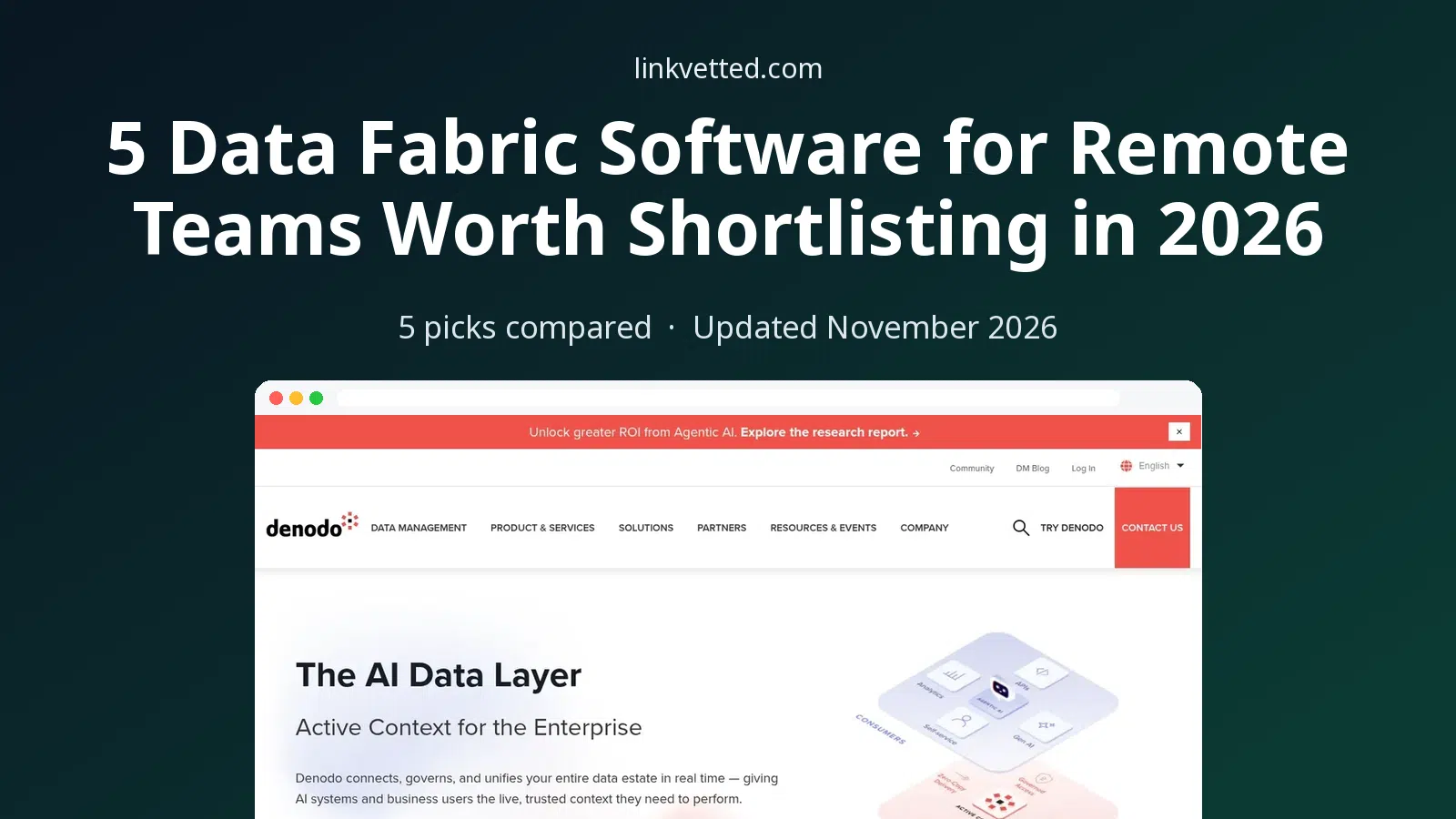
Starts atPricing on requestVisit cloud.google.comFull review - Also considerDenodo Platform
Live data virtualization
Starts atPricing on requestVisit denodo.comFull review
Direct answer
This list puts Microsoft Azure Purview first for Microsoft-centric data governance. Google Cloud Dataplex is the stronger choice for unified data context on Google Cloud, while Denodo Platform suits real-time data virtualization. The other 2 tools in the list cover narrower or pricier cases. None of these vendors publish plan prices, so pricing is on request for every option.
TL;DR:
- Microsoft Azure Purview is the opening pick, best for Microsoft-centric data governance.
- Before buying Microsoft Azure Purview, weigh this: best value for Microsoft-heavy environments.
- A permanent free plan is missing from all 5 tools, Microsoft Azure Purview and Databricks Lakehouse Platform included; plan for a trial or a premium start.
- Databricks Lakehouse Platform suits unified analytics and AI on lakehouse.
- No starting price is shown for any of the 5 tools, Microsoft Azure Purview and Databricks Lakehouse Platform included, so plan time for sales calls.
Last checked November 2026. Pricing on request: vendors did not publish plan prices when this guide was last checked (November 2026), so ask each vendor for a written quote.
Quick comparison
| Tool | Best for | Starts at | Free plan? | |
|---|---|---|---|---|
| Microsoft Azure Purview | Microsoft-centric data governance | Pricing on request | Not stated | Visit |
| Google Cloud Dataplex | Unified data context on Google Cloud | Pricing on request | Not stated | Visit |
| Denodo Platform | Live data virtualization | Pricing on request | Not stated | Visit |
 Informatica Intelligent Data Management Cloud | Thorough cloud data management | Pricing on request | Not stated | Visit |
| Databricks Lakehouse Platform | Unified analytics and AI on lakehouse | Pricing on request | Not stated | Visit |
The best data Fabric software for remote teams
If you are comparing data Fabric software for remote teams, this page covers 5 tools in one place: what each is best for, what it costs to start, whether it has a free plan, and the main limit to know about.
Microsoft Azure Purview
Best for: Microsoft-centric data governance
Microsoft Azure Purview is designed for Microsoft-centric data governance. If you need a vendor-neutral governance tool, other systems may be a better fit.
What to check first: Best value for Microsoft-heavy environments.
It is especially well-suited for remote teams already using Microsoft Azure and related services, as it integrates smoothly with those tools to offer compliance and security across distributed data. Microsoft Azure Purview does not show a starting price in this comparison, so check the vendor site for current pricing. Free access: Not stated.
- Deep integration with Microsoft tools
- Unified data estate visibility
- Restricted native support for non-Microsoft sources
Google Cloud Dataplex
Best for: Unified data context on Google Cloud
Choose Google Cloud Dataplex for unified data context on Google Cloud. Google Cloud Dataplex, now known as Knowledge Catalog, is an always-on context engine that brings together structured, unstructured, and SaaS data into a governed, agent-ready truth for trusted AI.
Best features of Google Cloud Dataplex: Brings together structured and unstructured data.
Downsides: May require extra tools for multi-cloud. More specifically, Dataplex is most effective within the Google Cloud ecosystem. If you need a multi-cloud data fabric, consider products with broader native connectivity. Google Cloud Dataplex does not show a starting price in this comparison, so check the vendor site for current pricing. Free plan details: Not stated.
- Always-on context engine
- Agent-ready data for AI
- Primarily for Google Cloud users
Denodo Platform
Best for: Live data virtualization
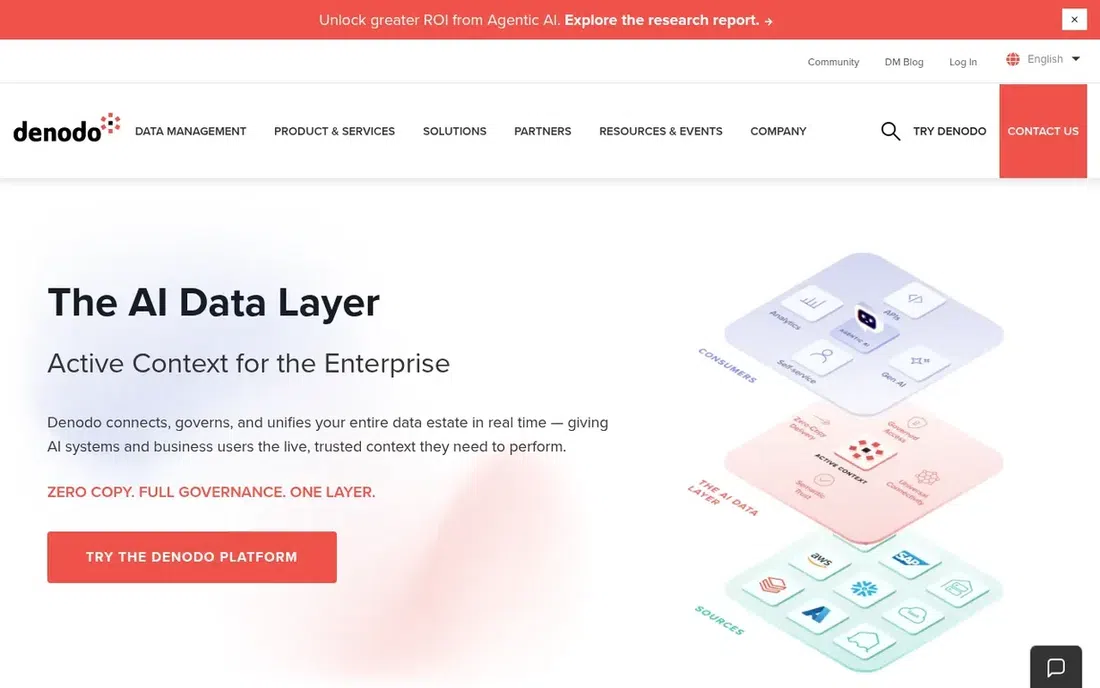
Denodo Platform is aimed squarely at live data virtualization. Denodo Platform concentrates on data virtualization, connecting and unifying your whole data estate in live. It gives you live, trusted context for AI systems and business users, which is valuable for remote teams needing immediate access to dispersed data.
Honest limits: Needs careful performance tuning.
If your team needs persistent data copies or works with largely static data, a traditional integration tool might be more appropriate. For everyday use, whereas virtualization avoids data duplication, it can introduce latency for some queries. Worth adding: the system is a strong match for organizations prioritizing live integration without data movement. Performance tuning may be necessary. Denodo Platform does not show a starting price in this comparison, so check the vendor site for current pricing. As for free access: Not stated.
Upsides: Solid governance features.
- Live data access
- Brings together data across sources
- Virtualization layer can add latency
Informatica Intelligent Data Management Cloud
Best for: Thorough cloud data management
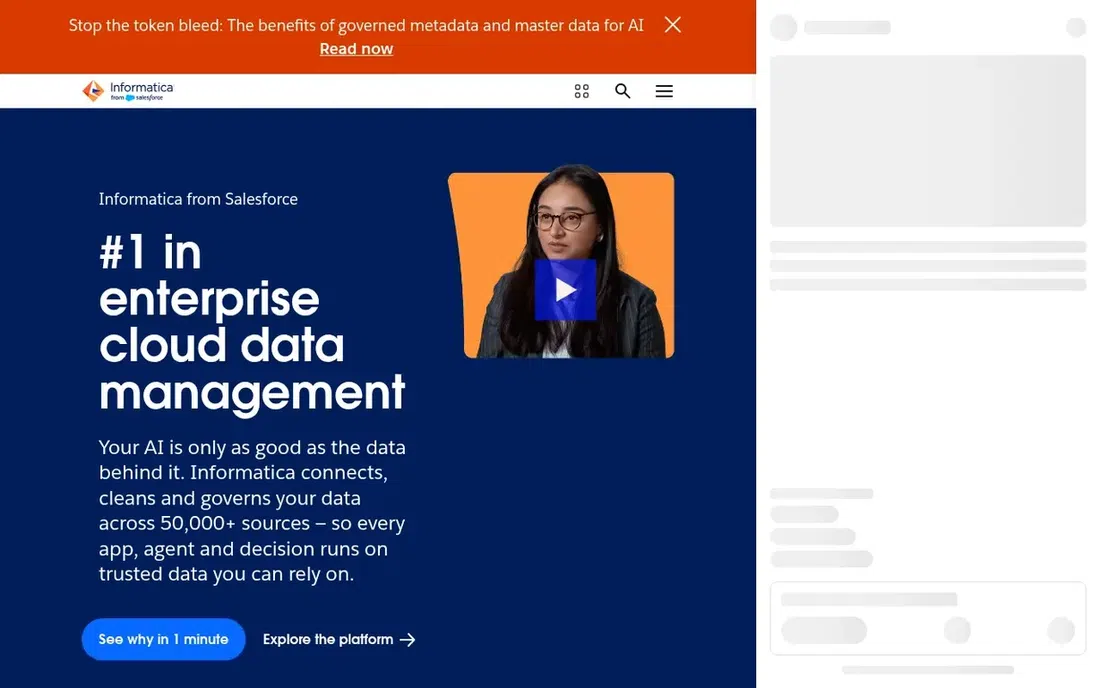
Informatica Intelligent Data Management Cloud serves comprehensive cloud data management. Informatica Intelligent Data Management Cloud is a thorough system for managing data across cloud and on-premises environments.
Beyond that, remote teams without specialized staff might find it overwhelming. Check the vendor site for Informatica Intelligent Data Management Cloud pricing; none is listed in this comparison. Free options: Not stated.
Points against: Complicated setup for smaller teams.
- AI-ready data focus
- Enterprise-grade governance
- Needs specialized skills
Databricks Lakehouse Platform
Best for: Unified analytics and AI on lakehouse
Databricks Lakehouse Platform works best for unified analytics and AI on lakehouse. Databricks can be complicated to set up and optimize, commonly requiring dedicated data engineering resources. Costs can escalate without careful management.
Trade-offs to know: Needs data engineering expertise.
Databricks Lakehouse Platform gives you a unified system for data, analytics, and AI. It eases ETL, data warehousing, governance, and AI on the Data + AI Platform, making it a good match for remote teams that require to collaborate on data science and analytics projects. Pricing for Databricks Lakehouse Platform is not stated here, so ask the vendor for current figures. Free access: Not stated.
- Data-centric approach for AI
- Eases ETL and data warehousing
- Can be complicated to optimize costs
How these tools were picked
Each tool was reviewed on what its vendor publishes: price, plan limits, core features and stated drawbacks. We did not run hands-on tests. Where a price is missing, the vendor does not list one publicly or ties it to a quote. Always confirm before budgeting. Tools are placed by general fit for data Fabric software for remote teams, with price clarity and free access as tie-breakers. A different team can reasonably rank them differently.
Things to verify first
- Request quotes from Microsoft Azure Purview, Databricks Lakehouse Platform and the others; the list shows no fixed prices.
- Before choosing Microsoft Azure Purview, weigh its main limit: best value for Microsoft-heavy environments.
- The entry price of Microsoft Azure Purview is only the starting point; model the full cost with seats and extras.
- Ask Denodo Platform whether prices are locked for the first term and what happens at renewal.
- Check how data leaves Google Cloud Dataplex: formats, limits and whether exports are available on every plan.
FAQ
Do these tools publish their prices?
No. None of the tools, from Microsoft Azure Purview to Databricks Lakehouse Platform, shows a fixed starting price here, so budget time for quotes.
What is data fabric software?
Data fabric software offers a unified architecture for integrating, governing, and accessing data across distributed environments. It helps remote teams handle data from several sources as if it were a single, cohesive system, improving accessibility and trust.
How are the tools for data Fabric software for remote teams ordered?
The order follows typical fit for data Fabric software for remote teams, with Microsoft Azure Purview first and Databricks Lakehouse Platform last, then price clarity and free access. It is editorial judgement, not a score, so another team could rank the tools differently.
Does any tool for data Fabric software for remote teams here have a free plan?
A permanent free plan is not offered by Microsoft Azure Purview, Databricks Lakehouse Platform or the other tools here. Plan a short evaluation period instead.
Is Microsoft Azure Purview the right pick for everyone comparing data Fabric software for remote teams?
No single tool suits every team. Microsoft Azure Purview comes first because it fits Microsoft-centric data governance, while Google Cloud Dataplex suits unified data context on Google Cloud and Denodo Platform suits real-time data virtualization. Match the tool to your own size, budget and workflow before deciding.
Sources
- https://www.microsoft.com/en-us/security/business/microsoft-purview
- https://cloud.google.com/dataplex
- https://www.denodo.com
- https://www.informatica.com
- https://www.databricks.com