The 6 Best Dashboard Software for Hospital Operations in 2026, Ranked
Best dashboard software for hospital operations in 2026: 6 contenders with entry costs and free tiers. Limits and pricing notes included. Skim the table first.
- Editor's choice
 Domo
Connecting and moving operational data
Starts atSee websiteVisit domo.comFull review - Great alternative
 Oracle Health
Connected clinical and operational insight
Starts atSee websiteVisit oracle.comFull review - Also considerEpic Systems
Hospitals already on Epic clinical systems
Starts atSee websiteVisit epic.comFull review
Direct answer
Domo leads the list, best for connecting and moving operational data. Listed starting prices: Tableau from $15 per user a month. Oracle Health is better for connected clinical and operational insight, and Epic Systems is better for Hospitals already on Epic clinical systems. Details, prices and limits for the rest of the 6 tools are below.
TL;DR:
- Top of the list is Domo, which targets connecting and moving operational data.
- Tableau is the lowest-priced starter here at $15 per user per month.
- Tableau suits adaptable visual dashboards across data sources.
- Check the limits for Epic Systems before you commit: tightly tied to the Epic ecosystem.
Last checked November 2026. Prices and plan details were read from the vendors' own pages in November 2026; vendors change plans often, so confirm the current price on the vendor site before you buy.
Quick comparison
| Tool | Best for | Starts at | Free plan? | |
|---|---|---|---|---|
| Domo | Connecting and moving operational data | See website | Free trial | Visit |
| Oracle Health | Connected clinical and operational insight | See website | Not stated | Visit |
| Epic Systems | Hospitals already on Epic clinical systems | See website | Not stated | Visit |
 Looker | Governed metrics with embedded analytics | See website | Not stated | Visit |
 Sisense | Embedding analytics into operational apps | See website | Free trial | Visit |
 Tableau | Adaptable visual dashboards across data sources | $15 per user a month | Yes | Visit |
Dashboard Software for Hospital Operations compared in detail
If you are comparing dashboard software for hospital operations, this page covers 6 tools in one place: what each is best for, what it costs to start, whether it has a free plan, and the main limit to know about.
Pick Domo if this describes you: connecting and moving operational data. Domo provides AI and data products that help teams link and move data from any source, prepare it and expand access for exploration, then accelerate business-critical insights. In practice, for hospital operations, that makes it a candidate when data lives across plenty of disconnected systems and the priority is consolidating it before building dashboards for flow, staffing and capacity.
Where it falls short: System breadth can feel complicated.
On top of that, the breadth of the system means governance and ownership have to be clear, or dashboards can proliferate without consistency. Confirm how Domo would connect to your specific clinical and administrative sources. Also, Hospitals with a narrow reporting need may find a focused visualization tool more straightforward. Check the vendor site for Domo pricing; none is listed in this comparison. On free options: Free trial.
- Data preparation and access expansion
- Focus on business-critical insights
- Needs clear data ownership
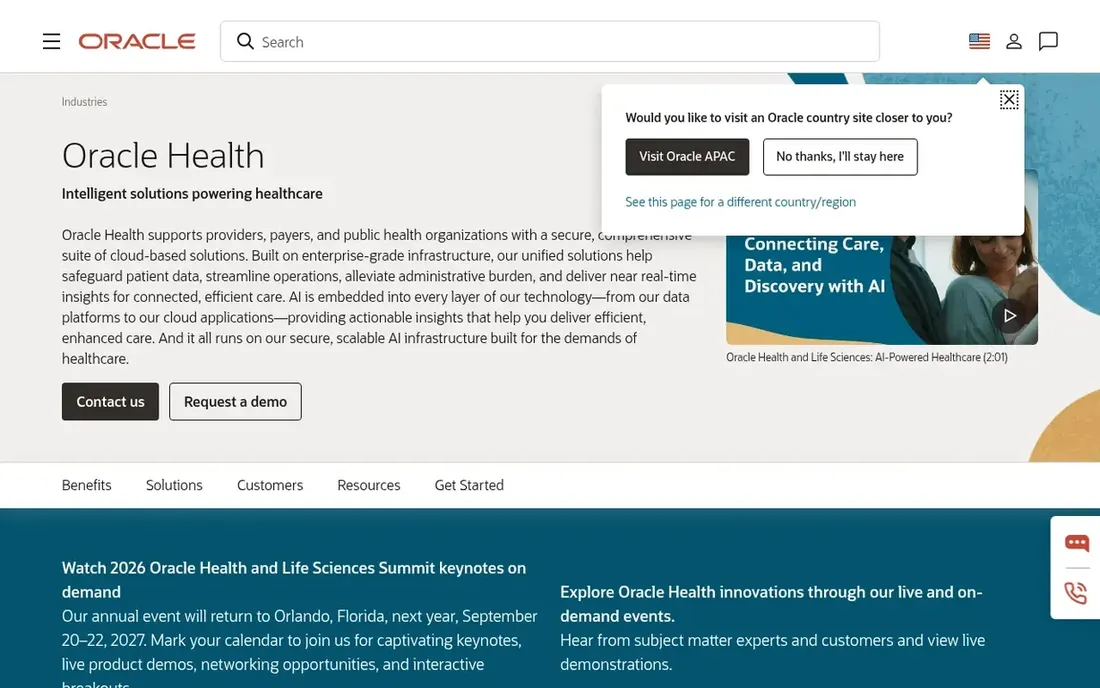
Pick Oracle Health if this describes you: connected clinical and operational insight. Oracle Health positions its software around secure and dependable options that support better healthcare insights and people-centric experiences. Verify current module coverage straight with the vendor.
For hospital operations, that means dashboards and reporting intended to link clinical and administrative views of the organization. Teams seeking a light standalone dashboard tool should compare general analytics products. No starting price is listed for Oracle Health here; confirm pricing on the vendor site. As for free access: Not stated.
The main drawbacks: Healthcare context required to get full value.
- Steady healthcare options
- Emphasis on healthcare insights
- Integration relies on existing systems
Epic Systems
Best for: Hospitals already on Epic clinical systems
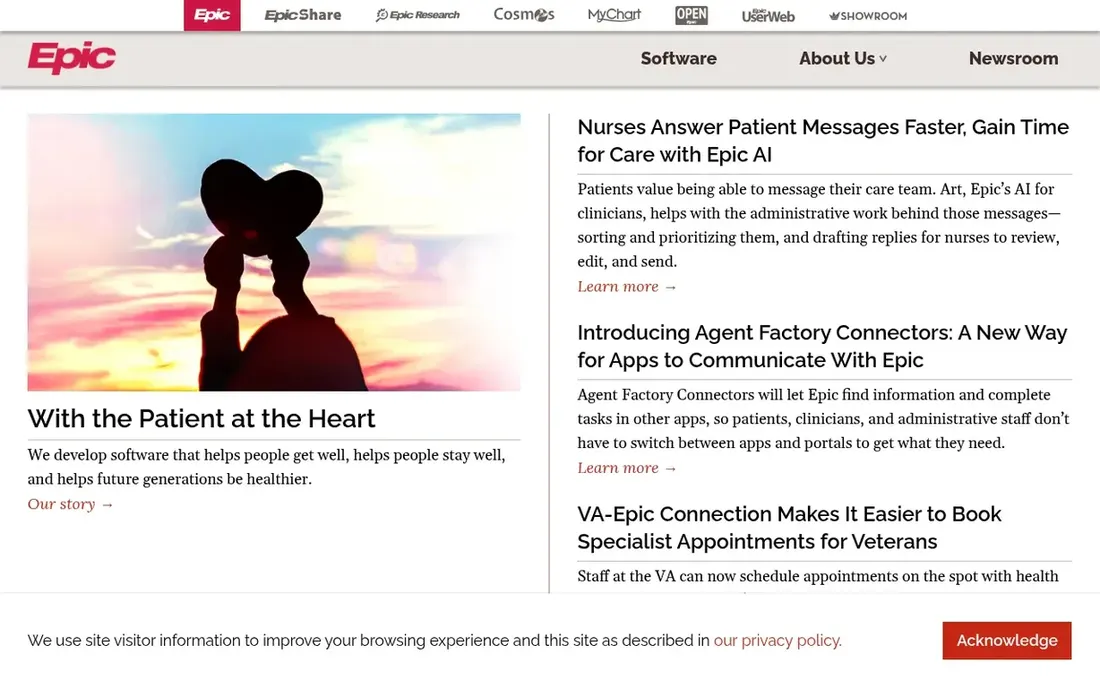
In short, Epic Systems is for Hospitals already on Epic clinical systems. Confirm current reporting capabilities with the vendor.
Downsides: Tightly tied to the Epic ecosystem.
Epic Systems develops software centered on patient care, and its operational reporting fits best as part of the wider Epic environment. Check the vendor site for Epic Systems pricing; none is listed in this comparison. As for free access: Not stated.
- Wide healthcare software focus
- Long-standing healthcare specialization
- Less suited to non-Epic organizations
Looker works best for governed metrics with embedded analytics. Looker is Google Cloud business intelligence and embedded analytics, built around unifying metrics in a trusted semantic layer with AI agents.
For everyday use, in a hospital setting, a governed metric layer helps ensure that measures like occupancy or turnaround mean the same thing across departments and dashboards. Check the vendor site for Looker pricing; none is listed in this comparison. On free options: Not stated.
Limits to weigh: Best fit within Google Cloud context.
- Part of Google Cloud
- Embedded analytics support
- Semantic modeling needs upfront work
Think of Sisense for embedding analytics into operational apps. Sisense gives AI-powered embedded analytics with pro-code, low-code and no-code adaptability, geared toward turning data into insight inside the applications people already use. Also, embedding analytics takes developer time and planning, so it is less immediate than a standalone dashboard tool.
Watch-outs: Less centered on clinical workflows.
For hospital operations, that fits teams building dashboards into internal tools for example bed management or staffing applications, where users should see operational metrics without switching systems. For everyday use, Hospitals wanting clinical-native reporting may prefer Epic or Oracle Health. Pricing for Sisense is not stated here, so ask the vendor for current figures. Trial and free access: Free trial.
- Embedded analytics focus
- Pro-code
- Embedding needs developer involvement
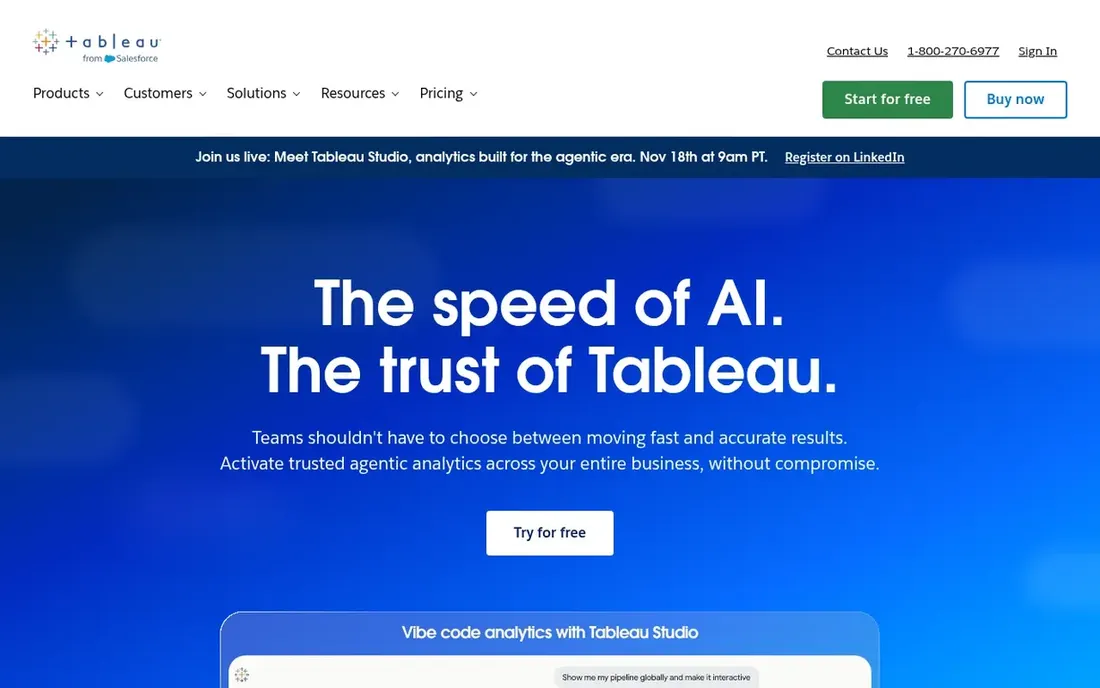
Think of Tableau for flexible visual dashboards across data sources. Tableau is business intelligence and analytics software built around seeing and understanding data.
Drawbacks to consider: Needs data preparation discipline.
As for the details, users link to almost any database, build visualizations by dragging and dropping, and share results with a click. On top of that, for hospital operations, it performs well when capacity, staffing and throughput data are already collected in accessible systems and the team wants adaptable, self-service dashboards without based on a single clinical vendor. Tableau cost at the entry level: $15 per user per month. Tableau includes a free tier.
- Links to almost any database
- Drag-and-drop visualization building
- Healthcare-specific logic must be built
How these tools were picked
LinkVetted looked at what each vendor publishes: pricing, plan limits, feature coverage for dashboard software for hospital operations and stated drawbacks. No hands-on testing is claimed. Seat minimums, billing terms and add-ons can move the real cost, so the starting prices here are a guide and not a quote. Tools are placed by general fit for dashboard software for hospital operations, with price clarity and free access as tie-breakers. A different team can reasonably rank them differently.
Things to verify first
- Ask Domo, Oracle Health, Epic Systems and others for a written quote, since no starting price is shown.
- Test the free plan from Tableau against your real workload before relying on it.
- Run a trial of Domo and Sisense with real work before paying for a year; your own workflow is the best test.
- Before choosing Domo, weigh its main limit: product breadth can feel complicated.
- Compare total cost, not headline price: for Tableau, add extra seats, add-ons and any usage-based charges.
- Ask Sisense which support channels and response times come with the plan you would buy.
FAQ
When does embedded analytics make sense for hospital operations?
Embedded analytics suits when staff should see operational metrics inside the tools they already use, like bed management or staffing applications. Sisense and Looker both emphasize embedded delivery, though embedding needs developer involvement and planning.
Which options for dashboard software for hospital operations have a free plan?
Tableau is the only tool in this list with a free plan. Free plans usually cap users, projects or features, so check the limits on the vendor page. Several others offer a trial instead. Each of the 6 options in this dashboard software for Hospital operations guide has its own card above with the price, free plan and limits.
How are the tools for dashboard software for hospital operations ordered?
The order follows typical fit for dashboard software for hospital operations, with Domo first and Tableau last, then price clarity and free access. It is editorial judgement, not a score, so another team could rank the tools differently.
Is Domo the right pick for everyone comparing dashboard software for hospital operations?
No single tool suits every team. Domo comes first because it fits connecting and moving operational data, while Oracle Health suits connected clinical and operational insight and Epic Systems suits Hospitals already on Epic clinical systems. Match the tool to your own size, budget and workflow before deciding.
What is the cheapest option for dashboard software for hospital operations in this list?
On published monthly entry prices, Tableau is the lowest here at $15 per user per month. Entry price is only part of the cost, because seats, add-ons and billing terms can change the total. All 6 picks in this dashboard software for Hospital operations comparison list a starting price, free plan details and the main limits on their cards above.
Sources
- https://www.domo.com
- https://www.oracle.com/health
- https://www.epic.com
- https://looker.com
- https://www.sisense.com
- https://www.tableau.com