Best CX Platforms in 2026: 8 Platforms Compared
Compare the best CX platforms for surveys, feedback, support, and journey insights, with published pricing, free plans, and honest trade-offs for teams.
- Editor's choice
 Qualtrics XM
Enterprise experience programs
Starts atSee websiteVisit qualtrics.comFull review - Great alternative
 Medallia
Always-on enterprise feedback
Starts atSee websiteVisit medallia.comFull review - Also consider
 Zendesk
Omnichannel support
Starts at$19 per agent per monthVisit zendesk.comFull review
TL;DR:
- Qualtrics and Medallia lead for large, always-on feedback programs, but both are quote-only and need real implementation time.
- Zendesk, Freshdesk, and Intercom cover the support side of CX, while survey tools cover measurement, so many teams need one of each.
- HubSpot Service Hub is the simplest CX start for teams already using HubSpot CRM.
- Survicate and QuestionPro give smaller teams published prices and free plans without an enterprise sales process.
- Check data privacy terms, survey limits, and per-seat costs before you commit, since add-ons change the total fast.
Quick comparison
| Tool | Best for | Starts at | Free plan? | |
|---|---|---|---|---|
| Qualtrics XM | Enterprise experience programs | See website | No | Visit |
| Medallia | Always-on enterprise feedback | See website | No | Visit |
| Zendesk | Omnichannel support | $19 per agent per month | Free trial | Visit |
 HubSpot Service Hub | HubSpot CRM teams | $20 per seat per month | Yes | Visit |
 Freshdesk | Budget ticketing | $19 per agent per month | Free trial | Visit |
 Intercom | Conversational support | $29 per seat per month | Free trial | Visit |
 Salesforce Service Cloud | Salesforce enterprises | $25 per user per month | Free trial | Visit |
 Survicate | Multi-channel feedback | $89 per month | Yes | Visit |
The best CX platforms
We compared CX software on feedback collection, analysis, support workflows, integrations, and published pricing. This list mixes measurement platforms with support platforms, since customer experience spans both.
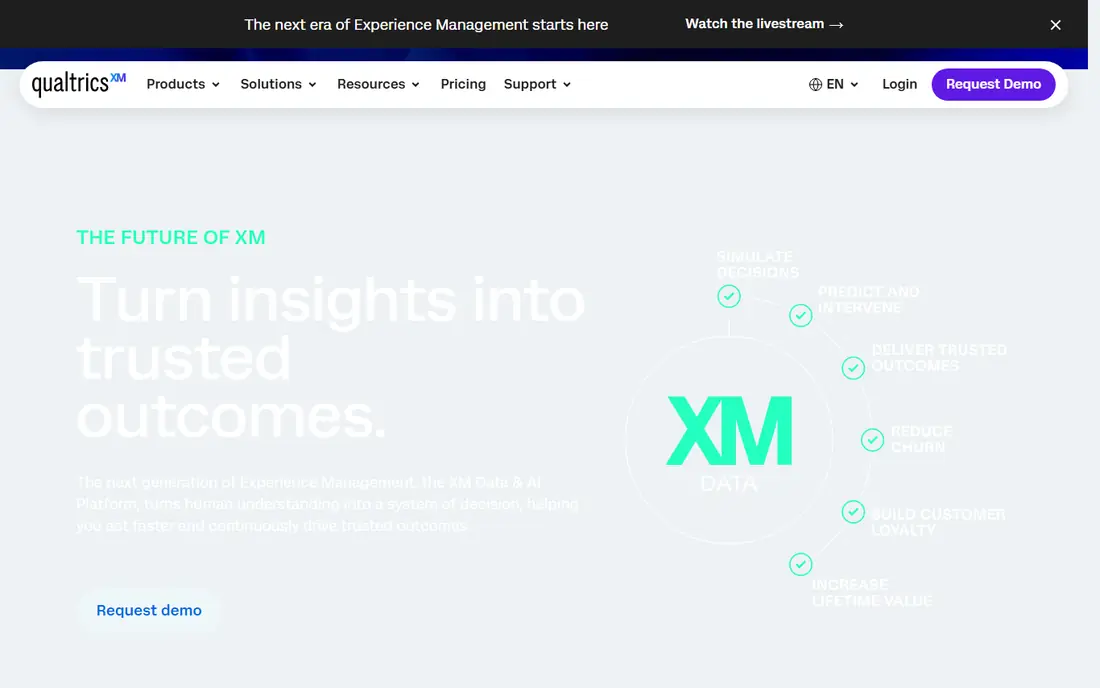
Qualtrics XM fits large organizations that run feedback as a formal program, not as a one-off survey. It supports complex survey logic, journey tracking, and dashboards for different teams, and it handles high volumes across channels. If your board asks for trends by segment and region, this is the class of tool built for that question.
The catch is scope and cost. Pricing is custom, implementation can take weeks, and small teams may find the depth gets in the way. Start here only when you have a clear owner for the program and a budget that fits an enterprise contract.
- Research-grade surveys
- Customer, employee, and brand programs in one system
- Strong analytics and role controls
- Quote-only pricing
- Setup and training take time
- More than most small teams need
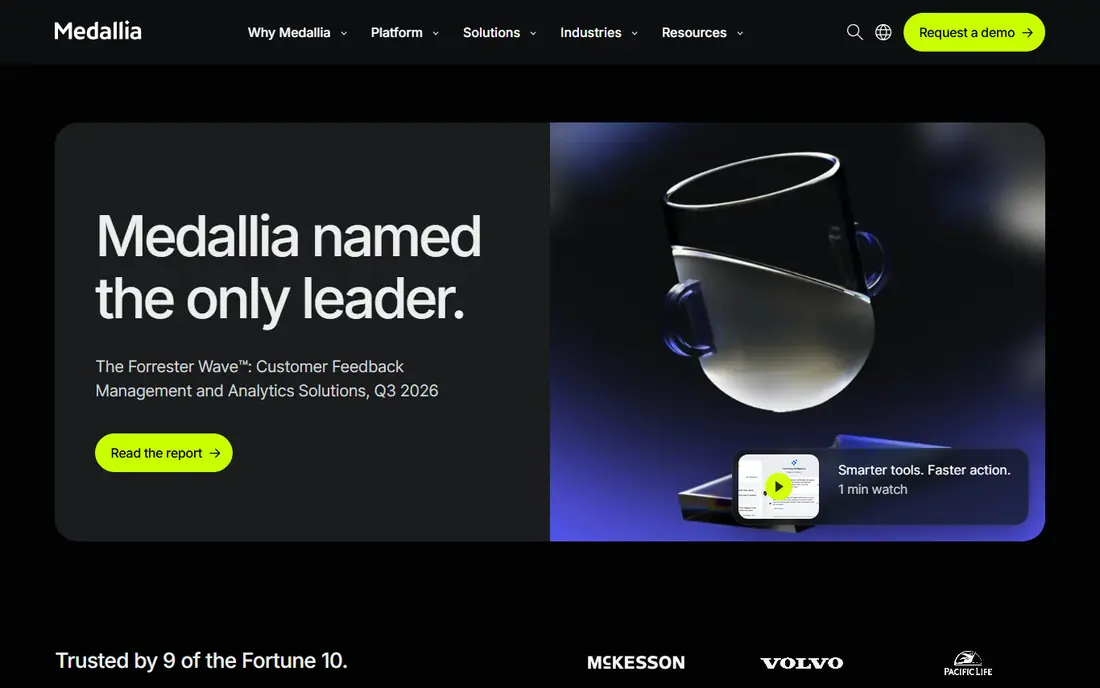
Medallia suits enterprises that collect feedback at many touchpoints and need to route problems to owners fast. Its text analytics can group open comments into themes, and its closed-loop tools help teams follow up with unhappy customers. Companies with stores, call centers, and digital channels in one program get the most from it.
The downside mirrors Qualtrics. Expect a sales-led purchase, a phased rollout, and ongoing work to keep the program useful. Without owners who close the loop, even good feedback data sits unused.
- Feedback across web, mobile, contact center, and stores
- Text analytics
- Closed-loop case handling
- Quote-only pricing
- Long implementation
- Needs staff time to act on signals
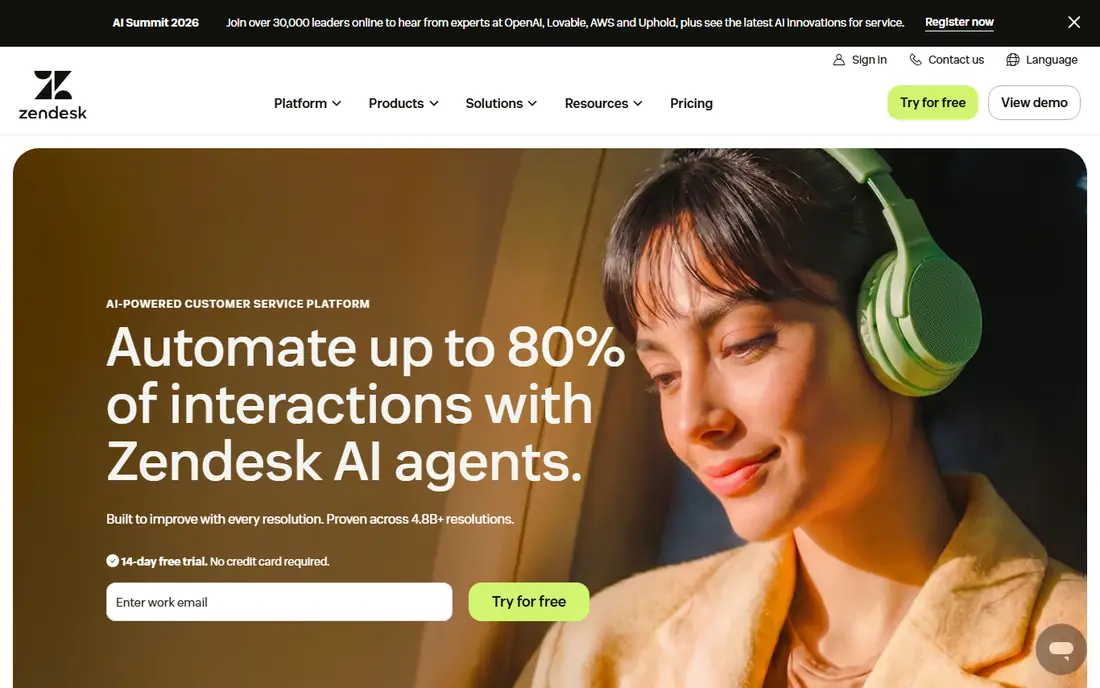
Zendesk is the support backbone for many CX teams. Agents can handle email, chat, and messaging from one queue, and customers can help themselves through a help center. The marketplace adds survey, CRM, and analytics links, which helps teams that already run Zendesk for support.
The limit is measurement. Zendesk captures post-ticket satisfaction well, but it does not run a full journey feedback program on its own. Pair it with a survey platform when you need NPS, journey surveys, and brand tracking beyond support.
- Ticketing, messaging, and help center in one suite
- Large app marketplace
- AI agents and automation on higher tiers
- Full suite costs climb with add-ons
- Feedback programs need a separate survey tool
HubSpot Service Hub is the low-friction pick for teams already on HubSpot. Tickets, customer records, and feedback surveys live together, so an agent can see past purchases and prior issues without switching tools. The free tier lets a very small team start without a purchase order.
The trade-off is fit outside HubSpot. If your CRM is Salesforce or another system, the value drops, and you may pay for overlap. Check whether the Starter tier covers your ticket volume and automation needs before you scale seats.
- Free tools for up to two users
- Tickets tied to CRM records
- Feedback surveys built in
- Best value inside HubSpot
- Advanced automation sits on higher tiers
Freshdesk appeals to growing support teams that want solid ticketing without enterprise pricing. Setup is quick, ticket routing is easy to grasp, and the interface stays approachable for new agents. Small teams can be live in days rather than months.
The weakness is depth. Freshdesk handles support well, but journey measurement, text analytics, and enterprise feedback governance are thinner. Use it as your support layer, and add a survey tool when measurement becomes the main job.
- Fast setup
- Clear ticket workflows
- Automation and self-service on paid plans
- CX analytics are lighter than survey platforms
- AI features cost more on higher tiers
Intercom fits product and SaaS teams that talk to customers inside the product. Chat, email, and messaging sit in one inbox, and its AI agent can answer routine questions before a human steps in. That conversational style suits onboarding, billing questions, and quick product help.
The catch is cost control. Seats plus AI resolution usage can rise with volume, so model a busy month before you sign. Also plan a separate feedback tool if you need structured NPS and journey surveys across channels.
- Live chat and messaging first
- AI agent resolves many routine questions
- In-product help and onboarding
- Seat plus usage costs can grow
- Feedback surveys are not its core strength
Salesforce Service Cloud is the natural CX choice for companies already standardized on Salesforce. Cases, accounts, and service history share one record, and automation can route work by skill, region, or priority. Large teams with complex service rules benefit most from that depth.
The downside is effort. Admin skill matters, and the Starter price is only the floor once you add channels, AI, and contact center features. Smaller teams without Salesforce admin help may find Zendesk or Freshdesk easier to run day to day.
- Deep CRM link
- Case management at scale
- Automation, knowledge, and contact center options
- Needs Salesforce skill to run well
- Total cost rises with add-ons and seats
Survicate gives product and marketing teams a direct way to run feedback loops without an enterprise deal. You can place surveys on a site, in email, or inside a product, then review themes and trends in one dashboard. The free plan is useful for a first test, even with its response cap.
The limit is scale and governance. Response limits, seats, and advanced controls rise with price, and very large programs may outgrow it. For mid-size teams, though, the published pricing and fast setup are real advantages over quote-only rivals.
- Website, email, mobile, and in-product surveys
- Free plan with limited responses
- AI-assisted analysis
- Response limits on lower tiers
- Less enterprise governance than Qualtrics or Medallia
How we picked these
We compared official feature pages, pricing pages, free plan terms, and public reviews for CX software, with a focus on what each tool actually does well. We treated support platforms and feedback platforms as different jobs, and we favored tools with clear pricing or a clear enterprise case for quote-only terms. Prices noted here come from vendor pricing pages and recent public comparisons, and vendors change plans often, so confirm the current tier before you buy.
How to choose a CX platform
Start with the job, not the brand. CX covers support, feedback, and journey work, and no single tool below does all three equally well.
Decide whether you need measurement or support
If customers contact you with problems, start with Zendesk, Freshdesk, HubSpot, or Intercom. If you need to measure satisfaction across a journey, start with Qualtrics, Medallia, or Survicate. Many teams end up with one from each group, linked by CRM or survey integrations.
Test with a real survey and a real ticket flow
Run one live survey to actual customers and route a set of test tickets through the support queue. Check response rates, ticket handling time, and how hard it is to build a dashboard. A demo with sample data hides the setup work that matters.
Price the full year, not the entry tier
Add seats, survey responses, AI usage, and any contact center or analytics add-ons. Quote-only tools need a written scope that lists response volume, channels, and support hours, so the first-year total is clear before you sign.
FAQ
What is the best CX platform?
For large enterprises, Qualtrics XM and Medallia are the strongest full CX platforms. For support-led teams, Zendesk is a safe default, and HubSpot Service Hub is best for HubSpot users. Smaller teams that need feedback fast should shortlist Survicate and QuestionPro-style survey tools.
What is the difference between CX software and a help desk?
A help desk resolves support requests through tickets, chat, and a help center. CX software is broader, since it also measures satisfaction, tracks journeys, and analyzes feedback across channels. Many companies use a help desk for service and a survey platform for measurement, linked through a CRM.
How much does CX software cost?
Prices range from free tiers and about 20 dollars per seat per month for support tools, to custom enterprise contracts for Qualtrics and Medallia. Survey tools often price by responses or seats, while support tools price by agent or seat. Model seats, responses, and add-ons together for a fair total.
Do CX platforms offer a free plan?
Some do, with limits. HubSpot Service Hub offers free tools for up to two users, and Survicate offers a free plan with a small monthly response allowance. Enterprise platforms such as Qualtrics and Medallia generally offer demos rather than free plans.
Can a CX platform replace a CRM?
No, in most cases it works with a CRM rather than replacing one. Support and survey tools read customer records from the CRM and write feedback and case history back to it. Choose a CX tool with a tested link to the CRM you already use.
What is the best CX tool for a small business?
Start with the tool that matches your main pain. Use HubSpot Service Hub or Freshdesk for support, and Survicate for feedback surveys. Avoid enterprise platforms until you have the volume, staff, and budget to run a formal program.