Best Customizable Ecommerce Platform in 2026: 8 Platforms Compared
Compare the best customizable ecommerce platform in 2026, with themes, checkout, apps, SEO, transaction fees and pricing for stores of every size today.
- Editor's choice
 Shopify
Fast growth and app ecosystem
Starts at$39 per monthVisit shopify.comFull review - Great alternative
 WooCommerce
Full code ownership on WordPress
Starts atFreeVisit woocommerce.comFull review - Also consider
 BigCommerce
Built in features for growing stores
Starts at$39 per monthVisit bigcommerce.comFull review
TL;DR:
- WooCommerce gives the most customization and code ownership, while Shopify gives the fastest path to a polished, reliable store.
- BigCommerce suits growing stores that want strong built in features and no platform transaction fees.
- Wix and Squarespace suit design led small stores, but they scale less well for large catalogs.
- Budget for transaction fees, payment processing, apps and themes, not just the monthly subscription.
Quick comparison
| Tool | Best for | Starts at | Free plan? | |
|---|---|---|---|---|
| Shopify | Fast growth and app ecosystem | $39 per month | Free trial | Visit |
| WooCommerce | Full code ownership on WordPress | Free | Yes | Visit |
| BigCommerce | Built in features for growing stores | $39 per month | Free trial | Visit |
 Wix | Drag and drop small stores | $17 per month | No | Visit |
 Squarespace | Design led small catalogs | $25 per month | Free trial | Visit |
 Adobe Commerce | Large enterprise customization | See website | No | Visit |
 PrestaShop | Open source store control | Free | Yes | Visit |
 Volusion | Simple US small business stores | $35 per month | No | Visit |
The best customizable ecommerce platform
We compared theme control, checkout customization, app and plugin ecosystems, SEO flexibility, payment options, scalability and pricing. The best website platform for ecommerce depends on whether you want hosted simplicity or full code control.

Shopify is the default pick for most new and growing stores. You can launch a polished store in days, add apps for reviews, subscriptions, bundles and marketing, and sell on social, marketplaces and in person with POS. The hosted platform handles security, updates and scaling, so you do not need a developer for day to day operations.
Customization is strong at the theme and app level, but checkout code is restricted on Basic and Grow plans. Transaction fees also apply on top of payment processing unless you use Shopify Payments. Starting pricing is $39 per month, or $29 per month on annual billing in some guides, so check the current plan page for your region. For speed and reliability, Shopify is still our pick for most people.
- Huge app store and theme library
- Reliable hosted checkout
- Strong multi channel selling and POS
- Checkout customization is limited on lower plans
- Transaction fees apply unless you use Shopify Payments
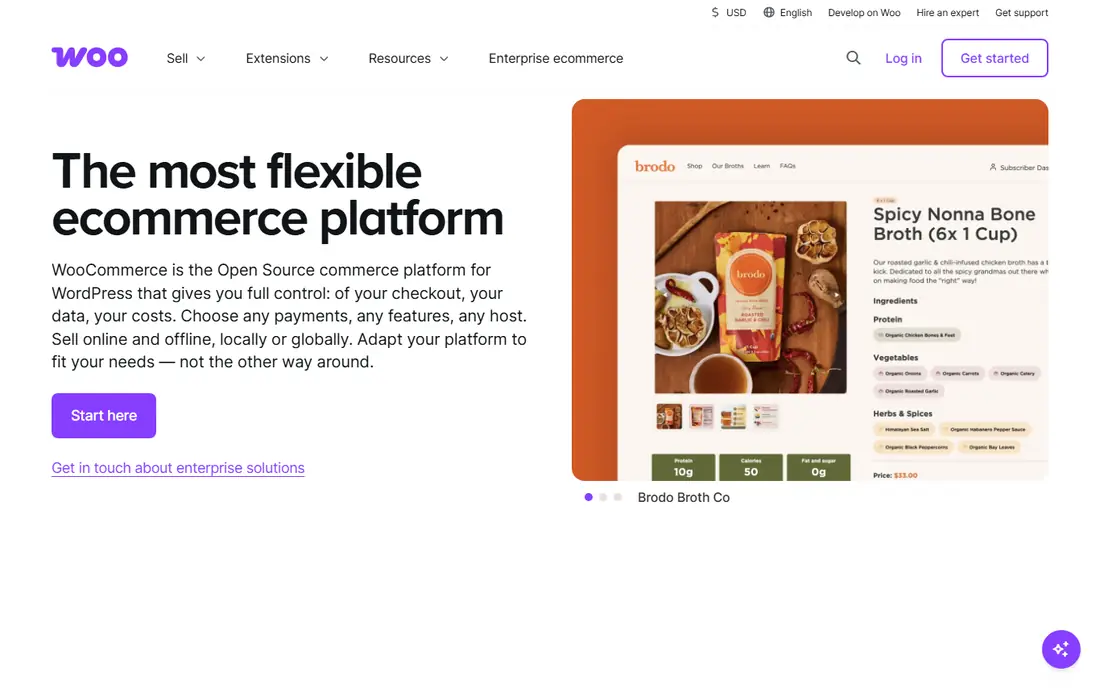
WooCommerce is a free WordPress plugin that turns a WordPress site into a full store. Because it is open source, you own the code and data, and you can customize themes, checkout, product pages and integrations without platform limits. The WordPress blog engine also gives unmatched content and SEO control, which helps stores that depend on organic traffic.
The trade off is responsibility. You pay for hosting, typically $20 to $80 per month for a small to mid size store, plus SSL, security, backups and plugin licences. Updates and compatibility are yours to manage, or you hire a developer. For a team with technical help, or a content led store, WooCommerce offers the most customization per dollar.
- Open source with full code and data ownership
- Huge WordPress plugin ecosystem
- Strong SEO and content control
- You pay for hosting, security and maintenance
- Plugin costs and updates need management
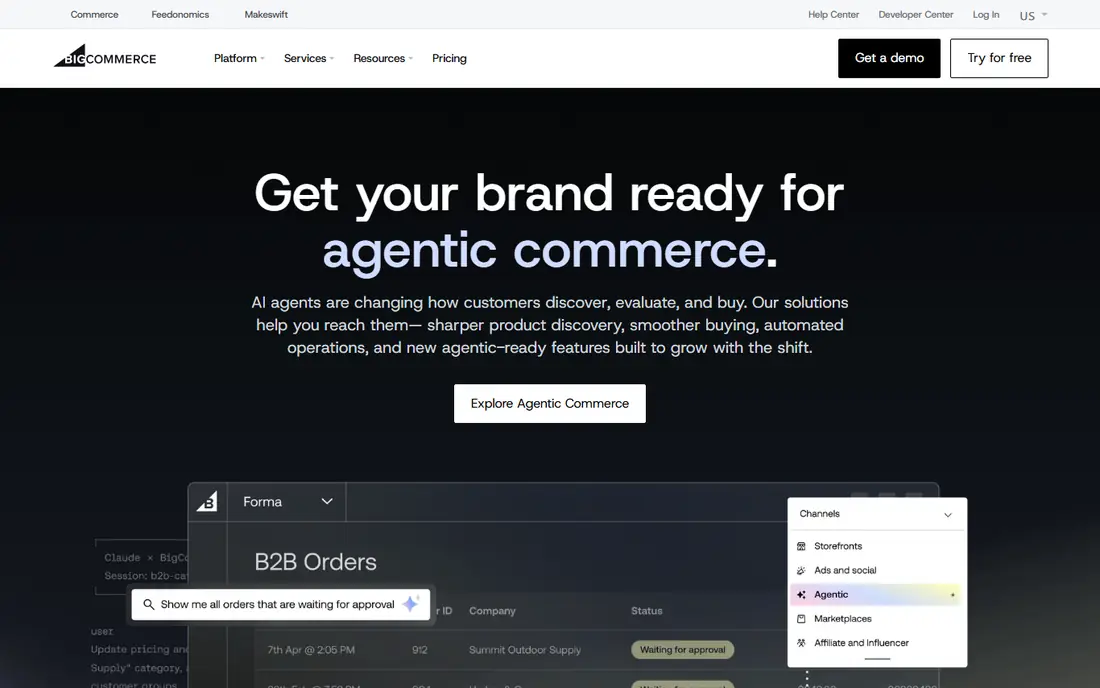
BigCommerce suits mid size stores that want more built in, rather than buying an app for every feature. Product options, discounts, SEO tools, multi storefront and B2B pricing are included on many plans, and there are no platform transaction fees on any plan, only payment gateway fees. That fee model helps high volume sellers.
Customization covers themes, checkout and APIs, with a stencil theme framework for developers. The app marketplace is smaller than Shopify's, but many common needs are already built in. Starting pricing is $39 per month, or $29 per month on annual billing in some guides. Watch the annual sales cap on each plan, because growth can trigger a forced upgrade.
- Strong built in features with no platform transaction fees
- Customizable checkout
- Multi storefront and B2B tools
- App marketplace is smaller than Shopify
- Plan caps by annual sales can force an upgrade
Wix is a good fit for a solo seller or creative who wants a website that also sells, rather than a pure store. The drag and drop editor makes it easy to design product pages, landing pages and a blog without code, and ecommerce plans add payments, shipping and order management. Starting pricing is $17 per month on annual billing for the entry ecommerce plan.
For a large catalog, Wix is less strong than Shopify or BigCommerce, with storage limits and fewer advanced ecommerce apps. Migration away from Wix is also harder than from WooCommerce. If your catalog is small and design matters most, Wix is a fast, low friction choice.
- Easy drag and drop builder
- Good for a site that also needs pages and a blog
- Simple setup
- Limited storage on entry plans
- Weaker for very large catalogs
- Harder to migrate away later
Squarespace produces some of the most polished storefronts in this list, with templates that look professional with little effort. Blogging, email campaigns and scheduling are built in, which suits a brand that sells a focused product range alongside content. Starting pricing is $25 per month for the entry commerce plan in published guides.
Ecommerce depth is the limit. Payment options, advanced shipping, B2B features and app choices are narrower than Shopify or BigCommerce. For a design led brand with fewer than 200 products, Squarespace is a strong pick. For a large or complex catalog, choose a more ecommerce focused platform.
- Beautiful templates and visual editor
- Integrated blogging and email
- Simple store setup
- Limited ecommerce features and payment options
- Smaller app store than Shopify
Adobe Commerce, formerly Magento Commerce, is the enterprise open source option for very large stores. It supports complex catalogs, multiple storefronts, B2B pricing, custom workflows and deep integrations, with a large developer ecosystem. Companies with a dedicated development team can build almost any commerce experience on it.
The cost is scale and complexity. Pricing is quote based, hosting and development are separate, and a small team will find it more platform than it needs. For a large retailer with custom requirements that hosted platforms cannot meet, Adobe Commerce remains the most customizable enterprise choice.
- Formerly Magento, with deep enterprise customization
- Strong B2B and multi store features
- Large developer ecosystem
- Quote based pricing
- Needs developers and hosting for full control
PrestaShop is a free open source ecommerce platform popular in Europe and with smaller retailers who want control without WordPress. You can customize themes, product pages, checkout and shipping, and add modules for payments, marketing and marketplace selling. The software itself is free, which keeps the entry cost low.
As with WooCommerce, you pay for hosting, themes, modules and maintenance, and support comes from the community or paid partners. That makes PrestaShop a good fit for a technically comfortable seller who wants a dedicated store platform, not a WordPress site. For a hosted, low maintenance store, Shopify or BigCommerce will be simpler.
- Free open source software
- Strong product and catalog controls
- Large module marketplace
- Hosting, themes and modules add cost
- Support depends on community or paid partners
Volusion is a hosted platform for US small businesses that want a simple store without a large app ecosystem. Onboarding is straightforward, SEO tools are built in, and pricing starts at $35 per month. That simplicity suits a seller with a focused catalog who wants to launch quickly and manage orders in one dashboard.
The limits are design range, template choice and payment geography. Volusion does not match Shopify on apps, WooCommerce on code control, or Squarespace on design polish. For a budget conscious US seller with basic needs, it is a workable, low cost option, but most growing stores will outgrow it sooner than Shopify or BigCommerce.
- Simple onboarding and built in SEO tools
- Affordable entry for US sellers
- No need for separate hosting
- Limited design and template range
- US only payments in some guides
- No native blogging
How we picked these
We compared official pricing pages, theme and checkout controls, app ecosystems, SEO tools and transaction fee policies in October 2026. We favored platforms with live customization options, whether through themes, code access or APIs, and we included hosted and open source models. We left out website builders with only a basic buy button and no real store management. Prices shown are entry paid plans where published; otherwise we list See website.
How to choose the best platform to build an ecommerce website
Start with your catalog and your team. Count products, variants and sales channels, then ask who will run the store day to day. A non technical founder needs hosted simplicity, while a team with a developer can use WooCommerce, PrestaShop or Adobe Commerce for deeper control. A content led store benefits most from WooCommerce, while a social led store benefits most from Shopify.
Next, model total cost for a year. Add the subscription, payment processing, platform transaction fees, paid apps, themes and hosting. A $29 per month plan with 2 percent transaction fees can cost more than a $39 per month plan with no platform fees once sales grow. Test checkout on mobile, because most customers will buy there, and check shipping, tax and discount rules against your real products.
Finally, test migration and ownership. Ask how you export products, orders and customer data, and what happens to your theme and custom code if you leave. Open source platforms give the most ownership, while hosted platforms give the most convenience. Choose the balance you can live with for three years, not just for launch month.
A note on fees and taxes
Payment processing fees are separate from platform fees, and both vary by plan and provider. Confirm card rates, transaction fees, tax calculation and payout timing before launch. For US sellers, check sales tax handling, and for international sellers, check multi currency and duties support, because those features differ sharply across platforms.
FAQ
What is the best customizable ecommerce platform?
WooCommerce is the most customizable overall, thanks to open source code and the WordPress ecosystem. Shopify is the best hosted customizable platform for most stores, with themes and apps covering most needs. BigCommerce sits between them, with strong built in customization and no platform transaction fees.
What is the best platform to build an ecommerce website for beginners?
Shopify is our pick for beginners, because setup, checkout, payments and support are handled for you. Wix and Squarespace are also easy for small stores, while WooCommerce is better once you have technical help or a content heavy site.
Is WooCommerce really free?
The plugin is free, but a live store is not. You pay for hosting, a domain, SSL, themes and some plugins, typically $20 to $80 per month for a small to mid size store, plus your time for updates and security. That total is still often lower than a hosted plan with many paid apps.
Does Shopify charge transaction fees?
Yes, unless you use Shopify Payments. With Shopify Payments, you pay card processing only. With another gateway, Shopify adds a platform transaction fee on top of gateway fees, with the rate depending on your plan. BigCommerce charges no platform transaction fee on any plan.
Can I switch platforms later?
Yes, but migration takes work. Products, customers and orders can usually be exported, while themes, apps and custom code rarely transfer directly. Choose a platform you can grow with for a few years, and keep regular exports of your product and customer data as a safety net.