Best Custom Apparel Companies in 2026: 8 Companies Compared
Find the best custom apparel companies for team shirts, company merch, and bulk orders, with pricing, minimums, print methods, and quality compared. today.
- Editor's choice
 Custom Ink
Group and company orders
Starts atSee websiteVisit customink.comFull review - Great alternative
 Printful
Print on demand stores
Starts atSee websiteVisit printful.comFull review - Also consider
 Printify
Print on demand choice
Starts atSee websiteVisit printify.comFull review
TL;DR:
- Custom Ink is a strong all rounder for group and company shirts, with free shipping on many orders and a group order tool.
- Printful and Printify suit sellers who want print on demand with no stock, while RushOrderTees suits tight deadlines.
- Bonfire is built for fundraising and supporter orders, since buyers order and pay on a campaign page.
- The cheapest per shirt price usually comes from larger bulk orders, fewer ink colours, and a simpler garment.
- Always order a sample first when colour, fit, or print placement matters, since screens and fabric vary.
Quick comparison
| Tool | Best for | Starts at | Free plan? | |
|---|---|---|---|---|
| Custom Ink | Group and company orders | See website | No | Visit |
| Printful | Print on demand stores | See website | No | Visit |
| Printify | Print on demand choice | See website | No | Visit |
 RushOrderTees | Fast turnaround | See website | No | Visit |
 Bonfire | Fundraising campaigns | From $16 per shirt | No | Visit |
 Vistaprint | Small business branding | See website | No | Visit |
 Spreadshop | Creator merch shops | See website | No | Visit |
 UberPrints | Clear digital and screen options | See website | No | Visit |
The best custom apparel companies
We compared custom apparel companies on order minimums, print methods, garment choice, shipping, design tools, and how well each one fits group orders, company uniforms, or online selling. Prices vary by garment, print method, colours, and quantity, so we list See website where the vendor prices inside a quote or design tool, and we note Bonfire base prices where published.
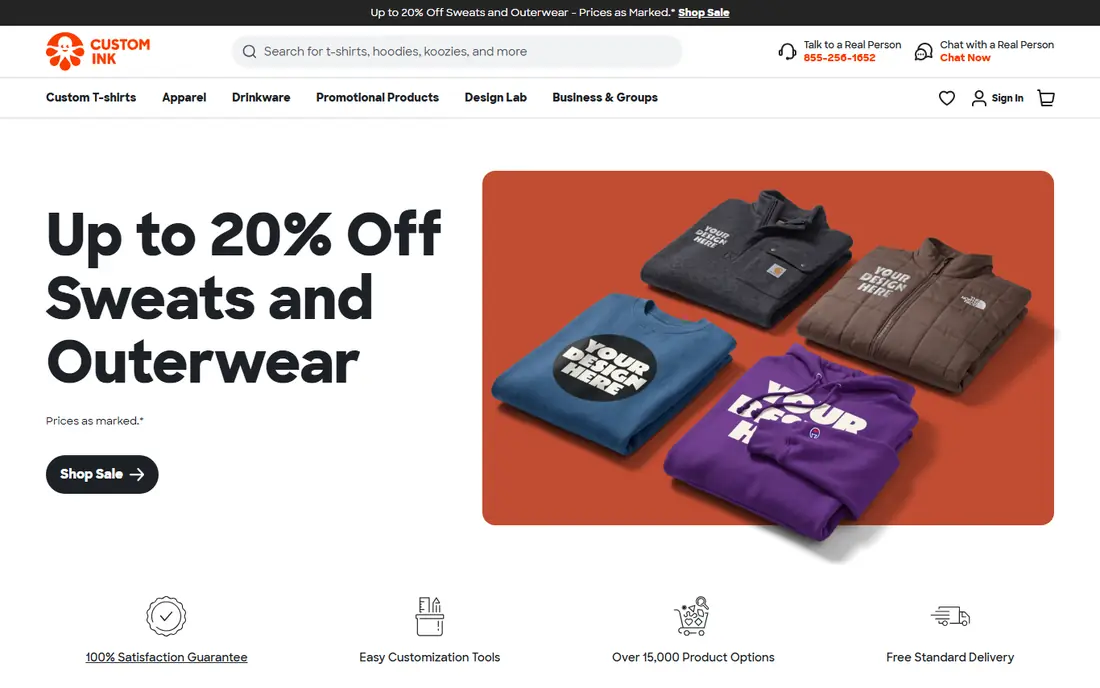
Custom Ink is our pick for most people ordering company shirts or team apparel, because it handles the messy part of group orders well. Organisers can collect sizes and payments through its group order tool instead of chasing spreadsheets, and the site covers screen printing, digital printing, and embroidery. Public pricing guides put typical screen print shirts around 10 to 16 dollars each for orders of 12 to 24, with lower prices at higher quantities.
The catch is that you will not see a final price until you build the design and quantity, and small orders carry a higher per shirt cost. Custom Ink also offers a free fundraising storefront and an online store option for ongoing sales, which helps small launches. Order a sample if exact colour matching matters, and check shipping time before a hard event date.
- Strong group order tool
- Free standard shipping on many orders
- Wide garment and print choice
- Exact price requires a quote
- Small orders cost more per shirt
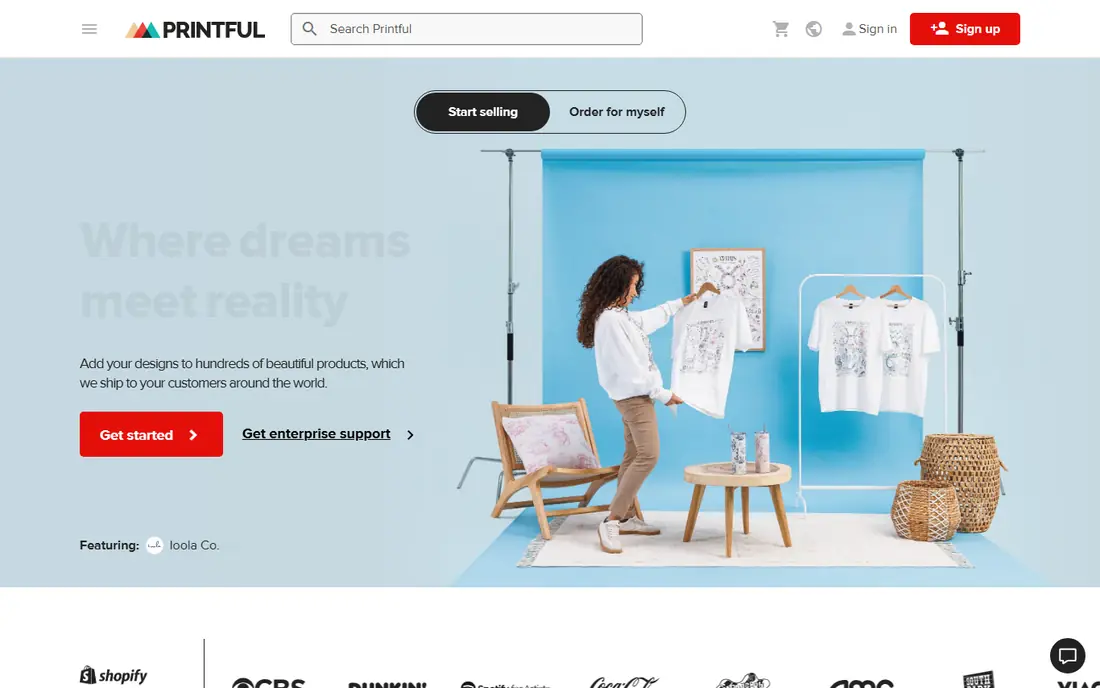
Printful suits sellers who want to sell custom apparel online without holding stock. You connect it to a store on Shopify, Etsy, or a similar platform, upload a design, and Printful prints and ships each order as it arrives. That model removes inventory risk, which is ideal for a new merch brand or a side project that is still testing designs.
The trade off is margin. A single print on demand shirt costs more than a bulk screen printed shirt, and shipping adds up, so pricing your products needs care. Printful describes bulk discounts at higher volumes, which can help once a design sells well. For a one off team order, a bulk printer will usually beat Printful on price, but for ongoing online sales, Printful is far more practical.
- No order minimum
- Integrates with major store platforms
- Global fulfilment network
- Per item cost is higher than bulk printing
- Shipping is paid per order
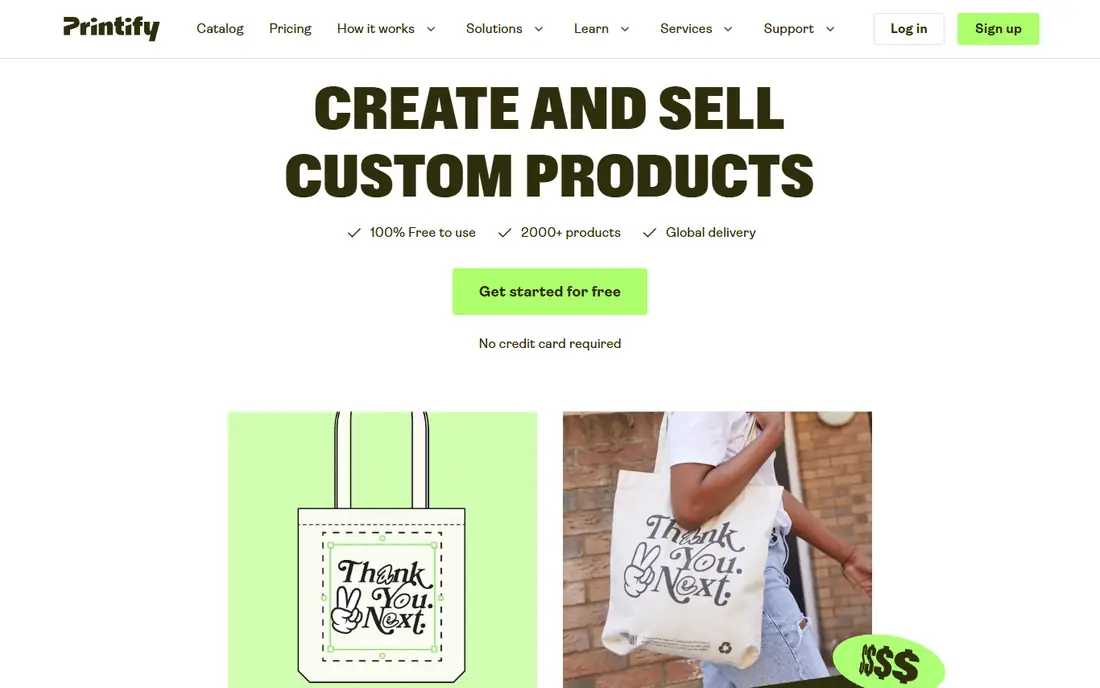
Printify works like a marketplace of print providers, which gives sellers more garment and price options than a single provider model. You can compare providers for the same shirt, check their locations and ratings, and switch if a provider disappoints. That flexibility is useful for sellers who care about a specific garment brand or a faster shipping region.
Flexibility brings responsibility. Print quality and shipping speed can vary between providers, so testing a sample from your chosen provider matters more here than with a single provider service. Printify offers a free plan for basic selling, with paid plans for discounts and extra features. If you want the simplest setup, Printful may feel easier, but if you want choice, Printify is strong.
- Wide choice of print providers and garments
- No minimum order
- Store integrations
- Quality can vary by provider
- You must manage provider choice
RushOrderTees is built around deadlines, which is why it stands out for events, tournaments, and last minute company orders. The site describes no minimum on many printed apparel items, with rush delivery in as little as two business days for printed items, while standard shipping takes longer. That speed is worth paying for when an event date cannot move.
The catch is cost and method. Rush fees raise the total, and embroidered items take longer than printed ones, so check the delivery estimate for your exact product before ordering. RushOrderTees also offers free standard shipping, which helps on larger orders without a deadline. If you have two weeks, a slower printer may save money, but if you have two days, this is the safer bet.
- No minimum on many printed items
- Rush delivery options
- Free standard shipping described
- Rush fees can raise the total
- Embroidery takes longer than printing
Bonfire solves a different problem from bulk printers: collecting orders from supporters without one person handling money and sizes. You create a campaign page, supporters order and pay directly, and Bonfire prints and ships. Base shirt prices are described from around 16 to 25 dollars depending on style, print locations, and ink colours, and sellers set their own selling price above that base.
That model is ideal for fundraisers, clubs, and creator merch drops, but less ideal for a company that needs a fixed uniform with tight colour standards and repeat reorders. Bonfire offers a wide catalogue of shirts, hoodies, hats, and accessories, and a 90 day return policy is described. If your goal is to raise money or sell to a community, Bonfire removes most of the admin work.
- Campaign pages collect orders and payments
- No minimum
- 90 day return policy described
- Base cost varies by garment and print
- Less suited to a fixed company uniform program
Vistaprint is a practical choice for a small business that wants company shirts alongside business cards, signs, and other branded items in one order. The design tool is friendly for non designers, and guides describe single tees from around 10 dollars, with quantity pricing shown inside the tool. That makes it easy to start with one sample before committing to a larger run.
The downside is transparency before you design. Exact quantity pricing is not fully published outside the tool, and shipping can add cost on smaller orders. Vistaprint is best for small businesses that value a single supplier for many branded items, rather than for large bulk screen printing where a specialist bulk printer may beat it on unit price.
- Easy design tool
- Wide branded products beyond apparel
- Single tees available from around 10 dollars in guides
- Quantity pricing sits inside the design tool
- Shipping is extra under some thresholds
Spreadshop, from Spreadshirt, lets creators open a free merch shop and sell shirts, hoodies, and accessories without holding stock. It is simple to use for one shirt with a name or design, and the editor needs no production knowledge. For a creator, streamer, or small community, that low friction setup is the main appeal.
For a company uniform program, Spreadshop is weaker. Colour matching and garment consistency across large repeat orders are harder to control than with a bulk screen printer, and the catalogue is geared to merch rather than workwear. Use Spreadshop when you want to sell designs to fans, and use a bulk printer when you need matching uniforms for staff.
- Free shop setup for creators
- No inventory
- Simple editor for single items
- Weaker fit for uniform programs
- Colour control is less strict than bulk printing
UberPrints stands out for clarity about print methods. Digital printing carries no minimum, which makes it easy to order a single prototype, while screen printing and embroidery each require 12 pieces per design. That clear line helps buyers avoid surprises, and the catalogue can be filtered to show only no minimum products.
The catch is that a colour you want may only be available on the 12 piece side, so check the exact garment and method before finalising a design. UberPrints suits small teams and businesses that want to test a design first, then move to a larger screen print run. It is less well known than Custom Ink, but its method clarity makes it a useful comparison quote.
- Clear minimum rules by method
- Digital printing with no minimum
- Wide garment catalogue
- Screen printing and embroidery need 12 pieces
- Colour availability varies by method
How we picked these
We compared official company sites, pricing guides, and product descriptions for custom apparel providers that serve US buyers. We looked for a mix of bulk group printers, print on demand sellers, fundraising platforms, and small business suppliers, so readers can match a company to group orders, company uniforms, or online selling. We did not claim hands on printing tests, and we treated prices as estimates where vendors price inside a design tool.
We also favoured companies with clear minimums, shipping information, and return policies, since those details affect total cost and risk. A low per shirt price means little if shipping, rush fees, or a poor fit force a reorder.
Buying guide for custom apparel
Screen printing, digital printing, or embroidery
Screen printing suits larger orders with few colours, since the per shirt cost falls as quantity rises. Digital printing suits small orders and full colour designs with no minimum at many printers. Embroidery suits polos, hats, and jackets for a professional company look, but it costs more and takes longer. Choose the method by quantity and garment, not by habit.
How to keep the per shirt cost down
Fewer ink colours, a standard garment, and a larger order all lower the unit price. A simple one colour logo on a standard tee will cost far less than a multi colour design on a premium hoodie. If you are close to a quantity break, ask for the next tier price before cutting the order, since a few extra shirts can lower the unit cost enough to be worth it.
Sizing, samples, and colour
Order a sample in your chosen garment and size before a large run, especially if staff will wear the shirts daily. Check the size chart for each brand, since fits vary, and ask how colours are matched if your logo has a brand colour. A sample costs a little now and can prevent a costly reorder later.
Group orders without the admin headache
For teams and fundraisers, use a group order or campaign tool so each person enters their own size and pays directly. That removes chasing payments and reduces size errors. For company uniforms, keep a simple reorder sheet with garment, colour, print method, and sizes, so repeat orders match the first run.
FAQ
What is the best custom shirt company for a small team?
Custom Ink is a strong choice for small teams because of its group order tool and wide garment choice, while UberPrints is useful for a single prototype with digital printing. Compare both on your exact garment and quantity, since per shirt prices change with colours and method.
What is the best place to order company shirts?
For company shirts in bulk, Custom Ink and RushOrderTees are both practical, with Custom Ink stronger for group collection and RushOrderTees stronger for tight deadlines. Vistaprint suits small businesses that also want other branded items. Always get a quote for your exact design and quantity.
Is print on demand cheaper than bulk printing?
No, print on demand usually costs more per shirt, but it needs no stock and no upfront bulk order. Bulk screen printing is cheaper per shirt at higher quantities. Choose print on demand for online selling and testing, and bulk printing for known quantities such as staff uniforms.
How many shirts do I need for screen printing?
It depends on the printer. Many bulk printers work well from 12 pieces upward, while digital printing often has no minimum. UberPrints, for example, describes 12 pieces for screen printing and embroidery, and no minimum for digital printing. Check the method, not just the company, when you compare minimums.
How long does custom apparel take?
Standard delivery is often around two weeks, with rush options at checkout from printers such as RushOrderTees. Embroidery and large orders take longer. Always check the delivery estimate for your product and quantity, and order a sample early if timing is tight.
Can I sell custom shirts without holding stock?
Yes, with Printful, Printify, Bonfire, or Spreadshop. Printful and Printify connect to an online store and print each order as it arrives, while Bonfire and Spreadshop handle campaign or shop sales. You still need to set prices that cover base cost, shipping, and any platform fees.