Best CTV Advertising Platforms in 2026: 9 Platforms Compared
Compare the best CTV advertising platforms in 2026, from Vibe and MNTN to Roku, Amazon, and The Trade Desk, with minimum spends and honest trade-offs.
- Editor's choice
 Vibe
Small-budget self-serve CTV
Starts at$50 per dayVisit vibe.coFull review - Great alternative
 MNTN
Performance TV with creative bundled
Starts at$5,000 per monthVisit mntn.comFull review - Also consider
 Tatari
Linear plus streaming buying
Starts at$350 per weekVisit tatari.tvFull review
TL;DR:
- Vibe is the easiest entry point for small advertisers, with campaigns starting at $50 per day and no minimum spend requirement.
- MNTN suits performance-focused brands with at least $5,000 per month to spend, and it bundles creative help.
- Roku, Amazon, and Disney sell premium inventory on their own platforms, while The Trade Desk and StackAdapt buy across many services.
- CTV CPMs typically run $15 to $35 for premium inventory, so a real first test usually costs $3,000 to $10,000.
- Attribution claims vary widely, so test with holdouts before trusting any return-on-ad-spend number.
Quick comparison
| Tool | Best for | Starts at | Free plan? | |
|---|---|---|---|---|
| Vibe | Small-budget self-serve CTV | $50 per day | No | Visit |
| MNTN | Performance TV with creative bundled | $5,000 per month | No | Visit |
| Tatari | Linear plus streaming buying | $350 per week | No | Visit |
 Roku Advertising | Reaching Roku viewers | See website | No | Visit |
 Amazon Ads | Shoppers and purchase data | See website | No | Visit |
 Disney Advertising | Premium Hulu and Disney+ inventory | See website | No | Visit |
 The Trade Desk | Programmatic buying at scale | See website | No | Visit |
 StackAdapt | Multi-channel programmatic teams | See website | No | Visit |
 Simpli.fi | Local and regional targeting | See website | No | Visit |
The best ctv advertising platforms
Connected TV advertising puts your video ad on the big screen inside streaming apps, and in 2026 it is open to far smaller budgets than traditional TV ever was. The platforms below fall into three groups: self-serve tools for small advertisers, publisher platforms that sell their own inventory, and programmatic platforms that buy across many services. We compared minimum spends, inventory, targeting, and measurement to shortlist nine.

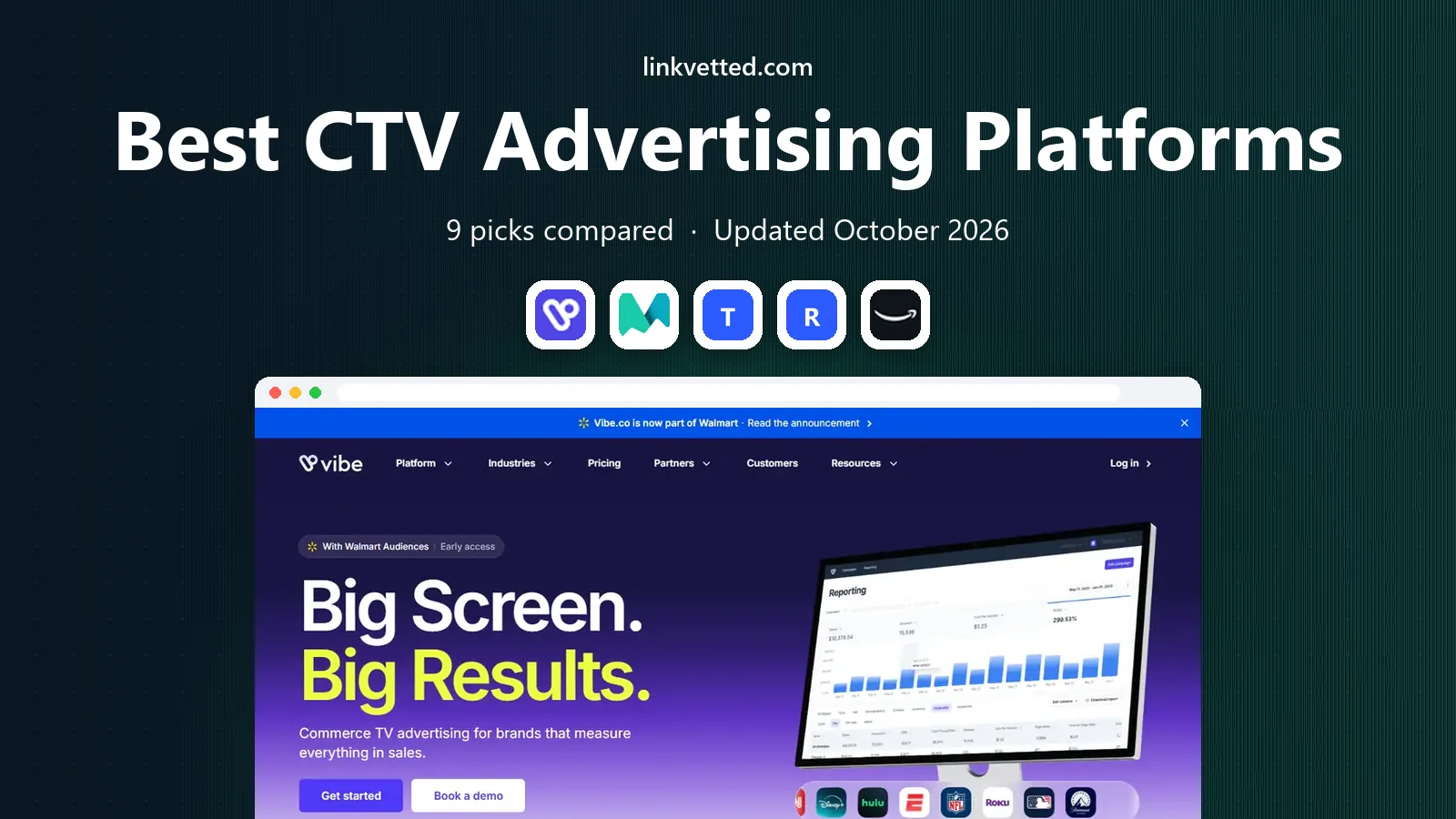
Vibe is our pick for a first CTV test. Its pricing page starts at $50 per day, with no platform or seat fees, and its help center sets a $50 minimum budget per strategy. Inventory spans more than 500 channels and apps, and Vibe Studio can build a TV ad from a website address at no cost. That combination removes the two biggest barriers for small advertisers: budget and creative.
The catch is that cheap entry does not guarantee cheap results. Premium targeted inventory runs $15 to $35 CPM, and narrow audiences can cost more. Budget $3,000 to $10,000 for a real test, and set up conversion tracking before launch so you can read the results.
- $50 per day starting point
- No minimum spend requirement
- Free AI creative tool
- CPMs rise for targeted inventory
- Smaller brands still need strong creative
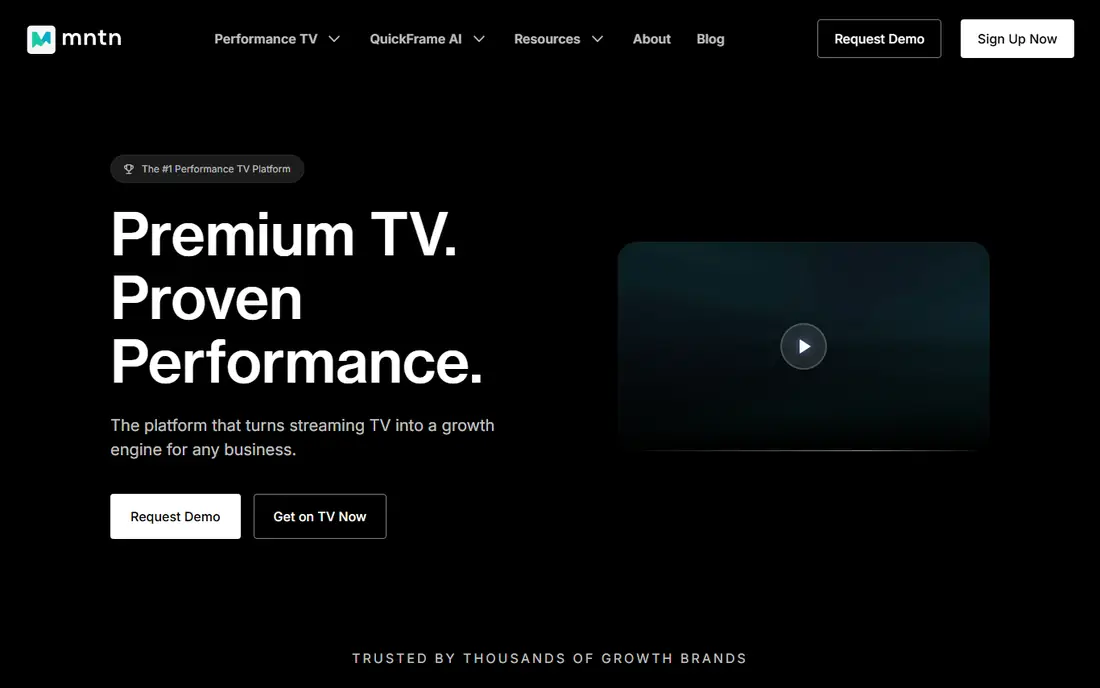
MNTN is built for brands that want TV to perform like digital advertising, with measurement tied to site visits and conversions. Its minimum budget is $5,000 per month, and creative help is part of the package, which suits teams without a video department. Retargeting tools let you reach site visitors on TV, which is a strong starting audience.
The downside is the floor. At $5,000 per month, MNTN is a commitment, not a weekend test. Brands that can sustain that spend and give the platform time to learn will get more from it than brands looking for a quick experiment.
- Performance-focused reporting
- Creative support bundled
- Retargeting and prospecting tools
- $5,000 monthly minimum prices out small testers
- Best results need sustained spend
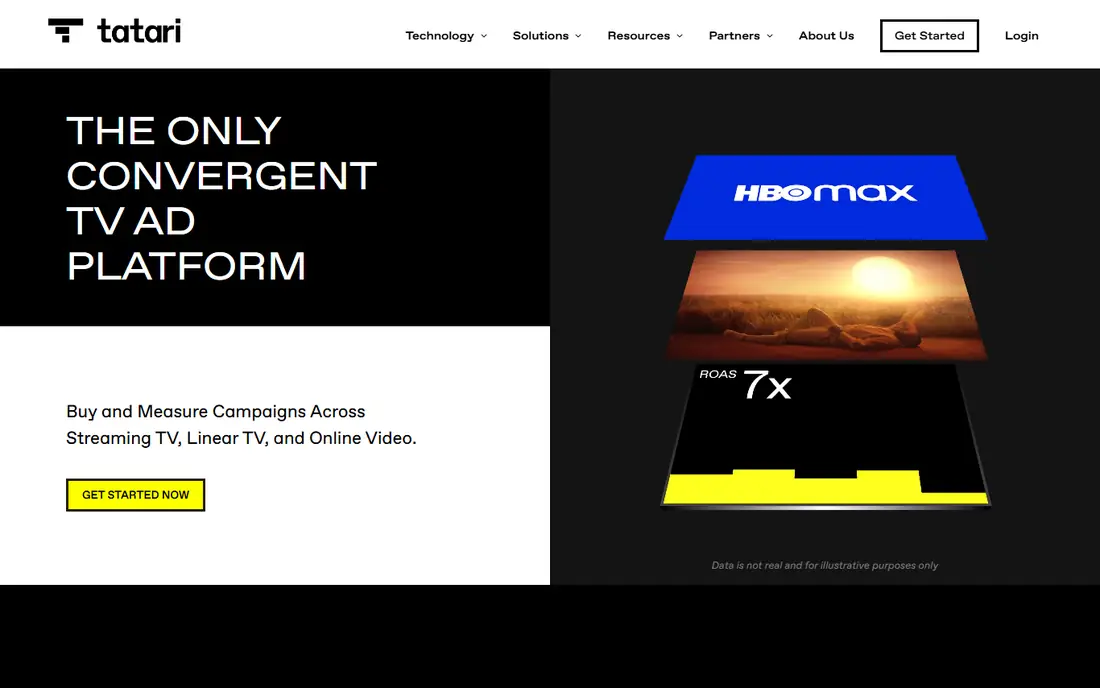
Tatari is unusual because it buys both traditional linear TV and streaming TV in one platform. Self-serve retargeting starts at $350 per week, which makes it accessible for brands with warm audiences, while prospecting starts higher at $5,000 per week. That mix suits brands that want TV reach beyond streaming alone.
The honest catch is complexity. Linear buying involves schedules, networks, and lead times that streaming buyers may not expect. If you only need streaming, a simpler platform may serve you better.
- Buys linear and streaming together
- Self-serve retargeting from $350 per week
- Measurement tools
- Prospecting costs more at $5,000 per week
- Linear buying adds complexity
Roku is the largest single streaming platform by active accounts in the United States, and buying through Roku Ads Manager puts your ad in front of that concentrated audience. First-party viewing data gives targeting that third-party platforms cannot copy, and the self-serve tool has a practical starting point around $500 per campaign in third-party comparisons.
The limitation is scope. You are buying Roku inventory, not the whole streaming market. Brands that want one platform for every service should pair Roku with a programmatic tool or a broad self-serve platform such as Vibe.
- Huge US streaming audience
- First-party viewing data
- Self-serve Ads Manager
- Inventory is limited to Roku and partner apps
- No cross-platform buying in one account
Amazon Ads brings something no other CTV platform can: shopping behavior. Its DSP can target based on what people buy and measure whether TV exposure leads to purchases, and Prime Video adds premium inventory. For brands that sell on Amazon, that closed loop is powerful.
The catch is cost and fit. Amazon DSP self-serve minimums are reported around $10,000 per month, with managed service higher, so small brands should use simpler streaming options or Amazon's sponsored formats first. If Amazon sales are not your goal, the data advantage shrinks.
- Purchase data for targeting and measurement
- Prime Video inventory
- Sponsored and DSP options
- Self-serve DSP minimums are high
- Best value for brands already selling on Amazon
Disney Advertising sells inventory across Hulu, Disney+, and ESPN, which is some of the most brand-safe streaming inventory available. Campaign Manager tools let smaller advertisers buy self-serve, with third-party comparisons putting practical campaign starts around $500. For brands that care about premium content adjacency, Disney is hard to beat.
The downside is price. Premium inventory costs more per impression than open-exchange CTV, so cost per outcome can be higher even when the audience quality is better. Test Disney against a cheaper platform before committing a large budget.
- Premium Hulu, Disney+, and ESPN inventory
- Strong brand-safe environment
- Self-serve tools
- Premium pricing
- Minimums suit mid-sized and larger brands
The Trade Desk is the leading independent demand-side platform, and it buys CTV inventory across many publishers, exchanges, and private marketplaces. Agencies and large brands value its targeting, frequency controls, and measurement tools, plus its independence from any single media owner.
The catch is that it is an enterprise tool. Minimums and complexity put it out of reach for most small advertisers, and it works best with experienced media buyers or an agency. If you spend enough to justify it, the control is unmatched. If not, start with a self-serve platform.
- Independent DSP with broad inventory
- Advanced targeting and frequency controls
- Strong measurement
- Enterprise minimums around $10,000 per month in third-party comparisons
- Steep learning curve
StackAdapt suits teams that want CTV alongside display, native, and video in a single programmatic platform. That matters for mid-sized agencies running full-funnel campaigns, since one account can cover prospecting, retargeting, and brand work. Its interface is friendlier than some enterprise DSPs.
The trade-off is focus. StackAdapt is not a TV specialist like MNTN or Tatari, so its CTV measurement and creative tools are less tailored. Teams whose main goal is TV performance may prefer a specialist, while multi-channel teams will value the breadth.
- CTV plus display, video, and native in one platform
- Good for mid-sized agencies
- Flexible buying
- Pricing is custom
- CTV is one channel among many, not a TV specialist
Simpli.fi is a strong pick for local and regional advertisers, such as multi-location businesses that want to target specific ZIP codes or trade areas. It combines CTV with display and other programmatic formats, and its platform is built for agencies managing many local clients.
The downside is access. Simpli.fi pricing is custom, and the platform leans toward managed and agency use rather than a $50-per-day self-serve signup. Local brands that work with an agency will get the most from it.
- Strong local targeting with ZIP and addressable options
- CTV plus display
- Agency-friendly
- Pricing is custom and managed
- Less suited to pure self-serve small advertisers
How we picked these
We compared official pricing pages, help centers, and independent platform comparisons for CTV advertising in 2026. We included self-serve platforms, publisher platforms, and programmatic DSPs, and we favored platforms with published or widely reported minimum spends so readers can judge entry cost honestly. Where pricing is custom, we say so rather than inventing a figure.
How to run your first CTV campaign
A good first campaign is a test, not a bet. Plan it that way and you will learn something useful even if the first results are modest.
Start with retargeting
If you have a warm audience of site visitors or past customers, start there. Retargeting proves the channel faster because the audience already knows your brand, and it needs a smaller budget to produce readable results. Move to prospecting once retargeting works.
Budget for a real test
A $500 spend spread too thin teaches you nothing. At $15 to $35 CPM, a useful test needs enough impressions to reach your audience several times and produce conversion events. Plan $3,000 to $10,000 over four weeks, and resist the urge to judge results in the first few days.
Get creative right
A weak 30-second spot will fail on every platform, while a strong one can work on the cheapest. Keep the message simple, show the product early, and end with a clear next step. If you have no video, use a free creative tool such as Vibe Studio or start with a simple slideshow-style ad before paying for production.
Measure with holdouts
Every platform promises attribution, but attribution models can flatter the channel. Hold out a similar audience from CTV exposure and compare conversions between the two groups. That incrementality check is the most honest way to judge whether CTV is earning its budget.
FAQ
What is the best CTV advertising platform?
For small advertisers, Vibe is the best starting point at $50 per day. For performance-focused brands with larger budgets, MNTN is a strong pick. Large brands and agencies usually do better with The Trade Desk, Amazon DSP, or a publisher platform such as Roku or Disney.
What are the best platforms for CTV advertising on a small budget?
Vibe, Roku Ads Manager, and Disney Campaign Manager offer the lowest practical entry points, with Vibe starting at $50 per day. A realistic first test still costs $3,000 to $10,000 once CPMs and frequency are counted.
How much does CTV advertising cost?
Premium streaming CPMs typically run $15 to $35, with targeted inventory reaching $40 to $65. Platform minimums range from $50 per day on Vibe to $5,000 per month on MNTN and around $10,000 per month on enterprise DSPs.
Is CTV advertising better than social media advertising?
It depends on the goal. CTV puts a full-screen video in front of viewers on a TV, which suits brand and consideration goals. Social ads are usually cheaper per click and better for direct response. Many brands run both and compare cost per outcome.
Do I need a video ad to run CTV campaigns?
Yes, you need video creative, but it does not have to be expensive. Platforms such as Vibe offer free AI creative tools that build a TV ad from a website address, and a simple, clear spot often beats a polished ad with a weak message.
How do I measure CTV advertising results?
Use platform pixels and attribution windows, then check results with a holdout test that compares exposed and unexposed audiences. Track site visits, conversions, and cost per outcome, not just impressions or completion rates.