Best CTV Advertising Measurement Companies in 2026: 8 Compared
Best CTV advertising measurement companies for 2026, compared for reach, outcomes, verification, attention and cross-platform reporting for media buyers.
- Editor's choice
 Nielsen
Cross-platform reach currency
Starts atSee websiteVisit nielsen.comFull review - Great alternative
 Innovid
Creative and outcome measurement
Starts atSee websiteVisit innovid.comFull review - Also consider
 VideoAmp
Unified TV and digital measurement
Starts atSee websiteVisit videoamp.comFull review
TL;DR:
- Nielsen ONE remains the reference point for deduplicated reach across linear TV, streaming and connected TV.
- Innovid suits advertisers who need creative, reach and outcome measurement in one workflow.
- DoubleVerify and Integral Ad Science are the strongest choices when fraud, viewability and brand safety come first.
- VideoAmp and iSpot suit buyers who want faster, currency-style reporting across TV and digital video.
- No single vendor covers every need, so shortlist by your main question: reach, outcomes, verification or attention.
Quick comparison
| Tool | Best for | Starts at | Free plan? | |
|---|---|---|---|---|
| Nielsen | Cross-platform reach currency | See website | No | Visit |
| Innovid | Creative and outcome measurement | See website | No | Visit |
| VideoAmp | Unified TV and digital measurement | See website | No | Visit |
 iSpot | Real-time ad airing measurement | See website | No | Visit |
 Comscore | Cross-platform audience data | See website | No | Visit |
 DoubleVerify | CTV verification and fraud control | See website | No | Visit |
 Integral Ad Science | Viewability and brand safety | See website | No | Visit |
 Samba TV | TV viewing data and identity | See website | No | Visit |
The best ctv advertising measurement companies
Connected TV measurement answers different questions for different buyers. A brand team may care about incremental reach, a performance team about sales outcomes, and an agency about clean delivery and fraud control. The companies below cover those angles, and each has a distinct strength. Pricing is almost always custom, so treat the comparison as a shortlist guide, not a price ranking.
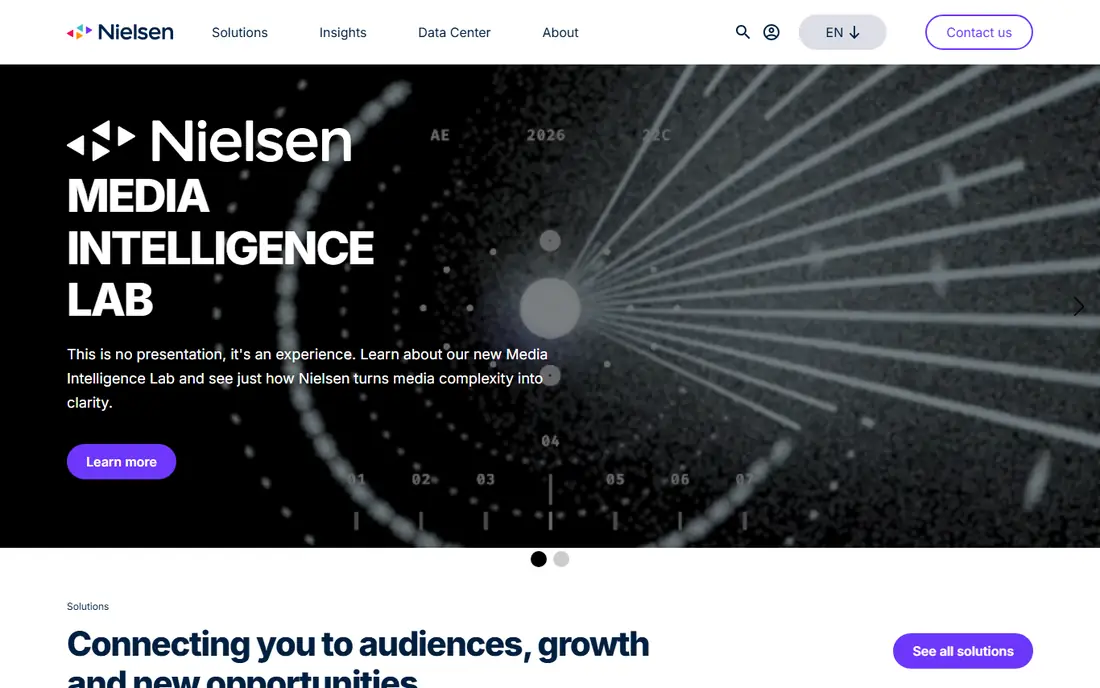
Nielsen is the incumbent that other vendors are measured against. Nielsen ONE aims to give one deduplicated view of reach and frequency across linear TV, connected TV and digital video, which helps buyers avoid counting the same household twice. That consistency is why it remains central to many media deals.
The trade-off is pace and cost. Nielsen is built for planning and settlement at scale, not for minute-by-minute optimisation by a small team. Smaller advertisers may find the contract model heavy, and should ask early about minimums, data access and reporting speed. For large TV budgets, though, it is still the default starting point.
- Nielsen ONE deduplicated reach across TV and streaming
- Large panel plus big data inputs
- Widely used in media negotiations
- Enterprise pricing and contracts
- Reporting can be slower than real-time tools
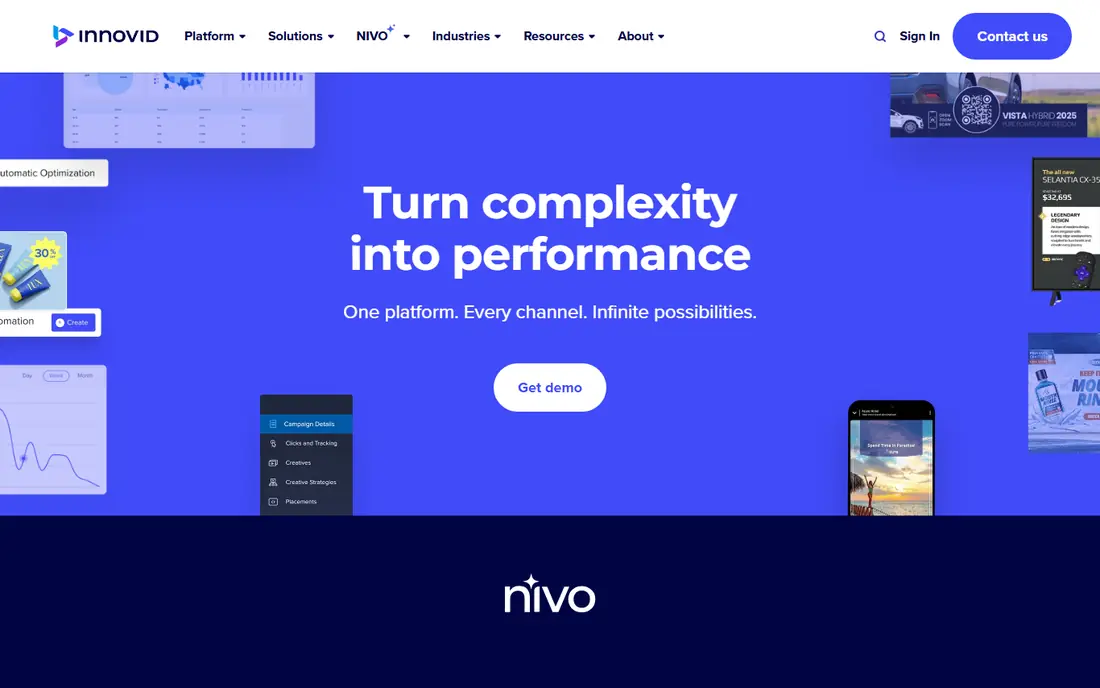
Innovid combines ad serving with measurement, which gives it a practical edge: the same system that delivers an interactive or personalised creative can report on reach, frequency and outcomes. Its acquisition of TVSquared added cross-platform attribution, so buyers can link TV exposure to site visits and sales signals.
That breadth means onboarding takes planning, especially if you use a separate ad server today. Ask how Innovid will sit alongside your existing stack before signing. For brands that run varied CTV creative and want one reporting view, the integration is worth the setup effort.
- Ad serving, creative and measurement in one platform
- Cross-platform reach and frequency
- Outcome and attribution tools
- Broad platform can be complex to set up
- Pricing depends on volume and modules
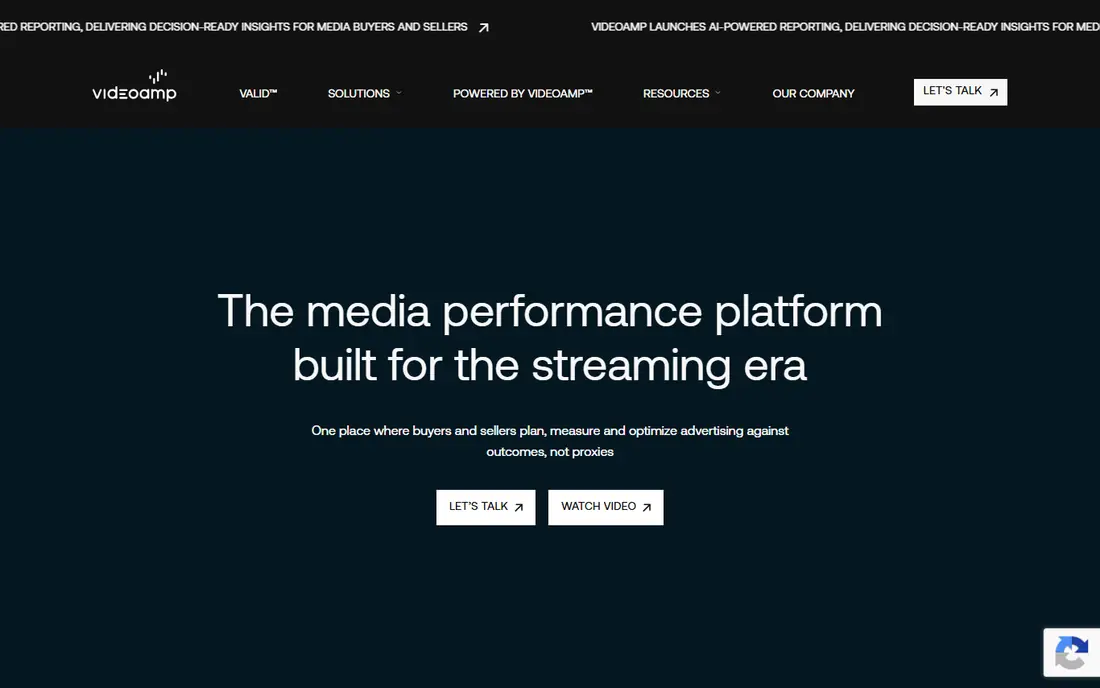
VideoAmp positions itself as an alternative currency for TV, with a platform that plans, measures and optimises across linear and streaming. Agencies use it to compare publishers on a common basis and to shift budget during a campaign. That workflow suits buyers who manage large, multi-channel video budgets.
Smaller advertisers may find the platform more than they need, and the commercial terms are negotiated rather than published. If your main need is simple post-campaign verification, a lighter vendor may fit better. If you need a shared measurement basis across partners, VideoAmp belongs on the shortlist.
- Unified linear, CTV and digital reporting
- Currency-style planning and optimisation
- Strong agency adoption
- Enterprise focus
- Data licensing terms need careful review
iSpot is known for detecting when and where TV ads air, then tying those airings to audience and outcome data. That speed helps buyers spot under-delivery early and move impressions before a campaign ends. Creative-level reporting also shows which version of an ad drove stronger response.
The toolset is strongest for TV and CTV buyers who think in terms of spots and flights. Digital-only teams may use only part of the platform. Confirm coverage for your publishers and apps, since measurement quality depends on detection across the services you buy.
- Fast detection of ad airings
- Audience estimates tied to creative
- Attention and outcome metrics
- Focus is TV-centric
- Creative-level reporting needs good tagging
Comscore offers cross-platform measurement that links CTV impressions to audience profiles, helping planners understand who saw an ad beyond a raw impression count. Its panel and data partnerships support demographic reporting and campaign evaluation across screens.
Buyers should ask for a clear product map, since Comscore sells several measurement products under similar names. Pin down whether you need audience measurement, campaign verification or both. For planners who need audience composition alongside reach, it remains a serious option.
- Cross-platform audience measurement
- Demographic and behavioural profiles
- Long history in media research
- Product lines can be confusing to compare
- Enterprise contracts
DoubleVerify answers a different question from Nielsen or VideoAmp: was the ad shown to a real person, in a viewable placement, in a safe context. Its CTV tools cover invalid traffic, viewability, brand safety and attention signals, with pre-bid filters that block poor inventory before money is spent.
That focus means DoubleVerify works best alongside a reach or outcome vendor, not instead of one. Integration with your demand-side platform matters, so check supported partners early. For any CTV budget where fraud risk is a concern, verification should be a baseline, not an optional extra.
- Fraud and invalid traffic detection for CTV
- Viewability and brand safety controls
- Pre-bid and post-bid tools
- Verification is not a full reach currency
- Needs integration with your buying platform
Integral Ad Science, often shortened to IAS, provides a parallel verification layer for CTV and digital video. It measures whether ads were viewable, whether traffic was valid and whether placements met brand safety settings, and it adds attention metrics for quality comparison. Broad integrations make it easy to add to existing campaigns.
The honest limit is the same as for any verification vendor: clean delivery does not by itself prove business impact. Pair IAS with an outcome or reach tool when you need to show sales or incremental reach. As a quality control layer, it is a strong, widely adopted choice.
- Viewability, fraud and brand safety measurement
- Attention and quality metrics
- Broad platform integrations
- Like DoubleVerify, it is verification rather than currency
- Reporting depth varies by publisher
Samba TV collects viewing data from smart TVs using automatic content recognition, which detects what is playing on screen. That data supports ad exposure measurement, audience segments and cross-screen identity through its SambaID product. Partners also use it for brand lift studies with survey providers.
Because the data comes through TV manufacturers and partners, access and terms vary. Buyers should review privacy practices, consent methods and geographic coverage before relying on it. For advertisers who need TV-first exposure data at scale, Samba TV offers a distinct and useful source.
- Automatic content recognition across smart TVs
- Large TV data footprint
- Identity tools for cross-screen measurement
- Data access is partner-based
- Privacy and consent rules need review
How we picked these
We compared vendor product pages, public case material and industry coverage, focusing on companies with current CTV measurement products in 2026. We favoured vendors with distinct roles, such as reach currency, outcome measurement, verification and TV data, rather than listing near-identical tools. We also checked that each company still operates as an independent measurement provider and serves advertisers directly or through agencies.
How to choose a CTV measurement partner
Start with the decision you need to make. If you negotiate media on reach, shortlist Nielsen, VideoAmp and Comscore. If you optimise creative and sales outcomes, look at Innovid and iSpot. If your budget is at risk from fraud or poor placements, add DoubleVerify or IAS before you scale spend. Many large buyers use two vendors: one for reach or outcomes, and one for verification.
Next, test coverage and integration. Ask each vendor which publishers, apps and buying platforms it covers, how fast reporting arrives, and whether data can flow into your existing dashboards. A vendor that cannot measure your main publisher is a poor fit, however strong its pitch. Finally, agree on success measures in advance, such as deduplicated reach, cost per incremental household or verified viewable impressions, so post-campaign reports answer a real question.
FAQ
What does CTV measurement actually measure?
It can measure reach, frequency, viewability, fraud, attention, brand lift and business outcomes, depending on the vendor. Reach tools count unique households, verification tools check delivery quality, and outcome tools link exposure to actions such as visits or sales.
Is Nielsen still the standard for CTV measurement?
Nielsen remains a widely used reference for cross-platform reach, but it is no longer the only currency. VideoAmp, iSpot and Comscore are used by agencies and brands as well, often alongside Nielsen for different decisions.
Do I need both a measurement vendor and a verification vendor?
Many buyers do. A reach or outcome vendor shows impact, while a verification vendor such as DoubleVerify or IAS checks that impressions were real, viewable and brand-safe. The two roles complement each other.
How much does CTV measurement cost?
Pricing is usually custom and based on media volume, data access and modules. Small campaigns may use publisher reporting and a verification tool, while large campaigns negotiate enterprise contracts with a currency vendor.
What is deduplicated reach?
Deduplicated reach counts each household once, even if it saw an ad on linear TV, CTV and mobile. Without deduplication, adding channel reports together overstates how many people a campaign reached.
How do I check a CTV vendor's data quality?
Ask about panel size, data sources, publisher coverage, accreditation, privacy practices and reporting speed. Run a small test campaign with clear success measures before committing a full budget.