Best Continuous Delivery Software in 2026: 8 Tools Compared
Compare the best continuous delivery software in 2026, from GitHub Actions and GitLab to Argo CD and Harness, with pricing, strengths and honest limits.
- Editor's choice
 Jenkins
Self-hosted flexibility
Starts atFreeVisit jenkins.ioFull review - Great alternative
 GitHub Actions
GitHub teams
Starts atFreeVisit github.comFull review - Also consider
 GitLab CI/CD
All-in-one DevOps
Starts atFreeVisit about.gitlab.comFull review
TL;DR:
- GitHub Actions and GitLab CI/CD are the easiest starting points, because delivery lives next to the code and the issue tracker.
- Jenkins remains the most flexible self-hosted option, but you pay for that flexibility with maintenance work.
- Argo CD and Spinnaker are the strongest choices for Kubernetes and multi-cloud delivery, rather than general-purpose CI.
- CircleCI, Octopus Deploy and Harness suit teams that need speed, release orchestration or enterprise controls, and each prices differently.
- Delivery safety matters more than delivery speed, so rollback, approvals and audit trails should be part of your shortlist criteria.
Quick comparison
| Tool | Best for | Starts at | Free plan? | |
|---|---|---|---|---|
| Jenkins | Self-hosted flexibility | Free | Yes | Visit |
| GitHub Actions | GitHub teams | Free | Yes | Visit |
| GitLab CI/CD | All-in-one DevOps | Free | Yes | Visit |
 CircleCI | Fast cloud builds | $15 per month | Yes | Visit |
 Argo CD | Kubernetes delivery | Free | Yes | Visit |
 Spinnaker | Multi-cloud releases | Free | Yes | Visit |
 Octopus Deploy | Release orchestration | See website | Free trial | Visit |
 Harness | Enterprise delivery platform | See website | Free trial | Visit |
The best continuous delivery software
Continuous delivery software takes code that has passed tests and gets it to production in a controlled, repeatable way. We compared official feature pages, pricing pages and documentation, and we kept tools that are actively maintained in October 2026. Note that some tools here also do continuous integration, while others focus only on delivery, so we note that difference for each one.
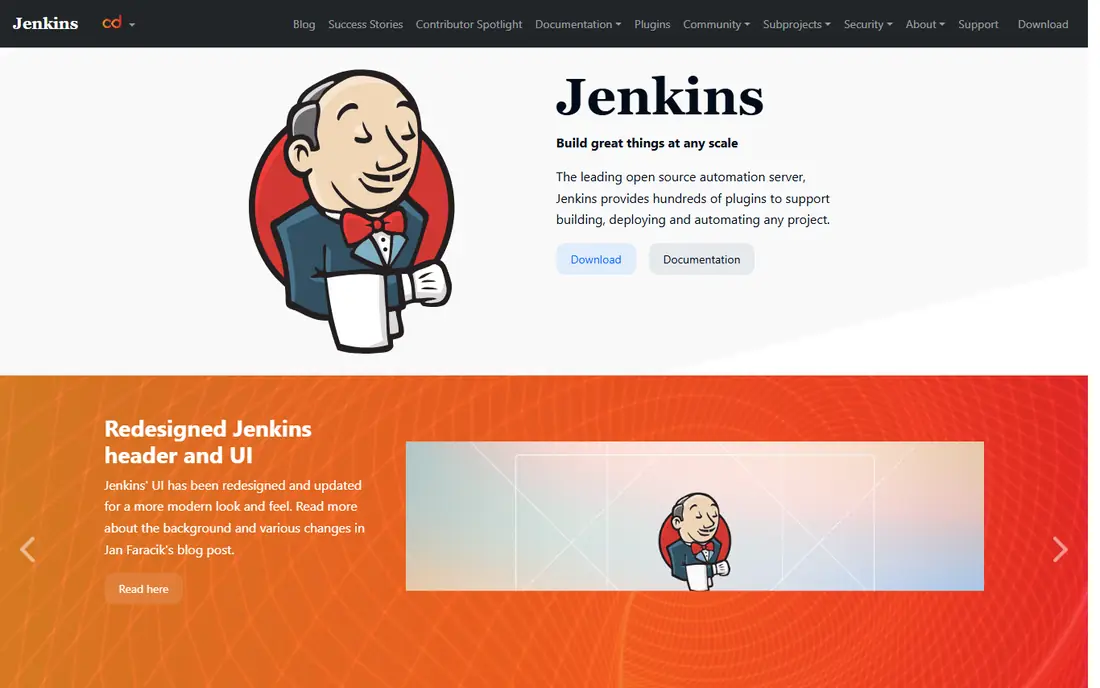
Jenkins is the long-running open source automation server that many teams still use to build, test and deploy software. Its plugin library covers almost every tool you might connect to, and because you host it yourself, you control the network, the agents and the data. That control is valuable for regulated teams and for teams with strict network rules.
The cost is staff time. Upgrades, plugin compatibility, backups and security patches are your job, and a poorly maintained Jenkins server can become a bottleneck. If you have platform engineering time and you need full control, Jenkins is hard to beat on price. If you do not, a managed service will save you more time than it costs.
- Free and open source
- Huge plugin library
- Runs anywhere, including on-premises and air-gapped networks
- You maintain upgrades, security and plugins
- Interface feels dated
- Scaling needs careful design
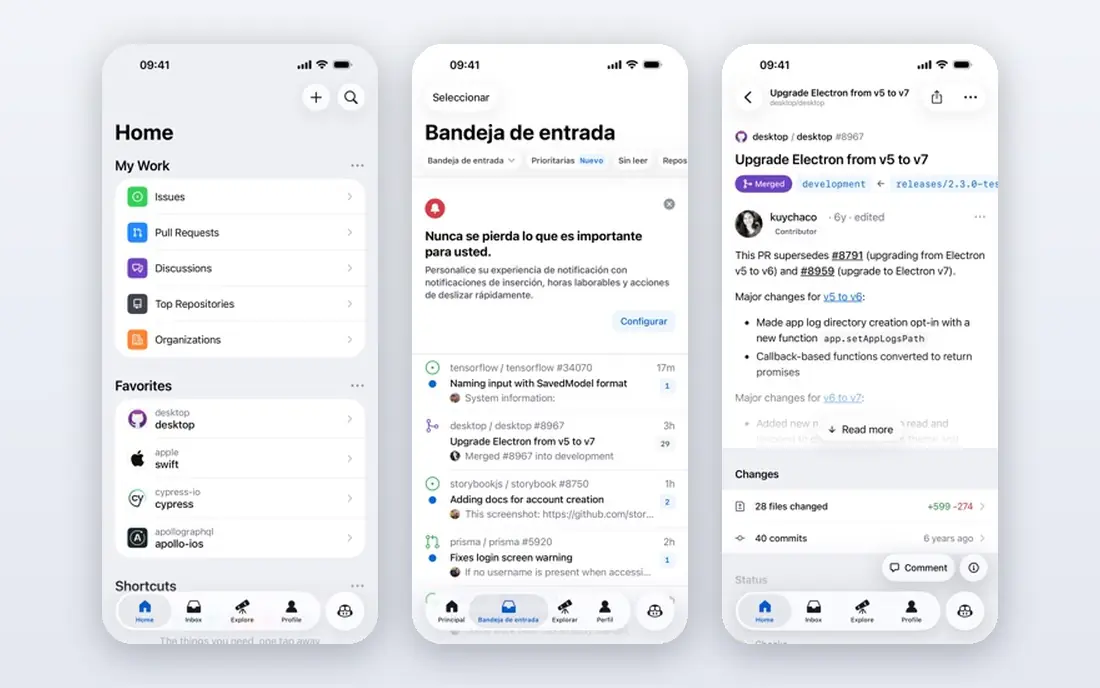
GitHub Actions is the natural choice when your code already lives on GitHub. Workflows run on pull requests, pushes and releases, and the marketplace offers reusable actions for most common tasks, from setting up a language to deploying to a cloud. For public repositories, hosted runners are free, and private repositories include free minutes, with usage-based billing after that.
The main watch-out is cost at scale. Larger runners, macOS runners and long test suites can add up quickly, so you should set spending limits and consider self-hosted runners for heavy workloads. It is also, by design, a GitHub product, so teams that move code elsewhere will need a new delivery tool as well.
- Built into GitHub
- Large marketplace of reusable actions
- Free minutes for public repos and a free tier for private repos
- Costs rise with large runner usage
- Complex workflows can be hard to debug
- Tied to GitHub hosting

GitLab CI/CD is part of a single DevOps platform, which means your pipelines, issues, merge requests, container registry and security scans live in one place. That reduces the number of tools you have to connect and audit. It also offers environments, review apps and deployment approvals, which help teams ship in a controlled way without bolting on extra products.
The free tier includes 400 compute minutes per month on shared runners, which is low for an active team, so most teams will need a paid tier or self-hosted runners. Premium is listed at $29 per user per month and includes 10,000 minutes, which is a clearer budget for a growing team. If you already use GitLab for code, the delivery side is an easy win.
- CI, delivery, security scanning and issue tracking in one app
- Strong self-hosting option
- Environments and review apps built in
- Free tier compute minutes are limited
- Interface can feel slower than lighter tools
- Premium at $29 per user per month adds up for large teams
CircleCI focuses on speed. Its cloud runners, caching and test splitting help large suites finish faster, and its orbs package common configuration into reusable pieces, so teams do not rewrite the same setup for every repository. The free tier includes credits each month, and the Performance plan starts at $15 per month with additional credits on top.
Credit-based pricing needs modelling. A suite that runs on every pull request, with parallel jobs and larger resource classes, will consume credits faster than a simple build. Run your real suite on the free tier first, watch credit use for a month, and then decide which plan fits. For teams where waiting on builds costs engineer time, that speed is often worth the bill.
- Fast cloud builds with good caching
- Reusable orbs for common setups
- Credit-based pricing that scales with use
- Credit costs can surprise teams with large suites
- MacOS and larger resource classes cost more credits
- Less of an all-in-one platform than GitLab
Argo CD is a delivery tool for Kubernetes that follows the GitOps model. You declare the desired state in Git, and Argo CD keeps the cluster synced to that state, shows drift when something changes by hand, and lets you roll back to a previous Git state. That visibility is its strength, because you can see exactly what is running and why.
It is not a general CI tool. You still need something to build and test code, and to push images, before Argo CD deploys them. It also assumes you run Kubernetes, so it is a poor fit for teams that deploy to virtual machines or serverless platforms without Kubernetes. For Kubernetes teams, though, it is a clear and well-supported choice.
- Free and open source
- GitOps model keeps clusters in sync with Git
- Clear view of what is deployed and what drifted
- Kubernetes only
- Needs a cluster and GitOps knowledge
- Not a CI tool, so you still need a build step
Spinnaker was built for multi-cloud delivery at scale, and it still stands out for release strategies. It supports canary releases, where a new version goes to a small share of traffic first, and blue-green releases, where you switch traffic once the new version is ready. Those strategies reduce the risk of a bad release, which matters more as traffic and revenue grow.
The price is operational complexity. Installing, upgrading and running Spinnaker takes real platform work, and smaller teams may find it heavy for a single service. Choose it when you deploy across clouds or regions and you need those release strategies as a core feature, not as an add-on.
- Free and open source
- Multi-cloud deployment strategies
- Canary and blue-green releases built in
- Complex to install and operate
- Interface is dated
- Overkill for a single small service
Octopus Deploy focuses on the release side of the pipeline, which is taking a built package and promoting it through environments with approvals, variables and audit trails. Its dashboards make it easy to see which version is in each environment and who approved it. Teams with many environments, or with operations runbooks alongside deployments, often find that view valuable.
It is not a full CI replacement, so you will usually pair it with a build tool. Pricing is also not a single simple figure, so check the vendor site for your deployment target count and team size. If your pain is release coordination rather than building code, Octopus is a strong candidate.
- Clear release and deployment dashboards
- Strong for .NET and Windows as well as other stacks
- Approvals and runbooks for operations
- Pricing needs checking on the vendor site
- Less of a CI tool, so pair it with a build tool
- Setup takes time for many environments
Harness is an enterprise delivery platform that covers continuous delivery alongside related areas such as feature flags, chaos testing and cloud cost management. Its delivery features include pipelines, approvals, verification and failure analysis, which help larger teams ship with controls in place. For organisations that need audit trails, policy checks and support across many teams, that breadth is the appeal.
The trade-off is scope and price. Most enterprise pricing is quote based, so you will need a sales conversation tied to your usage and modules. Smaller teams may also find the platform more than they need. Start with a trial on one service, measure deployment frequency and failure recovery, and only expand if the governance and visibility justify the cost.
- Broad platform covering delivery, feature flags and cost checks
- AI-assisted failure analysis
- Strong governance and audit features
- Pricing is quote based for most enterprise use
- Platform breadth can be overwhelming
- Implementation takes time
How we picked these
We compared official documentation, pricing pages and public release history, and we kept tools that are actively maintained in October 2026 and truly cover delivery, not just building code. We looked for rollback and approval support, a clear deployment model, and a path from a free or low-cost start to enterprise controls. We did not include tools that are only test runners or only container registries.
How to choose for your stack
Start with where your code lives and where it runs. GitHub code points to GitHub Actions, GitLab code points to GitLab CI/CD, and Kubernetes workloads point to Argo CD for GitOps delivery. If you run across several clouds, Spinnaker or Harness deserve a closer look, and if you self-host for compliance reasons, Jenkins remains a strong option.
Next, test the failure path, not just the happy path. Trigger a bad deployment in staging, check how fast you can roll back, who gets notified, and whether the audit trail shows who approved what. A tool that makes rollback easy will save you more than a tool that makes the first deployment slightly faster. Finally, model cost on your real build and deployment volume, including runner minutes, credits and any per-user fees, before you commit.
FAQ
What is the best continuous delivery software?
GitHub Actions is the best starting point for GitHub teams, GitLab CI/CD is best for an all-in-one platform, and Argo CD is best for Kubernetes delivery. The right answer depends on your code host, your runtime and your team size, so shortlist by those three factors first.
What is the difference between continuous delivery and continuous deployment?
Continuous delivery means every change is ready to release, but a human still approves the final release to production. Continuous deployment goes further and releases every passing change automatically. Both need the same pipeline safety, but deployment removes the manual approval step, so it needs stronger automated checks.
Is Jenkins still a good choice in 2026?
Yes, for teams that need self-hosting, full control and a huge plugin library. Jenkins is free as software, but you pay in maintenance time for upgrades, plugins and security. Teams without platform engineering time may prefer a managed service instead.
Do I need Argo CD if I already use GitHub Actions?
You may need both, because they do different jobs. GitHub Actions can build and test code, while Argo CD keeps a Kubernetes cluster synced to the desired state in Git. Many Kubernetes teams use Actions for CI and Argo CD for delivery, which gives a clear separation between building and deploying.
How much does CircleCI cost?
CircleCI offers a free tier with monthly credits, and its Performance plan starts at $15 per month plus additional credits. Actual cost depends on how many credits your builds consume, which varies with parallelism, resource class and test suite size. Trial it on your real suite before you budget.
What should I look for in enterprise delivery software?
Look for approvals, role-based access, audit trails, environment promotion, rollback support and policy checks. Harness and Octopus Deploy score well on those controls, while Spinnaker adds strong multi-cloud release strategies. Check that the audit trail covers who approved a release and which version went where.