Best Consolidation Companies in 2026: 8 Lenders Compared
Compare the best consolidation companies for combining debts into one payment, including loan amounts, fees, terms, and what to check before borrowing.
- Editor's choice
 SoFi
Larger loans, good credit
Starts atSee websiteVisit sofi.comFull review - Great alternative
 LightStream
Low rate focus, excellent credit
Starts atSee websiteVisit lightstream.comFull review - Also consider
 Marcus by Goldman Sachs
No fee simplicity
Starts atSee websiteVisit marcus.comFull review
TL;DR:
- SoFi and LightStream suit borrowers with good to excellent credit who want larger loans and no origination fees in many cases.
- Discover and Marcus are known for no origination fees and flexible terms, which helps keep total cost clearer.
- Upstart and Upgrade suit fair credit borrowers, but origination fees and higher rates need careful checking.
- Direct payment to creditors can simplify consolidation, so ask whether a lender pays your cards directly.
- This is not financial advice. A longer term can lower the monthly payment while raising total interest, so compare total cost, not just the monthly amount.
Quick comparison
| Tool | Best for | Starts at | Free plan? | |
|---|---|---|---|---|
| SoFi | Larger loans, good credit | See website | No | Visit |
| LightStream | Low rate focus, excellent credit | See website | No | Visit |
| Marcus by Goldman Sachs | No fee simplicity | See website | No | Visit |
 Discover Personal Loans | Flexible terms, no fees | See website | No | Visit |
 Upstart | Fair credit, alternative data | See website | No | Visit |
 LendingClub | Moderate credit | See website | No | Visit |
 Upgrade | Fair credit, credit tools | See website | No | Visit |
 Best Egg | Secured and unsecured options | See website | No | Visit |
The best consolidation companies
We compared consolidation lenders on loan amounts, fee structures described on lender sites and in public guides, direct creditor payment, term flexibility, and credit range. Rates are listed as See website because every lender prices by credit score, income, loan amount, and term, and published ranges change often. This is not financial advice, and consolidation only helps if the new loan costs less in total than the debts it replaces.
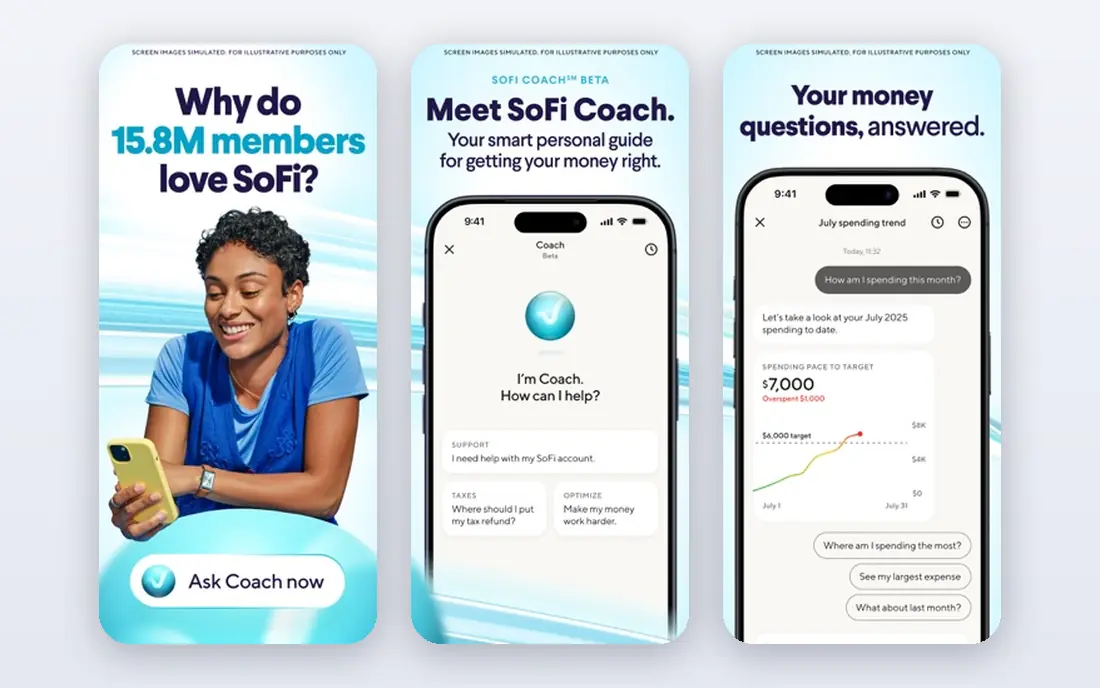
SoFi is a strong starting point for borrowers with good credit who want to combine several high rate debts into one larger loan. Its site describes personal loans from 5,000 to 100,000 dollars, with terms that can stretch to seven years, and direct payment to creditors in some cases. That direct payment feature matters, since it reduces the chance that loan money is spent elsewhere and debts remain open.
The catch is credit quality. SoFi targets borrowers with stronger profiles, so fair credit applicants may get a higher rate or a smaller approval. A longer term also lowers the monthly payment but can raise total interest, so check the total payoff for a shorter term too. SoFi suits larger, cleaner consolidations rather than small, urgent borrowing.
- Loans up to 100,000 dollars described
- No origination fees in many cases
- Direct creditor payment described
- Best rates need strong credit
- Minimum loan is higher than some rivals
LightStream, part of Truist, is known for low rate personal loans for borrowers with good to excellent credit, with amounts up to 100,000 dollars described. Its site describes no origination, late, or prepayment fees in many cases, and a Rate Beat program that offers a slightly lower rate if you present a qualifying competing offer. That combination makes it a strong comparison for anyone who already qualifies for a low rate elsewhere.
The downside is access. LightStream expects a strong credit profile and stable income, so it is not the best first choice for fair credit borrowers. It also does not always pay creditors directly, so you must be disciplined about paying off cards promptly after funding. For excellent credit borrowers, LightStream is often the lender to beat on total cost.
- No fees described in many cases
- Large loan amounts
- Rate beat program described
- Higher credit bar
- No direct creditor payment in some descriptions
Marcus by Goldman Sachs appeals to borrowers who want a simple, no fee loan without surprise charges. Its site describes personal loans from 3,500 to 40,000 dollars, with fixed rates and terms of three to six years, and options such as changing a payment date. That simplicity makes total cost easier to understand than a loan with several fees layered on top.
The limit is loan size. Marcus tops out at 40,000 dollars in descriptions, so it will not cover very large combined debts. It also may not pay creditors directly in all cases, so plan to pay off each card as soon as funds arrive. For moderate consolidations where clarity matters more than maximum size, Marcus is a solid, low fuss option.
- No origination or prepayment fees described
- Fixed rates
- Flexible payment options described
- Loan amounts top out below SoFi and LightStream
- No direct creditor payment in some descriptions
Discover Personal Loans is a practical choice for borrowers who want flexible terms and direct payment to creditors. Its site describes loans from 2,500 to 40,000 dollars, with no origination, prepayment, or late fees in many descriptions, and the option to send funds directly to creditors. That direct payment can close old accounts cleanly and reduce temptation to reuse a paid off card.
The cap of 40,000 dollars means Discover will not suit very large consolidations, and the best rates still require good credit. Discover also describes a payment flexibility option in some guides, which can help during a short hardship, but that should not be treated as a reason to borrow more. For moderate debts with a clear payoff plan, Discover is easy to compare and easy to understand.
- No origination fees described
- Direct creditor payment described
- Terms up to seven years in guides
- Loan cap below the largest lenders
- Best rates need good credit
Upstart suits borrowers whose credit score alone does not tell the full story, since it uses additional factors such as education and employment history in underwriting. Its site describes loans from 1,000 to 50,000 dollars in many guides, with terms of three or five years, and direct payment to creditors in some cases. That broader view can help younger borrowers or those with thin credit files.
The catch is fees and rate range. Upstart charges origination fees in many cases, and rates for weaker profiles can be high, which can erase the benefit of consolidation if the new rate is not clearly below your card rates. Check the total cost after fees, compare the monthly payment and total interest, and only proceed if the new loan is genuinely cheaper than the debts it replaces.
- Considers education and job history as well as credit
- Direct creditor payment described
- Wide loan range in guides
- Origination fees can apply
- Rates can be high for weaker profiles
LendingClub is a long running online lender that serves borrowers with moderate credit who may not qualify for the lowest rates at SoFi or LightStream. Its site describes loans from 1,000 to 40,000 dollars in many guides, with direct payment to creditors and the option to apply jointly in some cases, which can help couples consolidating shared debts.
Origination fees are the main watch point, since they are taken from the loan amount or added to cost, and rates vary widely. A LendingClub loan can still beat high card rates, but only if you calculate the fee into the total. Get a prequalification that shows the fee, rate, term, and total payoff, and compare it with at least one no fee lender before deciding.
- Loans for moderate credit profiles
- Direct creditor payment described
- Joint applications in some cases
- Origination fees apply in many cases
- Rates vary widely by credit
Upgrade is useful for fair credit borrowers who want a structured consolidation loan plus tools to track credit progress. Its site describes loans from 1,000 to 50,000 dollars, with direct payment to creditors in some cases and credit monitoring features. That combination can help borrowers who want to consolidate and then avoid rebuilding card balances.
The downside is cost for weaker profiles. Origination fees can reach a high percentage in some cases, and rates can be high, so the new loan must still beat your current card rates after fees. Upgrade works best when the borrower has a clear budget, closes or freezes paid off cards, and treats the loan as a payoff plan rather than new spending room.
- Serves fair credit borrowers
- Direct payment described
- Free credit monitoring tools described
- Origination fees can be high for weaker profiles
- Rates can be high
Best Egg offers both unsecured personal loans and secured options, which can help borrowers who need a lower rate and are willing to secure the loan with an asset. Its site describes loans from 2,000 to 50,000 dollars in many guides, with direct payment to creditors in some cases. That range makes it a flexible comparison for moderate consolidations.
Secured borrowing deserves caution. A lower rate is not worth risking a home or other asset if payments become hard, and origination fees can still apply. Best Egg is best used as an unsecured comparison first, with secured options considered only after careful advice and a clear repayment plan. As with all lenders here, compare total cost after fees, not just the advertised rate.
- Unsecured and secured loan options described
- Direct payment in some cases
- Wide credit range in guides
- Origination fees can apply
- Secured loans put an asset at risk
How we picked these
We compared official lender sites and public guides that summarise loan amounts, fees, direct payment, and credit ranges for consolidation loans. We favoured lenders with clear fee descriptions, a national online presence, and a mix of excellent, good, and fair credit options, so readers can find a fit without applying to many unsuitable lenders. We did not claim hands on borrowing from these firms, and we listed rates as See website because offers depend on individual credit and income.
We also favoured lenders that describe direct creditor payment, since that feature helps ensure consolidated debts are actually paid off. A consolidation loan that leaves old cards open and funded invites new balances, which defeats the purpose.
How to choose a consolidation loan safely
Compare total cost, not just the monthly payment
A longer term lowers the monthly payment but usually raises total interest. Ask each lender for the total amount you will repay, including fees, for the shortest term you can afford. If the total is higher than keeping your current debts and paying them aggressively, consolidation may not help.
Check fees and direct payment
Origination fees reduce the amount you actually receive or add to cost, so include them in every comparison. Direct payment to creditors is a plus, since it closes debts cleanly. If a lender sends cash to you, set a plan to pay each creditor immediately and keep proof of payment.
Freeze paid off cards, do not close them all at once
Paying off a card does not mean you must close it immediately, and closing many old accounts at once can affect credit utilisation and history. A safer approach is to freeze or lock paid off cards, keep one for emergencies, and avoid new balances while the loan runs. Discuss credit effects with a nonprofit credit counsellor if you are unsure.
Consider nonprofit credit counselling
If debts are large or payments are already missed, a nonprofit credit counsellor can review debt management plans, budgeting, and hardship options before you borrow. That advice is often free or low cost and can reveal cheaper paths than a new loan. Borrowing to consolidate is one tool, not the only tool.
FAQ
What is the best loan consolidation company?
SoFi and LightStream suit good to excellent credit borrowers seeking larger loans, while Discover and Marcus suit borrowers who want no fee simplicity for moderate amounts. The best consolidation company for you depends on your credit, loan size, fees, and total cost. Compare at least two lenders on total payoff, not just monthly payment.
Is debt consolidation a good idea?
It can help if the new loan has a lower total cost than your current debts, a payment you can afford, and a plan to avoid new card balances. It can hurt if fees are high, the term is much longer, or paid off cards are reused. This is not financial advice, so check total cost and consider nonprofit counselling if you are struggling.
Do consolidation companies pay my creditors directly?
Some do, including SoFi, Discover, Upgrade, and LendingClub in many descriptions, while others send funds to you to pay creditors yourself. Direct payment is convenient and reduces risk, but always confirm it for your specific loan and keep proof that each debt was paid off.
What credit score do I need for debt consolidation?
It varies by lender. Excellent credit borrowers get the lowest rates at LightStream and SoFi, good credit borrowers have broad choice, and fair credit borrowers can still qualify at Upstart, Upgrade, and LendingClub, often at higher rates and fees. Prequalification with a soft check can show likely terms without harming your score in many cases.
Can I consolidate with fair or bad credit?
Yes, but options narrow and costs rise as credit weakens. Fair credit lenders such as Upgrade and Upstart may approve smaller loans at higher rates, while very poor credit borrowers should consider nonprofit counselling, hardship plans, or secured options only with careful advice. Avoid any lender that charges large upfront fees before funding.
How long does a consolidation loan take to fund?
Many online lenders describe funding within a few days after approval, with some offering same day or next day funding in certain cases. Direct creditor payment can take additional time to post. Ask about funding and payoff timing, since interest on old cards continues until they are actually paid off.