Best Company Swag Ideas in 2026: 8 Stores Compared
Looking for the best company swag ideas? We compare 8 swag stores and platforms for onboarding kits, gifts, and branded merch that staff keep using. Learn more.
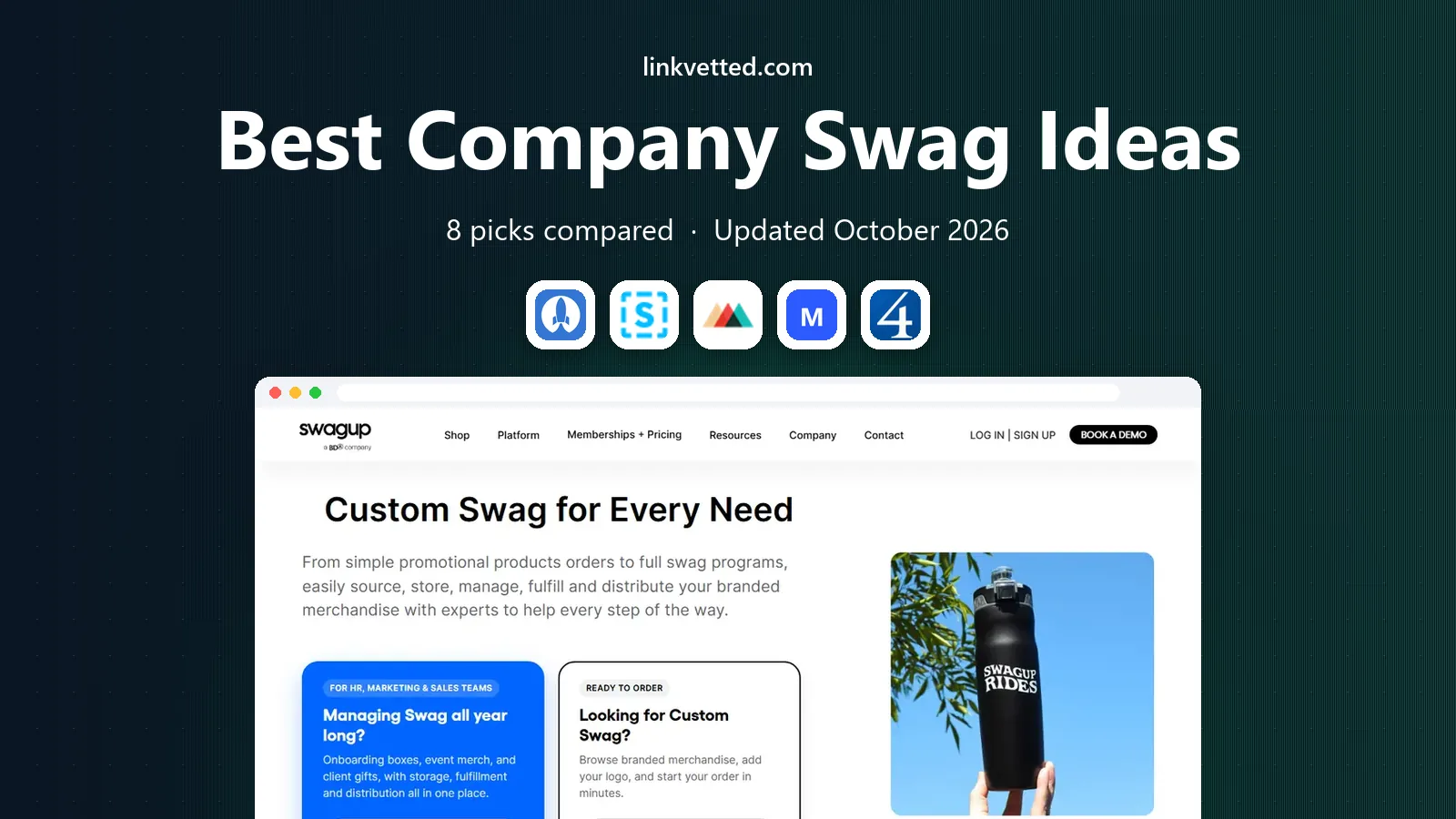
- Editor's choice
 SwagUp
Ongoing swag programs
Starts atSee websiteVisit swagup.comFull review - Great alternative
 Swag.com
US teams and small batches
Starts atSee websiteVisit swag.comFull review - Also consider
 Printful
Print-on-demand merch
Starts atSee websiteVisit printful.comFull review
TL;DR:
- The best swag is useful first and branded second, so start with items staff use daily, such as apparel, drinkware, and tech accessories.
- A company swag store beats one-off orders for distributed teams, because it handles sizing, shipping, and redemption without spreadsheets.
- Print-on-demand suits small teams and test runs, while warehousing suits repeat onboarding kits sent to many locations.
- Check minimums, setup fees, and shipping costs before choosing, because those extras often matter more than the item price.
- Order a sample before a bulk run, since print quality and fabric feel vary far more than catalog photos suggest.
Quick comparison
| Tool | Best for | Starts at | Free plan? | |
|---|---|---|---|---|
| SwagUp | Ongoing swag programs | See website | Yes | Visit |
| Swag.com | US teams and small batches | See website | Yes | Visit |
| Printful | Print-on-demand merch | See website | Yes | Visit |
 Merchology | Premium retail-brand apparel | See website | No | Visit |
 4imprint | Budget bulk orders | See website | No | Visit |
 Goody | Branded gifting without minimums | See website | Yes | Visit |
 Axomo | Employee swag stores | See website | Yes | Visit |
 Sendoso | Gifting tied to sales and hiring | See website | No | Visit |
The best company swag ideas
Good swag solves a real moment: a new hire start date, a work anniversary, a conference, or a client thank-you. The stores below turn those moments into kits, storefronts, and one-off gifts, and each one fits a different team size and budget.
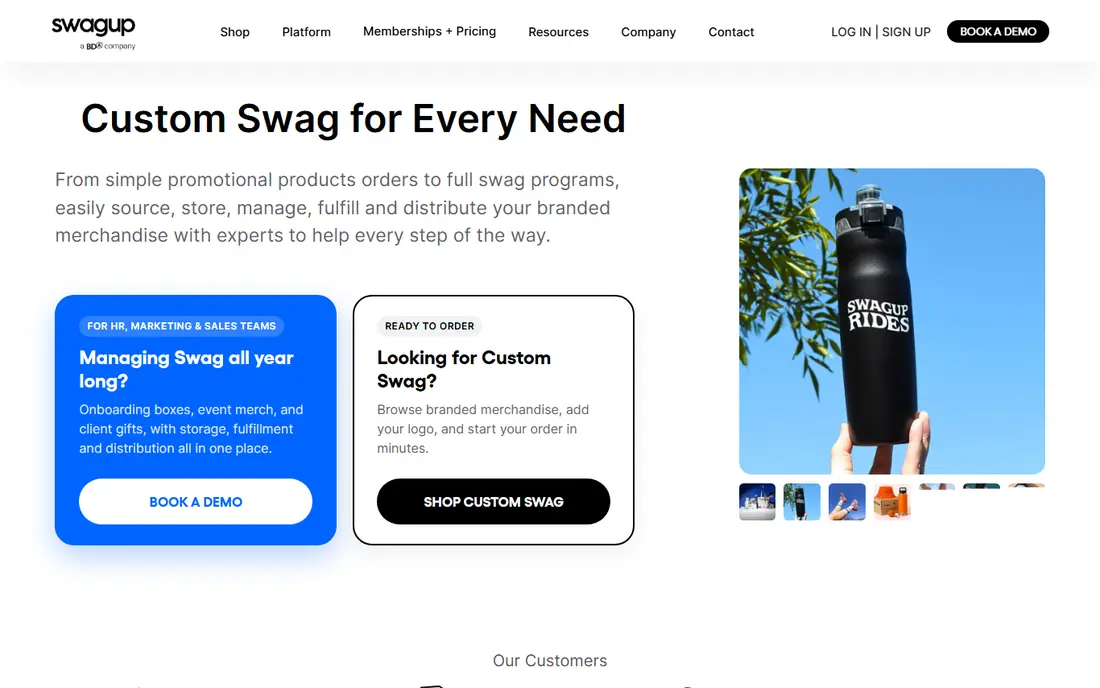
SwagUp is our pick for teams that send swag all year, not just once. You build packs for onboarding, milestones, and events, store inventory in its warehouses, and let recipients claim items through a link instead of emailing back sizes. That workflow saves real admin time once the headcount passes a few dozen.
The catch is cost structure. A free basic plan exists, but paid memberships, storage, and shipping fees stack on top of item prices. Small teams sending a handful of packs may find a simpler per-order store cheaper. Run a small test pack first, and price the full landed cost, not just the catalog price.
- End-to-end packs, storage, and shipping
- Redeem pages collect sizes and addresses
- HR integrations for automated sends
- Paid tiers and extra fees can add up
- Best value comes at higher volume
- Shipping can cost more than a cheap item
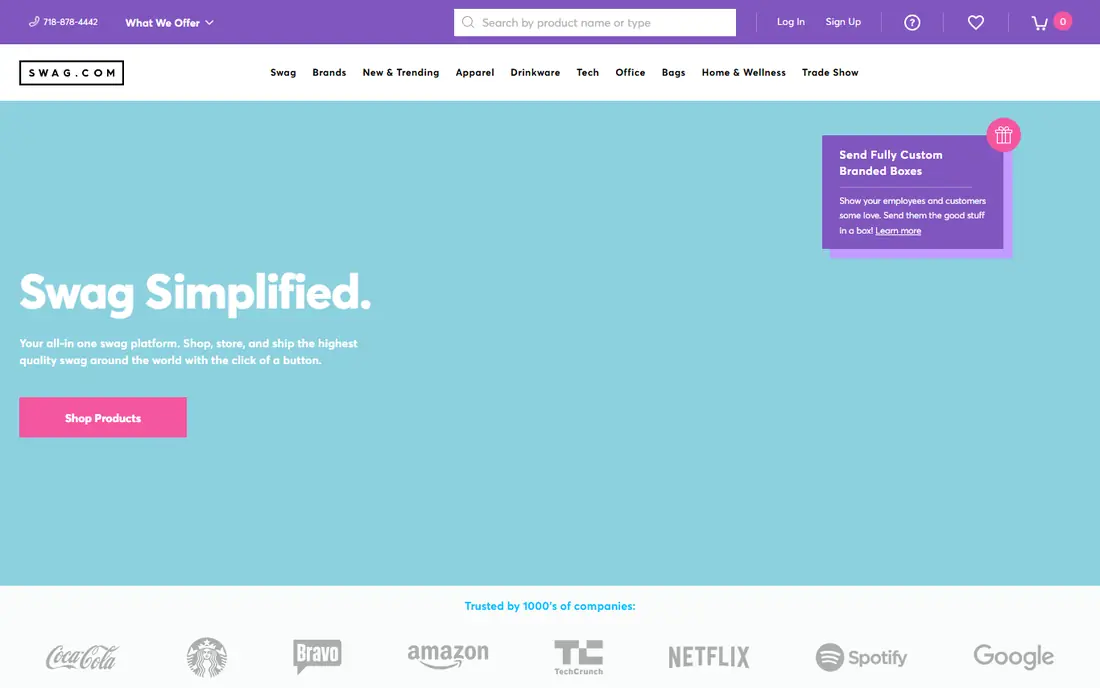
Swag.com suits US-based teams that want a polished store without committing to a large program. Staff browse a branded shop, redeem credits, and receive items from stored inventory, which keeps onboarding consistent even when start dates scatter across the month. Low minimums also make it practical for a single team or event.
International teams should check shipping and duties before committing, since the strongest warehousing story is US-focused. Also compare the same item across stores, because a premium hoodie can double the cost of a standard one. For most offices, the standard tier is the smarter spend.
- Free US warehousing on its platform
- Low minimums on many items
- Simple storefront setup
- International shipping is less central to the offer
- Premium items raise per-unit cost
- Design help varies by item
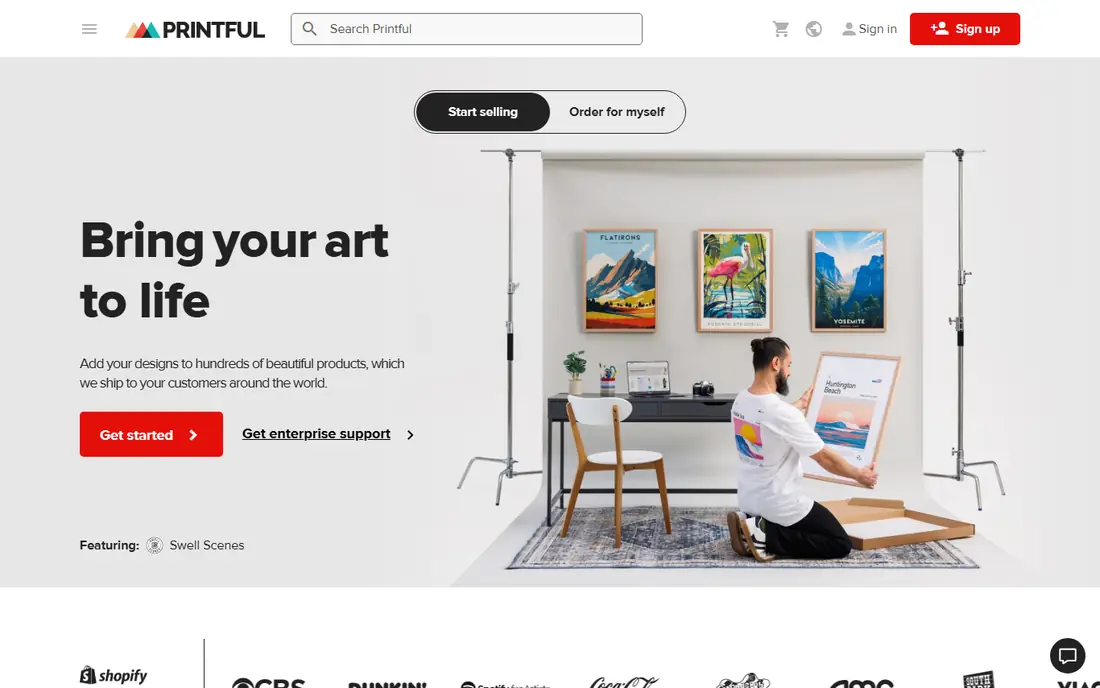
Printful is the low-risk way to test swag ideas. You upload a design, list items in a store, and each order prints and ships on demand, so no boxes pile up in an office closet. That model fits startups, remote teams, and limited-edition drops tied to a launch or anniversary.
The trade-off is unit economics. Print-on-demand costs more per item than bulk printing, and you give up some control over packaging and speed. Order samples of your top three items, check the print placement in person, and only then open the store to the whole company.
- No inventory to hold
- Wide product catalog
- Integrates with major store platforms
- Per-item cost is higher than bulk
- Print quality varies by product
- Shipping times vary by fulfillment location
Merchology is the choice when the item itself is the message. A well-known retail jacket or bag with a small, tasteful logo reads differently from a generic tee, and staff are far more likely to wear it outside work. That makes it a strong pick for leadership gifts, sales kickoffs, and client thank-you boxes.
Expect to pay for that quality, and expect a quote rather than a fixed catalog price. Lead times can also stretch when a retail brand item needs decoration approval. Plan executive and event orders weeks ahead, and keep the logo subtle so the item still works as everyday clothing.
- Co-branding with retail brands such as Patagonia and Nike
- Strong for executive gifts
- Corporate outfitting expertise
- Quote-based pricing
- Higher per-unit cost
- Longer lead times on some branded items
4imprint is the practical pick for events and bulk giveaways. Pens, bottles, bags, and shirts at volume, with tiered pricing that rewards larger orders, make it easy to stock a booth or a company all-hands without a platform subscription. The catalog is enormous, which is both the strength and the challenge.
Because the range is so wide, you need to filter by reviews and order samples for anything staff will keep. A cheap item that breaks or fades does more harm than no item at all. Use 4imprint for high-volume, low-cost ideas, and a curated store for the items meant to last.
- Very broad catalog
- Clear bulk pricing
- Long history in promotional products
- Less of a managed store platform
- Quality varies across the huge catalog
- Shipping adds up on small orders
Goody flips the usual swag problem by letting the recipient choose. You send a gift link, the person picks a size, color, or even a different item, and Goody handles fulfillment. That cuts waste from wrong sizes and unwanted items, which is a real problem with traditional swag boxes.
The cost per gift is higher than bulk ordering the same item, so Goody fits milestones and thank-yous better than outfitting hundreds of staff. It also works well for remote teams, where collecting addresses and sizes by email is slow. Pair it with a handwritten note in the gift message for a personal touch.
- No minimums on many gifts
- Recipient chooses size or style
- Free starter plan
- Per-gift pricing can exceed bulk
- Branding options vary by product
- Less suited to full inventory programs
Axomo suits mid-size companies that want staff to redeem swag on their own schedule. You set up a branded store, assign credits or allow direct orders, and automate sends for onboarding and anniversaries. Print-on-demand items keep the store fresh without holding stock for every design.
The platform needs a bit of setup, including product selection, credit rules, and approval flows, so it pays off most when sends repeat every month. Teams that only order once a year may prefer a simpler per-order vendor. Ask for a demo with your actual use case, not just a feature tour.
- Self-serve company stores
- Print-on-demand plus stocked items
- Automation for recurring sends
- Subscription pricing is quote-based
- Setup takes planning
- Smaller catalog than bulk distributors
Sendoso is less a swag shop and more a sending platform, which is why it fits sales, recruiting, and customer success teams. A gift can trigger from a deal stage, an interview milestone, or a renewal, and the platform tracks delivery and spend in one place. The catalog goes beyond branded merch into food, drink, and experience gifts.
That breadth comes with enterprise-style pricing and fees, so it is overkill for a simple team store. If your goal is only onboarding kits, pick a dedicated swag platform. If gifting is part of how you win deals and hires, Sendoso earns its place.
- Ties gifting to CRM and hiring workflows
- Global sending options
- Wide gift catalog beyond apparel
- Quote-based pricing
- Built for revenue teams more than internal swag
- Fees apply on top of gift costs
How we picked these
We compared official vendor sites, platform feature pages, pricing models, and recent third-party comparisons of swag platforms. We favored stores with a working US storefront, clear fulfillment options, and a track record serving companies rather than only individual shoppers. We weighed store and automation features alongside item quality, because a swag program fails on logistics as often as on design. Prices in this category are mostly per item or quote-based, so we show the starting model rather than a fixed total.
How to build a swag program people actually like
Start with the moment, not the catalog. Onboarding calls for a useful kit that arrives before day one, anniversaries call for a choice, and events call for something light to carry home. Pick three to five items per kit, keep branding tasteful, and include one item with no logo at all, such as quality socks or a snack box, so the box feels like a gift rather than an ad.
Then fix the logistics. Decide who pays for shipping, how sizes are collected, and what happens to returns. A store with redeem links solves most of this, but only if someone owns the store and reviews stock each quarter. Finally, set a per-person budget and track it, because swag spending drifts fast when every team orders separately. A small annual survey, asking what staff kept and what they gave away, is the cheapest way to improve the next round.
FAQ
What are the best company swag ideas for new hires?
Onboarding kits work best with a mix of useful and personal items, such as a quality hoodie or tee, a bottle or mug, a notebook, and a tech accessory like a charger. Add a welcome note and ship the kit to arrive before the first day. Avoid filling the box with low-cost items staff will discard.
What is a company swag store?
A company swag store is a branded online shop where staff redeem credits or order approved items, and the vendor handles printing, storage, and shipping. It suits distributed teams and repeat programs, because sizes and addresses are collected at redemption. One-off event orders may be cheaper through a bulk vendor.
How much should a company spend on swag per employee?
Budgets vary widely, but many teams spend roughly 50 to 150 dollars per person per year on swag and gifts, excluding shipping. Onboarding kits often sit at the higher end, while event giveaways sit lower. Set a per-person cap, include shipping in the total, and review spend quarterly.
Does print-on-demand swag look good enough for staff?
It can, but quality varies by product and printer, so always order samples first. Apparel and drinkware from established print-on-demand vendors usually pass a close look, while fine detail and dark fabrics show flaws more easily. For executive gifts, a retail-brand item from a curated vendor is the safer choice.
How do I handle swag for remote and international staff?
Use a store or gifting platform that ships globally and collects addresses at redemption, and check duties and delivery times by country. Offer choice where possible, since sizing and taste vary, and avoid items that are hard to ship, such as glassware. A digital gift option helps for countries with slow customs.
What swag ideas work for clients rather than staff?
Client gifts should feel personal and useful, such as a premium notebook, a quality bottle, or a curated food box with a short note. Keep branding subtle, and avoid generic items that look like conference leftovers. For high-value clients, a choice-based gift platform avoids sending something the recipient does not want.