Best Companies for Sustainable Snacks in 2026: 9 Brands Compared
Best companies for sustainable snacks compared, with organic ingredients, fair trade sourcing, compostable packaging and snacks you can buy in stores today.
- Editor's choice
 Patagonia Provisions
Regenerative farming snacks
Starts atSee websiteVisit patagoniaprovisions.comFull review - Great alternative
 LesserEvil
Organic popcorn and puffs
Starts atSee websiteVisit lesserevil.comFull review - Also consider
 Alter Eco
Fair trade chocolate snacks
Starts atSee websiteVisit alterecofoods.comFull review
TL;DR:
- The strongest sustainable snack companies pair a clear sourcing claim, such as organic or fair trade, with packaging or farming practices you can check.
- Patagonia Provisions and Alter Eco lead on farming and sourcing stories, while LesserEvil and Quinn stand out on packaging and ingredient transparency.
- Price and availability vary a lot, so a brand that is easy to find in grocery stores may beat a niche brand you can only order online.
- Taste still matters, and most of these brands sell variety packs, which is the cheapest way to test a new brand before buying in bulk.
Quick comparison
| Tool | Best for | Starts at | Free plan? | |
|---|---|---|---|---|
| Patagonia Provisions | Regenerative farming snacks | See website | No | Visit |
| LesserEvil | Organic popcorn and puffs | See website | No | Visit |
| Alter Eco | Fair trade chocolate snacks | See website | No | Visit |
 KIND Snacks | Nut and fruit bars | See website | No | Visit |
 Larabar | Simple ingredient bars | See website | No | Visit |
 MadeGood | Allergy-friendly snacks | See website | No | Visit |
 Quinn Snacks | Popcorn and pretzels with traceable ingredients | See website | No | Visit |
 Nature's Path | Organic granola and cereal snacks | See website | No | Visit |
 Bobo's | Oat bars for on-the-go snacking | See website | No | Visit |
The best companies for sustainable snacks
We compared sourcing claims, certifications, packaging, ingredient lists and retail availability, and we favored brands that explain their practices in plain terms on their own sites.
Patagonia Provisions is the food arm of Patagonia, and its snacks reflect that mission. Its crackers use organic and regeneratively grown wheat, including Kernza, a perennial grain that helps hold soil and nutrients in place. The range also covers dried fruit, nut mixes and other pantry snacks, with an emphasis on organic ingredients and shorter supply chains. For buyers who want food choices that support soil health, this is the most mission-led brand on the list.
The trade-off is price and choice. These snacks cost more than a standard grocery brand, and you will find fewer flavors than with a mass-market snack maker. Some crackers also taste plainer than heavily seasoned rivals, which suits pairing with cheese or dips more than eating alone. If the farming story matters as much as the snack itself, Patagonia Provisions is a strong first pick.
- Regenerative organic sourcing focus
- Plant-based crackers and snacks
- Part of a company with a long environmental record
- Prices run higher than mainstream snacks
- Range is narrower than a big grocery brand
LesserEvil makes organic popcorn, paleo puffs and kids snacks, and it has built its name on cleaner ingredients and better packaging. Many products use organic oils and simple seasonings, and the company has promoted compostable bags for parts of its range. That combination makes it easy to pick up in a regular grocery store without giving up on sustainability claims entirely.
The honest catch is that not every bag carries the same packaging claim, so check the specific product before you assume it is compostable. Sodium can also run high on savory flavors, which matters if you snack often. For a family-friendly, widely available option that balances taste and sourcing, LesserEvil is hard to fault.
- Organic ingredients
- Compostable packaging efforts
- Wide grocery availability
- Some flavors are high in sodium
- Packaging claims vary by product line
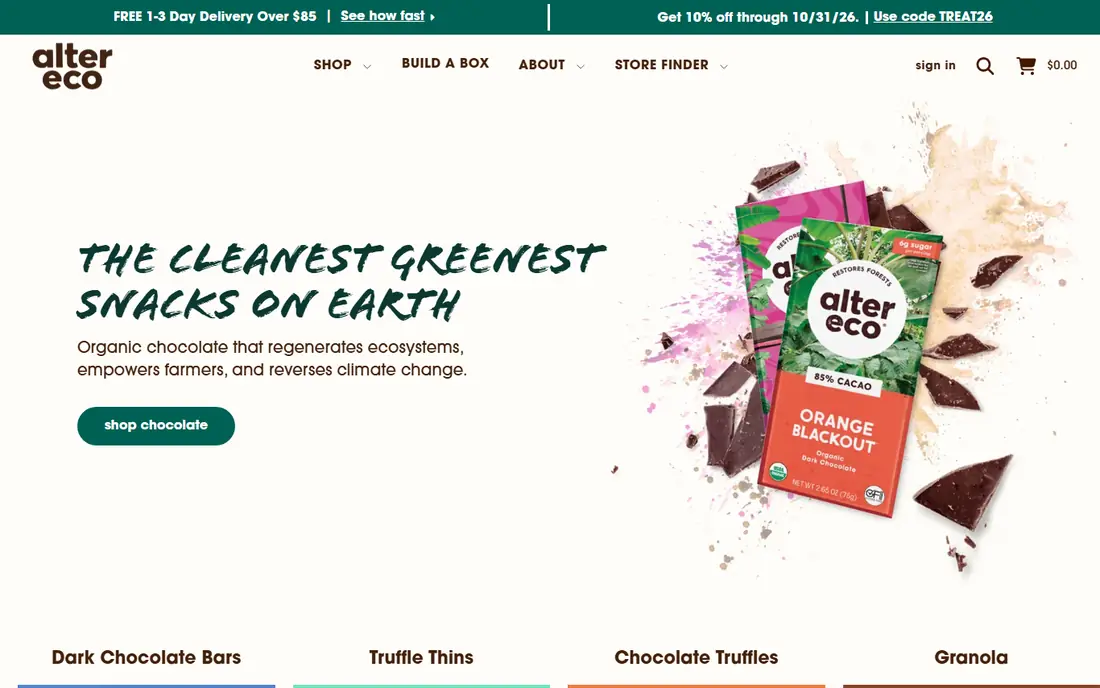
Alter Eco is best known for organic, fair trade chocolate bars and truffles, and its sourcing story is unusually detailed. The company works with smallholder cocoa farmers, supports agroforestry planting, and has used compostable wrappers for its truffles. That gives buyers a clear link between a sweet snack and the farms behind it, which many chocolate brands describe only in vague terms.
The range is mostly sweet, so it will not cover salty snacking or lunchbox variety on its own. Prices are also premium, which is common for fair trade chocolate. If chocolate is your main snack weakness, Alter Eco lets you keep that habit with stronger sourcing than a standard bar.
- Fair trade and organic chocolate
- Agroforestry sourcing
- Compostable truffle wrappers
- Chocolate focus limits savory choice
- Premium pricing
KIND built its name on bars where you can see the nuts and fruit, and that simple idea still works. The ingredient lists are short for a mass-market bar, many options are gluten free, and you can find KIND in most grocery stores, airports and offices. For a sustainable snack choice that does not require a special trip, KIND is the practical pick.
The sustainability case is broader and less specific than with Patagonia Provisions or Alter Eco. KIND talks about responsible sourcing, but its main appeal here is whole ingredients and portion control rather than a single farming program. Some bars also contain added sugars, so read the label if sugar is a concern. As an everyday bar, it remains a solid, widely available choice.
- Whole nuts and fruit as main ingredients
- Wide retail availability
- Many gluten-free options
- Some bars contain added sugars
- Sustainability work is less farm-specific than smaller brands
Larabar keeps things simple: many bars list just dates and nuts, with fruit or cocoa for flavor. That minimal approach appeals to buyers who want to avoid long additive lists and added sugars, and most core bars are gluten free and dairy free. The bars are also filling for their size, which makes them useful for hiking, travel or a mid-afternoon snack.
The downside is texture and sweetness. Date bars are dense and sweet by nature, so they will not suit everyone, and there is no savory Larabar to balance them. If you like simple, whole-food bars and you check labels for added sugar, Larabar is one of the cleanest mainstream options.
- Very short ingredient lists
- Many dairy-free and gluten-free options
- No added sugar in core bars
- Date-based bars are sweet and dense
- Limited savory range
MadeGood focuses on snacks that are safe for schools and allergy-aware households. Its granola bars, bites and cookies are made in facilities that avoid common allergens, and many products use organic oats and vegetables hidden in the recipe. That makes MadeGood a rare brand that serves both sustainability-minded parents and families managing allergies.
Portions are modest, and flavors tend to be gentle rather than intense, so adults looking for a bold snack may find them mild. Prices also sit above a standard granola bar. For lunchboxes, classrooms and allergy-safe snacking, MadeGood solves a real problem that most sustainable brands ignore.
- Free from common allergens
- Organic ingredients
- School-safe granola bars and bites
- Smaller portions than some rivals
- Flavor range is gentler than bold snack brands
Quinn is known for popcorn and pretzels, and for printing sourcing details that let buyers trace ingredients back to farms. That transparency is unusual in the snack aisle, where most bags give no farm information at all. The popcorn uses non-GMO kernels and simple oils, and the pretzels offer a salty alternative to the many sweet bars on this list.
Availability is the main frustration. Quinn is stocked in many natural grocery stores, but mainstream stores may carry only one or two flavors, and online stock can vary. If you find a flavor you like, it is worth buying a few bags. For traceable, savory snacking, Quinn stands out.
- Farm-to-bag ingredient transparency
- Non-GMO popcorn and pretzels
- Compostable bag efforts
- Availability varies by region
- Some flavors sell out online
Nature's Path has sold organic cereal and granola for decades, and its snack bars and granola bags carry that same organic sourcing. The company has set zero-waste goals for its facilities and uses organic ingredients across its range, which gives it a deeper track record than many newer sustainable brands. Granola, in particular, works well as a snack on its own or with yogurt.
The range is broad, which means quality and sugar content vary by product, so label reading still matters. Some granola bags are also better suited to home snacking than to a pocket or bag. For organic granola and cereal-based snacks from a brand with a long history, Nature's Path is a reliable pick.
- Long organic track record
- Zero-waste facility goals
- Wide granola and bar range
- Some products contain added sugars
- Snack bars are less portable than single-serve rivals in some lines
Bobo's started with baked oat bars, and that home-baked style still defines the brand. The bars use whole grain oats and simple ingredients, many are vegan, and they hold up well in a bag, car or backpack. That makes them useful for travel, work and outdoor days when a crumbly bar would fall apart.
The bars are dense, so one bar can feel like a small meal rather than a light snack. Prices also run above a mass-market oat bar, though the ingredient quality helps justify the gap for many buyers. If you want a filling, oat-based snack with a short ingredient list, Bobo's is a good choice.
- Whole grain oat bars
- Simple ingredients
- Many vegan options
- Bars are dense and filling, which may not suit light snackers
- Prices above a standard oat bar
How we picked these
We compared official brand pages, sourcing and certification claims, packaging information and ingredient lists. We favored companies that sell snacks in the United States today, explain their sourcing in specific terms, and offer products that work as everyday snacks rather than one-off treats. We left out brands whose sustainability claims were vague or whose snack range was too narrow to recommend with confidence.
How to judge a sustainable snack claim
Start with the label, not the front of the bag. Look for organic, fair trade or similar certifications, and check whether the brand names farms, regions or sourcing programs. A claim such as organic covers how ingredients were grown, while fair trade covers farmer pay and labor standards, so the two mean different things. Packaging claims also need care: compostable, recyclable and made with recycled content are not the same, and local composting rules affect what actually happens to a bag.
Next, weigh taste, price and waste together. A sustainable snack you throw away helps no one, so buy a small pack first. Compare price per ounce rather than price per bag, since bag sizes vary widely. Finally, check allergen labels and added sugars, because a snack can be well sourced and still be a poor fit for your diet.
FAQ
What are the best sustainable snack companies?
Patagonia Provisions, Alter Eco and LesserEvil lead on sourcing and packaging, while KIND, Larabar and Bobo's offer wider availability and simpler ingredients. The best pick depends on whether you value regenerative farming, fair trade sourcing, allergy safety or grocery store access most.
Are sustainable snacks healthier than regular snacks?
Not always. Sustainable refers mainly to sourcing, farming and packaging, not to sugar, salt or calorie content. A fair trade chocolate bar can still be high in sugar, and an organic popcorn can still be high in sodium. Check nutrition labels alongside sustainability claims.
What does fair trade mean for snacks?
Fair trade certification generally means farmers and workers receive a set minimum price and premium for community projects, with labor standards checked by a certifier. For chocolate, coffee and similar crops, it is one of the clearest ways to link a snack purchase to farmer income.
Where can I buy sustainable snacks?
Most brands on this list sell through their own websites and through natural grocery stores, and several, including KIND, Larabar and LesserEvil, are also in mainstream grocery stores. Online variety packs are useful for testing flavors, while grocery stores are usually cheaper per bag.
Are compostable snack bags really compostable?
Some are home compostable and some need industrial composting, which is not available everywhere. Check the bag for the exact claim and check your local composting service before assuming a bag will break down in a backyard pile.