Best Companies for Infinite Banking in 2026: 8 Companies Compared
Compare the best companies for infinite banking, from mutual insurers with dividend-paying whole life policies, with loan terms and honest limits today.
- Editor's choice
 MassMutual
Large mutual strength and dividends
Starts atSee websiteVisit massmutual.comFull review - Great alternative
 Penn Mutual
Cash value focused policy design
Starts atSee websiteVisit pennmutual.comFull review - Also consider
 Lafayette Life
Non-direct recognition loans
Starts atSee websiteVisit lafayettelife.comFull review
TL;DR:
- Infinite banking uses a participating whole life policy, usually from a mutual insurer, with policy loans for major purchases.
- MassMutual, Penn Mutual and Guardian Life are strong starting points for dividend history and policy design.
- Non-direct recognition carriers pay full dividends even with a loan outstanding, which matters for this strategy.
- Paid-up additions riders help cash value grow faster, so policy design matters as much as carrier choice.
- This is a long-term strategy, often ten years or more, and it is not right for everyone.
Quick comparison
| Tool | Best for | Starts at | Free plan? | |
|---|---|---|---|---|
| MassMutual | Large mutual strength and dividends | See website | No | Visit |
| Penn Mutual | Cash value focused policy design | See website | No | Visit |
| Lafayette Life | Non-direct recognition loans | See website | No | Visit |
 Guardian Life | Strong mutual whole life options | See website | No | Visit |
 New York Life | Large mutual insurer for high coverage | See website | No | Visit |
 Foresters Financial | Flexible whole life for varied needs | See website | No | Visit |
 Northwestern Mutual | Large mutual with broad planning support | See website | No | Visit |
 OneAmerica | Flexible paid-up additions design | See website | No | Visit |
The best companies for infinite banking
We compared mutual structure, dividend history, loan recognition, policy design options and financial strength for carriers that are still active in October 2026. Our pick for most people to research first is MassMutual, while Penn Mutual is our pick for cash value focused design.
This is not financial advice. Infinite banking involves long-term premium commitments, insurance costs and loan interest, and policies can lapse if loans and premiums are not managed. Speak with a licensed insurance adviser and a financial planner before buying a policy for this strategy.
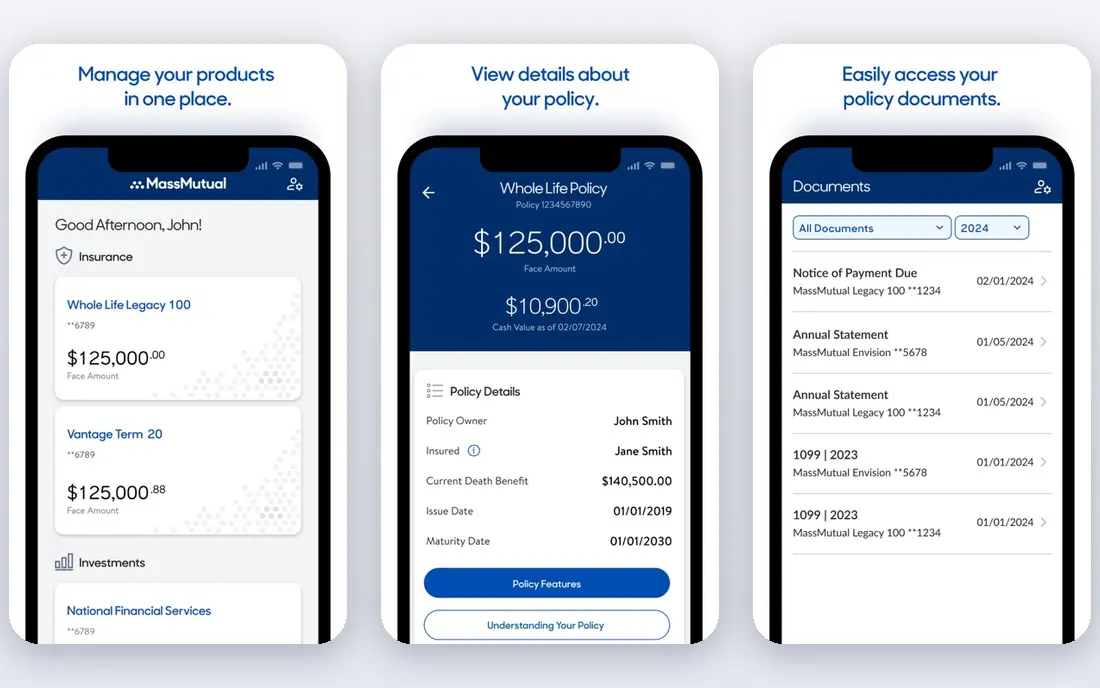
MassMutual is one of the largest mutual life insurers in the US, and it is often the first carrier people research for infinite banking. As a mutual company, it is owned by policyholders, and participating whole life policies may receive dividends, though dividends are not guaranteed. Its non-direct recognition approach means dividends are not reduced solely because a policy loan is outstanding, which is a key detail for this strategy.
Whole life options include riders for paid-up additions, which let extra premium buy small paid-up policies and grow cash value faster. Agent skill matters a great deal: two MassMutual policies with the same premium can perform very differently depending on design. Ask for full illustrations, including loan scenarios, before committing.
- Large mutual insurer with a long dividend history
- Non-direct recognition loans
- Broad whole life options
- Policy design varies by agent, so structure matters
- Premiums are a long-term commitment
Penn Mutual is frequently cited for infinite banking because its whole life policies allow flexible paid-up additions and early cash value growth when designed well. That flexibility lets an experienced agent shape a policy toward cash value rather than only death benefit, which is the goal for this strategy.
Penn Mutual uses direct recognition, meaning dividends on the loaned portion may be adjusted when a loan is outstanding. That does not disqualify it, but it means loan illustrations deserve close review. Compare total cost and loan outcomes with a non-direct carrier before choosing, since the best design depends on how often you plan to borrow.
- Strong reputation for cash value focused design
- Flexible paid-up additions
- Direct recognition, so loan effects need review
- Smaller than the largest mutuals
- Direct recognition means loans can affect dividends
Lafayette Life is a favorite among infinite banking practitioners for its non-direct recognition loans and flexible paid-up additions. Non-direct recognition means the dividend scale is not reduced just because you borrow, which keeps the policy mechanics simpler to model. For borrowers who plan to use loans regularly, that feature is a real advantage.
The carrier is smaller than MassMutual or New York Life, and policies are sold through agents, so finding an experienced infinite banking agent matters. Check financial strength ratings and state availability, and ask for illustrations that show cash value, loan balance and death benefit over twenty years or more.
- Non-direct recognition loans
- Flexible paid-up additions
- Long history with infinite banking designs
- Smaller carrier with less brand recognition
- Availability varies by state and agent
Guardian Life is a large mutual insurer with a long history of participating whole life policies. Its policies support paid-up additions and offer payment options such as 10-pay designs, which can suit people who want to fund a policy faster and then stop paying premiums. Strong financial ratings support confidence in long-term guarantees.
Guardian uses direct recognition, so dividends on borrowed cash value may be adjusted. As with Penn Mutual, that detail should be modeled in illustrations, not ignored. Guardian suits buyers who want a large, well-rated mutual and are comfortable comparing loan outcomes across carriers.
- Large mutual insurer with strong ratings
- Whole life with paid-up additions
- 10-pay and other payment options
- Direct recognition, so loan effects need review
- Agent design quality varies
New York Life is the largest mutual life insurer in the US by many measures, with a long dividend history and a large agent network. For buyers who value scale, stability and in-person planning support, it is a reassuring choice. Whole life policies offer guarantees, cash value growth and loan access, as with other mutuals on this list.
The trade-off for infinite banking is flexibility. New York Life uses direct recognition, and its policies may be less tailored to aggressive cash value design than some smaller carriers. Buyers who want maximum early cash value should compare illustrations carefully and ask how paid-up additions are structured.
- Very large mutual insurer
- Long dividend history
- Broad agent network and planning support
- Direct recognition
- Policies may be less flexible for aggressive cash value design
Foresters Financial is a fraternal benefit society that offers participating whole life policies used for infinite banking. Its non-direct recognition loans are a plus for borrowers, since dividends are not reduced solely due to a loan. Flexible designs and paid-up additions help shape policies toward cash value growth.
Foresters is smaller than the largest mutuals, so financial strength and state availability should be checked. Some policies include member benefits, such as community and scholarship programs, which are a bonus rather than a reason to buy. For buyers who want a non-direct carrier beyond the biggest names, Foresters deserves a look.
- Non-direct recognition loans
- Flexible whole life designs
- Member benefits in some policies
- Smaller carrier
- Product availability varies by state
Northwestern Mutual is a large mutual insurer with a strong dividend history and a wide network of financial planners. Buyers who want whole life as part of a broader plan, covering retirement, estate and business needs, will find that planning support useful. Policies offer guarantees and cash value growth over time.
For pure infinite banking, the direct recognition loan treatment and the planning-led approach need review. Some buyers prefer a carrier and agent focused only on policy design, while others value integrated planning. Compare illustrations and loan terms with non-direct carriers before deciding, and confirm how paid-up additions are handled.
- Large mutual with strong ratings
- Broad financial planning network
- Whole life with dividend history
- Direct recognition
- Planning-led sales may suit some buyers less than a pure policy focus
OneAmerica offers participating whole life policies with non-direct recognition loans and flexible paid-up additions, which are the two features infinite banking buyers most often seek. Some policies also offer indexed dividend options, which add a different way to participate in policy performance, though terms need careful review.
As a smaller carrier, OneAmerica may be less familiar than MassMutual or New York Life, so check ratings and state availability. Agent experience with infinite banking design matters as much as carrier choice. Ask for long-term illustrations, loan scenarios and a clear explanation of fees, surrender charges and loan interest.
- Non-direct recognition loans
- Flexible paid-up additions
- Indexed dividend options on some policies
- Smaller brand presence than the largest mutuals
- Agent experience varies
How we picked these
We compared mutual or fraternal structure, dividend history, loan recognition, paid-up additions flexibility and financial strength for carriers that are still active in October 2026. We favored carriers with a record of participating whole life policies and designs used for infinite banking. We left out stock insurers with no participating whole life, and carriers with no clear policy loan or rider options.
Choosing a carrier and policy design
Carrier choice is only half the decision. Policy design, including base premium, paid-up additions rider, and payment period, shapes early cash value more than small differences in dividend rates. Work with an agent who specializes in infinite banking, and ask for illustrations that show year-by-year cash value, loan balance and death benefit.
Do not start a policy until you can commit to premiums for many years. Early surrender charges can exceed cash value growth, and lapsing a policy can trigger tax issues if loans exceed basis. Keep an emergency fund separate from the policy, and max out employer retirement matches before committing large premiums to whole life, unless a planner advises otherwise for your situation.
Questions to ask an agent
Ask whether the carrier uses direct or non-direct recognition, and how loans affect dividends. Ask how paid-up additions are structured, what loan interest rate applies, and what happens if you miss a premium. Ask for a worst-case illustration, not just a favorable one, and get all fees and surrender charges in writing.
FAQ
What is infinite banking?
Infinite banking, also called the infinite banking concept, uses a participating whole life policy as a personal financing system. You pay premiums, build cash value, borrow against the policy for major purchases, and repay the loan to restore borrowing capacity. The strategy was popularized by Nelson Nash in his book Becoming Your Own Banker.
Which company is best for infinite banking?
There is no single best carrier for everyone. MassMutual and Lafayette Life are strong starting points for non-direct recognition loans, while Penn Mutual suits cash value focused design. Compare illustrations, loan terms and agent experience across two or three carriers before choosing.
How much money do I need to start infinite banking?
Many practitioners suggest a comfortable premium commitment, often hundreds to thousands of dollars per month, sustained for ten years or more. The strategy only works with consistent overfunding and a long horizon. If premiums strain your budget, it is not the right time to start.
Are policy loans tax-free?
Policy loans are generally not taxed as income while the policy stays in force, but unpaid loans reduce the death benefit and cash value. If a policy lapses with a large loan outstanding, the loan amount above basis may become taxable. This is not tax advice, so speak with a tax professional about your situation.
Is infinite banking a scam?
Infinite banking itself is a legitimate use of whole life insurance, but it is heavily marketed and not right for everyone. Be wary of claims about guaranteed high returns, tax-free wealth for all, or policies that replace all other saving. A licensed adviser can help you judge whether the costs and time horizon fit your goals.