Best Banking Services for SaaS in 2026: 8 Services Compared
best banking services for saas companies that need subscription billing support, cards, and treasury tools, compared for 2026 today for US SaaS firms.
- Editor's choice
 Mercury
Early SaaS startups
Starts atFreeVisit mercury.comFull review - Great alternative
 Rho
SaaS teams wanting no monthly fees
Starts atFreeVisit rho.coFull review - Also consider
 Brex
Funded SaaS teams
Starts atFreeVisit brex.comFull review
TL;DR:
- SaaS banking is about cash flow timing, since subscriptions, churn, and annual prepayments shape balances.
- Mercury and Rho are our top fintech picks for early SaaS firms, with free base accounts and strong integrations.
- Brex suits funded SaaS teams that want cards and spend controls in one platform.
- Silicon Valley Bank suits venture backed SaaS firms that need lending and treasury depth.
- Check Stripe, billing, and accounting integrations before you pick, since manual reconciliation wastes time.
Quick comparison
| Tool | Best for | Starts at | Free plan? | |
|---|---|---|---|---|
| Mercury | Early SaaS startups | Free | Yes | Visit |
| Rho | SaaS teams wanting no monthly fees | Free | Yes | Visit |
| Brex | Funded SaaS teams | Free | Yes | Visit |
 Silicon Valley Bank | Venture backed SaaS firms | See website | No | Visit |
 Relay | SaaS firms with many accounts | Free | Yes | Visit |
 Bluevine | SaaS firms wanting interest on checking | Free | Yes | Visit |
 Novo | Small SaaS firms and solo founders | Free | Yes | Visit |
 Grasshopper Bank | Startup and SaaS banking | Free | Yes | Visit |
The best banking services for SaaS
SaaS companies live on recurring revenue, so banking must handle subscription payouts, vendor spend, payroll, and investor reporting without friction. We compared account fees, cards, integrations, treasury tools, and support for SaaS firms.
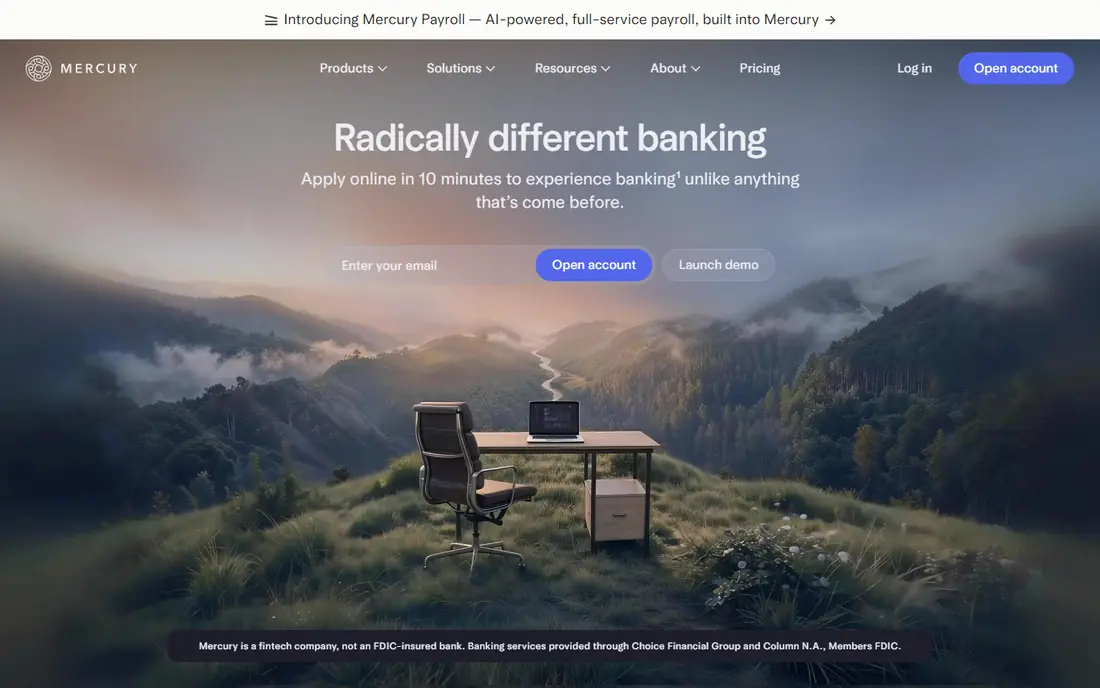
Mercury is a popular choice for early SaaS startups because its base account is free, with no monthly fee, and it includes free ACH and domestic wires. The platform offers sub-accounts for taxes, payroll, and runway planning, plus integrations with accounting tools and payment processors. API access lets finance teams automate reporting and reconciliation as subscription volume grows.
The limits are cash handling and support tiers. Mercury does not support cash deposits, and priority support sits on paid Plus and Pro plans. For a digital SaaS firm that rarely handles cash, that is a minor issue. Mercury suits founders who want a clean, low cost account that scales from seed to growth without a branch visit.
- Free base account
- Free ACH and domestic wires
- Strong API and accounting integrations
- No cash deposits
- Paid tiers needed for advanced workflows and priority support
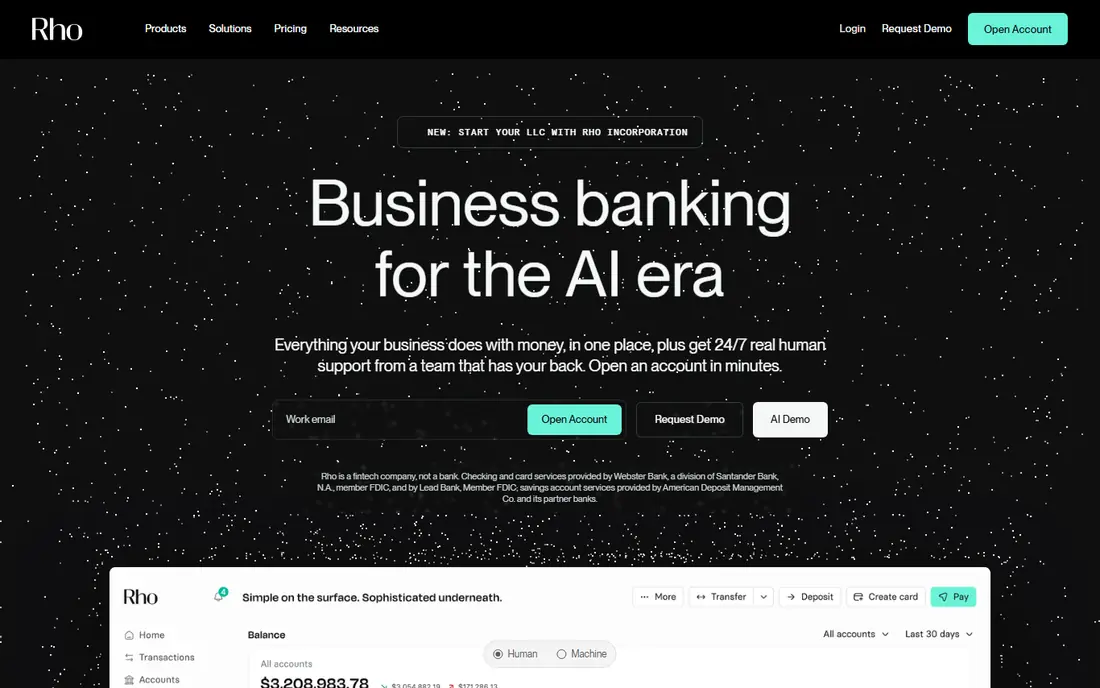
Rho combines business checking, corporate cards, bill pay, expense management, and accounting integrations in one platform, with no monthly, per user, or minimum balance fees. That bundle suits SaaS teams that want to control software spend, pay vendors, and track burn in one place. Sub-accounts with their own numbers help separate operating cash, taxes, and reserves.
Rho serves US incorporated businesses only, so sole proprietors and non-US firms must look elsewhere. Support is live and human, 24/7 by phone, chat, and email, which helps during billing or payroll issues. For an incorporated SaaS firm that wants a free, full featured account, Rho is a top pick.
- No monthly, per user, or minimum balance fees
- Free domestic wires
- Cards and bill pay included
- US incorporated businesses only
- Sole proprietors are not eligible
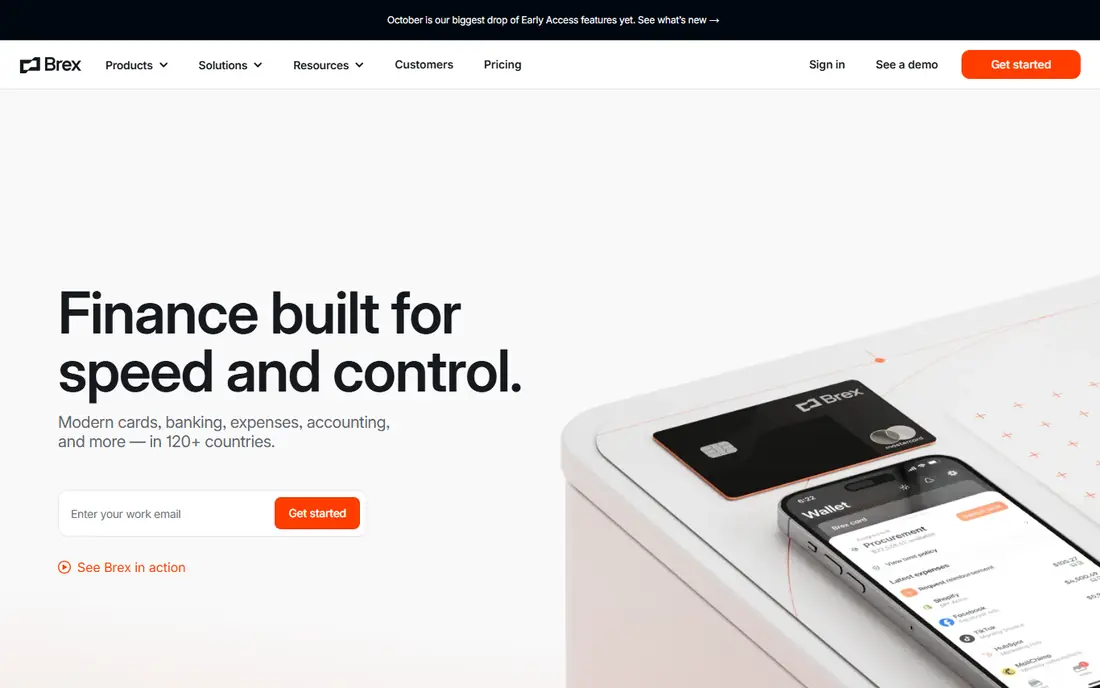
Brex pairs a business account with corporate cards, expense management, bill pay, and travel booking. Its Essentials plan is free per user, while Premium software costs about 12 dollars per user per month. For a funded SaaS team, cards with limits by team, vendor, and category help control cloud, ads, and software spend, which are often the largest variable costs.
Approval is not automatic, and monthly card requirements may apply, so early firms without funding or revenue may not qualify. Brex is not a traditional bank itself, working through partner banks, so check FDIC terms for your account type. For a funded SaaS team that wants spend control alongside banking, Brex is a strong fit.
- Corporate cards with spend controls
- Free account
- Accounting and bill pay integrations
- Approval and card requirements apply
- Premium software costs per user
Silicon Valley Bank, now part of First Citizens, has long served SaaS firms with operating accounts, treasury management, and venture debt. Its teams understand subscription metrics, churn, and annual prepayments, which helps when a SaaS firm seeks a credit line based on recurring revenue. Portfolio introductions and founder services add value beyond the account itself.
Onboarding is selective and focused on venture backed or growth firms, so bootstrapped early SaaS companies may start with a fintech account first. Fees are by agreement. For a venture backed SaaS firm that needs lending, treasury, and a bank that knows SaaS economics, SVB remains a leading choice.
- SaaS lending and treasury depth
- Venture ecosystem
- Startup banking expertise
- Selective onboarding
- Fees and minimums by agreement
Relay lets a SaaS business open up to 20 checking accounts on its free Starter plan, with 50 on its Scale plan. That structure helps firms separate client funds, taxes, payroll, contractor pay, and operating cash, which is useful when subscription revenue and costs flow through many buckets. Accounting integrations and cards support day to day finance work.
Wire fees and some advanced features sit on paid plans, so check the pricing page for your payment mix. Relay is online only, with cash deposits through retail partners where available. For a SaaS firm that organizes money by account rather than by spreadsheet, Relay offers a clear and low cost system.
- Up to 20 checking accounts on Starter
- Budgeting by account
- Integrations with accounting tools
- Outgoing wire fees vary by plan
- Cash deposit options are limited
Bluevine offers business checking through a partner bank, with a free Standard plan and paid Plus and Premier plans that add features and sub-accounts. Interest on checking balances is a draw for SaaS firms that hold annual prepayments or investor cash for months. Sub-accounts help separate taxes, payroll, and reserves, with counts rising by plan.
Outgoing wires cost up to 15 dollars on Standard, so firms that wire often should factor that in. Cash deposits are available through retail partners for a fee. For a SaaS firm with steady cash balances that wants interest and a simple checking account, Bluevine is a practical option.
- Free Standard checking
- Interest on balances on some plans
- Sub-accounts with own numbers
- Outgoing wire fees apply
- Paid tiers needed for higher sub-account counts
Novo offers business checking with no monthly fee and no minimum balance, plus Reserves that act as budgeting buckets inside the account. That simplicity suits solo founders and small SaaS teams that want to set aside tax and payroll money without opening many accounts. Integrations with accounting and payment tools cover basic finance workflows.
Novo does not support cash deposits, which is fine for most SaaS firms, and some wire fees are not published on its homepage, so confirm them if you wire often. Support and features are lighter than Rho or Mercury for larger teams. For a small SaaS firm that wants a free, simple account, Novo is an easy pick.
- No monthly fee or minimum balance
- Reserves for budgeting
- Simple interface
- No cash deposits
- Outgoing wire costs not always published
Grasshopper Bank is a digital first bank with a startup focused Innovator account that carries no monthly maintenance fee, subject to terms and an opening deposit. It offers business checking, savings, and lending products for startups and small businesses, with digital tools for payments and account management. Its startup focus means bankers are used to venture timelines and SaaS cash flow patterns.
The product range is narrower than a large national bank, and some advanced treasury features may require a larger partner. For a SaaS startup that wants a real bank account, not only a fintech platform, with startup friendly terms, Grasshopper is worth considering. Confirm current fees and deposit terms before applying.
- No monthly maintenance fee on Innovator account
- Startup focused service
- Digital banking tools
- Opening deposit may apply
- Product range narrower than larger banks
How we picked these
We compared account fees, card and bill pay features, accounting and billing integrations, and SaaS fit from vendor pricing pages in October 2026. We favored accounts with free base plans, clear FDIC terms, and tools for recurring revenue firms. We left out consumer accounts, enterprise only treasury platforms, and banks with no SaaS or startup specific service.
What to check before you choose
Start with your money flows. Map subscription payouts from Stripe or your billing tool, payroll dates, vendor payments, and tax reserves. An account that integrates with your billing and accounting stack will save hours each month. Next, check fees that matter for SaaS, such as wire costs, foreign exchange, and card fees for cloud spend.
Then check cash management. Sub-accounts or Reserves help separate annual prepayments from operating cash, which prevents spending money that is owed for future service. Finally, think about growth. A free fintech account may suit seed stage, while venture debt or treasury services may matter after a funding round. Many SaaS firms keep a fintech account for operations and add a venture bank later.
FAQ
What banking features matter most for SaaS?
Recurring revenue reconciliation, sub-accounts for taxes and payroll, cards with spend controls, and accounting integrations matter most. Fast payouts, low wire fees, and clear cash flow reporting also help. A bank that understands annual prepayments and churn will serve a SaaS firm better than a generic account.
Is a fintech account a real bank account?
Fintech platforms usually hold funds at partner banks, with FDIC insurance up to legal limits through those partners. Check the provider terms for which bank holds your funds, the insurance limit, and what happens if the fintech changes partners. Traditional banks hold deposits directly, which some firms prefer.
Can I use Mercury or Rho with Stripe?
Yes, both integrate with common billing and accounting tools, and Stripe payouts can land in these accounts like any business checking account. Confirm payout timing, account numbers, and any verification steps with Stripe before you switch your payout account. Test with a small payout first.
When should a SaaS firm add a venture bank?
Add a venture bank when you raise venture funding, need a credit line based on recurring revenue, or need treasury services beyond a basic account. Early bootstrapped firms often start with a free fintech account and add a venture bank after a seed or Series A round.
How do I manage annual prepayments in banking?
Separate annual prepayments from operating cash using sub-accounts or Reserves, and release them monthly as service is delivered. That practice prevents overspending cash that covers future months. Accounting tools can automate the release schedule, and your bank sub-accounts make the cash separation visible.