Best Banking Services for Venture Capital in 2026: 8 Options Compared
Compare the best banking services for venture capital, from startup accounts and fund banking to cards, treasury tools, fees, and support for growing teams.
- Editor's choice
 Mercury
Venture-backed startups
Starts at$0 per monthVisit mercury.comFull review - Great alternative
 Brex
Funded startups needing cards
Starts at$0 per monthVisit brex.comFull review - Also consider
 Rho
Startups wanting banking plus bill pay
Starts at$0 per monthVisit rho.coFull review
TL;DR:
- Mercury and Rho offer $0 starting plans with cards, bill pay, and treasury tools in one place.
- Silicon Valley Bank remains a strong fit for later-stage venture-backed companies and venture debt.
- Check FDIC coverage, sweep networks, wire fees, and support hours before moving operating cash.
- This article is general information only and is not financial advice for your company or fund.
Quick comparison
| Tool | Best for | Starts at | Free plan? | |
|---|---|---|---|---|
| Mercury | Venture-backed startups | $0 per month | Yes | Visit |
| Brex | Funded startups needing cards | $0 per month | Yes | Visit |
| Rho | Startups wanting banking plus bill pay | $0 per month | Yes | Visit |
 Silicon Valley Bank | Later-stage venture-backed companies | See website | No | Visit |
 Grasshopper Bank | Early-stage startups and funds | $0 per month | Yes | Visit |
 Bluevine | Operating cash with interest options | $0 per month | Yes | Visit |
 Relay | Teams using multiple money buckets | $0 per month | Yes | Visit |
 Novo | Solo founders and small teams | $0 per month | Yes | Visit |
The best banking services for venture capital
Venture-backed companies need banking that handles large wires, investor wires, payroll, and treasury without slowing a fundraise. The options below range from startup-friendly platforms to a long-standing venture bank, so you can match the account to your stage and your fund structure. Note: This article is general information only, not financial advice. Banking terms, FDIC coverage, and treasury yields change, so confirm current terms with each provider and your finance adviser before moving funds.
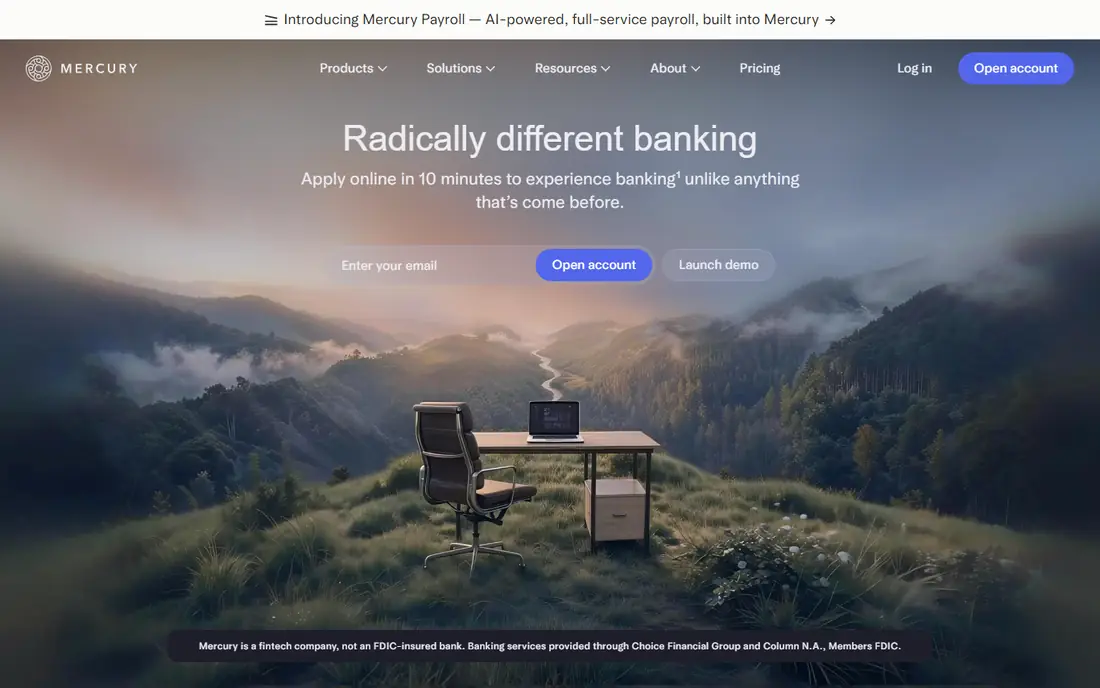
Mercury fits venture-backed startups and funds well, and its clean dashboard and venture-focused account setup gives it a clear reason to be on a shortlist. It also provides treasury tools, cards, and accounting integrations, which helps a busy team keep daily work in one place instead of juggling separate tools. If your main need is fast setup with strong controls, start with a trial and test the exact workflow you will use most. The trade-off is cash deposits are not supported, which can be a problem for cash-heavy businesses, so check that point against your own volume, team size, and budget before you commit. Pricing, limits, and contract terms can change, so confirm the current plan page and read the fine print on any usage meter. When the fit is right, Mercury is a steady choice for fast setup with strong controls without adding needless complexity.
- No monthly fee on the base plan
- Cards and treasury tools
- Clear dashboard
- No cash deposits
- Support varies by plan

For funded startups that spend heavily on cards, Brex stands out because its corporate card and spend management tools. The addition of expense tracking, bill pay, and integrations with common accounting tools makes the day to day work feel more joined up, and it reduces the number of separate logins a team has to manage. Teams that care most about card rewards with tight spend controls will usually know within a week if the fit is right. On the downside, smaller or unfunded teams may find qualification or limits less friendly, which matters more as usage grows or as more people join. Read the pricing page closely, test support response times, and confirm how data can be exported later. If those checks pass, Brex can serve funded startups that spend heavily on cards well for card rewards with tight spend controls over a longer period.
- Corporate cards with rewards
- Spend controls
- Accounting links
- Qualification can favor funded companies
- Some features sit on paid tiers
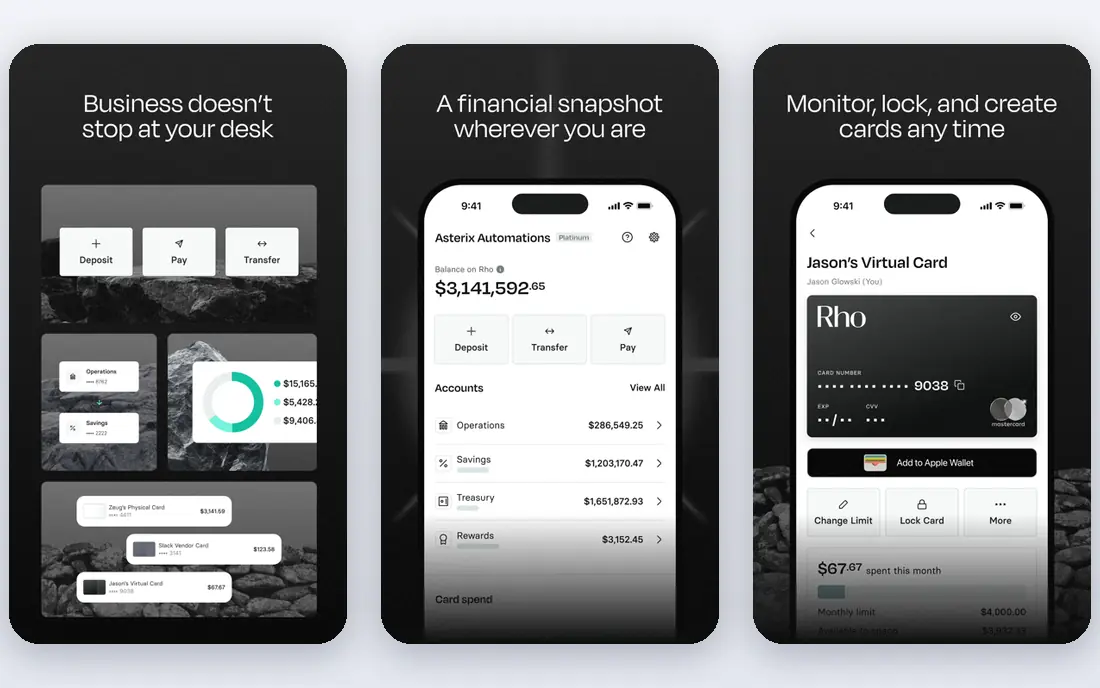
Rho was built with US startups that want one finance platform in mind, and that focus shows in how its combined banking, cards, and bill pay platform is presented. With treasury options, sub-accounts, and accounting integrations included, it covers more of the routine work than a narrow single-purpose tool can cover. If one login for banking and spending is high on your list, it deserves a serious look before you decide. That said, teams outside the United States cannot open an account, so a short pilot with real data is worth more than a feature list alone. Compare the total monthly cost at your expected volume, not just the headline starting price. For US startups that want one finance platform, that pilot usually shows quickly if Rho supports one login for banking and spending in practice.
- No monthly platform fee on core banking
- Bill pay and cards included
- US-incorporated companies only
- No sole proprietorships
Among the options here, Silicon Valley Bank appeals most to later-stage tech and life sciences companies because its long history with venture-backed companies and investors. It pairs that with venture debt, fund banking, and global payment options, so setup and daily use stay practical rather than theoretical. For buyers who rank a bank that understands venture rounds first, this is a sensible place to begin a comparison. In practice, smaller early-stage teams may find the process heavier than a fintech signup is the main reason some buyers look elsewhere, and it is worth weighing honestly. Check renewal terms, support hours, and any add-on fees before signing up. If those terms suit you, Silicon Valley Bank remains a practical option for later-stage tech and life sciences companies focused on a bank that understands venture rounds.
- Deep venture experience
- Venture debt and fund banking options
- Pricing is quote-based
- Onboarding can be more involved
Grasshopper Bank fits early-stage digital startups well, and its digital-first approach to startup banking gives it a clear reason to be on a shortlist. It also provides business checking, savings tools, and API access, which helps a busy team keep daily work in one place instead of juggling separate tools. If your main need is a simple digital account with startup features, start with a trial and test the exact workflow you will use most. The trade-off is customers who want in-person branches will need another option, so check that point against your own volume, team size, and budget before you commit. Pricing, limits, and contract terms can change, so confirm the current plan page and read the fine print on any usage meter. When the fit is right, Grasshopper Bank is a steady choice for a simple digital account with startup features without adding needless complexity.
- Digital-first account with startup-focused features
- Smaller branch footprint
- Some features vary by account type
For small businesses that hold operating cash, Bluevine stands out because its checking account with interest tiers. The addition of bill pay, invoicing tools, and accounting integrations makes the day to day work feel more joined up, and it reduces the number of separate logins a team has to manage. Teams that care most about earning interest on operating cash will usually know within a week if the fit is right. On the downside, the best rates sit behind paid tiers, so read the plan details, which matters more as usage grows or as more people join. Read the pricing page closely, test support response times, and confirm how data can be exported later. If those checks pass, Bluevine can serve small businesses that hold operating cash well for earning interest on operating cash over a longer period.
- Business checking with tiered interest options
- Bill pay and cards
- Top interest tiers require paid plans
- Cash deposit options are limited
Relay was built with founders who budget by account in mind, and that focus shows in how its multiple sub-accounts for clear money separation is presented. With team cards, bill pay, and accounting links included, it covers more of the routine work than a narrow single-purpose tool can cover. If organizing cash by purpose is high on your list, it deserves a serious look before you decide. That said, teams that need complex treasury tools may outgrow the base plan, so a short pilot with real data is worth more than a feature list alone. Compare the total monthly cost at your expected volume, not just the headline starting price. For founders who budget by account, that pilot usually shows quickly if Relay supports organizing cash by purpose in practice.
- Up to many sub-accounts for budgeting
- Cards for team members
- Some advanced features require paid plans
- No cash deposits in most cases
Among the options here, Novo appeals most to solo founders and very small teams because its simple setup and low-friction checking. It pairs that with invoicing, expense tracking, and app integrations, so setup and daily use stay practical rather than theoretical. For buyers who rank a low-cost account that is easy to run first, this is a sensible place to begin a comparison. In practice, growing venture-backed teams may need more fund and treasury support later is the main reason some buyers look elsewhere, and it is worth weighing honestly. Check renewal terms, support hours, and any add-on fees before signing up. If those terms suit you, Novo remains a practical option for solo founders and very small teams focused on a low-cost account that is easy to run.
- Simple checking with invoicing and integrations
- Fewer advanced treasury features than venture-focused rivals
How we picked these
We checked official feature pages, pricing pages, and app store listings, and we read privacy policies and public user reviews to see where each product helps and where it falls short. We favored products that are available in the United States in October 2026, that publish clear pricing or a clear way to get a quote, and that fit the topic without stretching the definition. Where a price could not be verified on the vendor site, we wrote See website rather than guessing. We also weighed who each product is really for, not just who it claims to serve. A low starting price means little if the plan you need costs far more, and a long feature list means little if daily use is slow or confusing. That is why each write-up names one honest weakness next to its strengths, and why the comparison table uses the same order as the list below.
How to choose a venture banking partner
Start with coverage and access: confirm how deposits are protected, how wires are approved, and who can approve payments. Compare the full stack, not just the monthly fee: cards, bill pay, accounting links, treasury yield, and foreign wires all change the real cost. Ask about fund accounts separately from operating accounts, since venture funds, SPVs, and management companies often need separate structures. Test support before a deadline: send a question, check response time, and confirm how urgent wire issues are handled.
FAQ
Do venture-backed startups need a special bank?
Not always, but venture-focused banks understand priced rounds, SAFE notes, board approvals, and large inbound wires better than a general branch bank. That familiarity can save time during a fundraise, and it often means better treasury and venture debt options later. A general business bank can still work for a simple operating account.
What is the difference between a fund account and an operating account?
An operating account holds a startup's day to day cash for payroll, vendors, and rent. A fund account holds capital for a venture fund, an SPV, or a management company, with its own controls, reporting, and compliance needs. Some providers support both, while others focus on only one side.
How much should we keep in one bank?
That depends on your cash balance, your sweep coverage, and your risk tolerance, so check the provider's current FDIC and sweep disclosures. Many venture-backed teams spread cash across sweep networks or treasury products rather than leaving a large balance in a single checking account. Talk to your finance lead or adviser about a structure that fits your stage.
Are fintech banking platforms real banks?
Most are not banks themselves. They partner with chartered banks that hold deposits, and the platform provides the app, cards, and tools. Read the partner bank disclosure, confirm which bank holds your funds, and check how sweep coverage is described before you move money.
Is Mercury FDIC insured?
Mercury states that deposits are held at partner banks and that sweep programs can extend coverage beyond a single bank limit. Coverage terms and partner banks can change, so read the current disclosure on the Mercury site and confirm the limit that applies to your account type before relying on a specific figure.