Best Chargeback Management Software in 2026: 9 Tools Compared
Compare the best chargeback management software for online stores, with prevention, alerts, and dispute recovery tools explained in plain terms. We compare.
- Editor's choice
 Chargeflow
Online stores that want automated dispute recovery
Starts atSee websiteVisit chargeflow.ioFull review - Great alternative
 Justt
Larger stores that want managed dispute recovery
Starts atSee websiteVisit justt.aiFull review - Also consider
 Chargebacks911
Larger merchants that want end-to-end dispute help
Starts atSee websiteVisit chargebacks911.comFull review
TL;DR:
- Prevention and recovery solve different problems, so many stores need both, not only one.
- Success fees suit stores with few disputes, while per-alert fees suit stores that want to stop disputes early.
- A recovered dispute still counted toward your dispute rate in the month it filed.
- Note: this guide gives general information only, not legal or financial advice for your store.
Quick comparison
| Tool | Best for | Starts at | Free plan? | |
|---|---|---|---|---|
| Chargeflow | Online stores that want automated dispute recovery | See website | Yes | Visit |
| Justt | Larger stores that want managed dispute recovery | See website | No | Visit |
| Chargebacks911 | Larger merchants that want end-to-end dispute help | See website | No | Visit |
 Midigator | Stores that want prevention plus recovery in one platform | See website | No | Visit |
 Signifyd | Stores that want fraud screening with a guarantee | See website | No | Visit |
 Riskified | Larger stores that want fraud decisions with a guarantee | See website | No | Visit |
 Chargeback.io | Stores that want pay-per-alert prevention | See website | No | Visit |
 Sift | Stores that want fraud and abuse signals before approval | See website | Free trial | Visit |
 Kount | High-volume stores with in-house risk teams | See website | No | Visit |
The best chargeback management software
Note: this article gives general information only. For advice on thresholds, reserves, or contracts, speak to your payment processor or a qualified adviser, because rules vary by processor and card network. We focused on fit for ordinary buyers, not only on feature counts.
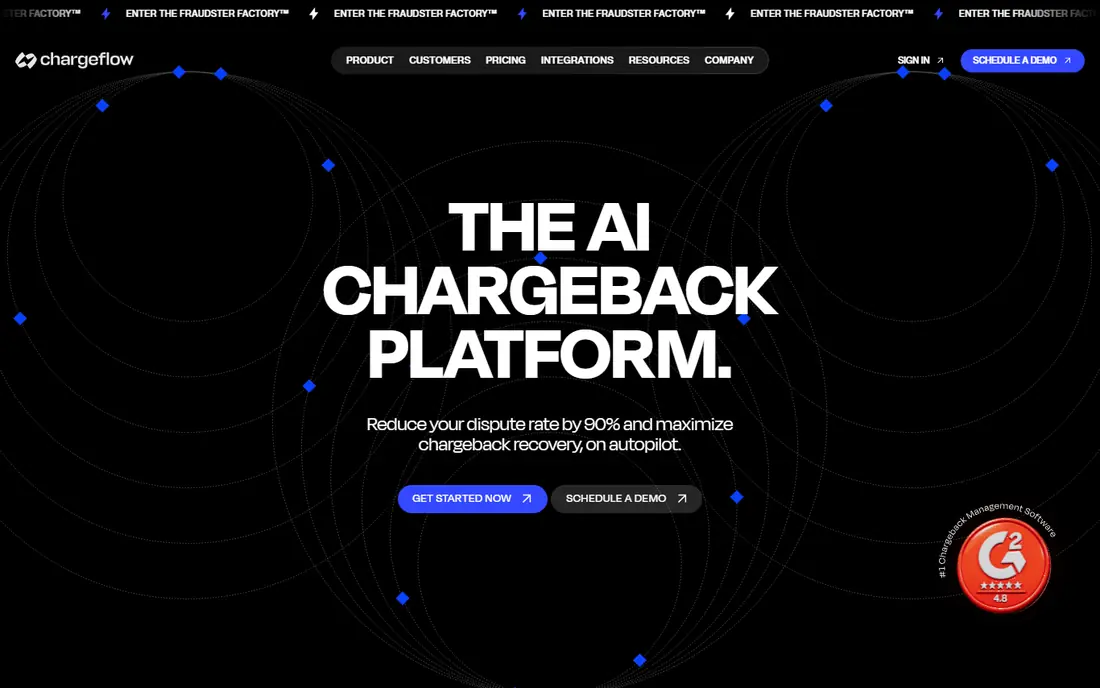
This is the pick to shortlist first when fit matters more than a long feature list. Chargeflow is aimed at online stores that want automated dispute recovery. Its clearest strength is automated evidence and dispute submission. It also offers success-fee recovery with no monthly fee on the core product, and analytics across processors for dispute trends.
The trade-off is success fee has no per-win cap, so large wins cost more, and scanning and alerts bill separately from recovery. Before you commit, check the plan that matches your size, confirm what support is included, and test the core workflow with a real example from your own work. That short test will tell you more than a feature list, and it will show whether the limits matter for your team.
- Automated evidence and dispute submission
- Success-fee recovery with no monthly fee on the core product
- Analytics across processors for dispute trends
- Success fee has no per-win cap, so large wins cost more
- Scanning and alerts bill separately from recovery
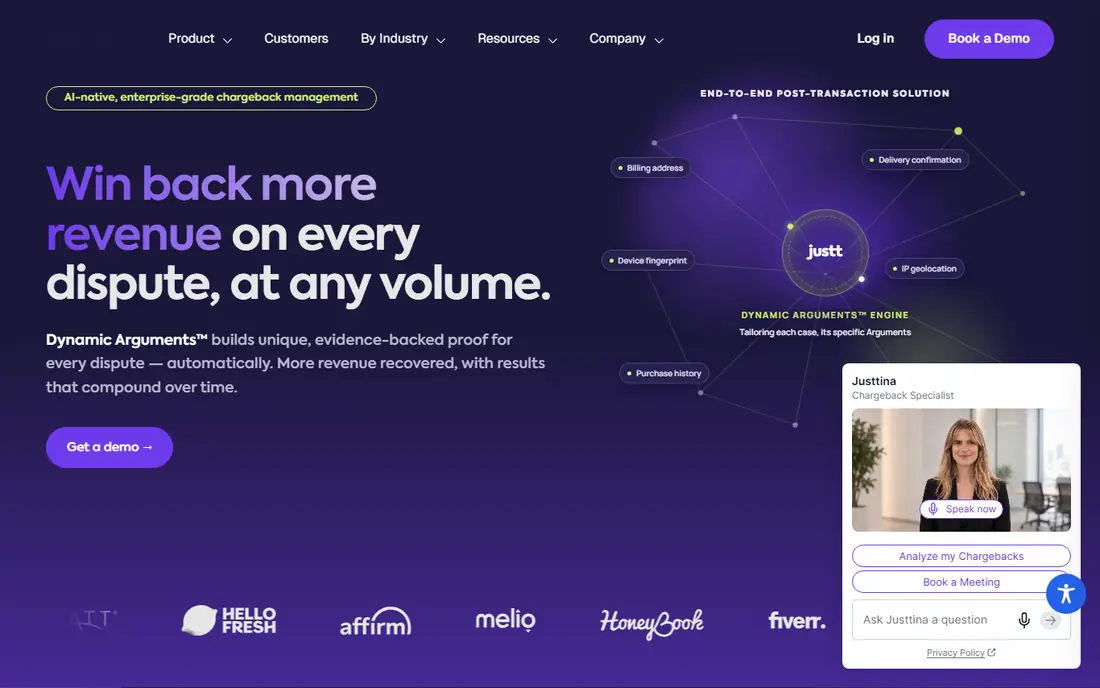
A different kind of buyer will get more from this next option. Justt is aimed at larger stores that want managed dispute recovery. Its clearest strength is managed recovery with tailored evidence. It also offers focus on higher-value disputes for larger merchants, and dashboard for dispute outcomes and trends.
The trade-off is pricing is custom and suits larger volumes, and smaller stores may find the service heavier than they need. Before you commit, check the plan that matches your size, confirm what support is included, and test the core workflow with a real example from your own work. That short test will tell you more than a feature list, and it will show whether the limits matter for your team.
- Managed recovery with tailored evidence
- Focus on higher-value disputes for larger merchants
- Dashboard for dispute outcomes and trends
- Pricing is custom and suits larger volumes
- Smaller stores may find the service heavier than they need
Chargebacks911
Best for: Larger merchants that want end-to-end dispute help
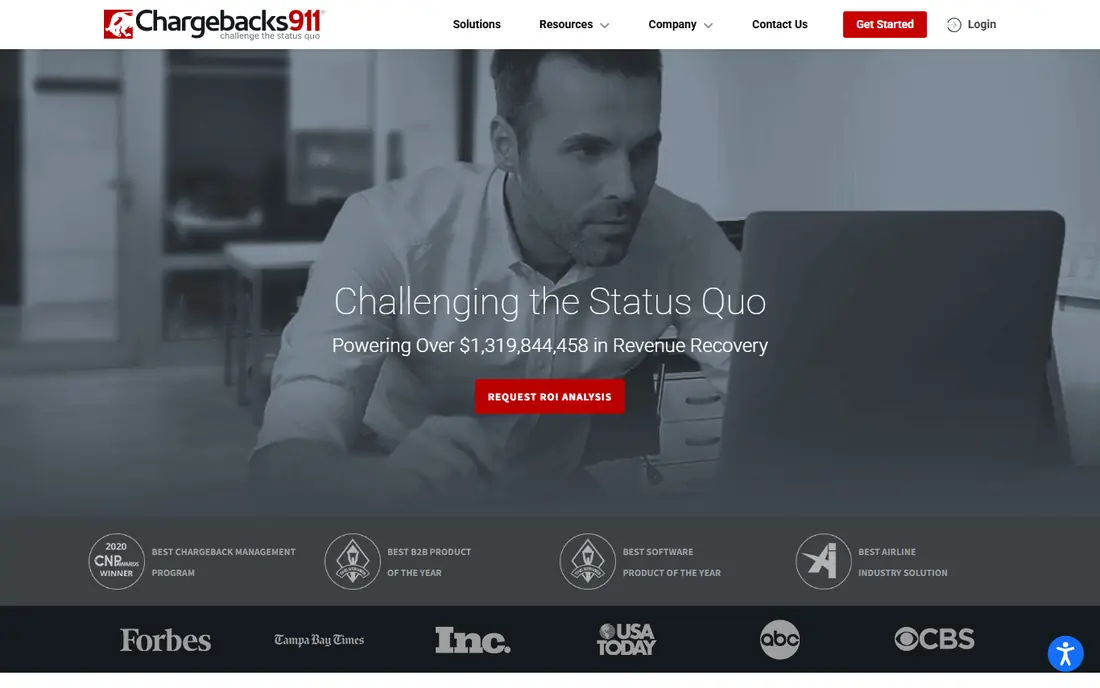
If your main worry is day-to-day workload, this option deserves a close look. Chargebacks911 is aimed at larger merchants that want end-to-end dispute help. Its clearest strength is end-to-end dispute management and support. It also offers technology plus expert guidance for complex cases, and broad integration range with payment systems.
The trade-off is pricing is custom and not published, and smaller stores may not need the full service range. Before you commit, check the plan that matches your size, confirm what support is included, and test the core workflow with a real example from your own work. That short test will tell you more than a feature list, and it will show whether the limits matter for your team.
- End-to-end dispute management and support
- Technology plus expert guidance for complex cases
- Broad integration range with payment systems
- Pricing is custom and not published
- Smaller stores may not need the full service range
Some buyers need depth in one area rather than breadth across many, and that is where this option fits. Midigator is aimed at stores that want prevention plus recovery in one platform. Its clearest strength is prevention alerts alongside dispute recovery. It also offers analytics on dispute causes and trends, and tools to track prevention impact over time.
The trade-off is pricing needs a vendor conversation, and setup benefits from clean processor and order data. Before you commit, check the plan that matches your size, confirm what support is included, and test the core workflow with a real example from your own work. That short test will tell you more than a feature list, and it will show whether the limits matter for your team.
- Prevention alerts alongside dispute recovery
- Analytics on dispute causes and trends
- Tools to track prevention impact over time
- Pricing needs a vendor conversation
- Setup benefits from clean processor and order data
For a smaller budget or a smaller team, this option keeps the scope workable. Signifyd is aimed at stores that want fraud screening with a guarantee. Its clearest strength is fraud screening at checkout with a financial guarantee. It also offers liability shift on approved orders under its terms, and abuse prevention alongside fraud screening.
The trade-off is pricing is a share of approved order value, and guarantee terms need a careful read before you rely on them. Before you commit, check the plan that matches your size, confirm what support is included, and test the core workflow with a real example from your own work. That short test will tell you more than a feature list, and it will show whether the limits matter for your team.
- Fraud screening at checkout with a financial guarantee
- Liability shift on approved orders under its terms
- Abuse prevention alongside fraud screening
- Pricing is a share of approved order value
- Guarantee terms need a careful read before you rely on them
This option suits buyers who want a familiar, widely used platform and plenty of outside help. Riskified is aimed at larger stores that want fraud decisions with a guarantee. Its clearest strength is fraud decisions with a chargeback guarantee on approved orders. It also offers machine learning across a large order network, and tools for policy abuse and returns fraud.
The trade-off is pricing is custom for larger merchants, and smaller stores may find the model heavier than needed. Before you commit, check the plan that matches your size, confirm what support is included, and test the core workflow with a real example from your own work. That short test will tell you more than a feature list, and it will show whether the limits matter for your team.
- Fraud decisions with a chargeback guarantee on approved orders
- Machine learning across a large order network
- Tools for policy abuse and returns fraud
- Pricing is custom for larger merchants
- Smaller stores may find the model heavier than needed
When growth is the plan, this option is worth weighing early. Chargeback.io is aimed at stores that want pay-per-alert prevention. Its clearest strength is per-alert pricing with no monthly minimum. It also offers alerts from major card networks in one setup, and auto-refund thresholds for low-value alerts.
The trade-off is prevention only, so filed disputes need another tool, and fraud screening at checkout needs a separate product. Before you commit, check the plan that matches your size, confirm what support is included, and test the core workflow with a real example from your own work. That short test will tell you more than a feature list, and it will show whether the limits matter for your team.
- Per-alert pricing with no monthly minimum
- Alerts from major card networks in one setup
- Auto-refund thresholds for low-value alerts
- Prevention only, so filed disputes need another tool
- Fraud screening at checkout needs a separate product
A practical, less flashy choice can be the right call, and this option plays that role well. Sift is aimed at stores that want fraud and abuse signals before approval. Its clearest strength is fraud and abuse signals across orders and accounts. It also offers risk scoring to support manual review, and good fit for firms with in-house risk staff.
The trade-off is it is a screening tool, not a full dispute recovery service, and pricing is custom and needs a sales conversation. Before you commit, check the plan that matches your size, confirm what support is included, and test the core workflow with a real example from your own work. That short test will tell you more than a feature list, and it will show whether the limits matter for your team.
- Fraud and abuse signals across orders and accounts
- Risk scoring to support manual review
- Good fit for firms with in-house risk staff
- It is a screening tool, not a full dispute recovery service
- Pricing is custom and needs a sales conversation
Close the shortlist with an option that fills a gap the others leave open. Kount is aimed at high-volume stores with in-house risk teams. Its clearest strength is fraud screening with detailed risk signals. It also offers strong fit for high-volume order review, and part of Equifax, with broad data signals.
The trade-off is pricing is custom with no published tiers, and needs in-house staff to get full value from the signals. Before you commit, check the plan that matches your size, confirm what support is included, and test the core workflow with a real example from your own work. That short test will tell you more than a feature list, and it will show whether the limits matter for your team.
- Fraud screening with detailed risk signals
- Strong fit for high-volume order review
- Part of Equifax, with broad data signals
- Pricing is custom with no published tiers
- Needs in-house staff to get full value from the signals
How we picked these
We compared official feature pages, pricing pages, and app store listings, and we checked privacy policies and public reviews where they helped explain support, limits, and real-world use. We favored products that exist and work today, that fit the topic closely, and that offer a clear audience and a clear trade-off.
We did not claim hands-on testing that did not happen, and we did not add products that only partly fit the topic. Where a price varies by address, plan, or quote, we wrote See website rather than inventing a number, so you can verify the current figure on the vendor page before you buy.
How to choose chargeback management software
Separate prevention, screening, and recovery
Prevention alerts stop a dispute before it files, screening stops risky orders before approval, and recovery fights disputes after they file. A store near a processor threshold needs prevention first, while a store losing revenue to filed disputes needs recovery first. Many stores use one tool for each stage.
Compare the full fee, not only the headline rate
Add success fees, per-alert fees, per-scan fees, and any monthly fees into one estimate based on your last three months of disputes. A 25 percent success fee looks simple, but a large recovered order carries a large fee, while a per-alert fee is steadier for high dispute counts. Run the math on your own numbers before you sign.
Check evidence quality with a sample case
Ask each vendor to show a sample evidence pack for a dispute type you actually face, such as a subscription renewal or a friendly fraud claim. Check that order, delivery, and customer messages are pulled together clearly, because weak evidence wastes the fee even when the tool is automated.
FAQ
What is the best chargeback management software for Shopify stores?
Chargeflow is a common starting point for Shopify stores, because it connects easily and charges a success fee on recovered disputes. Chargeback.io suits stores that want prevention alerts, while Midigator suits stores that want prevention and recovery together.
What are the best chargeback management tools for small stores?
Small stores often start with a free analytics tier or a pay-per-alert prevention tool, then add recovery only when dispute volume justifies the fee. A success-fee tool can work well at low volume, because you pay mainly when money is recovered.
How much does chargeback management software cost?
Costs vary by model, from per-alert fees and success fees to custom quotes for larger merchants. Chargeflow charges a success fee on recovered disputes, while other vendors charge per alert, per transaction, or a share of order value, so compare models on your own dispute history.
Can software guarantee that I will win chargebacks?
No tool can guarantee wins, because issuers and card networks decide each case on the evidence and the dispute reason. Good tools improve evidence quality and speed, but outcomes still vary by dispute type, order history, and documentation.
Do I still need to fix the causes of chargebacks?
Yes, because software handles disputes after they happen, while clear billing descriptors, easy cancellations, and fast support reduce disputes at the source. Track dispute reasons each month and fix the top two causes, or dispute volume will keep rising even with good recovery.