Best Career Management Software in 2026: 8 Tools Compared
best career management software compared: 8 tools for growth plans, reviews, and mobility, with pricing, free trials, and picks for midsize and large teams.
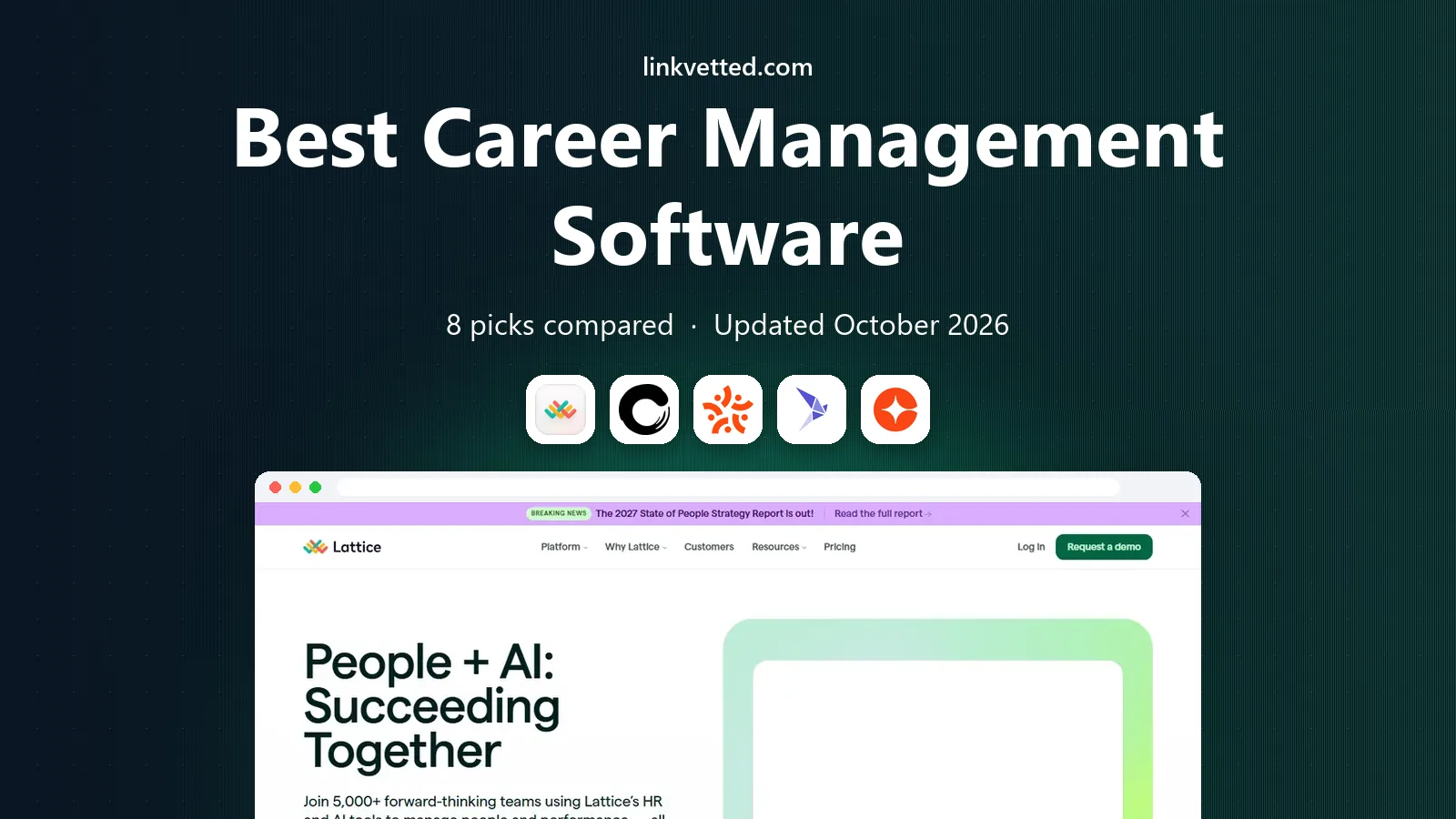
- Editor's choice
 Lattice
Midsize performance and growth
Starts at$13 per seat per monthVisit lattice.comFull review - Great alternative
 Culture Amp
Engagement-led development
Starts atSee websiteVisit cultureamp.comFull review - Also consider
 15Five
Regular check-ins and growth
Starts at$4 per user per monthVisit 15five.comFull review
TL;DR:
- Lattice is the clearest pick for midsize teams, with performance reviews, goals, and career tracks from $13 per seat per month, plus add-ons for engagement and compensation.
- Culture Amp suits firms that want deep engagement and development science, but pricing is by quote and implementation is heavier.
- 15Five and Leapsome pair regular check-ins with growth plans, which helps managers support development between annual reviews.
- Cornerstone, Workday, and Degreed serve large enterprises with learning, succession, and internal mobility at scale, but all require a sales process and a larger budget.
Quick comparison
| Tool | Best for | Starts at | Free plan? | |
|---|---|---|---|---|
| Lattice | Midsize performance and growth | $13 per seat per month | No | Visit |
| Culture Amp | Engagement-led development | See website | No | Visit |
| 15Five | Regular check-ins and growth | $4 per user per month | Free trial | Visit |
 Leapsome | Global people platform | See website | No | Visit |
 Cornerstone | Enterprise learning and careers | See website | No | Visit |
 Workday | Large enterprise HCM careers | See website | No | Visit |
 Degreed | Skills and learning pathways | See website | No | Visit |
 Betterworks | Goals-led career growth | See website | No | Visit |
The best career management software
Career management software helps employees plan growth, track skills, and move internally, while giving managers and HR a clear view of readiness, gaps, and next roles. We compared tools on career paths, development plans, reviews, learning links, succession, and pricing transparency for midsize and large teams.

Lattice is our pick for most midsize firms because career growth is tied to the work managers already do. Employees can see career tracks, set growth areas, and track progress in one-on-ones, while reviews, goals, and feedback feed the same record. Foundations pricing starts at $13 per seat per month, with Engagement from $4 and Grow from $4 as add-ons in recent listings, so a team can start with performance and add development tools as needed.
The catch is total cost. Add-ons stack up, and the annual minimum can make Lattice expensive for a very small team. For a firm with 50 to 1,000 staff that wants clear tracks, fair reviews, and manager tools in one place, Lattice balances depth and usability well. Check the current plan page for minimums and add-on pricing before budgeting.
- Clear career tracks and growth plans
- Performance reviews tied to goals
- Modular add-ons for engagement and compensation
- Add-ons raise total cost
- $4,000 annual minimum applies in some listings, so very small teams should check terms
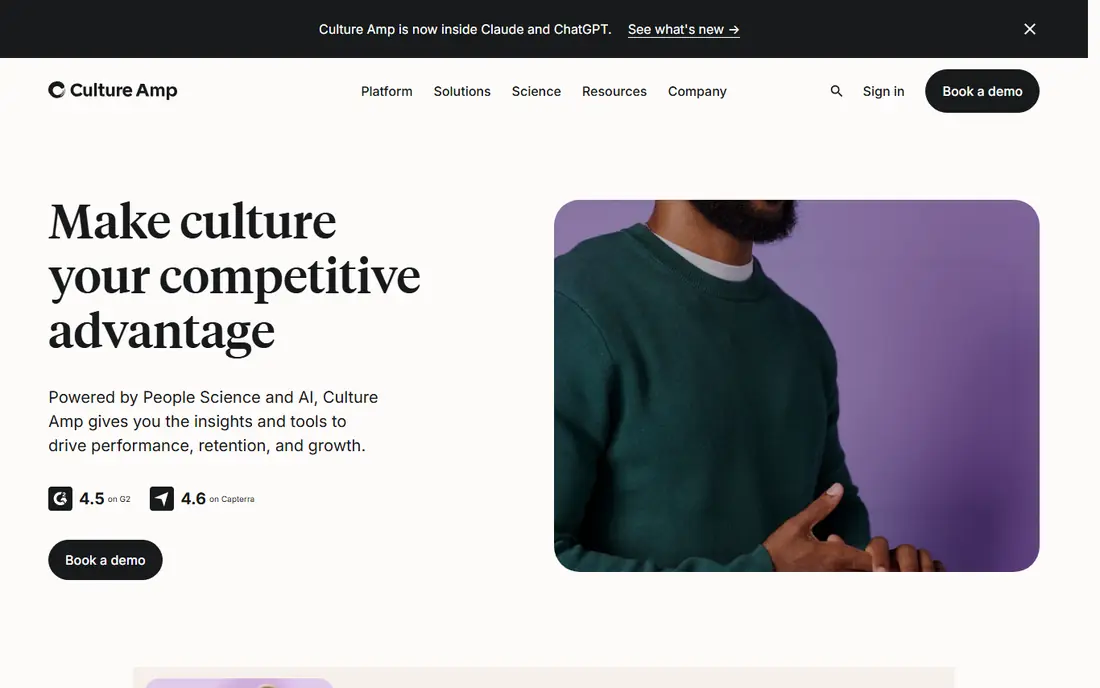
Culture Amp suits firms that start career work from engagement and listening data. Surveys reveal where growth, manager support, and clarity need work, and Develop tools help turn those insights into individual plans. Benchmarks against similar firms help HR argue for development investment with data, not only anecdotes.
The drawback is pricing and scale. Culture Amp quotes every customer and bills annually, with minimums that suit midsize and large firms better than small teams. Firms without HR staff to run surveys and act on results may not get full value. Firms that already invest in engagement science will find Culture Amp a strong career partner.
- Deep engagement surveys and benchmarks
- Develop tools for growth plans
- AI Coach for employee development support
- Quote-only pricing
- Best value for larger firms with dedicated HR staff
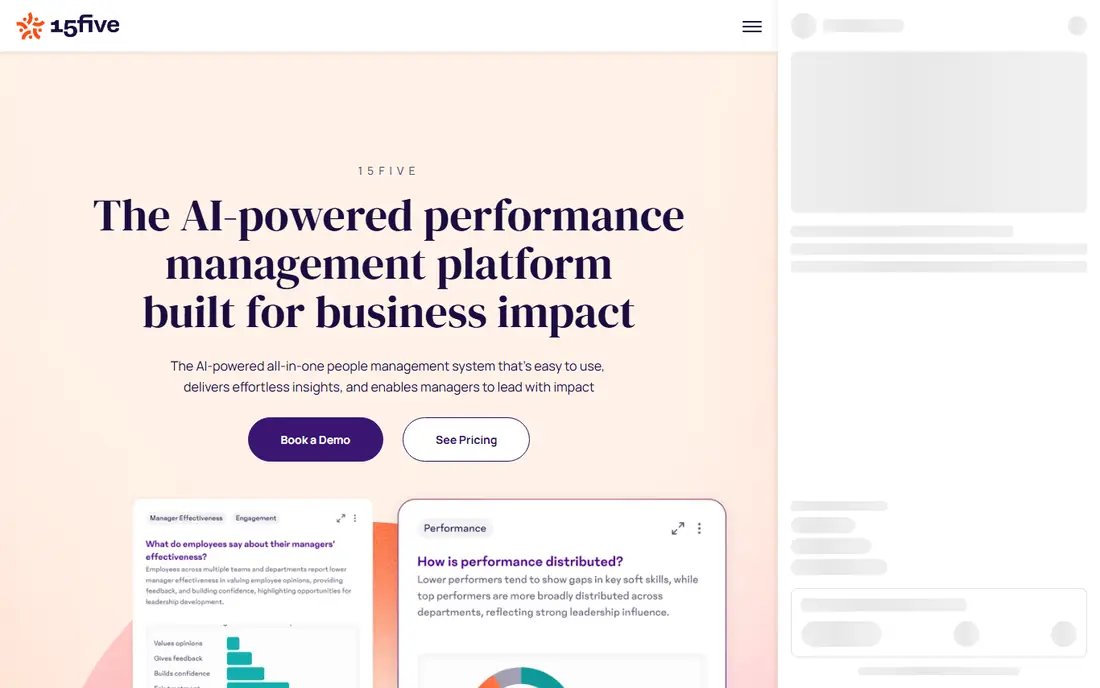
15Five is built around regular manager conversations, which is where career growth actually happens for most staff. Weekly check-ins, one-on-ones, and pulse surveys give managers early signals on workload, clarity, and growth needs, while Perform plans add reviews, goals, and calibration. Engage starts at $4 per user per month on annual billing, with Perform plans higher.
The limit is career structure. 15Five supports growth conversations well, but it does not offer the same depth of career tracks, succession, and learning pathways as Lattice, Cornerstone, or Degreed. For a midsize team that wants managers to talk about growth often, 15Five is a practical pick. For a firm that needs formal career frameworks, pair it with a stronger path tool or choose Lattice.
- Weekly check-ins and one-on-ones
- Engage surveys from $4 per user per month
- Perform plans for reviews and goals
- Career path depth is thinner than Lattice or Cornerstone
- Higher tiers needed for full performance features
Leapsome pairs performance reviews with goals, engagement surveys, learning, and career development in one people platform. That breadth suits global teams that want one system for reviews, feedback, and growth, rather than separate tools for each job. Modular pricing lets a firm buy only the modules it needs, though published per-employee rates vary by source.
The catch is pricing clarity. Leapsome is largely quote-based, and module costs stack, so a team cannot budget from a single public price alone. Firms with distributed teams, multiple languages, and a need for learning plus performance in one place will find Leapsome worth a demo. Smaller US-only teams may find Lattice or 15Five simpler to buy.
- Reviews, goals, engagement, and learning in one platform
- Strong for European and global teams
- Modular pricing by feature
- Quote-based pricing in most listings
- Modules add cost, so totals need checking
Cornerstone OnDemand is an enterprise talent platform that links learning, performance, career paths, and succession. Employees can find courses, build development plans, and explore internal roles, while HR can plan succession and spot skill gaps across a large workforce. That scale suits firms with thousands of staff, multiple sites, and formal compliance training needs.
The trade-off is effort and cost. Cornerstone is quote-only, and rollout requires planning, data work, and change management. Small and midsize firms will find it heavy. Large firms that need learning and careers in one governed system, with reporting for compliance and succession, will find Cornerstone a strong long-term choice.
- Deep learning, career, and succession tools
- Strong for regulated and large workforces
- Talent marketplace for internal moves
- Quote-only pricing
- Implementation is an enterprise project
Workday suits large firms that already run Workday for HR, payroll, and finance. Career Hub helps employees explore roles, skills, and mentors, while managers and HR can see talent, succession, and mobility data alongside workforce plans. That single HCM record reduces duplicate data and keeps career moves tied to headcount and pay planning.
The limit is ecosystem. Workday is an enterprise HCM purchase, not a standalone career app for a small team, and pricing is by quote. Firms not on Workday should not buy it for career features alone. Firms already on Workday will get the most value by adding Career Hub rather than buying a separate career tool that must sync back to Workday.
- Career Hub and talent marketplace inside Workday HCM
- Strong workforce data and reporting
- Enterprise security and scale
- Quote-only pricing
- Best value only for firms already on Workday HCM
Degreed focuses career growth on skills. Employees can build a skill profile, find learning from many providers, and follow pathways toward a next role, while employers can see skill gaps and internal candidates for open roles. That skills view suits firms moving from job titles to skill-based hiring and internal mobility.
The catch is data work. Degreed delivers most value when skills, roles, and learning content are mapped well, which takes HR and learning team effort. Pricing is by quote, and small firms may find the platform larger than needed. Large firms investing in upskilling, reskilling, and internal mobility will find Degreed a useful career layer on top of their HR system.
- Skills-based learning pathways
- Content from many providers in one place
- Career mobility tied to verified skills
- Quote-only pricing
- Needs content and skills data work to deliver full value
Betterworks ties career growth to goals and performance conversations. Teams set objectives, track progress, run reviews with calibration, and use feedback to guide development plans. That goals-led model suits firms that already run OKRs and want career talks grounded in real work, not only annual ratings.
The limit is career framework depth. Betterworks is strong on goals and reviews, but its career path and learning tools are thinner than Lattice, Cornerstone, or Degreed. Firms that want goals plus growth conversations will like Betterworks. Firms that need formal career ladders, succession, and learning pathways should choose a deeper career platform.
- Goals and OKRs tied to growth conversations
- Calibration and review tools
- Manager coaching support
- Quote-based pricing
- Career path features are less deep than Lattice or Cornerstone
How we picked these
We compared official feature and pricing pages, people platform guides, and vendor documentation, and we focused on tools that support career paths, development plans, or internal mobility, not only survey or payroll tools. We favored tools with clear review, goal, and growth features, and we noted where pricing is by quote. We left out general HRIS tools with no real career development features, even if they store employee records well.
What to check before you buy
Career software only works if managers use it and employees trust it. Test the employee view, not only the HR dashboard, and check whether career paths, skills, and next roles are clear to a new hire in five minutes.
Career paths that staff can understand
Ask for sample career tracks for your main roles, and check whether levels, skills, and promotion criteria are written in plain language. A beautiful framework that staff cannot understand will not change behavior. Pilot with one department, gather feedback, and revise tracks before a company-wide launch.
Manager time and training
Career tools add manager work if they are not designed well. Check how long a review, check-in, and growth plan take, and whether managers get prompts and coaching help. Budget training time, and set a simple cadence, such as monthly check-ins and quarterly growth reviews, rather than adding many new rituals at once.
Data, privacy, and fairness
Confirm who can see reviews, ratings, and career data, and how calibration and bias checks work. Employees will not share honest growth goals if they fear ratings will be used against them. Set clear rules for data access, and review promotion and pay outcomes by group to spot unfair patterns early.
FAQ
What is the best career management software?
Lattice is our pick for most midsize teams, Culture Amp suits engagement-led firms, and 15Five suits teams that want regular check-ins. Cornerstone, Workday, and Degreed serve large enterprises with learning and mobility at scale. The best choice depends on team size, HR staff, and whether you need formal career frameworks or regular growth conversations.
How much does career management software cost?
Published prices include Lattice from $13 per seat per month, 15Five Engage from $4 per user per month, and many enterprise tools by quote. Add-ons for engagement, compensation, learning, and succession raise totals, so request a full quote at your headcount and module mix before budgeting.
Can career software help with internal mobility?
Yes, when it links skills, career paths, and open roles. Workday Career Hub, Cornerstone talent marketplace, and Degreed skills pathways all help employees find internal moves. The tool alone is not enough, however. Firms also need managers who support moves, clear posting rules, and time for learning.
Do employees need training to use career software?
Yes, a short onboarding helps. Employees need to know how to set goals, request feedback, and build a growth plan, while managers need training on reviews, calibration, and career conversations. A pilot group and simple guides improve adoption far more than a long manual.
Is career management software only for large firms?
No, but scale matters. Midsize firms benefit most from Lattice, 15Five, and Leapsome, while very small teams can often manage growth with reviews and check-ins in a simpler tool. Large firms need the governance, succession, and reporting that Cornerstone, Workday, and Degreed provide. Choose the smallest tool that covers your real career workflows.