Best Brands for Managed IT Services in 2026: 8 Brands Compared
We compared the best brands for managed it services on support, security, cloud skills and price, so businesses can find a provider that fits their size.
- Editor's choice
 IBM
Enterprise hybrid cloud and AI operations
Starts atSee websiteVisit ibm.comFull review - Great alternative
 Accenture
Enterprise transformation and managed operations
Starts atSee websiteVisit accenture.comFull review - Also consider
 Cognizant
AI-led IT operations
Starts atSee websiteVisit cognizant.comFull review
TL;DR:
- IBM, Accenture and Cognizant lead for large enterprises that need global coverage and complex transformation work.
- Dataprise is the clearest small and mid-market option here, with more transparent per-user pricing than the enterprise firms.
- Infosys, TCS and HCLTech suit companies that want large delivery teams and strong multi-cloud or automation skills.
- DXC fits organizations modernizing older systems, while Accenture fits companies pairing managed services with strategy.
- Almost all enterprise providers price by quote, so compare service levels and exit terms, not just a headline rate.
Quick comparison
| Tool | Best for | Starts at | Free plan? | |
|---|---|---|---|---|
| IBM | Enterprise hybrid cloud and AI operations | See website | No | Visit |
| Accenture | Enterprise transformation and managed operations | See website | No | Visit |
| Cognizant | AI-led IT operations | See website | No | Visit |
 Infosys | Multi-cloud and regulated industries | See website | No | Visit |
 TCS | Large-scale managed operations | See website | No | Visit |
 HCLTech | Automation-led workplace and infrastructure | See website | No | Visit |
 DXC Technology | Legacy modernization | See website | No | Visit |
 Dataprise | Mid-market managed IT with clear pricing | $102 per user per month | No | Visit |
The best brands for managed it services
Managed IT services cover help desk support, network and endpoint management, security monitoring, cloud operations and backup. The right brand depends less on size alone and more on complexity, regulation and how much strategy you need. We compared official service pages, public reviews and published pricing where available.
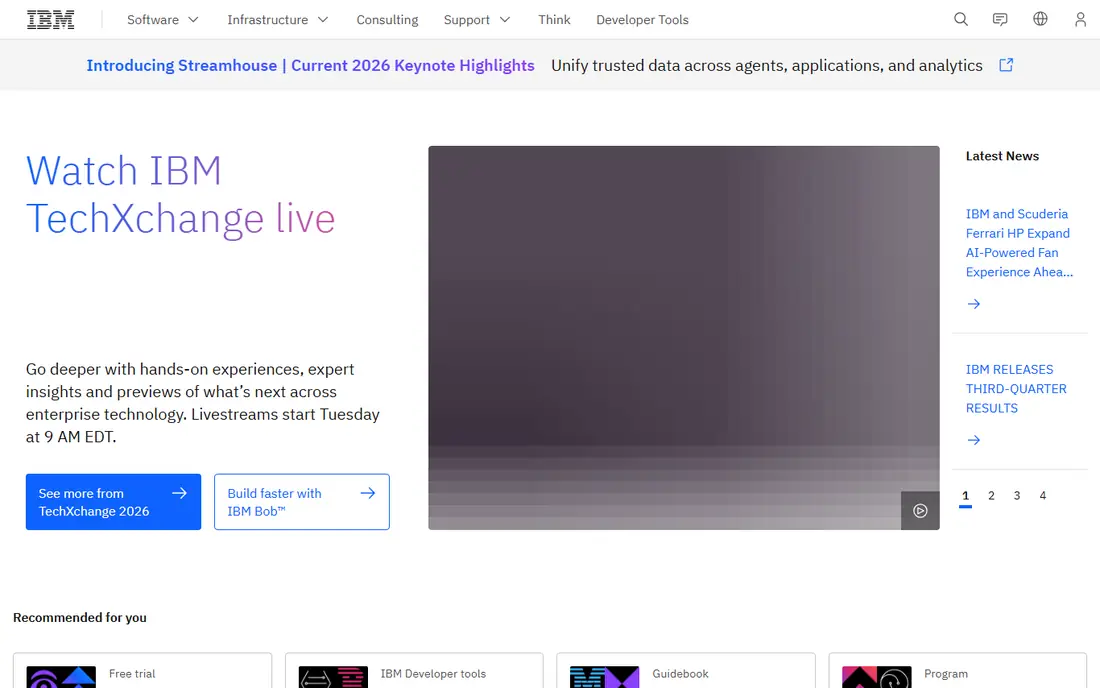
IBM managed services support infrastructure across on-premises systems, private cloud and public cloud, with automation drawn from its watsonx tools. That breadth suits large companies running mixed environments that cannot move everything to one cloud at once. Security monitoring, backup and disaster recovery are core parts of the offer, with global support centers.
Small businesses will usually find IBM more than they need and harder to price without a sales engagement. Contract size and process reflect enterprise work. For a large organization that wants one accountable provider for complex infrastructure, IBM remains a top-tier brand.
- Deep hybrid cloud experience
- AI automation tools
- Broad security and compliance coverage
- Quote-only enterprise pricing
- Can be costly for small firms
- Large-vendor process can feel slow
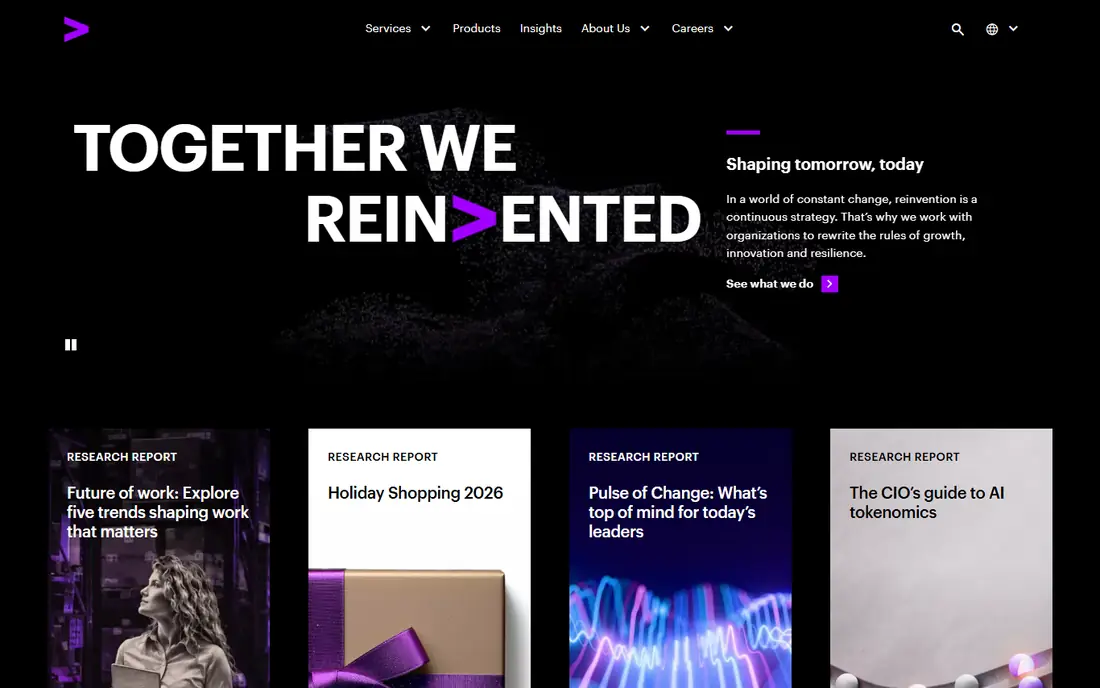
Accenture pairs managed IT operations with consulting, which helps companies that want to change how IT works, not just keep current systems running. Its managed services cover cloud operations, application management and workplace support, with automation used to resolve routine tickets faster. Partnerships with AWS, Azure and Google Cloud give clients choice across clouds.
The trade-off is scale and cost. Accenture engagements are typically large and multi-year, and a small company seeking basic support will get better value elsewhere. For an enterprise planning a multi-year modernization alongside daily operations, Accenture offers strategy and delivery under one roof.
- Combines strategy with managed operations
- Strong cloud partnerships
- Large global delivery team
- Premium pricing
- Engagements often run for years
- Less suited to simple help desk needs
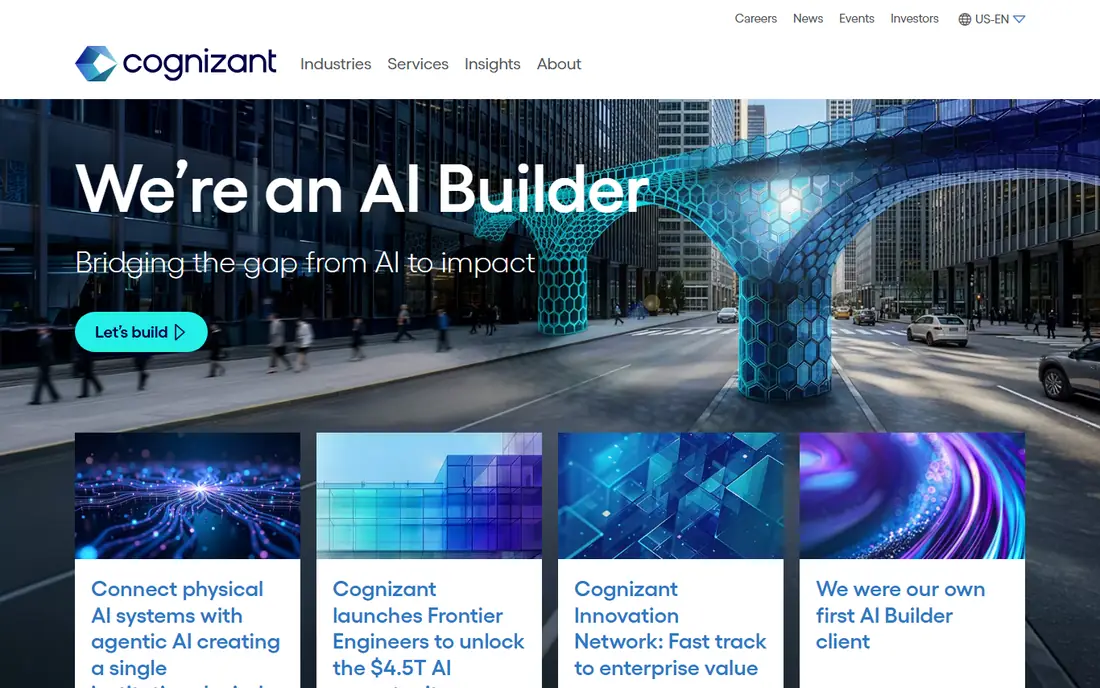
Cognizant focuses on using automation and analytics to run IT operations with fewer manual steps. Services include infrastructure management, application support, cloud operations and digital workplace help. Its experience in healthcare and financial services helps regulated clients that need careful handling of data and compliance.
As with other large firms, pricing is by quote and the experience depends on the assigned delivery team. Ask for named leads, service levels and references in your industry before signing. For mid-sized to large companies that want operations modernized, not just maintained, Cognizant is a strong candidate.
- Strong AIOps and analytics focus
- Broad application management
- Healthcare and financial services experience
- Quote-only pricing
- Delivery quality can vary by team
- Less simple for very small clients
Infosys manages IT infrastructure and applications across multiple clouds, with an emphasis on governance, compliance and steady service delivery. That suits companies in regulated sectors that need documented processes, audit trails and consistent reporting. Its scale also helps organizations with operations in several countries.
The formal onboarding and enterprise process can feel heavy for a company with 20 staff and simple needs. Infosys is best viewed as a long-term partner for growing or large organizations. If your priority is predictable, well-governed operations across clouds, Infosys deserves a place on the shortlist.
- Broad multi-cloud management
- Strong governance processes
- Large global workforce
- Quote-only pricing
- Onboarding can be formal
- Small clients may get less attention
Tata Consultancy Services, known as TCS, is one of the largest IT services firms in the world. Its managed services cover infrastructure, applications, cloud operations and workplace support for enterprises across many industries. Scale is the main advantage: TCS can staff large, multi-country programs and sustain them over many years.
That scale is also the weakness for smaller buyers. Decision-making can feel slow, and a small account may not get senior attention. TCS fits best when a company needs a proven, large delivery partner for a broad managed services program. Use its official site to confirm current service lines, since the group site covers many businesses beyond managed IT.
- Very large delivery capacity
- Long enterprise track record
- Broad service range
- Quote-only pricing
- Can feel bureaucratic
- Innovation speed varies by account
HCLTech manages infrastructure, cloud operations and digital workplace services, with automation used to cut repetitive service desk work. Its engineering background helps companies that run custom applications alongside standard office systems. Workplace services, device lifecycle and employee support are particular strengths.
HCLTech sells mainly to mid-sized and large organizations, so small firms may find the sales process long. Regional delivery quality can also differ, so check references in your time zones. For companies that want fewer manual tickets and a more automated support experience, HCLTech is worth comparing with Cognizant and Infosys.
- Strong automation for service desk and infrastructure
- Digital workplace focus
- Engineering depth
- Quote-only pricing
- Service quality varies by region
- Enterprise-oriented sales process
DXC Technology specializes in managing complex, older IT environments while moving them toward modern platforms in stages. That includes mainframes, custom applications and industry systems that cannot simply be replaced overnight. Its managed services cover infrastructure, applications and workplace support, with modernization roadmaps as a separate strength.
Cloud-native startups will find DXC an odd fit, and modernization timelines need careful management. For manufacturers, insurers and public-sector bodies with legacy estates, DXC offers experience that generalist providers often lack. Ask for a phased plan with clear milestones rather than an open-ended transformation promise.
- Deep legacy system experience
- Mainframe and modernization skills
- Government and manufacturing focus
- Quote-only pricing
- Modernization projects can run long
- Less suited to cloud-native startups
Dataprise serves mid-market companies that want managed IT support without enterprise sales complexity. Published material puts managed services from around $102 per user per month, with help desk support, cybersecurity monitoring and virtual CIO consulting. That transparency makes it easier for a 50 to 500 person company to budget and compare.
Dataprise does not match the global delivery scale of IBM or Accenture, and final pricing still depends on users, devices and security needs. For a US mid-market firm that wants a single provider for support, security monitoring and IT planning, Dataprise is one of the most approachable brands on this list.
- Published per-user starting price
- 24/7 help desk
- VCIO consulting for planning
- Smaller global footprint than enterprise firms
- Pricing varies by scope
- Less suited to very large enterprises
How we picked these
We compared official service descriptions, support models, cloud partnerships and public reviews for managed IT brands with current operations. We included both global enterprise firms and a mid-market provider so readers can see the full range. We favored brands with documented security, monitoring and cloud operations, and we noted where pricing requires a quote rather than inventing a figure.
How to choose a managed IT provider
Start with the outcome you need. A company that mainly needs fast help desk support and patching should not buy a transformation program. A company modernizing legacy systems should not hire a provider whose main skill is small-business support. Write down response times, coverage hours, security monitoring scope and who owns vendor management before you compare prices.
Check service levels, security and exit terms
Ask for written service levels for critical incidents, planned maintenance and onboarding. Confirm how security alerts are handled overnight, how backups are tested and how often you receive reports. Also check contract length, price changes at renewal and how your data and documentation transfer if you leave. A provider that cannot answer those questions clearly is a risk, whatever its brand name.
FAQ
What do managed IT services usually include?
They usually include help desk support, device and network monitoring, patching, backup, security monitoring and vendor management. Some providers add cloud operations, virtual CIO planning and compliance help. Always get a written list, since packages with the same name can cover very different work.
How much do managed IT services cost?
Mid-market per-user pricing often starts near $100 per user per month, while enterprise programs are quoted by scope and can run far higher. Final cost depends on users, devices, locations, security needs and service hours. Request a quote that separates support, security and project work.
Is a large brand always better than a smaller provider?
No. Large brands offer scale and global coverage, but smaller providers often give faster access to senior staff and clearer pricing. The best choice depends on your size, locations, compliance needs and how complex your systems are.
What is a vCIO and do I need one?
A virtual CIO is an outsourced senior IT adviser who helps plan budgets, security and system changes. Small and mid-sized firms without a full-time IT leader often benefit, while larger firms with in-house leadership may only need operational support.
How long does onboarding take?
Simple support onboarding can take a few weeks, while enterprise programs with security tooling and legacy systems can take months. Ask for a timeline with milestones, a named project lead and a plan for the transition period.
Can I keep some IT work in-house?
Yes. Many companies keep strategy or specialist application work in-house while outsourcing help desk, monitoring and patching. Agree on who owns each task in writing so gaps do not appear between teams.