Top 5 BI Tools for Startups for 2026 (Prices and Free Plans)
Searching for the best BI tools for startups? Here are 5 options with prices and free plans. Each listing flags where it falls short. Refreshed for 2026.
- Editor's choice
 Mode
SQL, Python and visual analysis together
Starts atSee websiteVisit mode.comFull review - Great alternative
 Domo
End-to-end data journey and governance
Starts atSee websiteVisit domo.comFull review - Also consider
 Tableau
Deep visual analytics and exploration
Starts at$15 per user per monthVisit tableau.comFull review
Direct answer
This list puts Mode first for SQL, Python and visual analysis together. Listed starting prices: Tableau from $15 per user per month and Metabase from $90 a month. Alternatives: Domo for end-to-end data journey and governance, and Tableau for deep visual analytics and exploration. Prices, free plans and limits for all 5 tools follow.
TL;DR:
- Number one here is Mode, a fit for SQL, Python and visual analysis together.
- Metabase suits open source analytics teams can verify.
- Tableau is the lowest-priced starter here at $15 per user per month.
- Just one of the 5 tools, Tableau, has a free plan.
Last checked November 2026. Prices and plan details were read from the vendors' own pages in November 2026; vendors change plans often, so confirm the current price on the vendor site before you buy.
Quick comparison
| Tool | Best for | Starts at | Free plan? | |
|---|---|---|---|---|
| Mode | SQL, Python and visual analysis together | See website | Not stated | Visit |
| Domo | End-to-end data journey and governance | See website | Free trial | Visit |
| Tableau | Deep visual analytics and exploration | $15 per user per month | Yes | Visit |
 Sigma | Spreadsheet-style building on warehouse data | See website | Free trial | Visit |
 Metabase | Open source analytics teams can verify | $90 a month | Free trial | Visit |
Tool-by-tool breakdown
This LinkVetted guide covers 5 BI tools for startups. Each profile lists a starting price, free plan details, strengths and drawbacks, so you can drop poor fits quickly.
Pick Mode if this describes you: SQL, Python and visual analysis together. Mode is a collaborative data product that brings SQL, R, Python and visual analytics into one place. So teams can link, analyze and share quicker.
Worth adding: the workflow leans technical, so non-technical teammates may find it less approachable than a simple dashboard tool. As for the details, if most of your questions come from business users instead of analysts, consider a self-service-first system instead. Mode shows no starting price here, so confirm the cost on the vendor site. On free options: Not stated.
Where it is weaker: Less pitched at casual self-service users.
- Collaborative data platform
- Python and visuals
- Technical workflows suit analyst-heavy teams
Domo makes the most sense for end-to-end data journey and governance. Domo positions itself around governed data for AI agents, strengthening the data journey from connection and movement to preparation, expanded access and business-critical insights.
Drawbacks to consider: Wide product may exceed early needs.
Worth adding: if you chiefly need a single dashboard layer over one warehouse, a narrower tool may be quicker to adopt. This comparison lists no price for Domo; ask the vendor. Free options: Free trial.
- Link and move data from any source
- Prepare and expand data access
- Full rollout takes planning
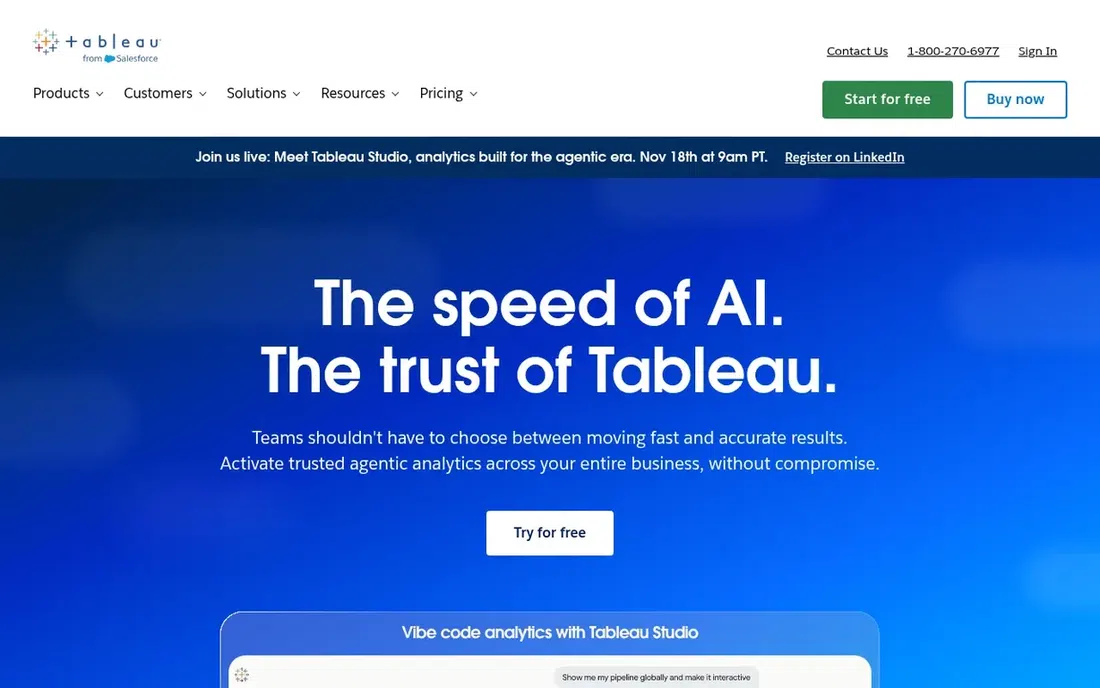
Tableau is aimed squarely at deep visual analytics and exploration. Tableau is a business intelligence and analytics platform built around visual exploration. It links to almost any database, lets users drag-and-drop to produce visualizations, and supports sharing results with a click.
Choose Tableau when visual analysis depth matters. More specifically, if your priority is a quick, straightforward dashboard instead of deep exploration, a lighter tool may fit better. Worth adding: for startups with a dedicated analyst or a data-minded founder, it supplies room to grow into more advanced reporting without switching systems later. Entry price for Tableau: $15 per user per month. Free access exists with Tableau.
Drawbacks to consider: Full feature depth takes time to learn.
- Links to almost any database
- Share dashboards with a click
- Can feel heavy for very lean teams
Sigma was built for spreadsheet-style building on warehouse data. Sigma describes itself as an AI runtime for business, letting teams build and run AI apps, dashboards and agents on governed warehouse data. Choose Sigma when governed warehouse data and spreadsheet-style building are both priorities.
Highlights: Build with chat, spreadsheet.
Also, users can work through chat, a spreadsheet interface, SQL or Python. It assumes a warehouse-centric setup, so teams without one will have to invest before getting value. No starting price is listed for Sigma here; confirm pricing on the vendor site. On free options: Free trial.
Honest limits: Feature breadth can overwhelm new teams.
- Supports dashboards
- Apps and agents
- Warehouse-centric setup is required
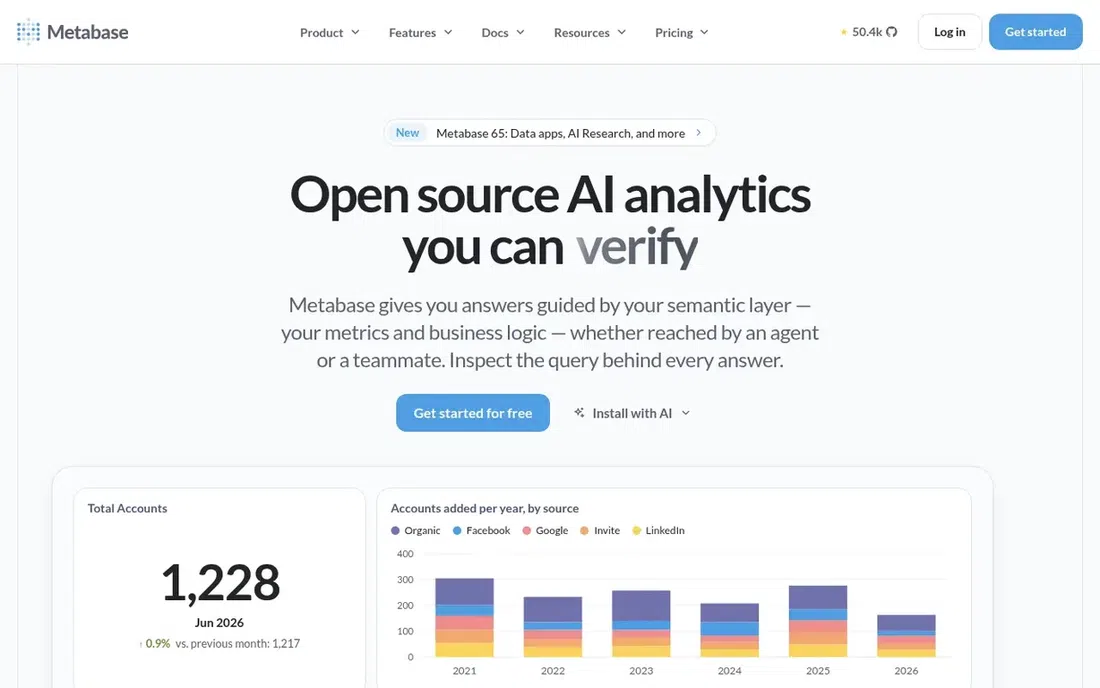
Metabase was built for open source analytics teams can verify. Getting the semantic layer right takes planning, and complicated modeling still benefits from someone with data skills. As for the details, Metabase is an open source analytics system that grounds every answer in a semantic layer of metrics and business logic.
So users can inspect the query behind a result. That transparency appeals to startups that want non-technical teammates to ask questions whereas keeping the logic auditable and consistent across the company. Metabase starts at: $90 per month. Free options: Free trial.
Watch-outs: Setup and governance need some care.
- Queries can be inspected
- Open source analytics approach
- Advanced modeling may need data skills
What went into this list
Selection started from tools commonly considered for BI tools for startups, then narrowed to 5 that have clear pricing information or a clear quote process. Figures are shown as the vendors publish them. Billing terms, seat minimums and add-ons can change the real cost. Tools are placed by general fit for BI tools for startups, with price clarity and free access as tie-breakers. A different team can reasonably rank them differently.
A buyer's checklist
- Get a written quote from Mode, Domo and Sigma; the list shows no starting price for them.
- Look at the free plan from Tableau closely: its caps decide whether it is usable for real work.
- Run a trial of Domo, Sigma and Metabase with real work before paying for a year; your own workflow is the best test.
- Before choosing Mode, weigh its main limit: technical workflows suit analyst-heavy teams.
- A short pilot of Domo with your real workflow tells you more than a feature table.
- Get the contract term, renewal terms and any onboarding fees from Sigma in writing.
FAQ
What is the cheapest option for BI tools for startups in this list?
On published monthly entry prices, Tableau is the lowest here at $15 per user per month. Entry price is only part of the cost, because seats, add-ons and billing terms can change the total. Prices, free plan details and limits for all 5 tools in this BI tools for startups roundup sit on the individual cards above.
Is Mode the right pick for everyone comparing BI tools for startups?
No single tool suits every team. Mode comes first because it fits SQL, Python and visual analysis together, while Domo suits end-to-end data journey and governance and Tableau suits deep visual analytics and exploration. Match the tool to your own size, budget and workflow before deciding.
Do these tools publish their prices?
Not all of them. Mode, Domo and Sigma publish no starting price, so expect a quote request for those. The rest, Tableau included, show a starting price, though seats and billing terms still change the final cost.
Which options for BI tools for startups have a free plan?
Tableau is the only tool in this list with a free plan. Free plans usually cap users, projects or features, so check the limits on the vendor page. Several others offer a trial instead. Each of the 5 options in this BI tools for startups guide has its own card above with the price, free plan and limits.
Which BI tool is a good match for a startup without a dedicated analyst?
Mode comes first here and is built for SQL, Python and visual analysis together. Buyers with other needs may prefer Domo (for end-to-end data journey and governance) or Tableau (for deep visual analytics and exploration). Compare costs and limits first.
Can technical teams combine SQL and visual analytics in one BI tool?
Yes. Mode merges SQL, R, Python and visual analytics in a collaborative product, and Sigma lets teams build with chat, spreadsheet, SQL or Python on governed warehouse data.
Sources
- https://mode.com
- https://www.domo.com
- https://www.tableau.com
- https://www.sigmacomputing.com
- https://www.metabase.com