Best B2B Ecommerce Platforms in 2026: 8 Platforms Compared
Compare the best B2B ecommerce platforms for wholesale pricing, quotes, net terms and ERP integration, with starting prices and honest trade-offs for 2026.
- Editor's choice
 Shopify Plus
Brands that sell B2B and direct to consumers
Starts at$2,300 per monthVisit shopify.comFull review - Great alternative
 BigCommerce
Mid-market wholesalers on a hosted platform
Starts atSee websiteVisit bigcommerce.comFull review - Also consider
 Adobe Commerce
Large, complex B2B catalogs
Starts atSee websiteVisit adobe.comFull review
TL;DR:
- B2B buying is different from retail buying, so contract pricing, company accounts, quotes and net terms matter more than a pretty storefront.
- Shopify Plus is the easiest enterprise option to price, while Adobe Commerce, OroCommerce and Salesforce suit larger teams with complex catalogs and ERP needs.
- WooCommerce can work for smaller wholesalers, but B2B features usually come from plugins and extra setup rather than one built-in system.
- Always test a real buyer workflow, including a quote, a repeat order and a purchase order checkout, before you sign a long contract.
Quick comparison
| Tool | Best for | Starts at | Free plan? | |
|---|---|---|---|---|
| Shopify Plus | Brands that sell B2B and direct to consumers | $2,300 per month | No | Visit |
| BigCommerce | Mid-market wholesalers on a hosted platform | See website | Free trial | Visit |
| Adobe Commerce | Large, complex B2B catalogs | See website | No | Visit |
 Salesforce B2B Commerce | Teams already invested in Salesforce | See website | No | Visit |
 OroCommerce | Distributors with contract pricing and quotes | See website | No | Visit |
 WooCommerce | Small wholesalers already on WordPress | Free | Yes | Visit |
 Shopware | Global sellers that want a flexible open platform | See website | No | Visit |
 commercetools | Large teams building a composable storefront | See website | Free trial | Visit |
The best B2B ecommerce platforms
We compared platforms on buyer accounts, pricing rules, quotes, payment terms, ERP connections and total effort to launch. The right choice depends on your catalog size, your sales process and how much technical help you have.

Shopify Plus suits a brand that already sells online and now wants to add wholesale buyers without running a second store. It supports company accounts, price lists and B2B checkout features, and it connects to many ERP, accounting and shipping tools through its app store. For a team with limited developers, that hosted model removes a lot of hosting and security work.
The catch is depth. Very complex contract pricing, multi-level approvals and unusual ERP logic may still need custom development or extra apps. Check the variable fee, the app costs and the migration effort before you compare the headline price with a quote-based rival.
- Published starting price
- Large app marketplace
- Fast setup for a hosted platform
- Some B2B workflows need apps
- Transaction fees can apply outside Shopify Payments
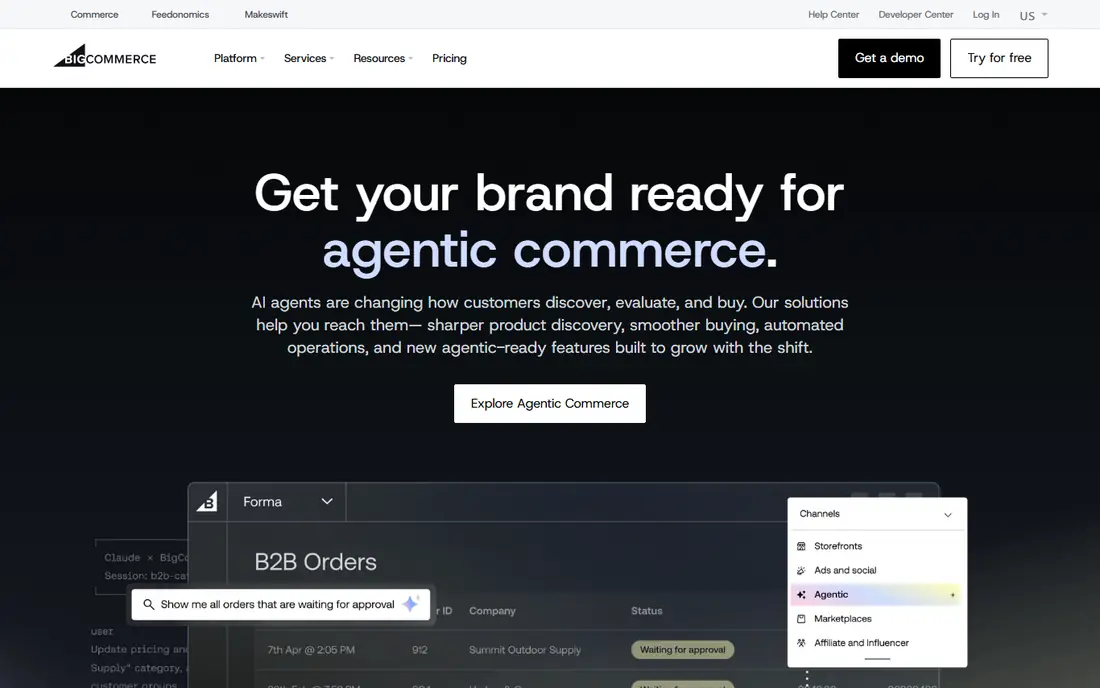
BigCommerce B2B Edition is built for buyers who need their own price lists, quick order forms and company hierarchies. A distributor can let different buyers see different products and prices, which is often the first thing that breaks on a retail platform. The hosted setup also means the vendor handles performance and security updates.
The main drawback is that the price you actually pay is negotiated, so two similar companies may not pay the same amount. Ask for the full cost, including B2B features, API limits and any implementation help, and test bulk ordering with your real product data.
- Built-in B2B Edition features
- Strong catalog tools
- No extra transaction fees on many plans
- Enterprise pricing is quote-based
- Advanced customization can still need developers
Adobe Commerce, formerly Magento Commerce, is the choice when the catalog, pricing rules and integrations are too complex for a simpler hosted tool. It supports company accounts, negotiated quotes, shared catalogs and a wide range of payment and shipping options. Large manufacturers and distributors use it because they can shape almost every part of the buying process.
That freedom comes with cost and time. You will need developers, hosting planning and ongoing maintenance, and implementation often takes months. It is a poor fit for a small team that just needs a wholesale order form this quarter.
- Deep customization
- Strong B2B quote and account features
- Large extension ecosystem
- High total cost
- Needs experienced developers
- Longer implementation
Salesforce B2B Commerce makes most sense when Salesforce is already the system where your customer, order and service data live. Buyers can reorder, manage accounts and see relevant pricing without a separate data patchwork. It also supports multiple storefronts and business models, which helps larger groups with several brands or regions.
The downside is that this is an enterprise purchase, not a quick signup. Pricing is negotiated, partners are often involved, and the total cost includes implementation and ongoing admin. Smaller sellers will usually get faster value from Shopify Plus or BigCommerce.
- Strong CRM and account data connection
- Flexible storefront options
- Global scale
- Quote-based pricing
- Implementation can be complex and costly
OroCommerce was built for B2B first, and that shows in the details. It handles price lists at customer, group and website level, quantity tiers, request-for-quote workflows and account hierarchies without forcing a retail model to fit. For a manufacturer or distributor with negotiated pricing, that native depth can save a lot of custom work.
The trade-off is ecosystem size and implementation effort. You may need a partner for ERP integration and custom workflows, and you should budget for training because buyers and sales reps will use quote and approval tools that simpler platforms do not have.
- Purpose-built B2B features
- Detailed price lists and RFQ workflows
- Flexible deployment
- Smaller app ecosystem than Shopify
- Needs technical resources
WooCommerce is the lowest-cost way to add wholesale selling to a WordPress site. The core store is free, and plugins can add wholesale pricing, registration forms, bulk ordering and quote requests. If your catalog is modest and your team knows WordPress, you can launch without an enterprise contract.
The honest catch is maintenance. You own hosting, updates, backups and plugin compatibility, and a stack of B2B plugins can become fragile as each one updates. Keep the plugin count low, test checkout after every major update, and move to a hosted B2B platform when order volume or pricing complexity grows.
- Free core plugin
- Huge WordPress plugin ecosystem
- Full control over content and design
- B2B features depend on plugins
- Hosting, security and updates are your job
Shopware suits sellers that need more flexibility than a closed hosted tool but do not want the full weight of Adobe Commerce. It supports B2B features such as business customer accounts, budgets and quote workflows in its higher plans, and it can handle multiple storefronts and languages. That makes it a useful option for companies selling across Europe and North America.
The main risk for US buyers is partner coverage and support hours. Check who will implement and support the store in your time zone, and confirm that your ERP, tax and payment providers have solid Shopware connections before you commit.
- Flexible rules and storefront options
- Strong European market presence
- B2B components
- Smaller US partner network than Shopify or Adobe
- Enterprise pricing is quoted
commercetools is not a ready-made wholesale store. It is a set of commerce APIs that your team uses to build exactly the buying experience you need, across web, mobile, sales portals and other channels. That API-first design helps large companies that already have product, pricing and order data in several systems.
For most small and mid-size sellers, that flexibility is also the problem. You need developers to build and maintain the storefront, checkout and buyer tools. Choose it only when you have the engineering team to use it, and a clear reason why a packaged B2B platform cannot fit your model.
- API-first design
- Flexible catalog and pricing models
- Strong multi-channel support
- Needs a strong engineering team
- No simple out-of-box B2B storefront
How we picked these
We compared official feature pages, pricing pages and documentation for B2B account management, price lists, quotes, payment terms, bulk ordering and ERP integration. We favored platforms with real B2B workflows rather than retail tools with a wholesale label, and we included both hosted and open options so smaller sellers and large enterprises both have a realistic shortlist. Prices shown are starting points or vendor quotes where pricing is negotiated, so confirm the full contract cost before you buy.
What to check before you choose a B2B platform
Start with your buyers, not the demo. List the five most common orders your team handles, including repeat orders, split shipments and orders that need approval. Then ask each vendor to show those exact workflows, with your pricing rules, not a clean sample catalog. A platform that looks good in a demo can still fail on a real quote approval or a purchase order checkout.
Next, check integration and total cost. Confirm how product, price, inventory and order data will move between the store and your ERP or accounting system, and who owns that connection when it breaks. Add implementation, apps, payment fees and admin time to the license price. The cheapest license can become the most expensive project if the integration needs constant fixing.
Finally, plan for buyer adoption. Wholesale buyers will keep emailing orders if the portal is confusing, so test it with two or three real customers before launch. Give them quick order by SKU, saved lists and clear delivery and payment terms. A short pilot will reveal more than a long feature checklist.
FAQ
What is the best ecommerce platform for B2B?
There is no single winner. Shopify Plus and BigCommerce suit most growing wholesalers, Adobe Commerce and OroCommerce suit complex contract pricing, and Salesforce suits teams already using Salesforce. Match the platform to your catalog, pricing rules and ERP first, then compare price.
Which ecommerce platform is best for B2B wholesale?
For wholesale, look for company accounts, customer-specific price lists, bulk and quick ordering, quotes and net terms. OroCommerce and Adobe Commerce offer the deepest native wholesale tools, while BigCommerce B2B Edition and Shopify Plus cover common wholesale needs with less setup.
Can I use Shopify for B2B sales?
Yes. Shopify Plus adds B2B features such as company accounts, price lists and B2B checkout, and many brands run B2B and direct sales from one system. Smaller sellers can also use regular Shopify plans with wholesale apps, but that route needs more testing.
How much does a B2B ecommerce platform cost?
Costs range from free for WooCommerce core, plus hosting and plugins, to a published $2,300 per month starting point for Shopify Plus, and negotiated enterprise quotes for Adobe Commerce, Salesforce and OroCommerce. Always add implementation, apps and payment fees to the license price.
Do B2B platforms support purchase orders and net terms?
Many do, but the details differ. Check whether net terms, credit limits, purchase order numbers and approval workflows are built in or need an app or custom work. Test a purchase order order from quote to invoice before you sign.
Is WooCommerce good for B2B?
WooCommerce can work well for small wholesalers with simple pricing and a WordPress team. It becomes harder to maintain as catalog size, pricing rules and order volume grow, at which point a hosted B2B platform is usually a better fit.