Best Aviation Authoring Software in 2026: 9 Tools Compared
We compared the best aviation authoring software for S1000D and ATA iSpec 2200 work, covering structured authoring, validation, reuse, and publishing.
- Editor's choice
 PTC Arbortext
Large structured aviation programs
Starts atSee websiteVisit ptc.comFull review - Great alternative
 Adobe FrameMaker
Print and XML publishing in one tool
Starts atSee websiteVisit adobe.comFull review - Also consider
 MadCap Flare
Topic based help and manuals
Starts atSee websiteVisit madcapsoftware.comFull review
TL;DR:
- S1000D and ATA iSpec 2200 work needs structured XML authoring, not a general word processor, because reuse, validation, and controlled publishing matter more than page layout alone.
- PTC Arbortext and Adobe FrameMaker remain the common enterprise choices for large aviation programs, while Oxygen XML Editor and MadCap Flare suit smaller or mixed teams.
- Cloud component systems such as Paligo and Heretto help distributed teams reuse topics and publish to web and PDF from one source.
- Pricing is mostly quote based at the enterprise end, so budget for implementation, training, and content migration as well as licences.
- Check support for your exact specification issue, data module types, and output formats before you commit, since two tools can both claim S1000D support and still differ in detail.
Quick comparison
| Tool | Best for | Starts at | Free plan? | |
|---|---|---|---|---|
| PTC Arbortext | Large structured aviation programs | See website | No | Visit |
| Adobe FrameMaker | Print and XML publishing in one tool | See website | Free trial | Visit |
| MadCap Flare | Topic based help and manuals | See website | Free trial | Visit |
 Oxygen XML Editor | Validation focused XML authoring | See website | Free trial | Visit |
 XMetaL | Structured authoring for enterprise teams | See website | Free trial | Visit |
 Author-it | Component reuse for documentation teams | See website | Free trial | Visit |
 Paligo | Cloud component content management | See website | Free trial | Visit |
 Heretto | Cloud structured authoring and publishing | See website | Free trial | Visit |
 IXIASOFT CCMS | DITA and S1000D content management | See website | No | Visit |
The best aviation authoring software
Aviation manuals live for decades, get revised constantly, and must stay consistent across fleets, operators, and regulators. The tools below are judged on structured authoring, standards support, reuse, review, and publishing.
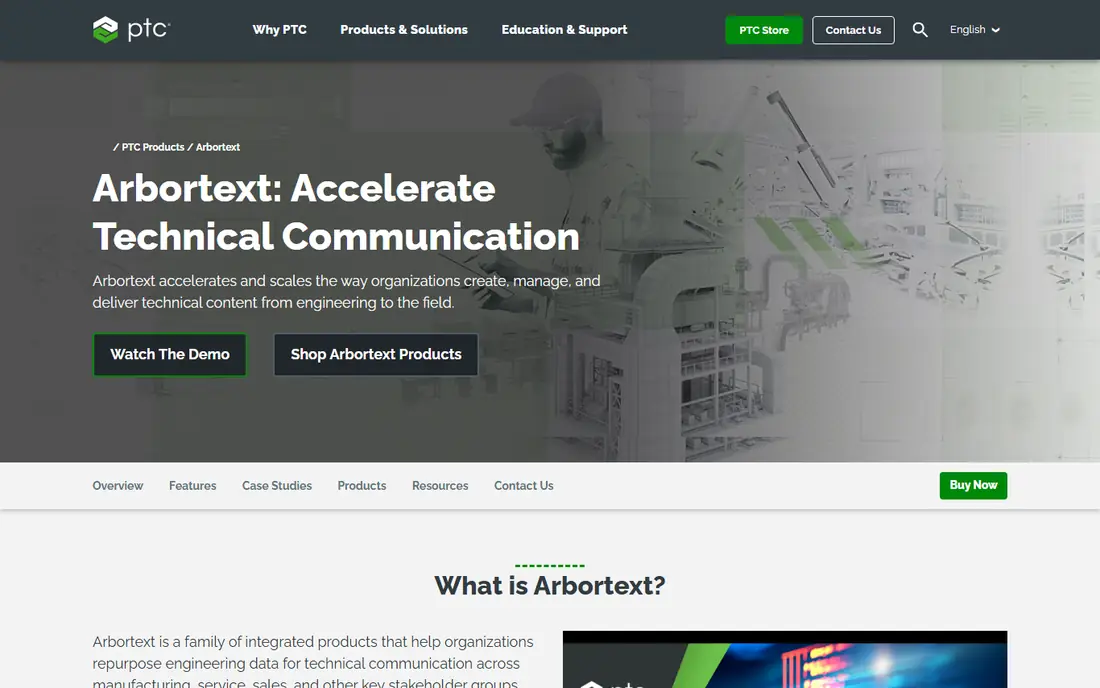
PTC Arbortext is a natural first look for airlines, airframers, and suppliers that already work in structured XML. It handles complex document models, conditional content, and multi-format publishing, which matters when one source must feed maintenance manuals, illustrated parts data, and service bulletins. Teams that work to S1000D or ATA iSpec 2200 benefit from governed authoring, where the editor enforces structure as writers type rather than catching errors at the end.
The trade off is scale. Arbortext is an enterprise platform, so expect a sales conversation, implementation planning, and training for authors and administrators. Smaller teams may find the setup heavy for a handful of manuals. For a large program with many contributors, strict change control, and a long service life, that overhead is often the point, since it protects consistency over years of revisions.
- Deep structured XML authoring
- Strong enterprise publishing
- Built for long lived technical content
- Enterprise pricing and setup
- Needs skilled administrators
- Overkill for a small manual set

Adobe FrameMaker has long served technical publications teams that need both polished print output and structured content. It supports XML and DITA based authoring, conditional text, and publishing to PDF, HTML, and other formats. For aviation teams moving from unstructured documents toward structured authoring, FrameMaker offers a gentler path, since writers can work in a familiar page based view while the underlying content stays structured.
That flexibility can also create confusion if governance is weak. Teams should agree on templates, styles, and validation rules before authors start work, or the same manual can drift into inconsistent structures. FrameMaker also works best as a desktop tool in a managed workflow, so teams that want fully browser based collaboration should compare it closely with cloud options below.
- Strong page layout plus XML support
- Familiar Adobe workflows
- Wide output options
- Structured workflows need careful setup
- Licence costs add up for large teams
- Less cloud native than newer tools
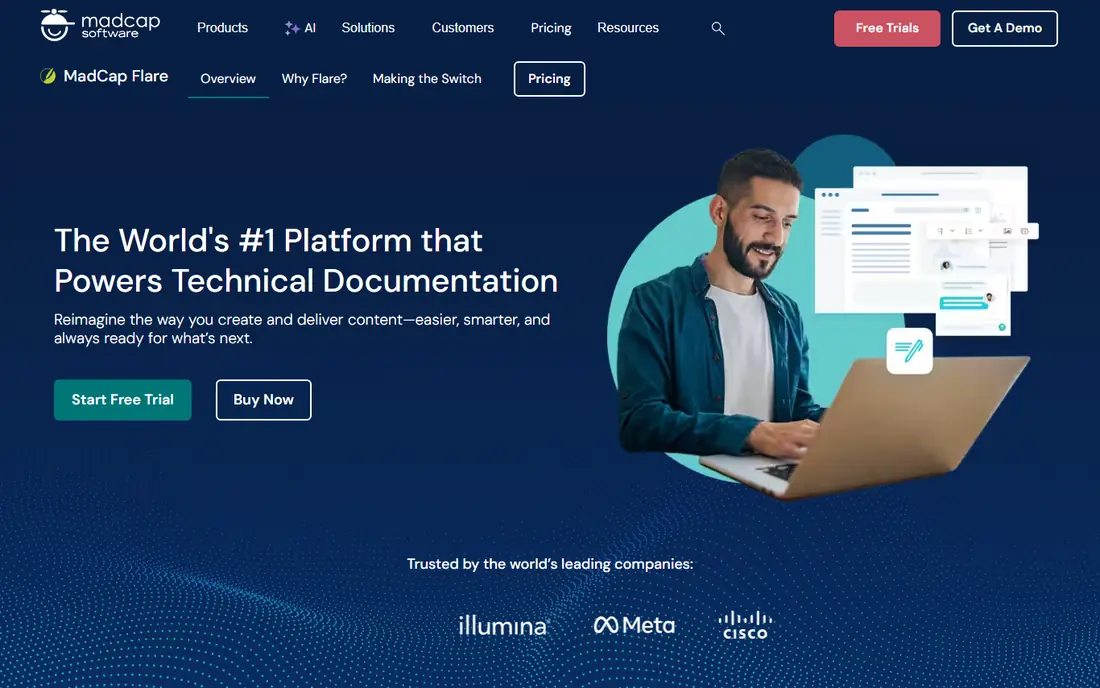
MadCap Flare is built around topics, snippets, and variables, so a warning, procedure, or parts note can be written once and reused across many manuals. That reuse model fits aviation documentation well, where similar procedures repeat across aircraft variants and maintenance tasks. Flare also publishes clean online help and PDF from the same source, which helps operators who read on tablets in hangars and offices alike.
Pure S1000D programs should check the details before choosing Flare. It is a strong technical communication tool first, and aviation specific data module handling may need plug-ins, custom setup, or a companion content system. For mixed documentation, including training material and operator guides alongside formal manuals, Flare gives a practical balance of control and speed.
- Single source publishing
- Strong topic reuse
- Good HTML and PDF output
- S1000D support needs add ons and configuration
- Learning curve for new authors
- Windows focused desktop tool
Oxygen XML Editor is the tool many XML specialists reach for first. It validates content against schemas, supports XSLT and XPath work, and handles DITA, DocBook, and other XML frameworks with care. For aviation teams that need to prove a data module is well formed and valid before it enters a common source database, that validation first approach is a real strength.
The honest catch is author experience. Oxygen rewards writers who understand XML structure, and it can feel dense for subject experts who only write occasionally. Pair it with clear templates, authoring guides, and review steps, and it becomes a precise workhorse. Teams that need built in workflow, translation management, and large scale component governance will usually add a content management system on top.
- Excellent validation and transformation tools
- Broad standards support
- Works on Windows, Mac, and Linux
- Interface can feel technical for non XML writers
- Publishing setup takes time
- Collaboration features are lighter than a full CCMS
XMetaL, from JustSystems, is designed to let subject experts write structured content without seeing raw XML. Writers work in a guided view, while the tool keeps the underlying structure valid. That matters in aviation, where maintenance experts and engineers hold the knowledge but may not want to learn XML syntax. The result can be cleaner content and fewer validation failures downstream.
XMetaL is an enterprise product, so small teams should ask for a clear price and a trial that mirrors their real document types. It also works best inside a planned content workflow, with a content management system or publishing pipeline beside it. When that workflow is in place, it is a steady choice for regulated, long lived manuals.
- Guided structured editing for non XML experts
- Enterprise integrations
- Long history in technical publishing
- Quote based pricing
- Smaller community than newer cloud tools
- Setup needs planning
Author-it treats documentation as reusable components rather than long files. A procedure, caution, or specification can live in one place and appear in many outputs, with variants for different aircraft configurations. For aviation teams that maintain overlapping manuals, that model cuts duplicate editing and reduces the risk that one manual gets updated while another is missed.
The work is in the setup. Teams need to plan component design, metadata, and publishing templates before they see the full benefit. Author-it also needs to be checked against specific S1000D or ATA requirements, since its strength is component management in general rather than one aviation schema alone. With that check done, it suits teams that publish many related manuals from shared content.
- Strong component reuse and single sourcing
- Web based review options
- Good for variant heavy content
- Needs configuration to match aviation schemas
- Pricing is quote based
- Migration from Word takes effort
Paligo is a cloud component content management system for structured authoring, with support for DITA and related XML workflows. Authors work in a browser, reuse topics, track versions, and publish to HTML and PDF without managing desktop installs. For distributed aviation teams, suppliers, and reviewers in different locations, that cloud model removes a lot of friction around files, versions, and access.
Aviation buyers should still confirm how Paligo handles their exact S1000D or ATA iSpec 2200 structures, including data module metadata and publication packages. Paligo is strongest when teams commit to component based writing and shared governance. Teams that only need a simple editor for a few manuals may find a desktop editor cheaper and simpler.
- Cloud based structured authoring
- Reuse and version control built in
- Multi-channel publishing
- Subscription costs scale with users
- Aviation schema support needs confirmation
- Needs reliable internet access for cloud work
Heretto offers cloud based structured authoring with a focus on DITA and component reuse. Writers edit in the browser, reviewers comment in context, and teams publish to web and PDF from the same source. The interface is more approachable than many legacy XML tools, which can help bring engineers and maintenance writers into a structured workflow without long training.
As with other cloud systems, aviation teams should test Heretto with real samples of their manuals, not just demo content. Check schema support, change tracking, and export options for downstream systems and customers. For teams that value cloud collaboration and a modern authoring experience, Heretto is a credible alternative to desktop heavy platforms.
- Browser based structured editing
- Component reuse
- Modern review and publishing workflows
- Newer and smaller than legacy vendors
- Aviation specific features need vetting
- Pricing is quote based
IXIASOFT CCMS is a content management system built for technical documentation teams, including those working with DITA and S1000D style content. It manages components, versions, workflows, translations, and publishing from a central repository, rather than leaving content scattered in files and folders. For aviation programs with many authors, reviewers, and deliverables, that central control helps keep audits and releases orderly.
IXIASOFT CCMS is not a light purchase. It is usually paired with an editor such as Oxygen or FrameMaker, and it needs implementation and administration. Teams that already feel the pain of version chaos, duplicate content, and slow reviews will get the most value. Smaller teams with a few manuals should start with an editor alone and add a CCMS only when volume justifies it.
- Purpose built content management for technical docs
- Strong reuse and workflow control
- Supports complex publishing pipelines
- Enterprise pricing and implementation
- Needs admin resources
- Not a standalone editor for casual writers
How we picked these
We compared official feature pages, pricing pages, standards documentation, and public reviews for tools used in aerospace and defence technical publishing. We favoured tools with current vendor support in October 2026, structured XML authoring, and a plausible path to S1000D or ATA iSpec 2200 output, and we noted where aviation specific support needs a plug-in, configuration, or companion system. We did not claim hands-on testing, and we treated vendor claims about standards support as a starting point for a buyer to verify with sample content.
What to check before you buy aviation authoring software
Start with your deliverables, not the feature list. List the manuals you must produce, the specification issues you must follow, the languages you publish in, and the formats your customers accept. Ask each vendor to author, validate, and publish a sample from your own content, including a revised data module and a variant for a second aircraft configuration. That sample test will reveal gaps in schema support, publishing, and review that a demo rarely shows.
Governance, reuse, and review
Decide who can create, edit, approve, and release content, and how changes are tracked. Aviation documentation needs clear audit trails, version history, and sign off, so check workflow, roles, and change history in detail. Plan your reuse model too. Components should be small enough to reuse, with metadata that makes them easy to find, and with rules that stop writers from copying text instead of linking to the source component.
Publishing, translation, and long term cost
Confirm output quality for PDF, HTML, and any interactive electronic technical publication format you need, and check how the tool handles graphics, tables, and cross references at scale. If you publish in more than one language, ask about translation memory, review of translated content, and handling of changed source topics. Finally, price the whole program: licences, implementation, migration, training, and ongoing administration, and ask what happens to your content if you later move to another system.
FAQ
What is the best aviation authoring software for S1000D?
There is no single winner, since the right tool depends on program size and workflow. Large programs often choose PTC Arbortext or Adobe FrameMaker with a content management system, while smaller teams may prefer Oxygen XML Editor or a cloud system such as Paligo. Test each candidate with your own data modules before you decide.
Can I use MadCap Flare for ATA iSpec 2200 manuals?
You can use Flare for structured technical documentation, but ATA iSpec 2200 support needs careful configuration and possibly additional tooling. Ask the vendor to show how your document types, numbering, and publication packages are handled. If the fit is weak, an XML editor with a dedicated aviation plug-in may be safer.
Do I need a CCMS as well as an editor?
Not always. A small team can start with an editor alone and manage files with version control and clear naming. A CCMS becomes valuable when many authors, reviewers, translations, and deliverables make file based work hard to control. If audits, reuse, and release management are already painful, a CCMS is worth pricing.
How much does aviation authoring software cost?
Most enterprise tools are quote based, so prices vary with users, modules, and services. Desktop XML editors may be priced per licence, while cloud systems usually charge per user per month. Always request implementation and training costs in writing, since those can match or exceed licence costs in the first year.
Is structured authoring worth it for a small operator?
It can be, if you maintain manuals that change often or share content across aircraft types. Structured authoring reduces duplicate editing and makes updates more consistent. If you only maintain one short manual that rarely changes, a simpler documentation tool may be cheaper and faster to run.
Sources
- https://www.ptc.com/en/products/arbortext
- https://www.adobe.com/products/framemaker.html
- https://www.madcapsoftware.com/products/flare/
- https://www.oxygenxml.com/
- https://www.xmetal.com/
- https://www.author-it.com/
- https://paligo.net/
- https://heretto.com/
- https://www.ixiasoft.com/
- https://contiem.com/software/authoring/eclipse-plugins/