Best Aviation MRO Software in 2026: 8 Systems Compared
The best aviation mro software, compared on maintenance planning, parts tracking, compliance, and scale for airlines and shops in 2026 before you buy.
- Editor's choice
 AMOS
Large airline maintenance
Starts atSee websiteVisit swiss-as.comFull review - Great alternative
 IFS Cloud
Multi-site MRO operations
Starts atSee websiteVisit ifs.comFull review - Also consider
 Ramco Aviation
Component traceability
Starts atSee websiteVisit ramco.comFull review
TL;DR:
- AMOS and IFS Cloud lead for large airlines and multi-site MRO operations with deep planning needs.
- Ramco Aviation suits operators that need strong component traceability and mobile shop-floor work.
- TRAX and Quantum Control are proven choices for repair shops that need a full MRO system without a broad ERP project.
- Smaller operators should weigh Veryon Tracking+ and CORRIDOR for simpler, focused deployments.
- The top aviation mro software choice must fit regulator, customer, and audit needs, not just feature lists.
Quick comparison
| Tool | Best for | Starts at | Free plan? | |
|---|---|---|---|---|
| AMOS | Large airline maintenance | See website | No | Visit |
| IFS Cloud | Multi-site MRO operations | See website | No | Visit |
| Ramco Aviation | Component traceability | See website | No | Visit |
 TRAX Maintenance | Full MRO ERP | See website | No | Visit |
 Quantum Control | Repair shop operations | See website | No | Visit |
 CORRIDOR | Flexible MRO workflows | See website | No | Visit |
 Veryon Tracking+ | Smaller fleets and shops | See website | No | Visit |
 ULTRAMAIN | Paperless maintenance execution | See website | No | Visit |
The best aviation mro software
Aviation maintenance software is not a generic work-order tool. It must track aircraft, engines, and serialized parts, tie each job to approved data and sign-offs, and produce records an auditor can follow years later. The systems below are built for that burden, and they differ mainly in scale, deployment style, and the type of operator they serve best.
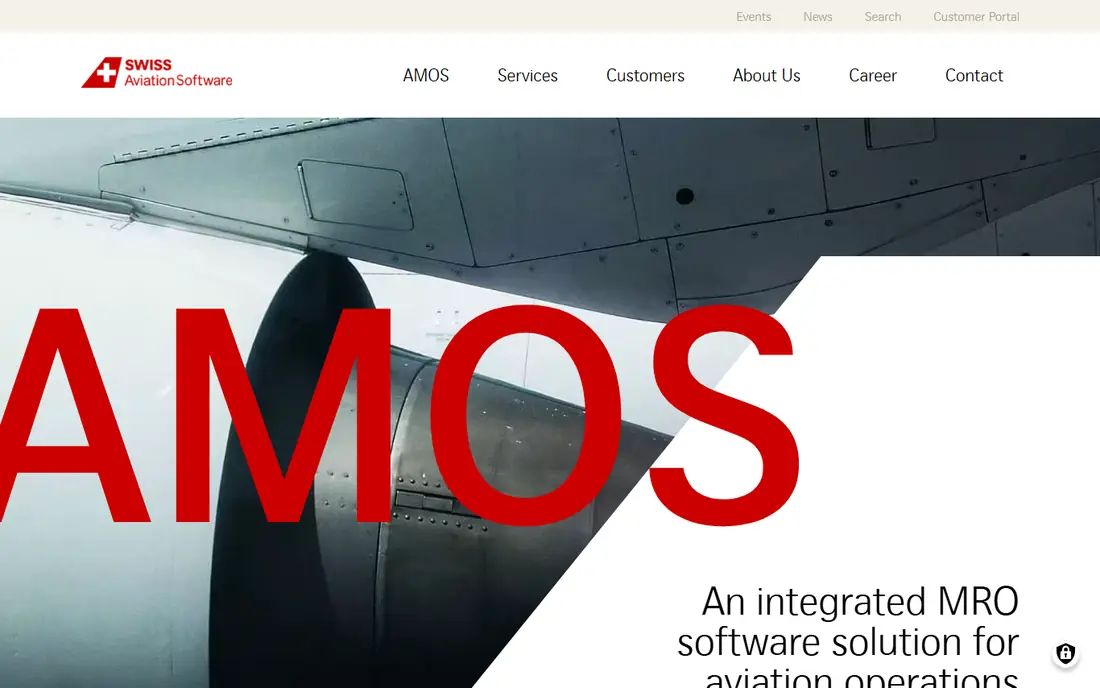
AMOS, from Swiss-AS, is a long-standing maintenance and engineering system for airlines and large MRO providers. It covers planning, work packages, logistics, and technical records in one system, so a maintenance event, its parts, and its release documents stay linked. That linkage matters during audits, when a regulator or customer asks for the full history of a single component.
The cost is implementation, not just license fees. AMOS projects need careful data migration, training, and process alignment, and smaller shops may find the system larger than they need. For a large operator with a complex fleet, that depth is the point, and AMOS remains a frequent shortlist name for good reason.
- Mature maintenance, planning, and logistics modules
- Strong technical records
- Used by many airlines
- Large implementation effort
- Pricing is enterprise and quote-based

IFS Cloud brings aviation MRO into a wider enterprise platform, covering maintenance, supply chain, finance, and asset management alongside shop-floor execution. That breadth helps multi-site operators that want one system for planning, parts, and commercial work, rather than stitching several tools together. Mobile tools support line maintenance away from the main base.
Breadth is also the risk. A team that only needs maintenance execution may pay for, and have to manage, far more than it uses. IFS fits best when the operator already needs enterprise planning and logistics, and when it has the staff to run a large platform over several years.
- Broad ERP plus MRO in one platform
- Mobile line maintenance
- Strong planning and materials tools
- Broad scope can slow deployment
- Needs skilled administrators

Ramco Aviation covers airlines, MRO shops, and component repair providers, with a focus on keeping serialized and rotable parts traceable through work orders and task execution. Mobile task cards let technicians record work at the aircraft or bench, including offline use where hangar connectivity is weak. Inventory, planning, and engineering records sit in the same system.
Smaller shops should still run a careful pilot, since Ramco is a full suite rather than a light tool. Its strength shows when component history, repair tracking, and customer billing must stay consistent across many jobs. For operators with that mix, Ramco is a strong contender.
- Strong serialized and rotable tracking
- Mobile task cards and offline support
- Broad aviation modules
- Implementation still needs planning
- Some modules suit larger operators better
TRAX Maintenance is a mature MRO ERP used by airlines and repair providers for planning, execution, inventory, and technical records. Role-based mobile apps support paperless work on the shop floor, and the system handles fleet, materials, and resource management as operations grow. That completeness makes it a common alternative to AMOS and IFS in head-to-head reviews.
Buyers should expect a serious implementation, with data migration and training built into the timeline. The interface will not feel as modern as a new SaaS app, but for operators that value proven MRO depth over a fresh look, TRAX has a long record to check.
- Mature MRO ERP with mobile apps
- Paperless execution
- Broad fleet and materials coverage
- Enterprise implementation effort
- Interface feels dated in places
Quantum Control, from Component Control, is built for MRO and repair shops that need quoting, repair tracking, inventory, and customer work in one place. It suits component repair, accessory shops, and mid-size MRO providers that live on turnaround time and accurate repair history. Cloud and hosted deployment options keep IT overhead lower than a full on-premise ERP.
Very large airlines with complex fleet planning may outgrow it or need extra tools around it. For a repair-focused business, though, that focus is an advantage, since the daily workflow centers on repair orders, parts, and customer status rather than airline fleet planning. A trial with real repair orders is the best test.
- Focused on MRO and repair shops
- Strong quoting, inventory, and repair tracking
- Cloud and hosted options
- Less suited to very large airline fleets
- Some enterprise ERP depth is thinner
CORRIDOR, from Continuum Applied Technology, serves MRO shops, business aviation operators, and component repair providers with configurable maintenance, inventory, and sales workflows. Its API-friendly design helps teams connect the MRO system to accounting, customer portals, and other tools without a heavy custom project. Business aviation teams often cite its fit for smaller, mixed fleets.
Configuration work is still required, and a buyer should check references in their exact segment, since MRO needs vary widely between a business jet shop and a commercial component repair house. For teams that want flexibility without a full airline ERP, CORRIDOR deserves a place on the shortlist.
- Configurable workflows for shops and operators
- API-friendly design
- Strong in business aviation
- Smaller vendor footprint than AMOS or IFS
- Needs careful configuration
Veryon Tracking+, formerly Flightdocs and related Veryon tools, offers cloud-based tracking for fleets, maintenance, inventory, and flight operations. It suits business aviation, helicopter operators, and smaller MRO shops that need reliable records and compliance tracking without a long ERP project. Cloud delivery also shortens setup and updates.
Large commercial operators with heavy planning and logistics needs may find it thinner than AMOS or IFS. That is a fair trade for a smaller operator, where speed to go live and ease of use matter more than enterprise planning depth. Check that its reporting covers the exact regulator and customer formats the operator must produce.
- Cloud-based fleet, MRO, and inventory tracking
- Simpler deployment
- Covers helicopters and business aviation
- Less depth than large airline ERPs
- Complex multi-site planning may need more
ULTRAMAIN focuses on paperless maintenance execution, with electronic task cards, mobile tools, and controlled record progression from task assignment to sign-off. That focus helps shops that already have planning or inventory tools but need a reliable way to execute and record work on the floor, with clear roles and audit trails.
Teams that need a full ERP, including finance and broad supply chain, will need other systems alongside it. ULTRAMAIN fits best as an execution layer or as part of a paired setup, where its strength in controlled, traceable task completion is the main buying reason. Confirm integration with existing planning tools before purchase.
- Strong electronic task card and paperless execution
- Mobile shop-floor tools
- Audit-ready records
- Narrower ERP scope than full suites
- Integration planning needed
How we picked these
We compared official product pages, vendor documentation, and public review comparisons for aviation MRO systems, and we favored systems with a current, supported release and a clear aviation maintenance focus. We weighed planning depth, component traceability, mobile execution, inventory control, and audit-ready records, since those decide whether a system survives a real audit. Where pricing was not published, we used See website rather than inventing a figure.
We also separated scale. A system built for a large airline and a system built for a component shop can both be excellent, but they are not interchangeable, so we judged each one against the operator type it serves best.
What to check before you buy
Match the system to your regulator and customers
Ask which airworthiness authorities, customer audit formats, and record retention rules the system must support, and get those answers in writing from the vendor. A feature list that looks complete can still miss a specific report or sign-off flow that a regulator or a major customer requires.
Plan data migration early
Aircraft, component, and maintenance history must move cleanly, with serial numbers and prior work linked to the right records. Start migration planning during selection, not after signing, and test a sample of real history before committing to a go-live date.
Test the shop floor, not just the demo
Give technicians the mobile app in a real hangar, with gloves, poor connectivity, and a real task card. A system that looks good in a sales demo can slow down badly on the floor, and that friction will show up in late sign-offs and incomplete records.
FAQ
What is the best aviation mro software for a large airline?
AMOS and IFS Cloud are common leaders for large airlines, because both handle fleet planning, logistics, and technical records at scale. The choice often turns on whether the airline also wants a broad ERP platform, in which case IFS has an edge, or a focused maintenance system, in which case AMOS is strong.
What are the top aviation mro software options for a small repair shop?
Quantum Control, CORRIDOR, and Veryon Tracking+ are strong starting points for smaller shops, because they focus on repair tracking, inventory, and records without a full airline ERP project. Pilot each one with real repair orders before deciding.
How much does aviation MRO software cost?
Most vendors in this category quote pricing based on fleet size, users, modules, and deployment, so public prices are rare. Budget for license fees plus implementation, migration, training, and ongoing support, and ask for a total first-year figure in writing.
Does MRO software replace paper task cards?
Yes, when it is set up for paperless execution, with electronic task cards, role-based sign-offs, and audit trails. Shops should still keep a fallback process for system outages, and confirm that electronic records meet their regulator and customer requirements.
How long does MRO software take to implement?
Timelines vary widely, from a few months for a focused cloud system to a year or more for a large airline ERP with full data migration. The main drivers are data quality, process alignment, training, and the number of sites going live at once.
What is the difference between MRO software and a general work-order tool?
MRO software tracks serialized aircraft parts, airworthiness records, approved data, and regulatory sign-offs, while a general work-order tool tracks jobs and labor. That aviation-specific record chain is what makes an audit possible, and it is why generic tools rarely pass muster for regulated maintenance.