Best Asset Tokenization Platforms in 2026: 8 Compared
We compared the best asset tokenization platforms for funds, real estate, and securities, checking compliance, custody, investor onboarding, and secondary
- Editor's choice
 Securitize
Regulated fund and securities tokenization
Starts atSee websiteVisit securitize.ioFull review - Great alternative
 Tokeny
White label compliant tokenization
Starts atSee websiteVisit tokeny.comFull review - Also consider
 Polymesh
Purpose built chain for regulated securities
Starts atSee websiteVisit polymesh.networkFull review
TL;DR:
- Securitize leads for a complete US regulated stack, while Tokeny leads for white label control.
- Ondo and Centrifuge serve different needs, with Treasuries on one side and private credit on the other.
- RealT is the most accessible retail option, but it is limited to rental real estate.
- Compliance, custody, and investor eligibility matter more than chain choice alone.
Quick comparison
| Tool | Best for | Starts at | Free plan? | |
|---|---|---|---|---|
| Securitize | Regulated fund and securities tokenization | See website | No | Visit |
| Tokeny | White label compliant tokenization | See website | No | Visit |
| Polymesh | Purpose built chain for regulated securities | See website | No | Visit |
 tZERO | Regulated digital securities trading | See website | No | Visit |
 Ondo Finance | Tokenized US Treasuries and yield products | See website | No | Visit |
 Centrifuge | Private credit on chain | See website | No | Visit |
 RealT | Fractional US rental real estate | See website | No | Visit |
 Brickken | Multi asset white label tokenization | See website | No | Visit |
The best asset tokenization platforms
We compared official pricing, features, and support pages for the best asset tokenization platforms search, and the eight options below cover the main ways people actually use these services. This is not financial advice. Tokenized assets carry risk, including loss of capital, illiquidity, and regulatory change. Check eligibility and offering documents before investing.

For many readers, this is the first name worth checking. Securitize offers one of the most complete regulated stacks in the US, covering issuance, transfer agency, and secondary trading. Its starting price is see website, and its free plan status is no, so check those details against your budget before you commit. In our review of its official pages, the strengths that stood out were sec registered transfer agent and broker dealer; regulated ats; fund administration. That combination makes it a sensible fit for regulated fund and securities tokenization, especially when you want a clear answer rather than a long list of extras you may never use.
The honest catch is worth naming plainly. The drawbacks we noted were enterprise pricing; onboarding and compliance work takes time. That does not make it a bad choice, but it does mean you should confirm coverage, limits, and support hours on the official site before you pay. If those limits fit how you plan to use it, it can serve you well for a long time.
- SEC registered transfer agent and broker dealer
- Regulated ATS
- Fund administration
- Enterprise pricing
- Onboarding and compliance work takes time
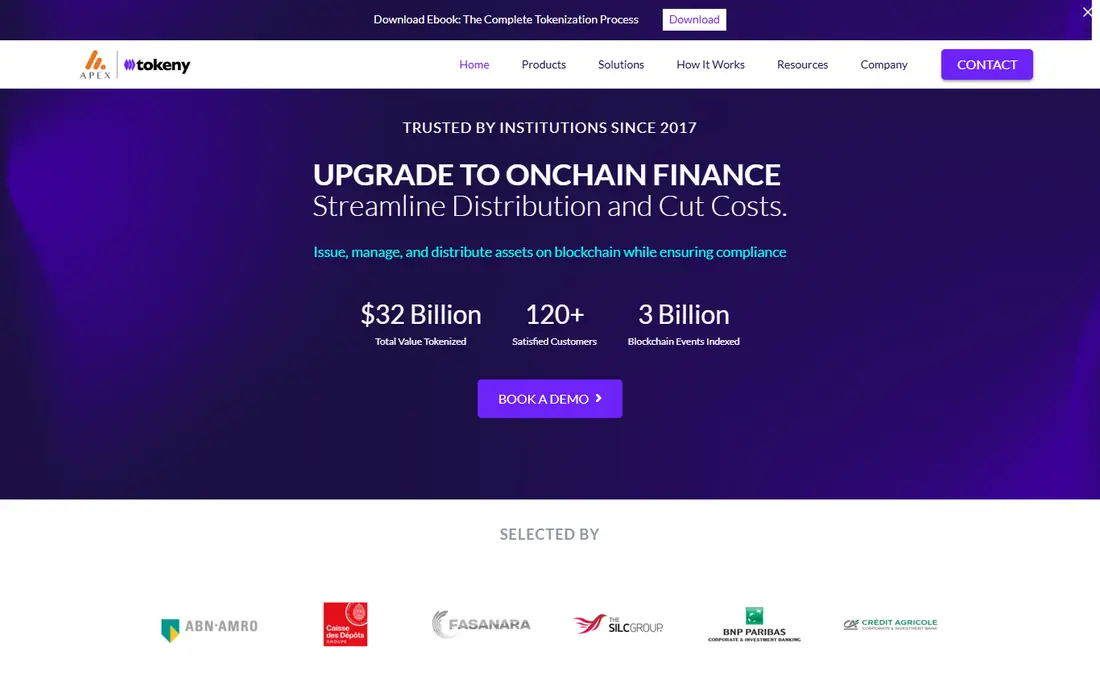
This one earns its place for a clear, practical reason. Tokeny suits institutions that want control and white label infrastructure, with compliance rules attached to the token itself. Its starting price is see website, and its free plan status is no, so check those details against your budget before you commit. In our review of its official pages, the strengths that stood out were erc-3643 compliance built into tokens; white label platform; broad jurisdiction coverage. That combination makes it a sensible fit for white label compliant tokenization, especially when you want a clear answer rather than a long list of extras you may never use.
The honest catch is worth naming plainly. The drawbacks we noted were technology focused, so issuers still need regulated partners for some functions. That does not make it a bad choice, but it does mean you should confirm coverage, limits, and support hours on the official site before you pay. If those limits fit how you plan to use it, it can serve you well for a long time.
- ERC-3643 compliance built into tokens
- White label platform
- Broad jurisdiction coverage
- Technology focused, so issuers still need regulated partners for some functions

We put this next because it solves a different problem than the names above it. Polymesh is a purpose built blockchain for regulated securities, where identity and compliance are part of the chain design. Its starting price is see website, and its free plan status is no, so check those details against your budget before you commit. In our review of its official pages, the strengths that stood out were on chain identity; compliance focused design; security token standards. That combination makes it a sensible fit for purpose built chain for regulated securities, especially when you want a clear answer rather than a long list of extras you may never use.
The honest catch is worth naming plainly. The drawbacks we noted were chain focused, so issuers need partners for custody, distribution, and legal work. That does not make it a bad choice, but it does mean you should confirm coverage, limits, and support hours on the official site before you pay. If those limits fit how you plan to use it, it can serve you well for a long time.
- On chain identity
- Compliance focused design
- Security token standards
- Chain focused, so issuers need partners for custody, distribution, and legal work
If the options above feel too broad, this one narrows the focus nicely. tZERO fits issuers and investors who want a regulated secondary market for digital securities, not just issuance. Its starting price is see website, and its free plan status is no, so check those details against your budget before you commit. In our review of its official pages, the strengths that stood out were regulated ats; issuance and trading; custody and settlement partners. That combination makes it a sensible fit for regulated digital securities trading, especially when you want a clear answer rather than a long list of extras you may never use.
The honest catch is worth naming plainly. The drawbacks we noted were access and asset availability depend on listings and investor eligibility. That does not make it a bad choice, but it does mean you should confirm coverage, limits, and support hours on the official site before you pay. If those limits fit how you plan to use it, it can serve you well for a long time.
- Regulated ATS
- Issuance and trading
- Custody and settlement partners
- Access and asset availability depend on listings and investor eligibility
This pick stands out for the way it handles one everyday need. Ondo Finance leads for tokenized US Treasuries and yield bearing products aimed at institutions and developers. Its starting price is see website, and its free plan status is no, so check those details against your budget before you commit. In our review of its official pages, the strengths that stood out were tokenized treasuries; institutional grade products; on chain settlement. That combination makes it a sensible fit for tokenized us treasuries and yield products, especially when you want a clear answer rather than a long list of extras you may never use.
The honest catch is worth naming plainly. The drawbacks we noted were some products are limited to accredited or qualified investors. That does not make it a bad choice, but it does mean you should confirm coverage, limits, and support hours on the official site before you pay. If those limits fit how you plan to use it, it can serve you well for a long time.
- Tokenized Treasuries
- Institutional grade products
- On chain settlement
- Some products are limited to accredited or qualified investors
Consider this one when price or simplicity matters more than extra features. Centrifuge suits fund managers who want to bring private credit and lending assets on chain with transparent pools. Its starting price is see website, and its free plan status is no, so check those details against your budget before you commit. In our review of its official pages, the strengths that stood out were private credit and real world lending assets on chain; fund tokenization tools. That combination makes it a sensible fit for private credit on chain, especially when you want a clear answer rather than a long list of extras you may never use.
The honest catch is worth naming plainly. The drawbacks we noted were defi style pools carry smart contract and liquidity risks. That does not make it a bad choice, but it does mean you should confirm coverage, limits, and support hours on the official site before you pay. If those limits fit how you plan to use it, it can serve you well for a long time.
- Private credit and real world lending assets on chain
- Fund tokenization tools
- DeFi style pools carry smart contract and liquidity risks
This option deserves attention for its track record and steady support. RealT is the retail friendly pick for fractional US rental real estate, with each property held in its own LLC. Its starting price is see website, and its free plan status is no, so check those details against your budget before you commit. In our review of its official pages, the strengths that stood out were fractional rental property ownership; llc per property; automated kyc checks. That combination makes it a sensible fit for fractional us rental real estate, especially when you want a clear answer rather than a long list of extras you may never use.
The honest catch is worth naming plainly. The drawbacks we noted were property specific risks; rental income and liquidity vary by property. That does not make it a bad choice, but it does mean you should confirm coverage, limits, and support hours on the official site before you pay. If those limits fit how you plan to use it, it can serve you well for a long time.
- Fractional rental property ownership
- LLC per property
- Automated KYC checks
- Property specific risks
- Rental income and liquidity vary by property
We include this last in the main list because it fills a gap the others leave open. Brickken fits institutions managing several asset classes on one white label platform. Its starting price is see website, and its free plan status is no, so check those details against your budget before you commit. In our review of its official pages, the strengths that stood out were white label platform; real estate, equity, debt, and other assets; kyc and proof of reserves tools. That combination makes it a sensible fit for multi asset white label tokenization, especially when you want a clear answer rather than a long list of extras you may never use.
The honest catch is worth naming plainly. The drawbacks we noted were enterprise sales process; pricing is quote based. That does not make it a bad choice, but it does mean you should confirm coverage, limits, and support hours on the official site before you pay. If those limits fit how you plan to use it, it can serve you well for a long time.
- White label platform
- Real estate, equity, debt, and other assets
- KYC and proof of reserves tools
- Enterprise sales process
- Pricing is quote based
How we picked these
We started with the official website, pricing page, and help pages for each product, and we kept only products that exist and work in October 2026 and truly fit the topic. We checked starting prices, free plans, and the main limits that affect everyday use, and we left out any product we could not verify. We did not claim hands-on testing we did not do. Instead, we compared what vendors publish, what their support pages promise, and where public reviews point to a repeated problem. Price alone did not decide the order. Fit, clarity, and support mattered just as much.
How to choose the right option
Start with the job you need done, then work backward to the plan. List the features you will use in the first month, the budget you can hold for a year, and the support you will need when something goes wrong. Check contract terms, renewal prices, and cancellation steps before you pay, because an intro price is not the same as a long term price. Read the limits on data, seats, storage, or usage, and confirm them on the vendor site. A short trial or a month to month plan is often worth more than a discount that locks you in. Keep notes on what you tried, so you can switch without losing your work if the first choice does not fit.
FAQ
What is asset tokenization?
Asset tokenization turns ownership of a real world asset, such as a fund share or a property, into digital tokens on a blockchain. The token represents a legal claim defined by the offering documents, not just a digital file. Legal structure, custody, and transfer rules decide what a holder can actually claim.
Are tokenized assets regulated?
In most cases, yes, when they are securities. Issuers must follow securities laws, KYC and AML checks, and transfer restrictions in each jurisdiction. A platform that ignores those rules creates legal risk for issuers and investors, even if the technology works.
Can retail investors buy tokenized assets?
Some can, such as fractional real estate through RealT, while many fund and Treasury products are limited to accredited investors. Check eligibility, minimums, and lockups before you invest. Liquidity is not guaranteed, even when a secondary market exists.
What risks should I check before investing?
Check smart contract risk, custody, liquidity, legal structure, and the underlying asset risk itself. Tokenization does not remove the risk of the asset, and a stale price feed or thin market can misprice a token. This article is for general information only and is not financial advice.
How do issuers choose a platform?
Issuers should start with license needs, asset class, and target jurisdictions, then check custody, transfer agency, and distribution. A regulated stack suits US funds, while white label technology suits banks that already have regulated partners. Get legal advice early.